Full Text (PDF)
Indian Journal of Forensic Medicine and Pathology 17(4):p 249-258, OCT. DEC. 2024. | DOI: https://doi.org/10.21088/ijfmp.0974.3383.17424.4
Original Article
Identification and Quantitation Methods for Anti-Convulsant Drugs from Biological Matrix Relating to Forensic Cases
Shrutika Singla, Vimal Rarh, Jyoti Singh
Author Information
Licence:
Attribution-Non-commercial 4.0 International (CC BY-NC 4.0)This license enables reusers to distribute, remix, adapt, and build upon the material in any medium or format for noncommercial purposes only, and only so long as attribution is given to the creator.
Indian Journal of Forensic Medicine and Pathology 17(4):p 249-258, OCT. DEC. 2024. | DOI: https://doi.org/10.21088/ijfmp.0974.3383.17424.4
How Cite This Article:
Singla S, Rarh V, Singh J. Identification and Quantitation Methods for Anti-Convulsant Drugs from Biological Matrix Relating to Forensic Cases. Indian J Forensic Med Pathol. 2024;17(4):249-258.Timeline
Received : June 19, 2024
Accepted : August 21, 2024
Published : December 15, 2024
Abstract
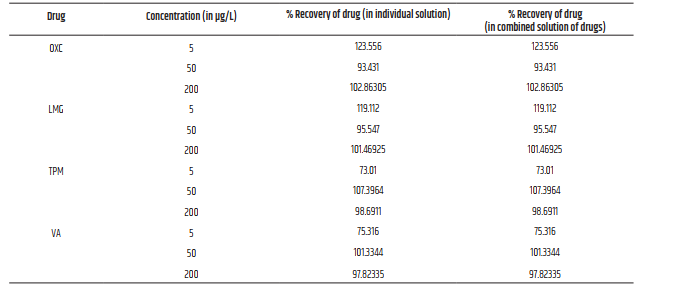
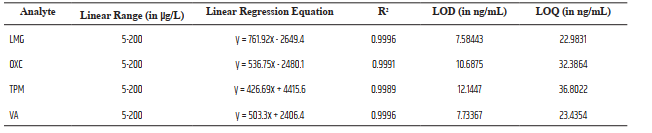
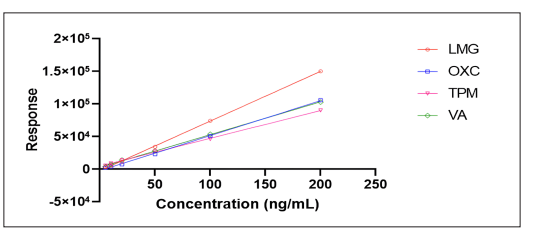
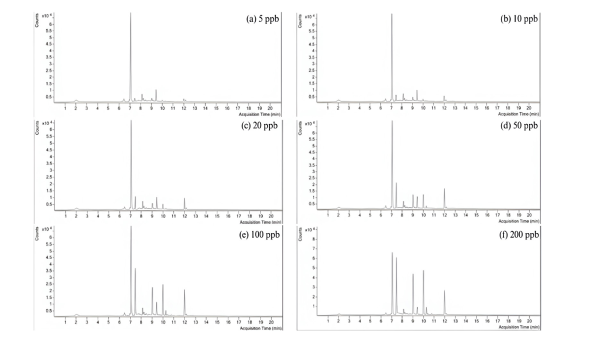
Context: Epilepsy, also known as “The Falling Sickness”, is a neurological disorder that occurs due to nerve cell disruption which results in improper signal transferring leading to seizures. Occurrence of abuse of Anti-convulsant drugs (ACDs) is increasing day-by-day, so the need for detection of these drugs due to their involvement in forensic cases. Aims: In this research paper, Dispersive Liquid-Liquid Microextraction (DLLME) has been used for extraction of 4 ACDs-Lamotrigine (LMG), Oxcarbazepine (OXC), Valproic Acid (VA) and Topiramate (TPM). Settings and Design: Ultrahigh Performance Liquid Chromatography Tandem Mass Spectrometry (UHPLC-MS/MS) was employed to analyze data utilizing multiple reaction monitoring (MRM) from biological matrix encountered in forensic and clinical scenarios. Methods and Material: DLLME extraction method has been employed for isolation of 4 ACDs- LMG, OXC, VA & TPM from urine sample. Further quantification and analysis of drugs was employed by LC-MS/MS method. Statistical analysis used: MS-Excel and GraphPad Prism softwares are used to calculate the linearity between the response and 6 different concentrations of standards taken for each drug. Results: Linearity was obtained in the range of 5 – 200 µg/L for the targeted drugs. LOD and LOQ for the analytes were in the range of 7.5844 µg/ml to 12.1447 µg/ml and 22.9831 µg/ ml to 36.8022 µg/ml. This method resulted in the highest recovery of 73 to 119 % for targeted drugs as compared to other published methods. The complete process followed ICH guidelines for optimization and validation of method. Conclusions: A novel, sensitive and effective extraction method has been developed for concurrent extraction of 4 ACDs- LMG, OXC, VA & TPM from saliva sample. Values of LOD and LOQ obtained were lowest as compared to existing methods.
References
- 1. Poklis A, Poklis JL, Trautman D, Treece C, Backer R, Harvey CM. Disposition of Valproic Acid in a Case of Fatal Intoxication. Vol. 22, Journal of Analytical Toxicology. 1998.
- 2. Mishra A, Shukla SK, Tayal I, Ashwini K, Shilekh M, Rajiv J. Trends of Poisoning in Developing Country–A Ten-year Retrospective Study. Journal of Punjab Academy of Forensic Medicine & Toxicology. 2017;17(1) 35-39.
- 3. Salomone A, Di Corcia D, Gerace E, Vincenti M. A Fatal Case of Simultaneous Ingestion of Mirtazapine, Escitalopram Valproic Acid. J Anal Toxicol [Internet]. 2011 Sep 1;35(7):519–23. Available from: https://academic.oup.com/jat/articlelookup/doi/10.1093/anatox/35.7.519.
- 4. Mishra A. An epidemiological study of poisoning trends in eastern region of Nepal. Journal of Indian Academy of Forensic Medicine. 2019;41(1):50-2.
- 5. Mishra A, Rani MS, Singh C, Mishra V. Extraction, isolation detectionmethods used for antihistamines drugs from biological matrices-a review. International Journal of Medical Toxicology & Legal Medicine. 2021;24(3and4):155-63.
- 6. KC KK, Limbu T, Maskay SS, Bhasima A, Acharya SP. Lamotrigine induced toxic epidermal necrolysis: A case report. Annals of Medicine and Surgery. 2020 Dec 1;60:468–70.
- 7. Karaoulanis SE, Syngelakis M, Fokas K. Rhabdomyolysis after lamotrigine overdose: A case report and review of the literature. Ann Gen Psychiatry. 2016 Feb 24;15(1).
- 8. Deng J, Fu Z ran, Wang L, Liu J, Chen C hong, Fang F, et al. Acute liver failure associated with lamotrigine in children with epilepsy: A report of two cases and thoughts on pharmacogenomics. Epilepsy Behav Rep. 2022 Jan 1;20.
- 9. Singh C, Rani MS, Mishra A. Development of analytical method for detection of monocrotophos insecticide from biological matrix using lc-ms/ms. International Journal of Medical Toxicology & Legal Medicine. 2020;23(1and2):210-9.
- 10. Feng S, Bridgewater B, Strickland EC, McIntire G. A Rapid LC–MS-MS Method for the Quantitation of Antiepileptic Drugs in Urine. J Anal Toxicol. 2020 Oct 12;44(7):688–96.
- 11. Zhao M, Li G, Qiu F, Sun Y, Xu Y, Zhao L. Development and Validation of a Simple and Rapid UPLC–MS Assay for Valproic Acid and Its Comparison With Immunoassay and HPLC Methods. Ther Drug Monit. 2016 Apr;38(2):246–52.
- 12. Nikolaou P, Papoutsis I, Dona A, Spiliopoulou C, Athanaselis S. Development and validation of a GC/ MS method for the simultaneous determination of levetiracetam and lamotrigine in whole blood. J Pharm Biomed Anal. 2015 Jan;102:25–32.
- 13. Levine B, Lufer RA, Smialek JE. Lamotrigine Distribution in Two Postmortem Cases* [Internet]. Vol. 24, Journal of Analytical Toxicology. 2000. Available from: https://academic.oup. com/jat/article/24/7/635/767111.
- 14. Sabença R, Bicker J, Silva R, Carona A, Silva A, Santana I, et al. Development and application of an HPLC-DAD technique for human plasma concentration monitoring of perampanel and lamotrigine in drug-resistant epileptic patients. Journal of Chromatography B. 2021 Jan;1162:122491.
- 15. Mohamed FA, Ali MFB, Rageh AH, Mostafa AM. A highly sensitive HPTLC method for estimation of oxcarbazepine in two binary mixtures with two metabolically related antiepileptic drugs: Application to pharmaceutical and biological samples. Microchemical Journal. 2019 May;146:414–22.
- 16. Carvalho J, Rosado T, Barroso M, Gallardo E. Determination of Antiepileptic Drugs Using Dried Saliva Spots. J Anal Toxicol. 2019 Jan 1;43(1):61– 71.
- 17. Ishikawa AA, da Silva RM, Santos MSF, da Costa ET, Sakamoto AC, Carrilho E, et al. Determination of topiramate by capillary electrophoresis with capacitively‐coupled contactless conductivity detection: A powerful tool for therapeutic monitoring in epileptic patients. Electrophoresis. 2018 Oct 25;39(20):2598–604.
- 18. Fonseca BM, Rodrigues M, Alves G. First HPLC method for the simultaneous quantification of levetiracetam, zonisamide, lamotrigine, pentylenetetrazole and pilocarpine in rat plasma and brain. Analytical Methods. 2018;10(5):515–25.
- 19. Palte MJ, Basu SS, Dahlin JL, Gencheva R, Mason D, Jarolim P, et al. Development and Validation of an UltraPerformance Liquid Chromatography– Tandem Mass Spectrometry Method for the Concurrent Measurement of Gabapentin, Lamotrigine, Levetiracetam, Monohydroxy Derivative of Oxcarbazepine Zonisamide Concentrations in Serum in a Clinical Setting. Ther Drug Monit. 2018 Aug;40(4):469–76.
- 20. Linder C, Hansson A, Sadek S, Gustafsson LL, Pohanka A. Carbamazepine, lamotrigine, levetiracetam and valproic acid in dried blood spots with liquid chromatography tandem mass spectrometry; method development and validation. Journal of Chromatography B. 2018 Jan;1072:116–22.
- 21. Farouk F, ElKady EF, Azzazy HME. Simultaneous UPLC‐MS/MS determination of antiepileptic agents for dose adjustment. Biomedical Chromatography. 2017 Jul 31;31(7).
- 22. Qu L, Fan Y, Wang W, Ma K, Yin Z. Development, validation and clinical application of an online-SPE-LC-HRMS/ MS for simultaneous quantification of phenobarbital, phenytoin, carbamazepine its active metabolite carbamazepine 10,11-epoxide. Talanta. 2016 Sep;158:77–88.
- 23. Baldelli S, Cattaneo D, Giodini L, Baietto L, Di Perri G, D’Avolio A, et al. Development and validation of a HPLC-UV method for the quantification of antiepileptic drugs in dried plasma spots. Clinical Chemistry and Laboratory Medicine (CCLM). 2015 Jan 1;53(3).
- 24. Ferreira A, Rodrigues M, Oliveira P, Francisco J, Fortuna A, Rosado L, et al. Liquid chromatographic assay based on microextraction by packed sorbent for therapeutic drug monitoring of carbamazepine, lamotrigine, oxcarbazepine, phenobarbital, phenytoin and the active metabolites carbamazepine-10,11-epoxide and licarbazepine. Journal of Chromatography B. 2014 Nov;971:20–9.
- 25. Nikolaou P, Papoutsis I, Dona A, Spiliopoulou C, Athanaselis S. Development and validation of a GC/ MS method for the simultaneous determination of levetiracetam and lamotrigine in whole blood. J Pharm Biomed Anal. 2015 Jan;102:25–32.
- 26. Yu H, Ren X, Liu L, Xiang D, Li X, Li J, et al. Simultaneous determination of eight antiepileptic drugs and two metabolites in human plasma by liquid chromatography/tandem mass spectrometry. Acta Chromatogr. 2023 Apr 25;35(2):161–9.
- 27. Vasanthraju SG, Jain SK, Shetty R, Bejugam N, Hussen SS, Bhat K. Determination of Lamotrigine and Felbamate in Pediatric Plasma Samples by Reverse Phase High Performance Liquid Chromatography [Internet]. Available from: https://www.researchgate.net/ publication/262729674.
- 28. Shah NM, Hawwa AF, Millership JS, Collier PS, McElnay JC. A simple bioanalytical method for the quantification of antiepileptic drugs in dried blood spots. Journal of Chromatography B. 2013 Apr;923–924:65–73.
- 29. Rani S, Malik AK. A novel microextraction by packed sorbent–gas chromatography procedure for the simultaneous analysis of antiepileptic drugs in human plasma and urine. J Sep Sci. 2012 Nov 20;35(21):2970–7.
- 30. Conway JM, Birnbaum AK, Marino SE, Cloyd JC, Remmel RP. A sensitive capillary GC-MS method for analysis of topiramate from plasma obtained from single-dose studies. Biomedical Chromatography. 2012 Sep;26(9):1071–6.
- 31. Tonic-Ribarska J, Haxhiu A, Sterjev Z, Kiteva G, Suturkova L, TrajkovicJolevska S. Development and validation of a bioanalytical LC-UV method with solid-phase extraction for determination of valproic acid in saliva. Acta Pharmaceutica. 2012 Jun 1;62(2):211–20.
- 32. Loureiro AI, Fernandes-Lopes C, Wright LC, Soares-da-Silva P. Development and validation of an enantioselective liquid-chromatography/tandem mass spectrometry method for the separation and quantification of eslicarbazepine acetate, eslicarbazepine, R-licarbazepine and oxcarbazepine in human plasma. Journal of Chromatography B. 2011 Sep;879(25):2611–8.
- 33. Mercolini L, Mandrioli R, Amore M, Raggi MA. Simultaneous HPLC-F analysis of three recent antiepileptic drugs in human plasma. J Pharm Biomed Anal. 2010 Sep;53(1):62–7.
- 34. Fortuna A, Sousa J, Alves G, Falcão A, Soares-da-Silva P. Development and validation of an HPLC-UV method for the simultaneous quantification of carbamazepine, oxcarbazepine, eslicarbazepine acetate and their main metabolites in human plasma. Anal Bioanal Chem. 2010 Jun 18;397(4):1605–15.
- 35. Saracino MA, Tallarico K, Raggi MA. Liquid chromatographic analysis of oxcarbazepine and its metabolites in plasma and saliva after a novel microextraction by packed sorbent procedure. Anal Chim Acta. 2010 Feb;661(2):222–8.
- 36. Tai SSC, Yeh CY, Phinney KW. Development and validation of a reference measurement procedure for certification of phenytoin, phenobarbital, lamotrigine topiramate in human serum using isotope-dilution liquid chromatography/tandem mass spectrometry. Anal Bioanal Chem. 2011 Oct 28;401(6):1915–22.
- 37. Maurer HH, Kratzsch C, Weber AA, Peters FT, Kraemer T. Validated assay for quantification of oxcarbazepine and its active dihydro metabolite 10‐hydroxycarbazepine in plasma by atmospheric pressure chemical ionization liquid chromatography/ mass spectrometry. Journal of Mass Spectrometry. 2002 Jul 18;37(7):687–92.
- 38. Almeida JMF De, Silva EMF, Veríssimo LM, Fernandes NS. Saltingout assisted liquid-liquid extraction method combined with GC-MS for the determination of topiramate in aqueous solutions: development and application of the methodology. Sep Sci Technol. 2020 Sep 1;55(13):2303–12.
- 39. Gao S, Miao H, Tao X, Jiang B, Xiao Y, Cai F, et al. LC–MS/MS method for simultaneous determination of valproic acid and major metabolites in human plasma. Journal of Chromatography B. 2011 Jul;879(21):1939–44.
- 40. Behl A, Mishra A, Sharma GP, Mishra V. Detection and determination of the levels of physiologically active substances in non-alcoholic beverages. International Journal of Medical Toxicology & Legal Medicine. 2021;24(3 and 4):164-74.
- 41. Anand U, Chandel AK, Oleksak P, Mishra A, Krejcar O, Raval IH, Dey A, Kuca K. Recent advances in the potential applications of luminescence-based, SPRbased carbon-based biosensors. Applied Microbiology and Biotechnology. 2022 Apr;106(8):2827-53.
- 42. Mishra A, Nardareshvili N. Forensic Toxicology. In Manual of Forensic Science 2017 Dec 14 (pp. 167-178). CRC Press.
- 43. Mishra A, Shukla SK, Tayal I, Ashwini K, Shilekh M, Rajiv J. Trends of Poisoning in Developing Country–A Ten-year Retrospective Study. Journal of Punjab Academy of Forensic Medicine & Toxicology. 2017 Jan 1;17(1).
- 44. Mishra A, Singh SK, Singla S. Toxicological Evidence Collection. InManual of Crime Scene Investigation 2022 Oct 28 (pp. 133-144). CRC Press.
- 45. Mishra A, Nagda B. Study of water quality in Udaipur Region, India. Asian Journal of Water, Environment and Pollution. 2020 Jan 1;17(1):51-7.
Data Sharing Statement
There are no additional data available.
Funding
This research received no funding.
Author Contributions
All authors contributed significantly to the work and approve its publication.
Ethics Declaration
This article does not involve any human or animal subjects, and therefore does not require ethics approval.
Acknowledgements
Information not provide.
Conflicts of Interest
The authors report no conflicts of interest in this work.
About this article

Cite this article
Singla S, Rarh V, Singh J. Identification and Quantitation Methods for Anti-Convulsant Drugs from Biological Matrix Relating to Forensic Cases. Indian J Forensic Med Pathol. 2024;17(4):249-258.
Licence:
Attribution-Non-commercial 4.0 International (CC BY-NC 4.0)This license enables reusers to distribute, remix, adapt, and build upon the material in any medium or format for noncommercial purposes only, and only so long as attribution is given to the creator.
| Received | Accepted | Published |
|---|---|---|
| June 19, 2024 | August 21, 2024 | December 15, 2024 |
DOI: https://doi.org/10.21088/ijfmp.0974.3383.17424.4
Keywords
DLLMEEpilepsyUHPLC-MS / MSAnalysisQuantificationSearch for Similar Articles
Similar Articles
- Diatom Analysis in Thermophilic water bodies: A Study on Hot Water Springs of Ma...
- Morphometric Study of Supra-meatal Triangle and Mastoid process in the Adult dry...
- Histopathological Spectrum of Autopsy Cases: A One Year Retrospective Observatio...
- Forensic Differentiation of Manner of Death in Railway Fatalities: A FourCase Se...
- Understanding assault Patterns: A Cross-sectional study of Cases at Chri, Kelamb...
Article Level Metrics
Last UpdatedMonday 19 October 2026, 15:52:52 (IST)
16344
Accesses
36
3216
00
Citations
NA
NA
NA
Download citation
Article Keywords
Keyword Highlighting
Highlight selected keywords in the article text.
Timeline
| Received | June 19, 2024 |
| Accepted | August 21, 2024 |
| Published | December 15, 2024 |
licence
Attribution-Non-commercial 4.0 International (CC BY-NC 4.0)
This license enables reusers to distribute, remix, adapt, and build upon the material in any medium or format for noncommercial purposes only, and only so long as attribution is given to the creator.