Full Text (PDF)
Journal of Microbiology and Related Research 11(2):p 91-103, July-Dec 2025. | DOI: 10.21088/jmrr.2395.6623.11225.4
Review Article
Seaweed-Derived Bioplastics: A Sustainable Alternative to Petroleum Based Plastics: Review
Author Information
Licence:
Attribution-Non-commercial 4.0 International (CC BY-NC 4.0)This license enables reusers to distribute, remix, adapt, and build upon the material in any medium or format for noncommercial purposes only, and only so long as attribution is given to the creator.
Journal of Microbiology and Related Research 11(2):p 91-103, July-Dec 2025. | DOI: 10.21088/jmrr.2395.6623.11225.4
How Cite This Article:
Kinjal Upadhyay, Palak Yagnik. Seaweed-Derived Bioplastics: A Sustainable Alternative To Petroleum-Based Plastics: Review. J Microbiol Relat Res. 2025; 11(2): 91–103.Timeline
Received : August 05, 2025
Accepted : September 27, 2025
Published : December 30, 2025
Abstract
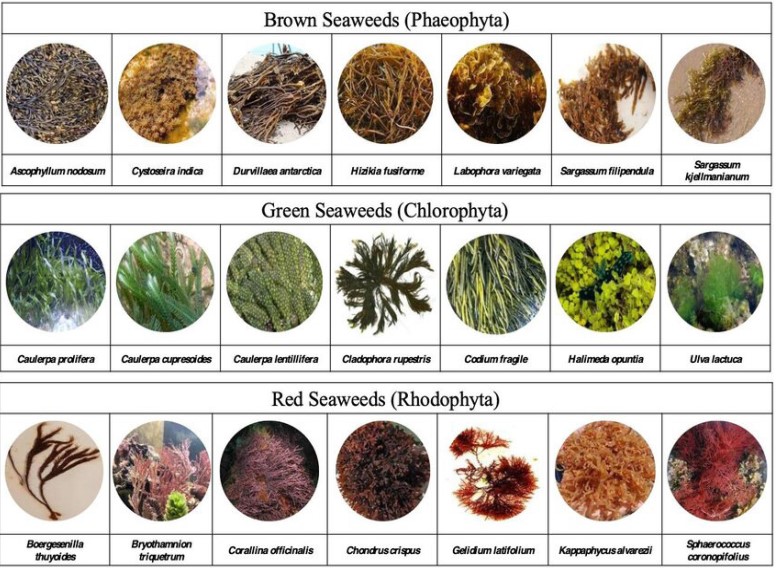
The increasing environmental burden of conventional plastic pollution 5 particularly from packaging waste has intensified the global pursuit of sustainable, biodegradable alternatives. Seaweeds, or marine macroalgae, have emerged as promising renewable biomass for bioplastic production due to their rapid growth, abundant polysaccharide content, and non-reliance on freshwater or arable land. This review critically examines the recent advancements (2010–2025) in the development of seaweed-derived bioplastics, focusing on the extraction of biopolymers such as alginate, agar, and carrageenan from brown and red algae.20 Key fabrication methods, including solution casting and extrusion, are explored alongside mechanical and biodegradation properties of the resulting materials. For instance, alginate-based films have demonstrated tensile strength values up to 38 MPa, while carrageenan films are noted for their transparency and potential for blending. Biodegradability tests have shown that certain seaweed bioplastics degrade within 30–60 days under natural conditions, offering significant environmental advantages.21 The review also highlights challenges such as water sensitivity, mechanical brittleness, and higher production costs, while identifying potential solutions in polymer blending, nanocomposites, and green extraction techniques. By synthesizing findings across multidisciplinary studies, this review underscores seaweed’s potential as a sustainable raw material for biodegradable plastics and its role in addressing the global plastic crisis.
References
- 1. Janani R, Rajesh GM. Production and evaluation of a seaweed-based bioplastic sheet for food packaging. Uttar Pradesh J Zool. 2024;45:108–15.
- 2. Sudhakar MP. Studies on the development and characterization of bioplastic film from the red seaweed (Kappaphycus alvarezii). Environ Sci Pollut Res. 2021;28.
- 3. Kumar KS. Seaweeds: distribution, production and uses. 2018.
- 4. Bamaniya K, Joshi N, Tiwari A, Shaji S. Seaweed – classification, source and uses. 2022;2:54–7.
- 5. Rathod SG, Choudhari AN, Mantri VA. A global bibliometric analysis of seaweed biodiversity, endemic taxa, and conservation (1992–2023). Phycology. 2025;5(1):1.
- 6. Janani R, Rajesh GM. Production and evaluation of a seaweed-based bioplastic sheet for food packaging. Uttar Pradesh J Zool. 2024;45:108–15.
- 7. Chopin, Thierry. (1986). The red alga Chondrus crispus Stackhouse (Irish moss) and carrageenans - A review. Can. Tech. Rep. Fish. Aquat. Sci.. 1514.
- 8. Sudhakar MP, Peter DM, Dharani G. Studies on the development and characterization of bioplastic film from the red seaweed (Kappaphycus alvarezii). Environ Sci Pollut Res Int. 2021 Jul; 28(26): 33899–913.
- 9. El-Sheekh MM, Alwaleed EA, Ibrahim A, Saber H. Preparation and characterization of bioplastic film from the green seaweed Halimeda opuntia. Int J Biol Macromol. 2024;259(Pt 2):129307.
- 10. Dang BT, Bui XT, Tran DPH, et al. Current application of algae derivatives for bioplastic production: a review. Bioresour Technol. 2022;347:126698.
- 11. Perera KY, Sharma S, Pradhan D, Jaiswal AK, Jaiswal S. Seaweed polysaccharide in food contact materials (active packaging, intelligent packaging, edible films, and coatings). Foods. 2021; 10(9):2088.
- 12. Kajla P, Chaudhary V, Dewan A, et al. Seaweedbased biopolymers for food packaging: a sustainable approach for a cleaner tomorrow. Int J Biol Macromol. 2024; 274(Pt 1):133166.
- 13. Santana I, Félix M, Guerrero A, Bengoechea C. Processing and characterization of bioplastics from the invasive seaweed Rugulopteryx okamurae. Polymers (Basel). 2022; 14(2):355.
- 14. Mohammed A, Gaduan A, Chaitram P, Pooran A, Lee KY, Ward K. Sargassum inspired, optimized calcium alginate bioplastic composites for food packaging. Food Hydrocolloids. 2023 Feb 1; 135:108192.
- 15. de Mello Soares CT, Ek M, Östmark E, Gällstedt M, Karlsson S. Recycling of multi-material multilayer plastic packaging: Current trends and future scenarios. Resources, conservation and recycling. 2022 Jan 1; 176:105905.
- 16. Mohammed A, Ward K, Lee KY, Dupont V. The environmental impact and economic feasibility assessment of composite calcium alginate bioplastics derived from Sargassum. Green Chemistry. 2023; 25(14):5501-16.
- 17. Kan M, Miller SA. Environmental impacts of plastic packaging of food products. Resources, Conservation and Recycling. 2022 May 1; 180:106156.
- 18. Gade R, Tulasi MS, Bhai VA. Seaweeds: a novel biomaterial. Int J Pharm Pharm Sci. 2013;5(2):975–1491.
- 19. Santana I, Felix M, Bengoechea C. Seaweed as basis of eco-sustainable plastic materials: focus on alginate. Polymers (Basel). 2024;16(12):1662.
- 20. Torrejon VM, Fernando S, Roy UK, Onwukwe U, Anguilano L. Transforming seaweed into bioplastics: a review of cultivation, harvesting and processing methods. Appl Phycology. 2025;6(1):52–73.
- 21. Janani R, Rajesh GM. Production and evaluation of a seaweed-based bioplastic sheet for food packaging. Uttar Pradesh J Zool. 2024;45:108–15.
- 22. Genecya G, Adhika DR, Sutrisno W, Wungu TD. Characteristic improvement of a carrageenan-based bionanocomposite polymer film containing montmorillonite as food packaging through the addition of silver and cerium oxide nanoparticles. ACS omega. 2023 Oct 12;8(42):39194-202.
- 23. Rathod SG, Choudhari AN, Mantri VA. A global bibliometric analysis of seaweed biodiversity, endemic taxa, and conservation (1992–2023). Phycology. 2025;5(1):1.
- 24. Ryan C, Billington S, Criddle C. Biocomposite fiber-matrix treatments that enhance in-service performance can also accelerate end-of-life fragmentation and anaerobic biodegradation to methane. J Polym Environ. 2018;26:10.
- 25. Ahsan WA, Hussain A, Lin C, Nguyen MK. Biodegradation of different types of bioplastics through composting—a recent trend in green recycling. Catalysts. 2023;13(2):294.
- 26. Miwa, Y., Awanthi, M. G. G., Soga, K., Tanaka, A., Ito, M., Numata, Y., Sato, Y., & Konishi, T. (2023). The Cell Wall Characterization of Brown Alga Cladosiphon okamuranus during Growth. Plants, 12(18), 3274.
- 27. Dobrinčić, A., Balbino, S., Zorić, Z., Pedisić, S., Bursać Kovačević, D., Elez Garofulić, I., & Dragović-Uzelac, V. (2020). Advanced Technologies for the Extraction of Marine Brown Algal Polysaccharides. Marine drugs, 18(3), 168.
- 28. Polman EM, Gruter G-JM, Parsons JR, Tietema A. Comparison of the aerobic biodegradation of biopolymers and the corresponding bioplastics: A review. Sci Total Environ. 2021;753:141953.
- 29. Koch D, Mihalyi B. Assessing the change in environmental impact categories when replacing conventional plastic with bioplastic in chosen application fields. Chem Eng Trans. 2018;70:853–8.
- 30. Huang J, Veksha A, Chan WP, Giannis A, Lisak G. Chemical recycling of plastic waste for sustainable material management: A prospective review on catalysts and processes. Renew Sustain Energy Rev. 2022;154:111866.
- 31. Mellinas C, Valdés A, Ramos M, Burgos N, Garrigos MC, Jiménez A. Active edible films: Current state and future trends. J Appl Polym Sci. 2016;133.
- 32. Mekonnen T, Mussone P, Khalil H, Bressler D. Progress in bio-based plastics and plasticizing modifications. J Mater Chem A. 2013; 1:13379–98.
- 33. Suman TY, Li W-G, Alif S, Faris VRP, Amarnath DJ, Ma J-G, et al. Characterization of petroleumbased plastics and their absorbed trace metals from the sediments of the Marina Beach in Chennai, India. Environ Sci Eur. 2020;32:110.
- 34. Quitain AT, Kai T, Sasaki M, Goto M. Microwave–hydrothermal extraction and degradation of fucoidan from supercritical carbon dioxide deoiled Undaria pinnatifida. Industrial & engineering chemistry research. 2013 Jun 12;52(23):7940-6.
- 35. Chae Y, An Y-J. Current research trends on plastic pollution and ecological impacts on the soil ecosystem: A review. Environ Pollut. 2018;240:387–95.
- 36. Burgos N, Valdés A, Jiménez A. Valorization of agricultural wastes for the production of protein-based biopolymers. J Renew Mater. 2016;4:165–77.
- 37. Abdul Khalil HPS, Tye YY, Saurabh CK, Leh CP, Lai TK, Chong EWN, Nurul Fazita MR, Hafiidz JM, Banerjee A, Syakir MI. Biodegradable polymer films from seaweed polysaccharides: A review on cellulose as a reinforcement material. Express Polym Lett. 2017;11(4):244–265.
- 38. Júnior J, Turan G. Biodegradable plastic and film production from seaweeds. Bull Biotechnol. 2022;3.
- 39. Wan Yahaya WA, Azman NAM, Adam F, Subramaniam SD, Abd Hamid KH, Almajano MP. Exploring the potential of seaweed derivatives for the development of biodegradable plastics: A comparative study. Polymers (Basel). 2023; 15(13):2884.
- 40. Sacramento MMÂ, Borges J, Correia FJS, Calado R, Rodrigues JMM, Patrício SG, Mano JF. Green approaches for extraction, chemical modification and processing of marine polysaccharides for biomedical applications. Frontiers in Bioengineering and Biotechnology. 2022; 10:1041102.
- 41. Xu, J., Liao, W., Liu, Y., Guo, Y., Jiang, S., & Zhao, C. (2023). An overview on the nutritional and bioactive components of green seaweeds. Food production, processing and nutrition, 5(1), 18. 42. Jönsson, Madeleine & Allahgholi, Leila & Sardari, Roya & Hreggvidsson, Gudmundur & Karlsson, Eva. (2020). Extraction and Modification of Macroalgal Polysaccharides for Current and Next-Generation Applications. Molecules. 25. 930. 10.3390/molecules25040930.
- 43. Jönsson M, Allahgholi L, Sardari RRR, Hreggviðsson GO, Nordberg Karlsson E. Extraction and modification of macroalgal polysaccharides for current and next-generation applications. Molecules. 2020;25(4):930.
- 44. Sacramento MMÂ, Borges J, Correia FJS, Calado R, Rodrigues JMM, Patrício SG, Mano JF. Green approaches for extraction, chemical modification and processing of marine polysaccharides for biomedical applications. Front Bioeng Biotechnol. 2022;10:1041102.
Data Sharing Statement
There are no additional data available.
Funding
This research received no funding.
Author Contributions
All authors contributed significantly to the work and approve its publication.
Ethics Declaration
This article does not involve any human or animal subjects, and therefore does not require ethics approval.
Acknowledgements
Information not provide.
Conflicts of Interest
The authors report no conflicts of interest in this work.
About this article

Cite this article
Kinjal Upadhyay, Palak Yagnik. Seaweed-Derived Bioplastics: A Sustainable Alternative To Petroleum-Based Plastics: Review. J Microbiol Relat Res. 2025; 11(2): 91–103.
Licence:
Attribution-Non-commercial 4.0 International (CC BY-NC 4.0)This license enables reusers to distribute, remix, adapt, and build upon the material in any medium or format for noncommercial purposes only, and only so long as attribution is given to the creator.
| Received | Accepted | Published |
|---|---|---|
| August 05, 2025 | September 27, 2025 | December 30, 2025 |
DOI: 10.21088/jmrr.2395.6623.11225.4
Keywords
SeaweedBioplasticPollutionSeaweed-extractionSearch for Similar Articles
Similar Articles
- Ochrobactrum anthropi Bacteremia in Immunocompromised Patients: A Unique Threat...
- A Survey of Current Research on the Green Synthesis of Silver Nanoparticles (AgN...
- Navigating the Global Obesity a Global Catastrophe: The Role of Pancreatic Lipas...
- Phenotypic Detection of MRSA from Conventional Methods and CHROM Agar Medium in...
- Isolation of Exopolysaccharides Producing Microorganisms from Garden Soils
Article Level Metrics
Last UpdatedMonday 21 September 2026, 14:29:34 (IST)
1469
Accesses
93
188
00
Citations
NA
NA
NA
Download citation
Article Keywords
Keyword Highlighting
Highlight selected keywords in the article text.
Timeline
| Received | August 05, 2025 |
| Accepted | September 27, 2025 |
| Published | December 30, 2025 |
licence
Attribution-Non-commercial 4.0 International (CC BY-NC 4.0)
This license enables reusers to distribute, remix, adapt, and build upon the material in any medium or format for noncommercial purposes only, and only so long as attribution is given to the creator.