Full Text (PDF)
Journal of Microbiology and Related Research 10(2):p 73-80, July-December 2024. | DOI: https://doi.org/10.21088/jmrr.2395.6623.10224.4
Original Article
Phenotypic Detection of MRSA from Conventional Methods and CHROM Agar Medium in the Bloodstream Infections: Laboratory-based Cross-sectional Study
Kirti Nirmal, Sudeshna Das, Avinash Kant Lakra, Chandrakshee Kakati, Shukla Das
Author Information
Licence:
Attribution-Non-commercial 4.0 International (CC BY-NC 4.0)This license enables reusers to distribute, remix, adapt, and build upon the material in any medium or format for noncommercial purposes only, and only so long as attribution is given to the creator.
Journal of Microbiology and Related Research 10(2):p 73-80, July-December 2024. | DOI: https://doi.org/10.21088/jmrr.2395.6623.10224.4
How Cite This Article:
Sudeshna Das, Kirti Nirmal, et al., Phenotypic Detection of MRSA from Conventional Methods and CHROM Agar Medium in the Bloodstream Infections: Laboratory-based Cross-sectional Study. J Microbiol Relat Res. 2024;10(2):73–80Timeline
Received : October 19, 2024
Accepted : December 11, 2024
Published : December 25, 2024
Abstract
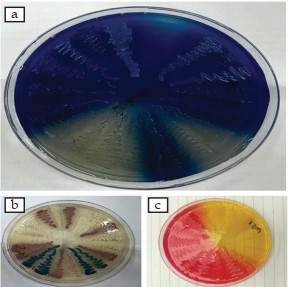
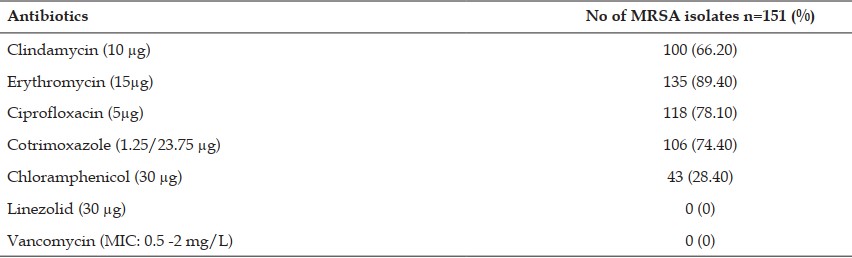
Introduction: Methicillin-resistant Staphylococcus aureus (MRSA) has currently become an important healthcare concern as its resistant to multiple antibiotics. Currently, it’s one of the major hospitals acquired and community acquired pathogen causing blood stream infections(BSI). Therefore, rapid identification of MRSA in clinical specimens is essential for timely decision on effective antimicrobial drug therapy. Aim: To detect the prevalence of MRSA isolates isolated from blood culture samples. To compare phenotypic methods; Mannitol salt agar (MSA), Cefoxitin disk diffusion (CDD) & Oxacillin resistant screening agar base (ORSAB) with CHROMagar MRSA. Materials and Methods: An Laboratory based cross-sectional study was carried out in the Microbiology department, UCMS and GTBH from January 2024 to April 2024 were included and further characterized. All the isolates were cultured in MSA, blood agar and MacConkey agar. The phenotypic methods used for confirming MRSA was Cefoxitin disc (30µg) diffusion, CHROMagarTMMRSA andORSAB for phenotypic identification. Results: Out of 328 isolates of S. aureus, 151(73. 3%) isolates were MRSA detected by CDD method, CHROMagarTM MRSA and ORSAB. The sensitivity of chromogenic media i. eCHROMagarTM MRSA and ORSAB is 94. 2% and 97. 2% respectively. All MRSA isolated were susceptible to Vancomycin, Linezolid and resistant to commonly used antibiotics. Conclusion: CHROMagarTM MRSA and ORSAB is found to be accurate for the detection of MRSA. It is reliable, easy to perform, less time-consuming, and cost-effective. It is an affordable alternative to the conventional method of detection of MRSA in resource-poor settings.
References
- 1. Kolman, S., Arielly, H. & Paitan, Y. Evaluation of single and double-locus real-time PCR assays for methicillin-resistant Staphylococcus aureus (MRSA) surveillance. BMC Res Notes 3, 110 (2010). https://doi. org/10. 1186/1756-0500- 3-110.
- 2. Cosgrove, S., Sakoulas, G., Perencevich, E., Schwaber, M., Karchmer, A. andCarmeli, Y. (2003): Comparison of mortality associated with methicillin resistant andmethicillin susceptible Staphylococcus aureusbacteremia: a metaanalysis. Clin. Infect. Dis., 36:53-59.
- 3. Harbarth, S., Rutschmann, O., Sudre, P. and Pittet, D. ( 1998): Impact of methicillinresistance on the outcome of patients with bacteremia caused by Staphylococcus aureus. Arch Intern Med, 158:182-189.
- 4. Rubin, R. J., Harrington, C. A., Poon, A., Dietrich. K., Greene, J. A. and Moiduddin, A. (1999): The economic impact of Staphylococcus aureus infection in New York Cityhospitals. Emerg. Infect. Dis., 5:9-17.
- 5. Feudal, C., Suvorov, M., Vakulenko, S. B. andMobashery, S. (2004): The basis for resistance toβ-lactam antibiotics by penicillin-binding protein 2a of methicillin-resistant staphylococcus aureus. J. Biol. Chem, 279:40802-6.
- 6. Miller, B. M., Meyer, H., Rogers, E. and Gilligan, P. H. ( 2005):Comparison of conventional susceptibility testing, penicillin-bindingprotein 2a latex agglutination testing, and mecA realtime PCRfor detection of oxacillin resistance in Staphylococcus aureus and coagulase-negative Staphylococcus. J. Clin. Microbiol., 43 (7): 3450– 3452.
- 7. Pillai MM, Latha R, Sarkar G. Detection of methicillin resistance in Staphylococcus aureus by polymerase chain reaction and conventional methods: a comparative study. J Lab Physicians. 2012 Jul;4(2):83-8.
- 8. Brown, D. F., Edwards, D. I., Hawkey, P. M., Morrison, D., Ridgway, G. L. and Towner, K. J. ( 2005):Guidelines for the laboratory diagnosis and susceptibility testing of methicillin-resistant Staphylococcus aureus (MRSA). J. Antimicrob. Chemother., 56:1000-18.
- 9. Anand, K. B., Agrawal, P., Kumar, S. and Kapila, K. (2009): Comparison of cefoxitin discdiffusion test, oxacillin screen agar, and PCR for mecAgene for detection of MRSA. Indian J. Med. Microbiol., 27:27-9.
- 10. Cooper, B. S., Stone, S. P., Kibbler, C. C., Cookson, B. D., Roberts, J. A. and Medley, G. F. (2004): Isolation measures in the hospital management of methicillin resistant Staphylococcus aureus (MRSA): Systematic review of the literature. BMJ, 329:533.
- 11. Geha, D. J., Uhl. J. R., Gustaferro, C. A. and Persing, D. H. (1994): Multiplex PCR for the identification of methicillin-resistant Staphylococci in the clinical laboratory. J. Clin. Microbiol., 32:1768-72.
- 12. CLSI-M100, 2024. Performance standards for antimicrobial susceptibility testing, 34th edition, clsi document M100.
- 13. Safaa M EA. Comparison of conventional mannitol salt agar with oxacillin, penicillinbinding protein 2a latex agglutination, and meca PCR for detection of methicillin resistance in staphylococcus aureus.
- 14. Patil NR, Gadagil SA. Performance of CHROMagar medium and conventional methods for detection of Methicillin-Resistant Staphylococcus aureus. Asian J Pharm Clin Res. 2016;9(6):136-9.
- 15. Khan, S., Shetty, P., Sarayu. L., Chidambaram, A. and Ranganathan, R. (2012): Detection of mecA genes of methicillin-resistant Staphylococcus aureus by polymerase chain reaction. Int. J. Health Rehabil. Sci., 1(2): 64-68.
- 16. Cesur S, Yildiz E, Irmak H, Aygün Z, Karakoc E, Kinikli S, Demiröz AP. Evaluation of oxacillin resistance screening agar and chromogenic MRSA agar media for the detection of methicillin resistance in Staphylococcus aureus clinical isolates. Mikrobiyolojibulteni. 2010 Apr 1;44(2):279-84.
- 17. Verma S, Joshi S, Chitnis V, Hemavani N, Chitnis D. Growing problems of methicillin.
- 18. Krishnan PU, Miles K, Shetty N. Detection of methicillin and mupirocin resistance in Staphylococcus aureus isolates using conventional and molecular methods: A descriptive study from a burns unit with high prevalence of MRSA. J Clin Pathol 2002;55(10):745-8.
- 19. Kateete, D. P., Kimani, C. N., Katabazi, F. A. et al. Identification of Staphylococcus aureus: DNase and Mannitol salt agar improve the efficiency of the tube coagulase test. Ann Clin Microbiol Antimicrob 9, 23 (2010). https://doi. org/10. 1186/1476-0711-9-23.
- 20. Nahimana I, Francioli P, Blanc DS. Evaluation of three chromogenic media (MRSA-ID, MRSASelect and CHROMagar MRSA) and ORSAB for surveillance cultures of methicillin-resistant Staphylococcus aureus. Clinical Microbiology and Infection. 2006 Dec 1;12(12):1168-74.
- 21. Umar AI, Garba I, Ganau AM. Evaluation of Cefoxitin Disc Diffusion and Chromogenic Agar in the Detection of Methicillin Resistant Staphylococcus aureus. South Asian Journal of Research in Microbiology. 2023 Jan 20;15(1):20-6.
- 22. Kluytmans J, Van Griethuysen A, Willemse P, Van Keulen P. Performance of CHROMagar selective medium and oxacillin resistance screening agar base for identifying Staphylococcus aureus and detecting methicillin resistance. Journal of clinical microbiology. 2002 Jul;40(7):2480-2.
- 23. Ahmed F, Hussain W, Mirza AI, Ali S, Khurshid U, Sarwar M. Diagnostic Accuracy of CHROMagar MRSA for Detection ofMethicillin-Resistant Staphylococcus aureus (MRSA) from Screening Swab Specimens. Pak Armed Forces Med J 2022; 72(3): 990-994. DOI: https://doi. org/ 10. 51253/ pafmj. v72i3. 6486.
- 24. Cherkaoui A, Renzi G, Francois P, Schrenzel J. Comparison of four chromogenic media for culturebased screening of methicillin-resistant Staphylococcus aureus. J Med Microbiol 2007;56(4): 500-503. doi:10. 1099/jmm. 0. 46981-0.
- 25. Bhoi P, Swain B, Otta S. Detection of Methicillinresistant Staphylococcus aureus using Chromogenic Agar and their Antimicrobial Susceptibility Pattern. Int J Cur Res Rev| Vol. 2021 Feb;13(04):39.
- 26. Perry JD, Davies A, Butterworth LA, Hopley AL, Nicholson A, Gould FK. Development and evaluation of a chromogenic agar medium for methicillin-resistant Staphylococcus aureus. J Clin Microbiol. 2004 Oct;42(10):4519-23. doi: 10. 1128/JCM. 42. 10. 4519-4523. 2004. PMID: 15472303; PMCID: PMC522333.
- 27. CHROMagar. CHROMagar MRSA for isolation and differentiation of Methicillin Resistant Staphylococcus aureus (MRSA)including low level MRSA[pamphlet]. Paris: CHROMagar 2020;7(2): 276 doi. org/10. 5455/JPMA. 290732.
- 28. Micheel V, Hogan B, Köller T, Warnke P, Crusius S, Hinz R et al. Screening agars for MRSA: Evaluation of a stepwise diagnostic approach with two different selective agars for the screening for methicillin-resistant Staphylococcus aureus (MRSA). Mil MedRes 2015; 2(1): 1-7. doi: 10. 1186/s40779-015-0046-1.
- 29. Becker A, Forster DH, Kniehl E. Oxacillin resistance screening agar base for detection of methicillin-resistant Staphylococcus aureus. Journal of clinical Microbiology. 2002 Nov;40(11):4400-1.
Data Sharing Statement
There are no additional data available. All raw data and code are available upon request.
Funding
This research received no funding.
Author Contributions
All authors contributed significantly to the work and approve its publication.
Ethics Declaration
This article does not involve any human or animal subjects, and therefore does not require ethics approval.
Acknowledgements
We would like to express our gratitude to the patients, their families, and all those who have contributed to this study.
Conflicts of Interest
No conflicts of interest in this work.
About this article

Cite this article
Sudeshna Das, Kirti Nirmal, et al., Phenotypic Detection of MRSA from Conventional Methods and CHROM Agar Medium in the Bloodstream Infections: Laboratory-based Cross-sectional Study. J Microbiol Relat Res. 2024;10(2):73–80
Licence:
Attribution-Non-commercial 4.0 International (CC BY-NC 4.0)This license enables reusers to distribute, remix, adapt, and build upon the material in any medium or format for noncommercial purposes only, and only so long as attribution is given to the creator.
| Received | Accepted | Published |
|---|---|---|
| October 19, 2024 | December 11, 2024 | December 25, 2024 |
DOI: https://doi.org/10.21088/jmrr.2395.6623.10224.4
Keywords
Cefoxitin disk diffusionCHROM agar MRSAORSABMethicillin-resistant Staphylococcus aureusSearch for Similar Articles
Similar Articles
- Ochrobactrum anthropi Bacteremia in Immunocompromised Patients: A Unique Threat...
- A Survey of Current Research on the Green Synthesis of Silver Nanoparticles (AgN...
- Navigating the Global Obesity a Global Catastrophe: The Role of Pancreatic Lipas...
- Isolation of Exopolysaccharides Producing Microorganisms from Garden Soils
- Isolation and Identification of Non-Fermenting Gram Negative Bacteria
Article Level Metrics
Last UpdatedMonday 21 September 2026, 13:47:45 (IST)
1463
Accesses
8
188
00
Citations
NA
NA
NA
Download citation
Article Keywords
Keyword Highlighting
Highlight selected keywords in the article text.
Timeline
| Received | October 19, 2024 |
| Accepted | December 11, 2024 |
| Published | December 25, 2024 |
licence
Attribution-Non-commercial 4.0 International (CC BY-NC 4.0)
This license enables reusers to distribute, remix, adapt, and build upon the material in any medium or format for noncommercial purposes only, and only so long as attribution is given to the creator.