Full Text (PDF)
Journal of Microbiology and Related Research 10(2):p 89-95, July-December 2024. | DOI: https://doi.org/10.21088/jmrr.2395.6623.10224.6
Review Article
A Survey of Current Research on the Green Synthesis of Silver Nanoparticles (AgNPs) and Their Antimicrobial Properties
Ankita Suvagiya, Gautam Parmar, Mihir Chavda, Harshal Joshi
Author Information
Licence:
Attribution-Non-commercial 4.0 International (CC BY-NC 4.0)This license enables reusers to distribute, remix, adapt, and build upon the material in any medium or format for noncommercial purposes only, and only so long as attribution is given to the creator.
Journal of Microbiology and Related Research 10(2):p 89-95, July-December 2024. | DOI: https://doi.org/10.21088/jmrr.2395.6623.10224.6
How Cite This Article:
Ankita Suvagiya, Gautam Parmar, et al., A Survey of Current Research on the Green Synthesis of Silver Nanoparticles (AgNPs) and their Antimicrobial Properties. J Microbiol Relat Res. 2024;10(2):89–95.Timeline
Received : October 14, 2024
Accepted : December 06, 2024
Published : December 25, 2024
Abstract
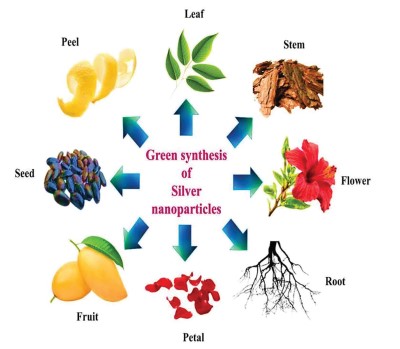
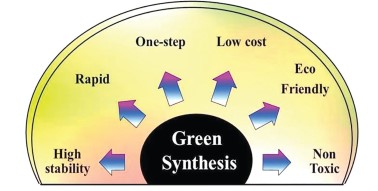
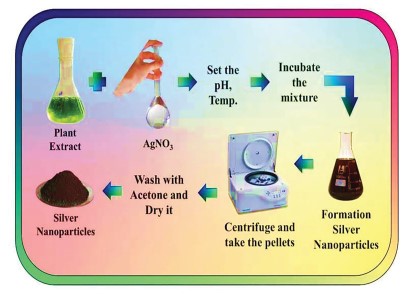
The synthesis of nanoparticles using plants or their parts or powder or whole plant is knownas greensynthesis. In recent years, nanoparticles of noble metals such as gold, silver and palladium have drawn immense attention due to the wide range of new applications in various fields of industry. Particularly, silver nanoparticles have significant interest in medical applications such as very effective antibacterial agents without the toxic effects, and industry application such as inkjet inks containing well uniform dispersions of Nanosized silverparticles that are useful for producing electronic circuits. It is important that the silver nanoparticles require not only the particles to be of Nano-size, but also synthesis of the nanoparticles to be produced easily and at low cost. Over the past few decades, many synthetic methods of silver nanoparticles have been studied. This paperaims to review different synthesis routes of silver nanoparticles and their applications. In particular, we mainly present several chemical approaches to preparing silver nanoparticles and their properties as well asapplications based on our recent studies. The focus is on effective and efficient synthesis ofpure colloidal silver nanoparticles with high electrical conductivity and their potential application. Nanotechnology is a revolutionary science that will have a large impact on human life. Nanoparticles are used for their countless applications in various areas such asenvironment, optical devices, mechanics, health care, biomedical, tissue engineering, gene and drug delivery, food industry, cosmetics etc. This review aims to present and to discuss recent publications related to antibacterial and antifungal activity using the different - different parts of plants like stem, roots, flowers, peel, bark, leaf, fruit, etc. and their silver nanoparticles in order to better understand the possible applications of these nanomaterial’s in a safe manner.
References
- 1. Mnyusiwalla, A., Daar, A.S., & Singer, P.A. (2003). ‘Mind the gap’: science and ethics in nanotechnology. Nanotechnology, 14(3), R9.
- 2. Cutkosky, R.E. (1960). Singularities and discontinuities of Feynman amplitudes. Journal of Mathematical Physics, 1(5), 429-433.
- 3. Cao, G. (2004). Nanostructures &nanomaterials: synthesis, properties & applications. Imperial college press.
- 4. Chun, Y.W., & Webster, T.J. (2009). The role of nanomedicine in growing tissues. Annals of biomedical engineering, 37, 2034-2047.
- 5. Mohanraj, V.J., & Chen, Y. J. T. J. O. P. R. (2006). Nanoparticles-a review. Tropical journal of pharmaceutical research, 5(1), 561-573.
- 6. West, J.L., & Halas, N.J. (2000). Applications of nanotechnology to biotechnology: Commentary. Current opinion in Biotechnology, 11(2), 215-217.
- 7. Salata, O.V. (2004). Applications of nanoparticles in biology and medicine. Journal of nanobiotechnology, 2, 1-6.
- 8. Kostarelos, K., Bianco, A., & Prato, M. A. U. R. I. Z. I. O. (2009). Promises, facts and challenges for carbon nanotubes in imaging and therapeutics. Nature nanotechnology, 4(10), 627-633.
- 9. Talens-Alesson, F.I., Anthony, S., & Bryce, M. (2006). Removal of phenol by adsorptive micellar flocculation: Multi-stage separation and integration of wastes for pollution minimisation. Colloids and Surfaces A: Physicochemical and Engineering Aspects, 276(1-3), 8-14.
- 10. Donga, S., & Chanda, S. (2021). Facile green synthesis of silver nanoparticles using Mangiferaindica seed aqueous extract and its antimicrobial, antioxidant and cytotoxic potential (3-in-1 system). Artificial Cells, Nanomedicine, and Biotechnology, 49(1), 292-302.
- 11. Pareek, V., Bhargava, A., Gupta, R., Jain, N., &Panwar, J. (2017). Synthesis and applications of noble metal nanoparticles: a review. Advanced Science, Engineering and Medicine, 9(7), 527-544.
- 12. Khan, B.A., Warner, P., & Wang, H. (2014). Antibacterial properties of hemp and other natural fibre plants: a review. BioResources, 9(2), 3642-3659.
- 13. Seferos, D.S., Prigodich, A.E., Giljohann, D.A., Patel, P.C., &Mirkin, C. A. (2009). Polyvalent DNA nanoparticle conjugates stabilize nucleic acids. Nano letters, 9(1), 308-311.
- 14. De Jong, W.H., &Borm, P.J. (2008). Drug delivery and nanoparticles: applications and hazards. International journal of nanomedicine, 3(2), 133-149.
- 15. Azzazy, H.M., & Mansour, M.M. (2009). In vitro diagnostic prospects of nanoparticles. ClinicaChimicaActa, 403(1-2), 1-8.
- 16. Doria, G., Conde, J., Veigas, B., Giestas, L., Almeida, C., Assunção, M., . . . &Baptista, P. V. (2012). Noble metal nanoparticles for biosensing applications. Sensors, 12(2), 1657-1687.
- 17. Sadegh, H., Ali, G.A., Gupta, V.K., Makhlouf, A.S.H., Shahryari-Ghoshekandi, R., Nadagouda, M. N., . . . &Megiel, E. (2017). The role of nanomaterials as effective adsorbents and their applications in wastewater treatment. Journal of Nanostructure in Chemistry, 7, 1-14.
- 18. Vidhu, V.K., & Philip, D. (2014). Catalytic degradation of organic dyes using biosynthesized silver nanoparticles. Micron, 56, 54-62.
- 19. Zhao, X., Xiao, B., Fletcher, A.J., Thomas, K.M., Bradshaw, D., &Rosseinsky, M. J. (2004). Hysteretic adsorption and desorption of hydrogen by nanoporous metal-organic frameworks. Science, 306(5698), 1012-1015.
- 20. Nurmi, J.T., Tratnyek, P.G., Sarathy, V., Baer, D. R., Amonette, J. E., Pecher, K., . . . &Driessen, M. D. (2005). Characterization and properties of metallic iron nanoparticles: spectroscopy, electrochemistry, and kinetics. Environmental science & technology, 39(5), 1221-1230.
- 21. Windt, W.D., Aelterman, P., & Verstraete, W. (2005). Bioreductive deposition of palladium (0) nanoparticles on Shewanellaoneidensis with catalytic activity towards reductive dechlorination of polychlorinated biphenyls. Environmental Microbiology, 7(3), 314-325.
- 22. Shan, B., Cai, Y.Z., Sun, M., & Corke, H. (2005). Antioxidant capacity of 26 spice extracts and characterization of their phenolic constituents. Journal of agricultural and food chemistry, 53(20), 7749-7759.
- 23. Chen, H.Y., Hou, J., Zhang, S., Liang, Y., Yang, G., Yang, Y., . . . & Li, G. (2009). Polymer solar cells with enhanced open-circuit voltage and efficiency. Nature photonics, 3(11), 649-653.
- 24. Das, B., Prasad, K.E., Ramamurty, U., & Rao, C.N.R. (2009). Nano-indentation studies on polymer matrix composites reinforced by fewlayer graphene. Nanotechnology, 20(12), 125705.
- 25. Anis, G., Sabagh, A.E., Ghareb, A., & Rewainy, I.E.L. (2016). Evaluation of promising lines in rice (Oryza sativa L.) to agronomic and genetic performance under Egyptian conditions. International Journal of Agronomy and Agricultural Research, 8(3), 52-57.
- 26. Tang, B., Wang, J., Xu, S., Afrin, T., Xu, W., Sun, L., & Wang, X. (2011). Application of anisotropic silver nanoparticles: Multifunctionalization of wool fabric. Journal of colloid and interface science, 356(2), 513-518.
- 27. Iravani, S. (2011). Green synthesis of metal nanoparticles using plants. Green chemistry, 13(10), 2638-2650.
- 28. Moghaddam, E., Teoh, B.T., Sam, S.S., Lani, R., Hassandarvish, P., Chik, Z., . . . &Zandi, K. (2014). Baicalin, a metabolite of baicalein with antiviral activity against dengue virus. Scientific reports, 4(1), 5452.
- 29. Chanda, S. (2013). Silver nanoparticles (medicinal plants mediated): A new generation of antimicrobials to combat microbial pathogens-a review. Microbial pathogens and strategies for combating them: science, technology and education, 1314-1323.
Data Sharing Statement
There are no additional data available. All raw data and code are available upon request.
Funding
This research received no funding.
Author Contributions
All authors contributed significantly to the work and approve its publication.
Ethics Declaration
This article does not involve any human or animal subjects, and therefore does not require ethics approval.
Acknowledgements
We would like to express our gratitude to the patients, their families, and all those who have contributed to this study.
Conflicts of Interest
No conflicts of interest in this work.
About this article

Cite this article
Ankita Suvagiya, Gautam Parmar, et al., A Survey of Current Research on the Green Synthesis of Silver Nanoparticles (AgNPs) and their Antimicrobial Properties. J Microbiol Relat Res. 2024;10(2):89–95.
Licence:
Attribution-Non-commercial 4.0 International (CC BY-NC 4.0)This license enables reusers to distribute, remix, adapt, and build upon the material in any medium or format for noncommercial purposes only, and only so long as attribution is given to the creator.
| Received | Accepted | Published |
|---|---|---|
| October 14, 2024 | December 06, 2024 | December 25, 2024 |
DOI: https://doi.org/10.21088/jmrr.2395.6623.10224.6
Keywords
Sliver NanoparticlesGreen SynthesisAntibacterialAntifungalSearch for Similar Articles
Similar Articles
- Ochrobactrum anthropi Bacteremia in Immunocompromised Patients: A Unique Threat...
- Navigating the Global Obesity a Global Catastrophe: The Role of Pancreatic Lipas...
- Phenotypic Detection of MRSA from Conventional Methods and CHROM Agar Medium in...
- Isolation of Exopolysaccharides Producing Microorganisms from Garden Soils
- Isolation and Identification of Non-Fermenting Gram Negative Bacteria
Article Level Metrics
Last UpdatedMonday 21 September 2026, 13:47:50 (IST)
1463
Accesses
7
188
00
Citations
NA
NA
NA
Download citation
Article Keywords
Keyword Highlighting
Highlight selected keywords in the article text.
Timeline
| Received | October 14, 2024 |
| Accepted | December 06, 2024 |
| Published | December 25, 2024 |
licence
Attribution-Non-commercial 4.0 International (CC BY-NC 4.0)
This license enables reusers to distribute, remix, adapt, and build upon the material in any medium or format for noncommercial purposes only, and only so long as attribution is given to the creator.