Full Text (PDF)
Indian Journal of Forensic Medicine and Pathology 11(2):p 95-100, April-June 2018. | DOI: 10.21088/ijfmp.0974.3383.11218.9
Original Article
Profile and Causes of Delayed Deaths in Burn Cases at a Tertiary Care Hospital
Mohd. Abdus Sattar, C.R. Ram Reddy, Deepika P
Author Information
Licence:
Attribution-Non-commercial 4.0 International (CC BY-NC 4.0)This license enables reusers to distribute, remix, adapt, and build upon the material in any medium or format for noncommercial purposes only, and only so long as attribution is given to the creator.
Indian Journal of Forensic Medicine and Pathology 11(2):p 95-100, April-June 2018. | DOI: 10.21088/ijfmp.0974.3383.11218.9
How Cite This Article:
Timeline
Received : May 07, 2018
Accepted : June 09, 2018
Published : July 30, 2018
Abstract
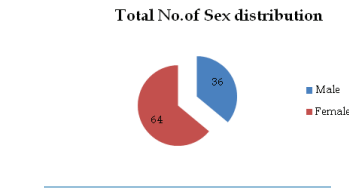
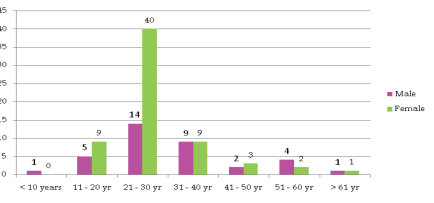
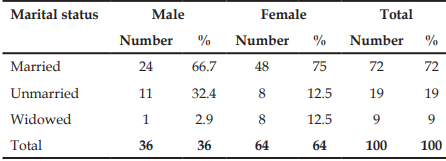
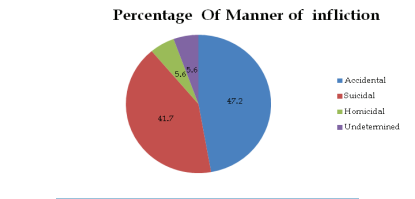
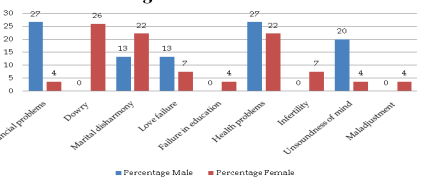
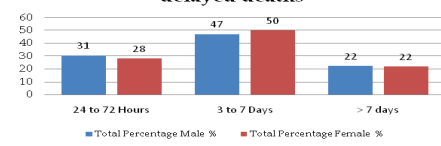
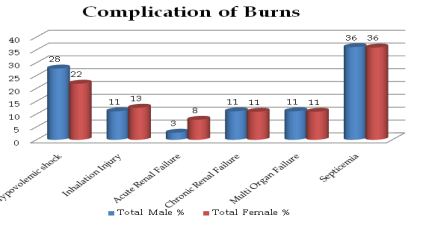
Context: The death due to burns may be instantaneous i.e. on the spot, or the victims may escape the immediate death and may die after one day of survival. All these deaths occurring after one day of survival will be considered as delayed deaths. Aims: To study the profile of burn victims and to study the causes and manner of death among them Settings and design: Department of Forensic Medicine and Toxicology, Gandhi Medical College and Hospital Secunderabad, Telangana, India. Methods and material: One hundred deaths which had occurred due to burns after one day of infliction are selected from May 2009 to September 2009 in Gandhi Hospital Secunderabad. The entire data was analyzed and the cross sectional statistics were prepared by highlighting the causes and complications of delayed death due to burns. Statistical analysis: The data was analyzed using proportions and presented as charts and tables. Results: The male and female deaths were 36% & 64% respectively with highest number of cases among the age group 21-30 years (male and female 25.9% & 74.1% respectively). Maximum deaths were due to septicemia as the complication leading to the death i.e. 36% of total death (male and female 36.1% & 63.9% respectively). The highest death rate is between 3-7 days after the infliction of burns (Total 49%, with males & females 17%, 32% respectively), followed by 24-72 hours (29%) Conclusion: Septicemia is the main complication in delayed deaths and the proportion is more in females compared to that of the males. The most common causes of burns are accidents and suicides. Dowry deaths & marital issues are more common in females where as financial and ill health issues are more common in males
References
- 1. Subrahmanyam M. Epidemiology of burns in a district hospital in Western India. Burns. 1996;22(6):439-42.
- 2. Sharma BR, Harish D, Sharma V. Kitchen accidents vis-à-vis dowry deaths. Burns. 2002;28(3):250-3.
- 3. Harish D, Kumar A, Sharma BR. Burns septicemia: leading cause of burn mortality. J Punjab Acad Forensic Med Toxicol. 2008;8(2):10-6.
- 4. Sharma BR, Singh VP, Bangar S, Gupta N. Septicemia: the principal killer of burns patients. Am J Infect Dis. 2005;1(3):132-8.
- 5. Sharma BR. Medicolegal considerations in burns. Physicians Digest. 2004;4:35-44.
- 6. Sharma BR. Delayed death in burns and the allegations of medical negligence. Burns. 2006;32(3):269-75.
- 7. Singh D, Singh A, Sharma AK, Sodhi L. Burn mortality in Chandigarh Zone: 25 years autopsy experience from a tertiary care hospital of India. Burns. 1998;24(2):150-6.
- 8. Taneja N, Emmanuel R, Chari PS, Sharma M. A prospective study of hospital-acquired infections in burn patients at a tertiary care referral centre in North India. Burns. 2004;30(7):665-9.
- 9. Bhat VG, Vasaikar SD. Bacteriological profile and antibiogram of aerobic burn wound isolates in Mthatha, Eastern Cape, South Africa. South Afr J Epidemiol Infect. 2010;25(4):16-9.
- 10. Alireza E, Ahmad H, Enayat K, Mahmood L, Abbas K. Epidemiology of hospitalized burn patients during 5 years in Khuzestan province, Iran. Iran J Clin Infect Dis. 2010;5(1):40-4.
- 11. Bangal RS, Ajankar AJ, Tirpude BH, Naik RS. Burn septicemia: bacteriological confirmation at autopsy. Int J Med Toxicol Leg Med. 1998;1(1):9-10.
- 12. Bang RL, Sharma PN, Sanyal S, Najjadah IA. Septicaemia after burn injury: a comparative study. Burns. 2002;28(8):746-51.
Data Sharing Statement
There are no additional data available. All raw data and code are available upon request.
Funding
This research received no funding.
Author Contributions
Whether all authors contributed significantly to the work and approve its publication.
Ethics Declaration
This article does not involve any human or animal subjects, and therefore does not require ethics approval.
Acknowledgements
We would like to express our gratitude to the patients, their families, and all those who have contributed to this study.
Conflicts of Interest
The authors report no conflicts of interest in this work.
About this article

Cite this article
Licence:
Attribution-Non-commercial 4.0 International (CC BY-NC 4.0)This license enables reusers to distribute, remix, adapt, and build upon the material in any medium or format for noncommercial purposes only, and only so long as attribution is given to the creator.
| Received | Accepted | Published |
|---|---|---|
| May 07, 2018 | June 09, 2018 | July 30, 2018 |
DOI: 10.21088/ijfmp.0974.3383.11218.9
Keywords
SepticemiaDelayed DeathsComplicationsDowryMarital IssuesSearch for Similar Articles
Similar Articles
- Diatom Analysis in Thermophilic water bodies: A Study on Hot Water Springs of Ma...
- Morphometric Study of Supra-meatal Triangle and Mastoid process in the Adult dry...
- Histopathological Spectrum of Autopsy Cases: A One Year Retrospective Observatio...
- Forensic Differentiation of Manner of Death in Railway Fatalities: A FourCase Se...
- Understanding assault Patterns: A Cross-sectional study of Cases at Chri, Kelamb...
Article Level Metrics
Last UpdatedSunday 18 October 2026, 14:51:06 (IST)
16275
Accesses
7
3209
00
Citations
NA
NA
NA
Download citation
Article Keywords
Keyword Highlighting
Highlight selected keywords in the article text.
Timeline
| Received | May 07, 2018 |
| Accepted | June 09, 2018 |
| Published | July 30, 2018 |
licence
Attribution-Non-commercial 4.0 International (CC BY-NC 4.0)
This license enables reusers to distribute, remix, adapt, and build upon the material in any medium or format for noncommercial purposes only, and only so long as attribution is given to the creator.