Full Text (PDF)
Indian Journal of Forensic Medicine and Pathology 18((2 Suppl)):p 301-311, April-June 2025. | DOI: https://doi.org/10.21088/ijfmp.0974.3383.18225.32
Review Article
Forensic Analysis of Web Browser Artifacts using Open-Source Tools
Rajeev Kumar, Amit Yadav, Aman Kumar, Ketan Baranwal
Author Information
Licence:
Attribution-Non-commercial 4.0 International (CC BY-NC 4.0)This license enables reusers to distribute, remix, adapt, and build upon the material in any medium or format for noncommercial purposes only, and only so long as attribution is given to the creator.
Indian Journal of Forensic Medicine and Pathology 18((2 Suppl)):p 301-311, April-June 2025. | DOI: https://doi.org/10.21088/ijfmp.0974.3383.18225.32
How Cite This Article:
Yadav A, Kumar A, Baranwal K, et al. Forensic Analysis of Web Browser Artifacts using Open-Source Tools. Indian J Forensic Med Pathol. 2025;18(2 Suppl):301-311.Timeline
Received : June 29, 2024
Accepted : June 18, 2025
Published : June 30, 2025
Abstract
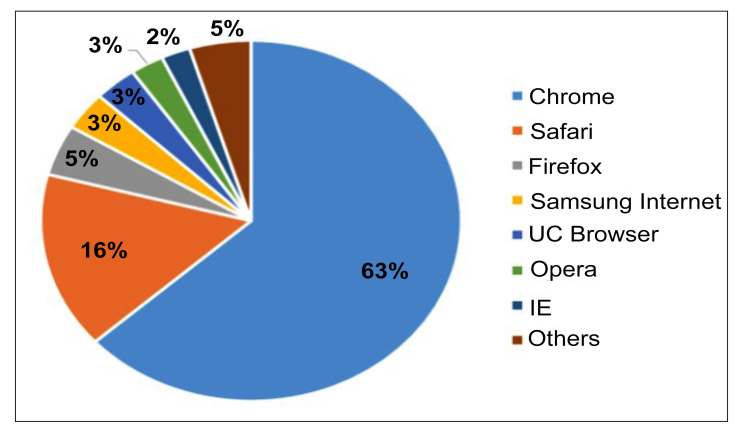
Nowadays, number of computer-related crimes is concerningly in growth these days, therefore digital forensic investigation is essential to combating crimes like cyberbullying, fraud, and cyber intrusion with its advanced capabilities, digital forensics is a fascinating field that can minimize and examine such dangers. Digital forensic investigation’s primary objective is to ensure that any evidence is not tampered with and is kept in its purest form possible. The most common tool for get into online information is a web browser, which also assists as a user’s interface with the outside world. Web browsers are used by internet users for a variety of online tasks, including email, social networking, banking, file and video downloads, and internet surfing. Since a web browser is the only means of accessing the internet, cybercriminals either utilize or target web browsers to perform internet-related crimes. There are many other browsers on the market, including Opera, Safari, Google Chrome, Mozilla Firefox and Internet Explorer to name a few. However, Google Chrome is the most widely used browser among internet users. Gathering and examining web browser-related artifacts from the suspect’s device is crucial for digital forensic investigator and especially for computer forensic detectives. To help the investigator with their work, these artifacts may be recovered using a specific browser forensic tool.
References
- 1. Blaine Stephens, What is Digital Forensics?”, Feb, 5, 2016. Accessed on: March, 27, 2020. Online. Available on: https://interworks. com/blog/bstephens/2016/02/05/whatdigital-forensics.
- 2. Harisuthan (2021), Security Investigation: Hindsight – Browser Forensic Analyzer for Web Artifacts, Available at: www.socinvestigation. com
- 3. D. Rathod, Web Browser Forensic: Google Chrome‖ International Journal of Advanced Research in Computer Science, Volume 8, No. 7, July – August 2017. Accessed on: Mar. 10, 2020. Online. Available DOI: http://dx.doi. org/10.26483/ijarcs.v8i7.4433
- 4. M.R. Jadhav, B.B. Meshram, Web Browser Forensics for Detecting User Activities” International Research Journal of Engineering and Technology (IRJET), Volume: 05 Issue: 07 July 2018. Accessed on: Mar. 10, 2020. Online. Available on: www.irjet.net
- 5. StatCounter Global Stats. (2020). Browser Market Share Worldwide | Stat Counter Global Stats. online Available at: https:// gs.statcounter.com/browsermarket-share Accessed 17 Jan. 2020.
- 6. Mugisha, D., & Rughani, P. (2018). Web Browser Forensics: Evidence collection And Analysis for Most Popular Web Browsers usage in Windows 10. Thesis in International Journal of Cyber Criminology.
- 7. Shafqat, N. (2016). Forensic investigation of user’s web activity on Google Chrome using various forensic tools. IJCSNS Int. J. Comput.Sci. Netw. Secur, 16(9), 123-132.
- 8. Donny Jacob Ohana, Narasimha Shashidhar, “Do Private and Portable Web Browsers Leave Incriminating Evidence?”. IEEE Security and Privacy Workshops, 2013.
- 9. Rasool, A., & Jalil, Z. (2020). A review of web browser forensic analysis tools and techniques. Researchpedia Journal of Computing, 1(1), 15-21.
- 10. Gabet, R.M., Seigfried-Spellar, K.C., & Rogers, M.K. (2018). A comparative forensic analysis of privacy enhanced web browsers and private browsing modes of common web browsers. International Journal of Electronic Security and Digital Forensics, 10(4), 356-371.
- 11. Oh, J., Lee, S., & Lee, S. (2011). Advanced evidence collection and analysis of web browser activity. Digital investigation, 8, S62-S70
- 12. Nalawade, A., Bharne, S., & Mane, V. (2016, September). Forensic analysis and evidence collection for web browser activity. In 2016 International Conference on Automatic Control and Dynamic Optimization Techniques (ICACDOT) (pp. 518-522). IEEE.
- 13. Index.dat Analyzer v2.5 tool. Available athttp://www. Systenance .com/indexdat.php
- 14. Chrome Analysis Plus tool. Available athttp://www.forensicsoftware.co.uk/ Chrome Analysis.aspx
- 15. NetAnalysis v1.52 tool. Available athttp:// www.fileol.com/security/netanalysis-1.52. html
- 16. “Basis Technology Corporation: Autopsy and The Sleuth”, Accessed on: Mar. 14, 2020. Online Available http://www.autopsy.com/wp
- 17. Adamu, H., Ahmad, A.A., Hassan, A., & Gambasha, S.B. (2021). Web browser forensic tools: Autopsy BHE and net analysis. Int. J. Res. Innov. Appl. Sci., 6(5), 103-107.
- 18. Akbal, E., Günes, F., & Akbal, A. (2016). Digital Forensic Analyses of Web Browser Records. J. Softw., 11(7), 631-637.
- 19. M.N. Faiz, R. Umar, and A. Yudhana, “Analisis Live Forensics Untuk Perbandingan Keamanan Email Pada SistemOperasi Proprietary”, J. Ilm.Ilk., vol. 8, no. 3, pp. 242–247, 2016.
- 20. N. Joseph, S. Sunny, S. Dija, and K.L. Thomas, “Volatile Internet evidence extraction from Windows systems”, 2014 IEEE Int. Conf. Comput. Intell. Comput. Res. IEEE ICCIC 2014, 2015.
- 21. Umar, R., Yudhana, A., & Faiz, M.N. (2018). Experimental analysis of web browser sessions using live forensics method. Int. J. Electr.Comput. Eng, 8(5), 2951-2958.
- 22. Open Document, How to View Cookies Available at, http://www.wikihow.com/ View-Cookies
- 23. Jadhav, M.R., & Meshram, B.B. (2018). Web browser forensics for detecting user activities. International Research Journal of Engineering and Technology (IRJET), 5(07), 273-279.
- 24. Epic Privacy Browser Home (2017). Epic Privacy Browser, a secure chromium-based web browser that protects your privacy and browsing history _ a free VPN privacy browser Retrieved 1 June 2017, from https://www. epicbrowser.com/.
- 25. Secure Browser Home (2017). Secure Browser Fast, Secure, Private Web Browser Retrieved 15 June 2017, from https://www.securebrowser. com/.
- 26. Comodo Dragon Browser (2017). Secure Web Browser Fastest Free Dragon Browser from Comodo Retrieved 15 June 2017, from https://www.comodo.com/home/browserstoolbars/browser.php
- 27. SRWare Iron Browser Home (2017). SRWare Iron the Browser of the Future Retrieved 15 June 2017, from https://www.srware.net/en/ software_srware_iron.php.
- 28. Dooble Home (2017). Dooble Web Browser Retrieved 15 June 2017, from http://dooble. sourceforge. net/
- 29. Maxthon Browser Home (2017). Maxthon 5 all-new release, supported free entire platform download Retrieved 15 May 2017, from http:// www.maxthon.cn/
- 30. Teng, S.Y., & Wen, C.Y. (2018). A forensic examination of anonymous browsing activities. Forensic Science Journal, 17(1), 1-8.
Data Sharing Statement
There are no additional data available. All raw data and code are available upon request.
Funding
This research received no funding.
Author Contributions
All authors contributed significantly to the work and approve its publication.
Ethics Declaration
This article does not involve any human or animal subjects, and therefore does not require ethics approval.
Acknowledgements
We would like to express our gratitude to the patients, their families, and all those who have contributed to this study.
Conflicts of Interest
No conflicts of interest in this work.
About this article

Cite this article
Yadav A, Kumar A, Baranwal K, et al. Forensic Analysis of Web Browser Artifacts using Open-Source Tools. Indian J Forensic Med Pathol. 2025;18(2 Suppl):301-311.
Licence:
Attribution-Non-commercial 4.0 International (CC BY-NC 4.0)This license enables reusers to distribute, remix, adapt, and build upon the material in any medium or format for noncommercial purposes only, and only so long as attribution is given to the creator.
| Received | Accepted | Published |
|---|---|---|
| June 29, 2024 | June 18, 2025 | June 30, 2025 |
DOI: https://doi.org/10.21088/ijfmp.0974.3383.18225.32
Keywords
AnalysisBrowserCybercrimeDigital ForensicWeb BrowserSearch for Similar Articles
Similar Articles
- Diatom Analysis in Thermophilic water bodies: A Study on Hot Water Springs of Ma...
- Morphometric Study of Supra-meatal Triangle and Mastoid process in the Adult dry...
- Histopathological Spectrum of Autopsy Cases: A One Year Retrospective Observatio...
- Forensic Differentiation of Manner of Death in Railway Fatalities: A FourCase Se...
- Understanding assault Patterns: A Cross-sectional study of Cases at Chri, Kelamb...
Article Level Metrics
Last UpdatedSunday 18 October 2026, 15:52:31 (IST)
16279
Accesses
54
3209
00
Citations
NA
NA
NA
Download citation
Article Keywords
Keyword Highlighting
Highlight selected keywords in the article text.
Timeline
| Received | June 29, 2024 |
| Accepted | June 18, 2025 |
| Published | June 30, 2025 |
licence
Attribution-Non-commercial 4.0 International (CC BY-NC 4.0)
This license enables reusers to distribute, remix, adapt, and build upon the material in any medium or format for noncommercial purposes only, and only so long as attribution is given to the creator.