Full Text (PDF)
Indian Journal of Forensic Medicine and Pathology 16(3):p 179-184, July-September 2023. | DOI: https://doi.org/10.21088/ijfmp.0974.3383.16323.2
Original Article
Estimation of Age of Abrasion by Histopathology Examination: A Cross-Sectional Study
Rajneesh Kumar Pandey, Shikha Shrivastava, Prateesh Shukla, Yashwant Kumar Singh, Shashidhar Prasad Garg, Jaya Vashisht
Author Information
Licence:
Attribution-Non-commercial 4.0 International (CC BY-NC 4.0)This license enables reusers to distribute, remix, adapt, and build upon the material in any medium or format for noncommercial purposes only, and only so long as attribution is given to the creator
Indian Journal of Forensic Medicine and Pathology 16(3):p 179-184, July-September 2023. | DOI: https://doi.org/10.21088/ijfmp.0974.3383.16323.2
How Cite This Article:
Shrivastava S, Shukla P, Singh YK, et al. Estimation of age of abrasion by histopathology examination: a cross-sectional study. Indian J Forensic Med Pathol. 2023;16(3):179-184.Timeline
Received : April 06, 2023
Accepted : September 19, 2023
Published : September 30, 2023
Abstract
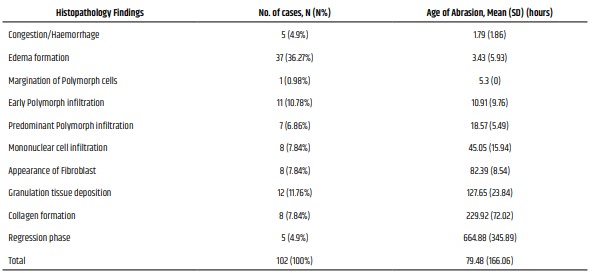
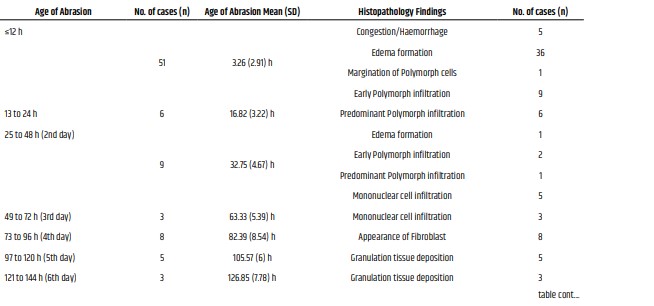
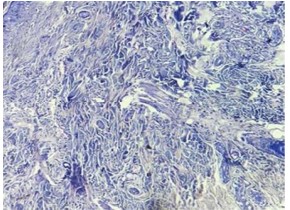
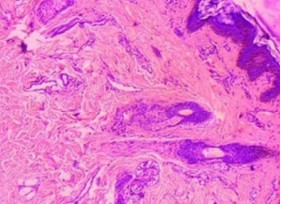
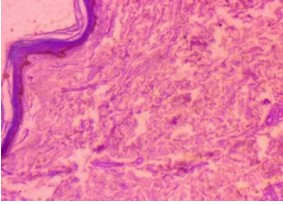
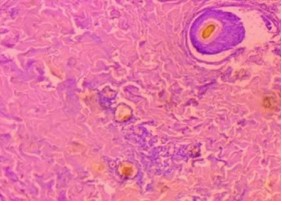
In India, abrasions are usually dated by the naked-eye observation of gross changes. Various researches consider the dating of abrasion by naked-eye examination as an uncertain and variable method. This may have signifi cant medical and legal ramifi cations. To improve the accuracy of the dating of abrasion, histopathology profi ling has been suggested. To estimate the age of abrasion by histopathology examination. This cross-sectional study was conducted from 1st January 2021 to 30th June 2022. Total 102 abrasions from subjects aged 4 to 80 years were correlated with the time frame of the occurrence of diff erent microscopic changes that follow the abrasion. Abrasions ranging from 0.02 hours to >336 hours were studied, and based on the duration of infl iction, abrasions were divided into 10 groups. The representative area of abrasion with adjacent normal skin with an underlying soft tissue of thickness 0.5 cm to 1 cm was dissected and a control sample was taken of intact skin and preserved in 10% formalin solution for fi xation. The specimen was processed, and a histopathology slide was prepared and examined. Routine haematoxylin & eosin (H&E) staining done. Van Gieson’s stain was used to confi rm the presence of collagen. Data were analysed using SPSS version 20.0 software. P<0.05 was considered signifi cant. Descriptive data were expressed as frequency; for the age group of abrasions (quantitative data), mean and SD were calculated; Pearson’s chi-square test of independence was used to compare the microscopic changes in abrasion with the age of infl iction. A signifi cant relationship was observed between the age of abrasion and histopathology fi ndings (X281=552.92, P<0.001). The reliability and accuracy of dating of abrasion increases if a histopathology examination is performed along with gross examination. To opine the age of injury accurately, the autopsy surgeon should subject the samples to histopathology examination
References
- 1. Pilling ML, Vanezis P, Perrett D, Johnston A. Visual assessment of the timing of bruising by forensic experts. Journal of forensic and legal medicine. 2010;17(3):143-149.
- 2. Simon LV, Lopez RA, King KC. Blunt force trauma. Published online 2022. https://www.ncbi.nlm.nih.gov/books/ NBK470338/
- 3. Au Y, Laforet M, Talbot K, Wang SC. Skin and wound map from 23,453 nursing home resident records: Relative prevalence study. Journal of Medical Internet Research Dermatology. 2018;20(10).
- 4. Vinay J, Harish S, Mangala GSR, Hugar BS. A study on postmortem wound dating by gross and histopathological examination of abrasions. The American Journal of Forensic Medicine and Pathology. 2017;38(2):167-173.
- 5. Siddiqui MAM, Parvathi K, Khan MT, Reddy MN. Histopathological study of blunt force injuries in relation to time since death. International Journal of Contemporary Medical Research. 2016;3(9):2780-2783.
- 6. Sharma A, Dikshit PC, Aggrawal A, Mandal AK. A postmortem study of histopathological findings to determine the age of abrasion and laceration. Journal of Forensic Medicine and Toxicology. 2010;27(1):43- 46.
- 7. Kumar L, B. V. C, Agrawal SS, Bastia BK. Age related changes in mechanical and thermal injuries - a post mortem study. Journal of Indian Academy of Forensic Medicine. 2011;33(2):149-151.
- 8. Saxena D, Nigam MK, Mishra PK, Tomar JS. Age estimation of abrasion by their colour changes. Indian journal of forensic and community medicine. 2018;5(2):114-118.
- 9. Mangeshkar A, Varghese PS. An evaluation of colour change in abrasion and its correlation to time: A cross-sectional study from a tertiary care centre. Medico-Legal Update. 2019;19:1.
- 10. Vijay Kumar A, Gowda N, Shivaramu MG, U. K. Analysis of wound dating by gross and histopathological examination-a postmortem cross-sectional study. Indian journal of forensic and community medicine. 2020;5:114-118.
- 11. Sandhu SS, Gorea RK, Gargi J, Garg A. Age estimation of injury from abrasion - a clinical study from north india. Journal of Punjab Academy of Forensic Medicine & Toxicology. 2009;9(2):76-81.
- 12. Saukko P, Knight B. Knight’s forensic pathology. In: 4th ed. CRC Press; 2016:133-165.
- 13. DiMaio VJ, Dimaio D. Forensic pathology. In: 2nd ed. CRC Press; 2001:94-98.
- 14. Betz P. Histological and enzyme histochemical parameters for the age estimation of human skin wounds. International Journal of Legal Medicine. 1994;107(2):60- 68.
- 15. Ross R, Benditt EP. Wound healing and collagen formation. I. Sequential changes in components of guinea pig skin wounds observed in the electron microscope. The Journal of biophysical and biochemical cytology. 1961;11(3):677-700.
- 16. Betz P. Pathophysiology of wound healing. In: Payne JJ, Busuttil A, Smock W, eds. Forensic Medicine Clinical and Pathological Aspects. Greenwich Medical Media Ltd; 2003:83-85
Data Sharing Statement
There are no additional data available. All raw data and code are available upon request.
Funding
This research received no funding.
Author Contributions
All authors contributed significantly to the work and approve its publication.
Ethics Declaration
This article does not involve any human or animal subjects, and therefore does not require ethics approval.
Acknowledgements
We would like to express our gratitude to the patients, their families, and all those who have contributed to this study.
Conflicts of Interest
No conflicts of interest in this work.
About this article

Cite this article
Shrivastava S, Shukla P, Singh YK, et al. Estimation of age of abrasion by histopathology examination: a cross-sectional study. Indian J Forensic Med Pathol. 2023;16(3):179-184.
Licence:
Attribution-Non-commercial 4.0 International (CC BY-NC 4.0)This license enables reusers to distribute, remix, adapt, and build upon the material in any medium or format for noncommercial purposes only, and only so long as attribution is given to the creator
| Received | Accepted | Published |
|---|---|---|
| April 06, 2023 | September 19, 2023 | September 30, 2023 |
DOI: https://doi.org/10.21088/ijfmp.0974.3383.16323.2
Keywords
AbrasionAge of abrasionsAutopsyHistopathologySearch for Similar Articles
Similar Articles
- Diatom Analysis in Thermophilic water bodies: A Study on Hot Water Springs of Ma...
- Morphometric Study of Supra-meatal Triangle and Mastoid process in the Adult dry...
- Histopathological Spectrum of Autopsy Cases: A One Year Retrospective Observatio...
- Forensic Differentiation of Manner of Death in Railway Fatalities: A FourCase Se...
- Understanding assault Patterns: A Cross-sectional study of Cases at Chri, Kelamb...
Article Level Metrics
Last UpdatedSunday 18 October 2026, 14:50:08 (IST)
16275
Accesses
41
3209
00
Citations
NA
NA
NA
Download citation
Article Keywords
Keyword Highlighting
Highlight selected keywords in the article text.
Timeline
| Received | April 06, 2023 |
| Accepted | September 19, 2023 |
| Published | September 30, 2023 |
licence
Attribution-Non-commercial 4.0 International (CC BY-NC 4.0)
This license enables reusers to distribute, remix, adapt, and build upon the material in any medium or format for noncommercial purposes only, and only so long as attribution is given to the creator