Full Text (PDF)
Indian Journal of Forensic Medicine and Pathology 18((2 Suppl)):p 175-190, April-June 2025. | DOI: https://doi.org/10.21088/ijfmp.0974.3383.18225.18
Original Article
Documentation and Preservation of the Evidences and Reconstruction of A Crime Scene using Augmented Reality, Virtual Reality and Synthetic Reality: Introducing Crime Scene DPR System Bringing the Jury to the Crime Scene
Vinny Sharma, Aditya Saini, Krishan Kumar Sharma, Nikhil Chandra Yadav, Kajol Bhati
Author Information
Licence:
Attribution-Non-commercial 4.0 International (CC BY-NC 4.0)This license enables reusers to distribute, remix, adapt, and build upon the material in any medium or format for noncommercial purposes only, and only so long as attribution is given to the creator.
Indian Journal of Forensic Medicine and Pathology 18((2 Suppl)):p 175-190, April-June 2025. | DOI: https://doi.org/10.21088/ijfmp.0974.3383.18225.18
How Cite This Article:
Saini A, Sharma KK, Yadav NC, et al. Documentation and Preservation of the Evidences & Reconstruction of A Crime Scene using Augmented Reality, Virtual Reality and Synthetic Reality: Introducing Crime Scene DPR System Bringing the Jury to the Crime Scene. Indian J Forensic Med Pathol. 2025;18(2 Suppl):175-190.Timeline
Received : June 28, 2024
Accepted : June 29, 2025
Published : June 30, 2025
Abstract
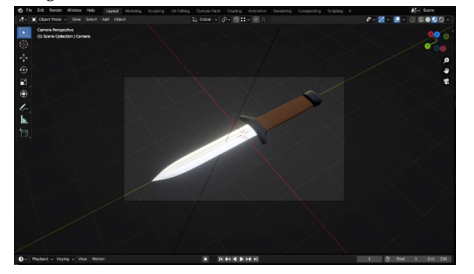
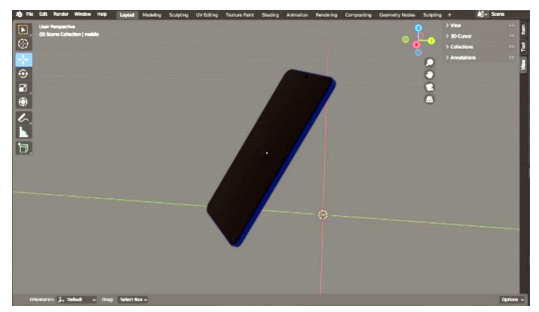
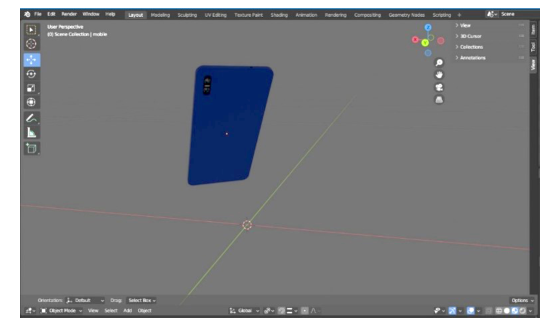
A crime scene, which is the place where a crime has occurred, is suspected of having been committed, or where evidence of a crime has been found, is an essential part of an investigation because it contains all the important details related to the crime. A careful examination of the crime scene can reveal the potential modus operandi of the criminal and establish the Corpus Delicti in court. The first visit to a crime scene is the investigator’s most crucial and often only real opportunity to observe, record, collect, and preserve evidence in its original state. Any subsequent visit holds little to no value, as the scene is usually disturbed, compromised, or altered, either intentionally or unintentionally. Thus, recording a crime became an extremely important step. The typical ways of documenting the crime scene only allow us to view the documents physically; we are unable to provide a visual or allow us to walk to the real crime scene. To help with the investigation, it is crucial to take pictures of the crime scene and any possible evidence. sophisticated user interface in which the user interacts with a real-time simulation of a world using all five senses: taste, smell, touch, hearing, and sight. A novel approach to criminal investigation that has promise for increased efficiency is the 3D reconstruction and visualization of criminal scenarios, such as assaults, collisions, and homicides. AR and VR are examples of contemporary 3D recording and processing techniques that are utilized to create an accurate and immersive virtual environment. Conversely, multiple points of view are possible while immersed in a virtual environment. Virtual reality and augmented reality are in high demand right now. Whereas Augmented Reality incorporates a real-world background, Virtual Reality presents an entirely virtualized version of the situation. Virtual reality (VR) is a kind of
References
- 1. Bestaccreditedcolleges.org. (n.d.). https:// b e s t a c c r e d i t e d c o l l e g e s . o r g / a r t i c l e s / criminology-vs-criminalistics-whatsthe-difference.html “Job Description for Forensic Laboratory Scientists”. Crime Scene Investigator EDU. 12 November 2013.
- 2. “Prosecutors just got millions of pages of Trump documents. His taxes are only the beginning”. NBC News. Retrieved 27 February 2023.
- 3. “Sections”. American Academy of Forensic Sciences. 27 August 2015. Archived from the original on 30 August 2015.
- 4. Shorter Oxford English Dictionary (6th ed.), Oxford University Press, 2007, ISBN 978-0-19- 920687-2.
- 5. “The Branches of Forensic Science - An Overview of Its Various Disciplines.” IFF Lab, 23 Feb. 2018.
- 6. Streefkerk, J.W., Houben, M., Amerongen, P.V., Haar, F.T., & Dijk, J. (2013, July). The art of csi: An augmented reality tool (art) to annotate crime scenes in forensic investigation. In International conference on virtual, augmented and mixed reality (pp. 330-339). Springer, Berlin, Heidelberg.
- 7. Breien, F.S., & Rødseth, I. (2006, October). Usability factors of 3D criminal archive in an augmented reality environment. In Proceedings of the 4th Nordic conference on Human-computer interaction: changing roles (pp. 385-388).
- 8. Sandvik, K., & Waade, A.M. (2008). Crime scene as augmented reality: On Screen, online and offline. Working Papers from Crime Fiction and Crime Journalism in Scandinavia, 5, 1-17.
- 9. Gibson, S. and Howard, T. 2000. Interactive Reconstruction of Virtual Environments from Photographs, with Application to Scene-ofCrime Analysis. (2000), 41–48.
- 10. Sandvik, K. (2010). Crime Scenes as Augmented Reality: Models for Enhancing Places Emotionally by Means of Narratives, Fictions and Virtual Reality. Re-Investing Authenticity. Tourism, Place and Emotions, 138-153.
- 11. Dath, C. (2017). Crime scenes in Virtual Reality: A user centered study
- 12. Norman, D.G., Wade, K.A., Williams, M.A., & Watson, D.G. (2020). Caught virtually lying— Crime scenes in virtual reality help to expose suspects’ concealed recognition. Journal of Applied Research in Memory and Cognition, 9(1), 118-127.
- 13. Sieberth, T., Dobay, A., Affolter, R., & Ebert, L. C. (2019). Applying virtual reality in forensics–a virtual scene walk through. Forensic Science, Medicine and Pathology, 15(1), 41-47.
- 14. “Association for Crime Scene Reconstruction”. Archived from the original on 13 December 2019. Retrieved 13 June 2012
- 15. Gardner, R., and Bevel, T. (2009). Practical Crime Scene Analysis and Reconstruction. Boca Raton, Florida: CRC Press. pp. 1. ISBN 9781420065510.
- 16. Barazzetti, L., Sala, R., Scaioni, M., Cattaneo, C., Gibelli, D., Giussani, A., Poppa, P., Roncoroni, F. and Vandone, A. 2012. 3D scanning and imaging for quick documentation of crime and accident scenes. Sensors, and Command, Control, Communications, and Intelligence (C3I) Technologies for Homeland Security and Homeland Defense XI. 8359, (2012), 1–14.
- 17. Steuer,”Defining Virtual Reality: Dimensions Determining Telepresence” (PDF). Archived from the original (PDF) on 24 May 2016. Retrieved 27 November 2018., Department of Communication, Stanford University. 15 October 1993.
- 18. Agosto, E., Ajmar, A., Boccardo, P., Tonolo, F.G. and Lingua, A. 2008. Crime scene reconstruction using a fully geomatic approach. Sensors. 8, 10 (2008), 6280–6302.
- 19. Denney, S., Knapp, B., &Ristvedt, J. (2019). The Use of Virtual Reality in Crime Scene Reconstruction and Analysis. Journal of Forensic Sciences, 64(3), 811-820.
- 20. Rossmo, K.L. (2021). Virtual and augmented reality in crime scene investigation and reconstruction. Forensic Science International: Synergy, 3, 100129.
- 21. Houle, D.F., & Muzzin, R.S. (2020). The use of synthetic reality in crime scene investigation. Journal of Forensic Sciences, 65(5), 1544-1552.
- 22. Yu, S. H., Thomson, G., Rinaldi, V., Rowland, C., & Daeid, N.N. (2023). Development of a Dundee ground truth photography protocol for recording indoor crime scenes to facilitate virtual reality reconstruction. Science & Justice.
- 23. Galanakis, G., Zabulis, X., Evdaimon, T., Fikenscher, S.E., Allertseder, S., Tsikrika, T., & Vrochidis, S. (2021). A study of 3D digitisation modalities for crime scene investigation. Forensic Sciences, 1(2), 56-85.
- 24. Engström, P. (2018, May). Virtual reality for crime scene visualization. In ThreeDimensional Imaging, Visualization, and Display 2018 (Vol. 10666, pp. 102-108). SPIE. 25. Ajah, B.O., Ajah, I.A., & Obasi, C.O. (2020).
- 25. Ajah, B.O., Ajah, I.A., & Obasi, C.O. (2020). Application of virtual reality (VR) and augmented reality (AR) in the investigation and trial of Herdsmen terrorism in Nigeria. International Journal of Criminal Justice Sciences, 15(1), 1-20.
- 26. Reichherzer, C., Cunningham, A., Coleman, T., Cao, R., McManus, K., Sheppard, D., ... & Thomas, B.H. (2021, May). Bringing the jury to the scene of the crime: Memory and decision-making in a simulated crime scene. In Proceedings of the 2021 CHI Conference on Human Factors in Computing Systems (pp. 1-12).
- 27. Acampora, G., Trinchese, P., Trinchese, R., & Vitiello, A. (2023). A Serious Mixed-Reality Game for Training Police Officers in Tagging Crime Scenes. Applied Sciences, 13(2), 1177
- 28. Sevcik, J., Adamek, M., & Mach, V. (2022, July). Crime scene testimony in virtual reality applicability assessment. In 2022 26th International Conference on Circuits, Systems, Communications and Computers (CSCC) (pp. 6-10). IEEE.
- 29. Breien, F.S., & Rødseth, I. (2006, October). Usability factors of 3D criminal archive in an augmented reality environment. In Proceedings of the 4th Nordic conference on Human-computer interaction: changing roles (pp. 385-388).
- 30. Conway, A., James, J.I., & Gladyshev, P. (2015, October). Development and initial user evaluation of a Virtual Crime Scene Simulator including digital evidence. In International Conference on Digital Forensics and Cyber Crime (pp. 16-26). Springer, Cham.
- 31. Datcu, D., Lukosch, S.G., & Lukosch, H.K. (2016, November). Handheld augmented reality for distributed collaborative crime scene investigation. In Proceedings of the 19th International Conference on Supporting Group Work (pp. 267-276).
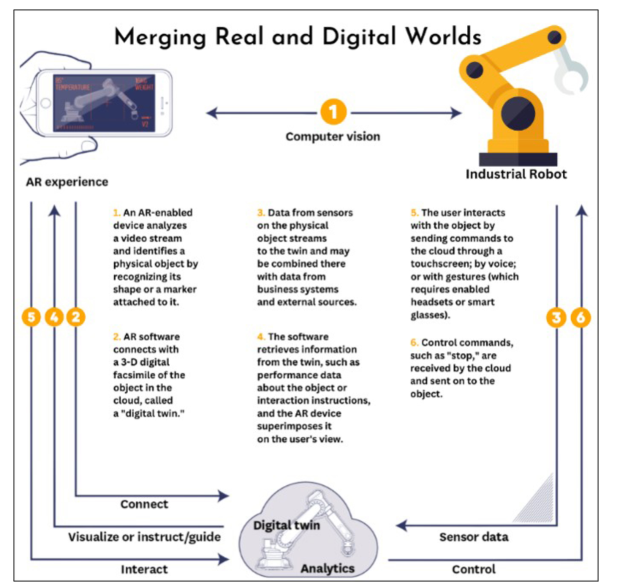
- 32. How does augmented reality work? Harvard Business Review. (2021, July 14). Retrieved September 2, 2022, from https://hbr. org/2017/11/how-does-augmented-realitywork#:~:text=Augmented%20reality%20 starts%20with%20a,which%20analyzes%20 the%20video%20stream.
Data Sharing Statement
There are no additional data available. All raw data and code are available upon request.
Funding
This research received no funding.
Author Contributions
All authors contributed significantly to the work and approve its publication.
Ethics Declaration
This article does not involve any human or animal subjects, and therefore does not require ethics approval.
Acknowledgements
We would like to express our gratitude to the patients, their families, and all those who have contributed to this study.
Conflicts of Interest
No conflicts of interest.
About this article

Cite this article
Saini A, Sharma KK, Yadav NC, et al. Documentation and Preservation of the Evidences & Reconstruction of A Crime Scene using Augmented Reality, Virtual Reality and Synthetic Reality: Introducing Crime Scene DPR System Bringing the Jury to the Crime Scene. Indian J Forensic Med Pathol. 2025;18(2 Suppl):175-190.
Licence:
Attribution-Non-commercial 4.0 International (CC BY-NC 4.0)This license enables reusers to distribute, remix, adapt, and build upon the material in any medium or format for noncommercial purposes only, and only so long as attribution is given to the creator.
| Received | Accepted | Published |
|---|---|---|
| June 28, 2024 | June 29, 2025 | June 30, 2025 |
DOI: https://doi.org/10.21088/ijfmp.0974.3383.18225.18
Keywords
Crime SceneReconstructionAugmented RealityVirtual Reality3D CapturingSearch for Similar Articles
Similar Articles
- Diatom Analysis in Thermophilic water bodies: A Study on Hot Water Springs of Ma...
- Morphometric Study of Supra-meatal Triangle and Mastoid process in the Adult dry...
- Histopathological Spectrum of Autopsy Cases: A One Year Retrospective Observatio...
- Forensic Differentiation of Manner of Death in Railway Fatalities: A FourCase Se...
- Understanding assault Patterns: A Cross-sectional study of Cases at Chri, Kelamb...
Article Level Metrics
Last UpdatedSunday 18 October 2026, 16:54:52 (IST)
16282
Accesses
108
3209
00
Citations
NA
NA
NA
Download citation
Article Keywords
Keyword Highlighting
Highlight selected keywords in the article text.
Timeline
| Received | June 28, 2024 |
| Accepted | June 29, 2025 |
| Published | June 30, 2025 |
licence
Attribution-Non-commercial 4.0 International (CC BY-NC 4.0)
This license enables reusers to distribute, remix, adapt, and build upon the material in any medium or format for noncommercial purposes only, and only so long as attribution is given to the creator.