Full Text (PDF)
Indian Journal of Forensic Medicine and Pathology 18((2 Suppl)):p 162-174, April-June 2025. | DOI: https://doi.org/10.21088/ijfmp.0974.3383.18225.17
Original Article
Forensic Footwear Comparison: Leveraging AI Tools for Enhanced Analysis
Vinny Sharma, Rashi Verma, Ranjeet Kr. Singh, Manjeet Kumar
Author Information
Licence:
Attribution-Non-commercial 4.0 International (CC BY-NC 4.0)This license enables reusers to distribute, remix, adapt, and build upon the material in any medium or format for noncommercial purposes only, and only so long as attribution is given to the creator.
Indian Journal of Forensic Medicine and Pathology 18((2 Suppl)):p 162-174, April-June 2025. | DOI: https://doi.org/10.21088/ijfmp.0974.3383.18225.17
How Cite This Article:
Verma R, Sharma V, Singh RK, et al. Forensic Footwear Comparison: Leveraging AI Tools for Enhanced Analysis. Indian J Forensic Med Pathol. 2025;18(2 Suppl):162-174.Timeline
Received : May 06, 2024
Accepted : June 21, 2024
Published : June 30, 2025
Abstract
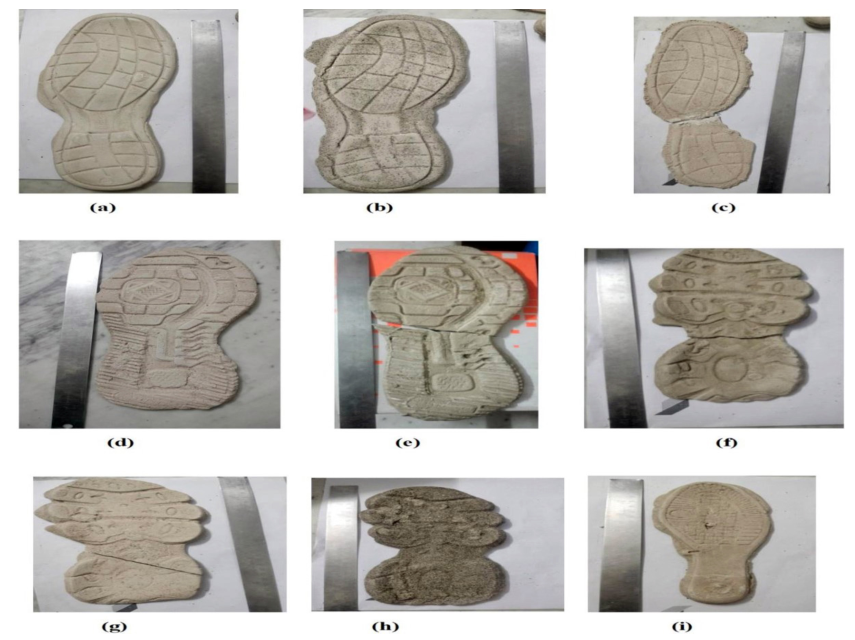
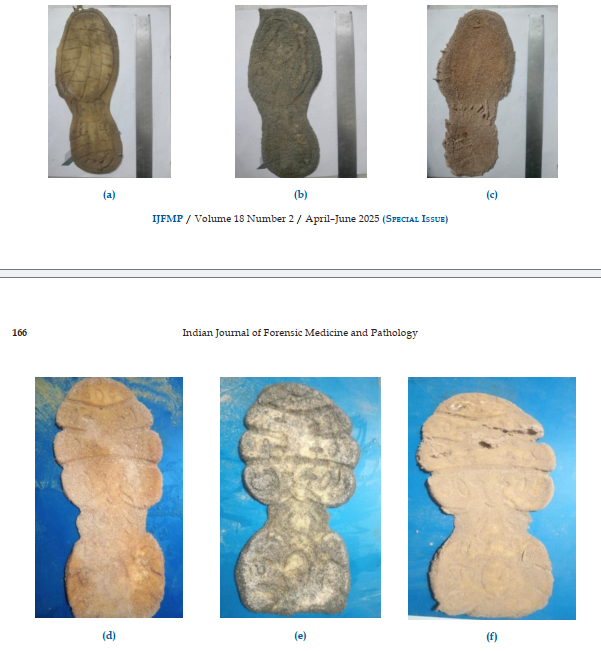
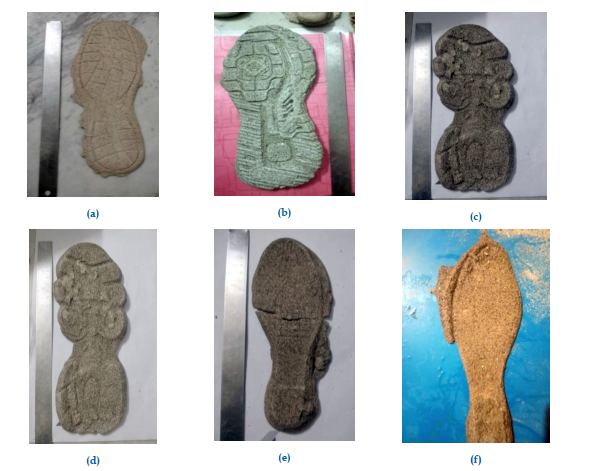
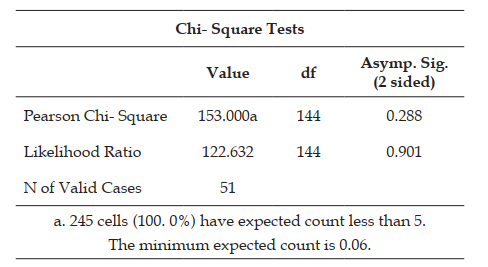
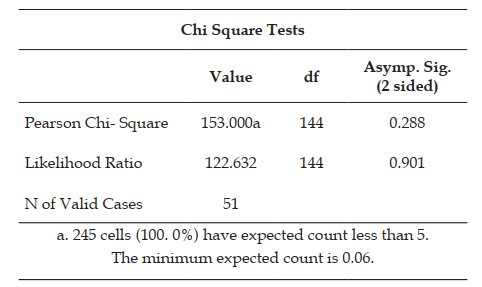
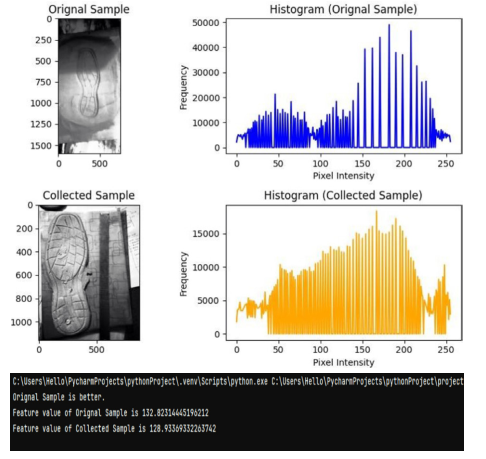
Footwear impressions serve as a crucial type of evidence in forensic investigations, effectively linking suspects to crime scenes with remarkable accuracy. This research explores the efficacy of three widely utilized casting materials - Plaster of Paris, Latex Rubber, and Dental Stone when applied to various soil types. Additionally, the study examines the impact of artificial intelligence (AI) in enhancing the analysis of these impressions. The main objectives were to investigate footwear impressions differ across diverse surfaces, identify which casting material captures the most precise details, and evaluate whether AI tools can provide more dependable comparisons than traditional visual inspection. Digital images of both the original and cast impressions were analyzed using an AI algorithm that included grayscale conversion and histogram analysis. Statistical technique chi-square tests, indicated significant differences based on the type of surface and material used. The findings revealed that original impressions exhibited superior clarity and detail compared to cast impressions. This study highlights the necessity of careful material selection and the incorporation of AI to enhance accuracy and reliability in the forensic examination of footwear impressions.
References
- 1. Miller M.T. Crime scene investigation. In: Forensic science. CRC Press; 2002. pp. 143-64.
- 2. Srihari SN. Analysis of footwear impression evidence. US DoJ Report; 2011.
- 3. Tang Y., Srihari S.N., Kasiviswanathan H., Corso J.J. Footwear print retrieval system for real crime scene marks. In: Computational Forensics: 4th International Workshop, IWCF 2010, Tokyo, Japan, November 11-12, 2010, Revised Selected Papers 4. Springer Berlin Heidelberg; 2011. pp. 88-100.
- 4. Larsen H.J., Bennett M.R. Recovery of 3D footwear impressions using a range of different techniques. J Forensic Sci. 2021; 66(3): 1056-64.
- 5. Halim M.I.A., Imran I.H., Sabri A.S.A., Mahat M.M., Karim U.K.A., Subri M.S.M. Forensic investigation to retrieve 3D shoe impression: A review. J Adv Res Appl Sci Eng Technol. 2024; 37(2):104-12.
- 6. Bodziak W.J. Footwear impression evidence: detection, recovery and examination. CRC Press; 2017.
- 7. David A.M. First impressions: Footprints as forensic evidence in crime in fact and fiction. Costume. 2019; 53(1): 43-66.
- 8. Cummins, K. (2010). The rise of additive manufacturing. The Engineer.
- 9. Kate, C. (2010). The rise of additive manufacturing: The Engineer. Centaur Communications Ltd Wells Point.
- 10. Bennett M.R., Huddart D., Gonzalez S.Preservation and analysis of three-dimensional footwear evidence in soils: the application of optical laser scanning. In: Ritz K, Dawson L, Miller D, editors.
- 11. British Brodcast Corporation. Plymouth Argyle youth player murder trial used 3D-printed bottle. BBC.
- 12. Scott C. 3D Printed skulls presented as evidence in murder trial, in a first for the British Legal System,
- 13. Tang, Y., Srihari, S.N., Kasiviswanathan, H., & Corso, J.J. (2011). Footwear print retrieval system for real crime scene marks
- 14. Goulermas, J., & Liatsis, P. Incorporating gradient estimations in a circle-finding probabilistic hough transform. Pattern Analysis and Applications.
- 15. Petraco, N., Sherman, H., Dumitra, A., & Roberts, M. (2016). Casting of 3-dimensional footwear prints in snow with foam blocks. \
- 16. Akarte M.M., Ravi B. Casting product– process–producer compatibility evaluation and improvement. Int J Prod Res. 2007; 45(21): 4917-36.
- 17. James T. Evidence collection & detection of footwear impression.
- 18. Naples V.L., Miller J.S. Making tracks: the forensic analysis of footprints and footwear impressions. Anat Rec B New Anat. 2004; 279(1): 9-15.
- 19. Keglevic M., Wilhelm S., Sablatnig R. Impress: A forensic footwear impression dataset. In: 9th International Conference on Imaging for Crime Detection and Prevention (ICDP-2019). IET; 2019. p. 99-104.
Data Sharing Statement
There are no additional data available. All raw data and code are available upon request.
Funding
This research received no funding.
Author Contributions
All authors contributed significantly to the work and approve its publication.
Ethics Declaration
This article does not involve any human or animal subjects, and therefore does not require ethics approval.
Acknowledgements
We would like to express our gratitude to the patients, their families, and all those who have contributed to this study.
Conflicts of Interest
No conflicts of interest in this work.
About this article

Cite this article
Verma R, Sharma V, Singh RK, et al. Forensic Footwear Comparison: Leveraging AI Tools for Enhanced Analysis. Indian J Forensic Med Pathol. 2025;18(2 Suppl):162-174.
Licence:
Attribution-Non-commercial 4.0 International (CC BY-NC 4.0)This license enables reusers to distribute, remix, adapt, and build upon the material in any medium or format for noncommercial purposes only, and only so long as attribution is given to the creator.
| Received | Accepted | Published |
|---|---|---|
| May 06, 2024 | June 21, 2024 | June 30, 2025 |
DOI: https://doi.org/10.21088/ijfmp.0974.3383.18225.17
Keywords
Footwear ImpressionForensic AnalysisCasting MaterialsPlaster of ParisLatex RubberDental StoneSoil SurfaceArtificial IntelligenceImage ComparisonCrime Scene EvidenceSearch for Similar Articles
Similar Articles
- Diatom Analysis in Thermophilic water bodies: A Study on Hot Water Springs of Ma...
- Morphometric Study of Supra-meatal Triangle and Mastoid process in the Adult dry...
- Histopathological Spectrum of Autopsy Cases: A One Year Retrospective Observatio...
- Forensic Differentiation of Manner of Death in Railway Fatalities: A FourCase Se...
- Understanding assault Patterns: A Cross-sectional study of Cases at Chri, Kelamb...
Article Level Metrics
Last UpdatedSunday 18 October 2026, 15:53:16 (IST)
16279
Accesses
81
3209
00
Citations
NA
NA
NA
Download citation
Article Keywords
Keyword Highlighting
Highlight selected keywords in the article text.
Timeline
| Received | May 06, 2024 |
| Accepted | June 21, 2024 |
| Published | June 30, 2025 |
licence
Attribution-Non-commercial 4.0 International (CC BY-NC 4.0)
This license enables reusers to distribute, remix, adapt, and build upon the material in any medium or format for noncommercial purposes only, and only so long as attribution is given to the creator.