Full Text (PDF)
Indian Journal of Forensic Medicine and Pathology 19(2):p 247-254, April - June 2026. | DOI: https://doi.org/10.21088/ijfmp.0974.3383.19226.18
Case Report
Analysis of Death Due to Pulmonary Embolism, a Case Series
Sujay V.K.,, Prateek Rastogi, Pavanchand Shetty H., Deepa Adiga S.A, Sunita Hegde, Sruti S. Gunturi, B. Suresh Kumar Shetty
Author Information
Licence:
Attribution-Non-commercial 4.0 International (CC BY-NC 4.0)This license enables reusers to distribute, remix, adapt, and build upon the material in any medium or format for noncommercial purposes only, and only so long as attribution is given to the creator.
Indian Journal of Forensic Medicine and Pathology 19(2):p 247-254, April - June 2026. | DOI: https://doi.org/10.21088/ijfmp.0974.3383.19226.18
How Cite This Article:
Prateek Rastogi, Sujay V.K., Pavanchand Shetty H., et al. Analysis of Death Due to Pulmonary Embolism, a Case Series. Indian J Forensic Med Pathol. 2026; 19(2): 247-254.Timeline
Received : February 04, 2026
Accepted : April 07, 2026
Published : June 30, 2026
Abstract
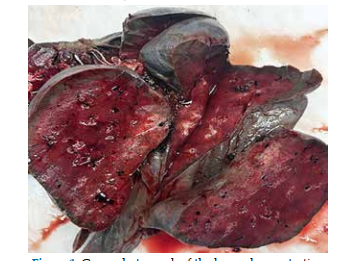
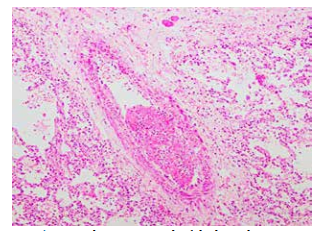
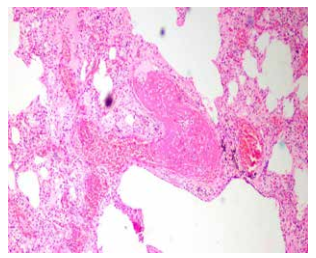
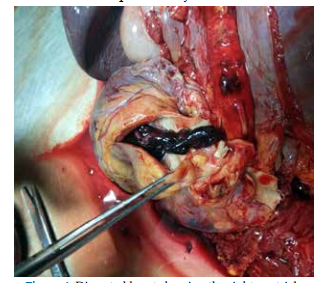
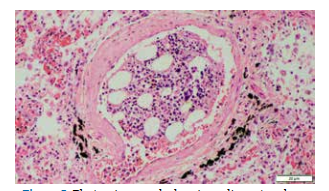
Introduction: This autopsybased case series analyzes six fatalities resulting from pulmonary, fat, and amniotic fluid embolism, highlighting their clinical presentations, pathological features, and diagnostic challenges. Case Report: This study included six medicolegal autopsy cases in which death was attributable to embolic phenomena. The presence of antemortem thrombi, fat globules with bone marrow elements, or fetal squames was used as confirmatory evidence of pulmonary, fat, and amniotic fluid embolism, respectively. Findings were correlated with premortem symptoms for diagnosis. Pulmonary thromboembolism was identified in two adults, they developed sudden dyspnea, tachycardia, or hypotension prior to collapse, and autopsy consistently revealed firm antemortem thrombi within the pulmonary trunk or arterial branches. Fat embolism was confirmed in two males; histology demonstrated fat globules and bone marrow elements in the pulmonary arteries. Two postpartum females died suddenly after delivery and both demonstrated classic features of amniotic fluid embolism, including fetal squames and microthrombi within pulmonary vessels. Conclusion: Across all patients, mechanisms of death included massive pulmonary arterial obstruction, hypoxia, rightheart strain, and disseminated intravascular coagulation. Amniotic fluid embolism and fat embolism typically manifest with nonspecific signs and sudden deterioration, limiting laboratory-based diagnosis during life. Thus, autopsybased histopathology continues to serve as the definitive diagnostic method for amniotic fluid embolism and fat embolism. Improved early recognition, appropriate thromboprophylaxis, timely stabilization of fractures, and rapid multidisciplinary management in obstetric emergencies are essential to reduce mortality and medicolegal burden associated with these embolic syndromes.
References
- 1. Freund Y., Cohen-Aubart F., Bloom B. Acute pulmonary embolism: A review. JAMA. 2022; 328(13): 1336–1345. doi:10.1001/ jama.2022.16815.
- 2. Goldhaber SZ, Bounameaux H. Pulmonary embolism and deep vein thrombosis. Lancet. 2012; 379(9828): 1835–1846. doi:10.1016/S0140- 6736(12)60574-6. Prateek Rastogi, Sujay V.K., Pavanchand Shetty H., et al. Analysis of Death Due to Pulmonary Embolism, a Case Series.254 Indian Journal of Forensic Medicine and Pathology IJFMP/Volume 19 Number 2 April–June 2026
- 3. International statistical classification of diseases and related health problems, 10th revision (ICD-10). Geneva: World Health Organization; 2019. Chapter IX: Diseases of the circulatory system (I00–I99). Code I26: Pulmonary embolism.
- 4. Lapner S.T., Kearon C. Diagnosis and management of pulmonary embolism. BMJ. 2013; 346: f757. pp. 1–9. doi:10.1136/bmj.f757.
- 5. Kakkar N., Vasishta R.K. Pulmonary embolism in medical patients: an autopsy-based study. Clin Appl Thromb Hemost. 2008; 14(2): 159–167. doi:10.1177/1076029607308389. Available from: http://cath.sagepub.com
- 6. Gong D.Y., Liu X.F., Huang F.J. Clinical feature analysis of fatal pulmonary thromboembolism: experiences from 41 autopsy-confirmed cases. Eur Rev Med Pharmacol Sci. 2013; 17: 701–706.
- 7. Christensen M.R., Larsen A.B., Boel L.W.T. Autopsy characteristics of deaths due to pulmonary thromboembolism in northern and western Denmark: a 10-year retrospective study. Forensic Sci Med Pathol. 2025; 21: 640– 646.
- 8. Bergqvist D., Lindblad B. A 30-year survey of pulmonary embolism verified at autopsy: an analysis of 1274 surgical patients. Br J Surg. 1985; 72(2): 105–108.
- 9. Lucena J., Rico A., Vazquez R., Marin R., Martínez C., Salguero M., Miguel L. Pulmonary embolism and sudden–unexpected death: prospective study on 2477 forensic autopsies performed at the Institute of Legal Medicine in Seville. J Forensic Leg Med. 2009; 16(4): 196–201.
- 10. Theilade J., Winkel B.G., Holst A.G., TfeltHansen J., Svendsen J.H., Haunsø S. A nationwide, retrospective analysis of symptoms, comorbidities, medical care and autopsy findings in cases of fatal pulmonary embolism in younger patients. J Thromb Haemost. 2010; 8(8): 1723–1729
- 11. Habashi N.M., Andrews P.L., Scalea T.M. Therapeutic aspects of fat embolism syndrome. Injury. 2006; 37 Suppl 4: S68–S73.
- 12. Bajuri M.Y., Johan R.R., Shukur H. Two variants of fat embolism syndrome evolving in a young patient with multiple fractures. BMJ Case Rep. 2013; 2013: bcr2013008631. doi:10.1136/bcr- 2013-008631
- 13. Rudinská L.I., Delongová P., Vaculová J., Iannaccone S.F., Ihnát P. Fulminant pulmonary fat embolism – undetected silent killer. J Forensic Leg Med. 2025; 114: 102918.
- 14. Shin S.W., Goncalves B.S., Seabra L.M., Coelho H.A., Sansoni T.M., Calderan TRA, et al. Atypical presentation of fat embolism syndrome: A case report. Trauma Case Rep. 2025; 56: 101150
- 15. Yan X., Wu S., Zeng W., Kong J. Fat embolism syndrome caused by fracture or liposuction: a retrospective case series of nine patients. Ann Med. 2025; 57(1): 2447427. doi:10.1080/078538 90.2024.2447427.
- 16. Morena D., Scopetti M., Padovano M., Turillazzi E., Fineschi V. Fat embolism: a systematic review to facilitate the development of standardised procedures in pathology. Histopathology. 2025; 86(6): 845–861. doi:10.1111/his.15355.
- 17. Chatzaraki V., Heimer J., Thali M.J., Ampanozi G., Schweitzer W. Approaching pulmonary fat embolism on postmortem computed tomography. Int J Legal Med. 2019; 133(6): 1879–1887
- 18. Qi M., Zhou H., Yi Q., Wang M., Tang Y. Pulmonary CT imaging findings in fat embolism syndrome: case series and literature review. Clin Med (Lond). 2023;23(1):88–93.
- 19. Cao X., Gui Q., Yan H., Wei Y., Chen X., Liang D., et al. A retrospective analysis of the incidence and risk factors for amniotic fluid embolism in cesarean deliveries. BMC Pregnancy Childbirth. 2025; 25: 432.
- 20. Society for Maternal-Fetal Medicine (SMFM), Pacheco L.D., Saade G., et al. Amniotic fluid embolism: diagnosis and management. Am J Obstet Gynecol. 2016; 215(5): B16–24.
- 21. Ghosh S., Kulkarni S., Nambier P., Davade T. Amniotic fluid embolism: pathophysiological insights through analysis of case series. J Obstet Gynecol India. 2025; 75(Suppl 1): S616–S618. doi:10.1007/s13224-024-02057-6.
- 22. Pranjic M., Borovac B., Juric T., Klaric M. Amniotic fluid embolism and uterine atony— two case reports and a literature review. Wien Med Wochenschr. 2025. doi:10.1007/s10354-025- 01101-y.
- 23. Fong A., Chau C.T., Pan D., Ogunyemi DA. Amniotic fluid embolism: antepartum, intrapartum and demographic factors. J Matern Fetal Neonatal Med. 2
Data Sharing Statement
There are no additional data available. All raw data and code are available upon request.
Funding
This research received no funding.
Author Contributions
All authors contributed significantly to the work and approve its publication.
Ethics Declaration
This article does not involve any human or animal subjects, and therefore does not require ethics approval.
Acknowledgements
We would like to express our gratitude to the patients, their families, and all those who have contributed to this study."
Conflicts of Interest
No conflicts of interest in this work.
About this article

Cite this article
Prateek Rastogi, Sujay V.K., Pavanchand Shetty H., et al. Analysis of Death Due to Pulmonary Embolism, a Case Series. Indian J Forensic Med Pathol. 2026; 19(2): 247-254.
Licence:
Attribution-Non-commercial 4.0 International (CC BY-NC 4.0)This license enables reusers to distribute, remix, adapt, and build upon the material in any medium or format for noncommercial purposes only, and only so long as attribution is given to the creator.
| Received | Accepted | Published |
|---|---|---|
| February 04, 2026 | April 07, 2026 | June 30, 2026 |
DOI: https://doi.org/10.21088/ijfmp.0974.3383.19226.18
Keywords
AutopsyAmniotic fluidEmbolismFatThrombusSearch for Similar Articles
Similar Articles
- Diatom Analysis in Thermophilic water bodies: A Study on Hot Water Springs of Ma...
- Morphometric Study of Supra-meatal Triangle and Mastoid process in the Adult dry...
- Histopathological Spectrum of Autopsy Cases: A One Year Retrospective Observatio...
- Forensic Differentiation of Manner of Death in Railway Fatalities: A FourCase Se...
- Understanding assault Patterns: A Cross-sectional study of Cases at Chri, Kelamb...
Article Level Metrics
Last UpdatedSunday 18 October 2026, 08:54:00 (IST)
16253
Accesses
120
3204
00
Citations
NA
NA
NA
Download citation
Article Keywords
Keyword Highlighting
Highlight selected keywords in the article text.
Timeline
| Received | February 04, 2026 |
| Accepted | April 07, 2026 |
| Published | June 30, 2026 |
licence
Attribution-Non-commercial 4.0 International (CC BY-NC 4.0)
This license enables reusers to distribute, remix, adapt, and build upon the material in any medium or format for noncommercial purposes only, and only so long as attribution is given to the creator.