Full Text (PDF)
Indian Journal of Forensic Medicine and Pathology 19(2):p 223-235, April - June 2026. | DOI: https://doi.org/10.21088/ijfmp.0974.3383.19226.15
Original Article
Drone: A Smart Intelligent Framework Aiding Forensic Investigations
Sahil Sharma, Mahak null, Sahil Deswal, Jaskaran Singh, Ananya G.
Author Information
Licence:
Attribution-Non-commercial 4.0 International (CC BY-NC 4.0)This license enables reusers to distribute, remix, adapt, and build upon the material in any medium or format for noncommercial purposes only, and only so long as attribution is given to the creator.
Indian Journal of Forensic Medicine and Pathology 19(2):p 223-235, April - June 2026. | DOI: https://doi.org/10.21088/ijfmp.0974.3383.19226.15
How Cite This Article:
Mahak, Sahil Deswal, Jaskaran Singh et al. Drone: A Smart Intelligent Framework Aiding Forensic Investigations. Indian J Forensic Med Pathol. 2026; 19(2): 223-235Timeline
Received : December 01, 2025
Accepted : March 05, 2026
Published : June 30, 2026
Abstract
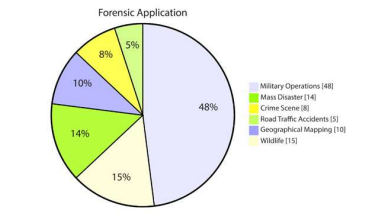
UAV’s (Unmanned Aerial Vehicles) named Drones are playing significant role in the field of forensic sciences. Primarily, the utilization of these drones for crime scene investigation is served lot of forensic charm. Furthermore, its application in diverse fields of forensic sciences is efficiently yielding importance for criminal investigation. In this review an attempt has been made to portray applicability of forensic drones in various disciplines of forensic science such as photogrammetry, CSI, proactive forensics.
References
- 1. Montasari, R., Jahankhani, H., Hill, R., & Parkinson, S. (Eds.). (2021). Digital forensic investigation of Internet of Things (IoT) devices. Springer.
- 2. Mendis, N.D.N.A., Dharmarathne, T.S.S., & Wanasinghe, N.C. (2017). Use of unmanned aerial vehicles in crime scene investigationsnovel concept of crime scene investigations. Forensic Res Criminol Int J, 4(1), 1-2.
- 3. Fust, P., & Loos, J. (2020). Development perspectives for the application of autonomous, unmanned aerial systems (UASs) in wildlife conservation. Biological Conservation, 241, 108380.
- 4. Srivastava, S., Gupta, S., Dikshit, O., & Nair, S. (2020). A review of UAV regulations and policies in India. Proceedings of UASG 2019: Unmanned Aerial System in Geomatics 1, 315-325.
- 5. Rajagopalan, R.P., & Krishna, R. (2019). India’s Drone Policy: Domestic and Global Imperatives. ICAO Scientific Review: Analytics and Management Research, 1, 53-68
- 6. Pastor, E., Lopez, J., & Royo, P. (2006, October). A hardware/software architecture for UAV payload and mission control. In 2006 ieee/aiaa 25TH Digital Avionics Systems Conference (pp. 1-8). IEEE.
- 7. Yaacoub, J.P., Noura, H., Salman, O., & Chehab, A. (2020). Security analysis of drones systems: Attacks, limitations, and recommendations. Internet of Things, 11, 100218.
- 8. Hassanalian, M., & Abdelkefi, A. (2017). Classifications, applications, and design challenges of drones: A review. Progress in Aerospace Sciences, 91, 99-131.
- 9. Al-Dhaqm, A., Ikuesan, R.A., Kebande, V.R., Razak, S., & Ghabban, F.M. (2021). Research challenges and opportunities in drone forensics models. Electronics, 10(13), 1519.
- 10. Atkinson, S., Carr, G., Shaw, C., & Zargari, S. (2021). Drone forensics: the impact and challenges. Digital Forensic Investigation of Internet of Things (IoT) Devices, 65-124. Mahak, Sahil Deswal, Jaskaran Singh et al. Drone: A Smart Intelligent Framework Aiding Forensic Investigations.234 Indian Journal of Forensic Medicine and Pathology IJFMP/Volume 19 Number 2 April–June 2026
- 11. Udeanu, G., Dobrescu, A., & Oltean, M. (2016). Unmanned aerial vehicle in military operations. Sci. Res. Educ. Air Force, 18(1), 199-206.
- 12. Wall, T., & Monahan, T. (2011). Surveillance and violence from afar: The politics of drones and liminal security-scapes. Theoretical criminology, 15(3), 239-254.
- 13. Islam, S.M. (2023). Drones on the Rise: Exploring the Current and Future Potential of UAVs. arXiv preprint arXiv:2304.13702.
- 14. Krátky, M., Minařík, V., Šustr, V., & Ivan, J. (2020). Electronic Warfare Methods Combatting UAVs. Advances in Science, Technology and Engineering Systems Journal, 5(6), 447-454.
- 15. Cattneo, C., De Angelis, D., & Grandi, M. (2006). Mass disasters. Forensic anthropology and medicine: complementary sciences from recovery to cause of death, 431-443.
- 16. Spranger, M., Heinke, F., Becker, S., & Labudde, D. (2016). Towards drone-assisted large-scale disaster response and recovery. In Proceedings of International Conference on Advances in Computation, Communication and Services (pp. 5-10).
- 17. Mishra, V., Dedhia, H., & Wavhal, S. (2015). Application of drones in the investigation and management of a crime scene. Forensic Sci, 4(4), 1-2.
- 18. Georgiou, A., Masters, P., Johnson, S., & Feetham, L. (2022). UAV‐assisted real-time evidence detection in outdoor crime scene investigations. Journal of forensic sciences, 67(3), 1221-1232.
- 19. Thiruchelvam, I.V., Jegatheswaran, R., Juremi, J.B., & Puat, H.A.M. (2021). Crime Scene Reconstruction Based on a Suitable Software: A Comparison Study. Journal of Engineering Science and Technology, 266-283.
- 20. Engberts, B., & Gillissen, E. (2016). Policing from above: Drone use by the police. The future of drone use: Opportunities and threats from ethical and legal perspectives, 93-113.
- 21. Škorput, P., Mandžuka, S., Gregurić, M., & Vrančić, M.T. (2020). Applying Unmanned Aerial Vehicles (UAV) in traffic investigation process. In New Technologies, Development and Application II 5 (pp. 401-405). Springer International Publishing.
- 22. Amin, M., Abdullah, S., Abdul Mukti, S.N., Mohd Zaidi, M.H.A., & Tahar, K.N. (2020). Reconstruction of 3d Accident Scene From Multirotor Uav Platform. International Archives of the Photogrammetry, Remote Sensing & Spatial Information Sciences, 43.
- 23. Ruffell, A., Lally, A., & Rocke, B. (2021). Dronar—Geoforensic Search Sonar from a Drone. Forensic Sciences, 1(3), 202-212.
- 24. Paba, R., Moniz, R., & Magni, P.A. (2023). Optimizing underwater visual records for crime scene investigations in water with clear to reduced visibility. Forensic Science International: Synergy, 6.
- 25. Grzyb, L., & Gazda, K. (2024). Uav forensics. Cybersecurity & Cybercrime, 1(4), 195–212. https://doi.org/10.5604/01.3001.0054.7105
- 26. Nair, R., Gayakwad, H., Mahida, D.K., Podiya, B., & Patel, A.M. (2024). Drone Forensics (pp. 99–123). Informa. https://doi. org/10.1201/9781003386926-6
- 27. Adel, A., & Jan, T. (2024). Watch the Skies: A Study on Drone Attack Vectors, Forensic Approaches, and Persisting Security Challenges. Future Internet, 16(7), 250. https:// doi.org/10.3390/fi16070250.
- 28. Zhao, Z., Wang, Y., & Liao, G. (2024). Digital Forensic Research for Analyzing Drone and Mobile Device: Focusing on DJI Mavic 2 Pro. Drones, 8(7), 281. https://doi.org/10.3390/ drones8070281
- 29. 2Editya, A.S., Kurniati, N., Alamin, M.M., Pramana, A.L., & Lisdiyanto, A. (2024). Forensic Analysis of Drones Attacker Detection Using Deep Learning. Scientific Journal of Informatics. https://doi.org/10.15294/sji. v11i1.48183
- 30. Lee, S., Seo, H., & Kim, D. (2023). Digital Forensic Research for Analyzing Drone Pilot: Focusing on DJI Remote Controller. 23. https://doi.org/10.3390/s23218934
- 31. Almusayli, A., Zia, T.A., & Qazi, E.H. (2024). Drone Forensics: An Innovative Approach to the Forensic Investigation of Drone Accidents Based on Digital Twin Technology. Technologies (Basel). https://doi. org/10.3390/technologies12010011
- 32. Alotaibi, F., Al-Dhaqm, A., & Al-Otaibi, Y. D. (2023). A Conceptual Digital Forensic Investigation Model Applicable to the Drone Forensics Field. https://doi.org/10.48084/ etasr.6195
- 33. Alotaibi, F., Al-Dhaqm, A., Al-Otaibi, Y.D., & Alsewari, A.R.A. (2022). A Comprehensive Collection and Analysis Model for the Drone Forensics Field. Sensors, 22(17), 6486. https:// doi.org/10.3390/s22176486235 IJFMP/Volume 19 Number 2 April–June 2026
- 34. Studiawan, H., Pratomo, B.A., & Ahmad, T. (2023). Anomaly Detection on Drone Forensic Timeline with Sigma Rules. 1–5. https://doi. org/10.1109/ESCI56872.2023.10100018
- 35. Chaudhary, N. (2024). Digital Forensic Investigation of a Damaged Drone: A Case Study (pp. 443–455). Springer International Publishing. https://doi.org/10.1007/978-981- 99-9531-8_36
- 36. Nayak, S.C., Samanthula, B.K., & Tiwari, V. (2023). Investigating Drone Data Recovery Beyond the Obvious Using Digital Forensics. 0254–0260. https://doi.org/10.1109/ uemcon59035.2023.10315995
- 37. Taylor, A. (2023). A Digital Forensics Case Study of the DJI Mini 3 Pro and DJI RC. arXiv.Org, abs/2309.10487. https://doi. org/10.48550/arxiv.2309.10487
- 38. A Comparative Study of Drone Forensic Tools and Techniques. (2023). https://doi. org/10.1109/idciot56793.2023.10053530
- 39. Editya, A.S., Ahmad, T., & Studiawan, H. (2024). Visual Instruction Tuning for Drone Accident Forensics. HighTech and Innovation Journal, 5(4), 870–884. https://doi.org/10.28991/hij- 2024-05-04-01
Data Sharing Statement
There are no additional data available. All raw data and code are available upon request.
Funding
This research received no funding.
Author Contributions
All authors contributed significantly to the work and approve its publication.
Ethics Declaration
This article does not involve any human or animal subjects, and therefore does not require ethics approval.
Acknowledgements
We would like to express our gratitude to the patients, their families, and all those who have contributed to this study.
Conflicts of Interest
No conflicts of interest in this work.
About this article

Cite this article
Mahak, Sahil Deswal, Jaskaran Singh et al. Drone: A Smart Intelligent Framework Aiding Forensic Investigations. Indian J Forensic Med Pathol. 2026; 19(2): 223-235
Licence:
Attribution-Non-commercial 4.0 International (CC BY-NC 4.0)This license enables reusers to distribute, remix, adapt, and build upon the material in any medium or format for noncommercial purposes only, and only so long as attribution is given to the creator.
| Received | Accepted | Published |
|---|---|---|
| December 01, 2025 | March 05, 2026 | June 30, 2026 |
DOI: https://doi.org/10.21088/ijfmp.0974.3383.19226.15
Keywords
DronesUnmanned aerial vehiclesPhotogrammetryProactive forensicsSearch for Similar Articles
Similar Articles
- Diatom Analysis in Thermophilic water bodies: A Study on Hot Water Springs of Ma...
- Morphometric Study of Supra-meatal Triangle and Mastoid process in the Adult dry...
- Histopathological Spectrum of Autopsy Cases: A One Year Retrospective Observatio...
- Forensic Differentiation of Manner of Death in Railway Fatalities: A FourCase Se...
- Understanding assault Patterns: A Cross-sectional study of Cases at Chri, Kelamb...
Article Level Metrics
Last UpdatedSunday 18 October 2026, 10:56:38 (IST)
16257
Accesses
83
3205
00
Citations
NA
NA
NA
Download citation
Article Keywords
Keyword Highlighting
Highlight selected keywords in the article text.
Timeline
| Received | December 01, 2025 |
| Accepted | March 05, 2026 |
| Published | June 30, 2026 |
licence
Attribution-Non-commercial 4.0 International (CC BY-NC 4.0)
This license enables reusers to distribute, remix, adapt, and build upon the material in any medium or format for noncommercial purposes only, and only so long as attribution is given to the creator.