Full Text (PDF)
Indian Journal of Forensic Medicine and Pathology 17(3):p 191-196, July- September 2024. | DOI: https://doi.org/10.21088/ijfmp.0974.3383.17324.6
Original Article
Diatomological Study on Water Bodies in Bengaluru City, India
Don Caeiro, Shristi Aich, Mayank David Raiborde, Nandini Katare, Ravi Kumar, Pratik Singh
Author Information
Licence:
Attribution-Non-commercial 4.0 International (CC BY-NC 4.0)This license enables reusers to distribute, remix, adapt, and build upon the material in any medium or format for noncommercial purposes only, and only so long as attribution is given to the creator.
Indian Journal of Forensic Medicine and Pathology 17(3):p 191-196, July- September 2024. | DOI: https://doi.org/10.21088/ijfmp.0974.3383.17324.6
How Cite This Article:
Caeiro D, Aich S, Raiborde MD, et al. Diatomological Study on Water Bodies in Bengaluru City, India. Indian J Forensic Med Pathol. 2024;17(3):191-196.Timeline
Received : July 02, 2024
Accepted : August 25, 2024
Published : September 25, 2024
Abstract
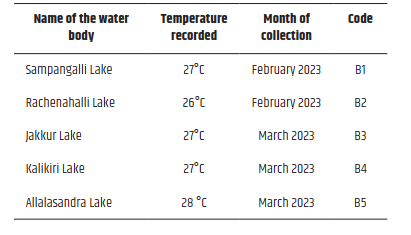
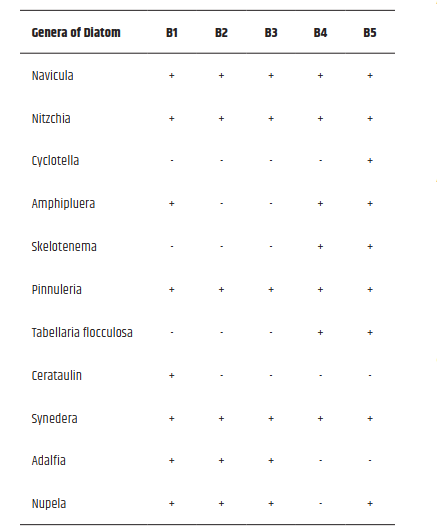
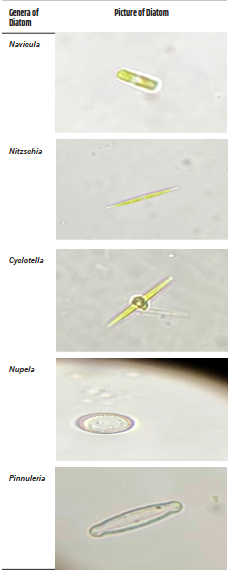
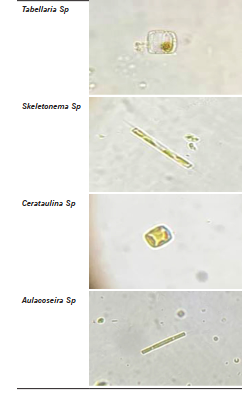
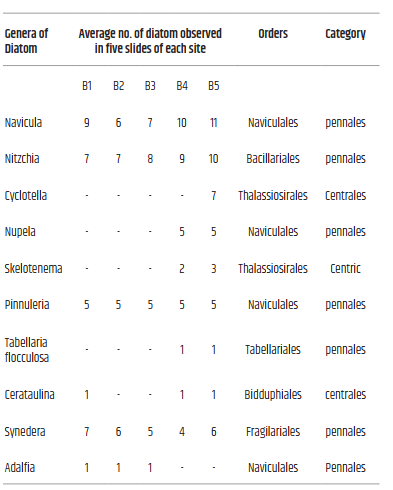
Context: Unicellular algae called diatoms are typically found in aquatic environments and are frequently used in forensic science as a method to pinpoint the exact moment and place of drowning deaths. The creation of a diatom species database for Bangalore city that may be utilized in forensic investigations is presented in this paper. Light microscopy was used to examine the diatom population in a total of five water samples from diverse aquatic habitats in Bangalore. A database was made utilizing the information used to identify and classify the different diatom species based on their morphology. A list of the diatom species discovered in each water sample may be found in the database. Analyzing the diatom population in five test samples taken from recognisable places in Bangalore served to confirm the database. The findings demonstrate that the database is accurate and trustworthy for classifying diatom species in Bangalore’s aquatic settings. Forensic investigators can utilize the diatom species database created in this study to pinpoint the place and timing of drowning fatalities in Bangalore city. Forensic investigators can pinpoint the site of a drowning and offer crucial evidence in court by comparing the diatom species identified in a drowning victim’s lungs and other tissues with the diatom species in the database. The database may also be utilized in Bangalore city for ecological research and evaluations of the water quality. Aims: To examine the diatom population in a total of five water samples from diverse aquatic habitats in Bangalore. Settings and Design: Study Location: Bangalore city, India, Sample Collection: Five water samples obtained from diverse aquatic habitats. Methodology: Light microscopy used to examine and classify diatom species based on morphology. Database Development: Compilation of identified diatom species to create a comprehensive database. Validation: Analysis of diatom populations in test samples confirms accuracy and reliability of the database for forensic and ecological applications. Material and Methods: Light microscopy was used to examine the diatom population in a total of five water samples from diverse aquatic habitats in Bangalore. A database was made utilizing the information used to identify and classify the different diatom species based on their morphology. Results: A list of the diatom species discovered in each water sample may be found in the database. Analyzing the diatom population in five test samples taken from recognisable places in Bangalore served to confirm the database. Conclusion: The findings demonstrate that the database is accurate and trustworthy for classifying diatom species in Bangalore’s aquatic settings.
References
- 1. Thakar MK, Singh R. (2010) Diatomological mapping of water bodies for the diagnosis of drowning cases. J Forensic Leg Med. https://doi.org/10.1016/j. jflm.2009.07.016.
- 2. Falciatore A, Bowler C. (2002) Revealing the molecular secrets of marine diatoms. Annu Rev Plant Biol. https:// doi.org/10.1146/annurev. arplant.53.091701.153921.
- 3. Horton BP, Boreham S, Hillier C. (2006) The development and application of a diatom-based quantitative reconstruction technique in forensic science. J Forensic Sci. https://doi.org/10.1111/ j.1556-4029.2006.00120.x.
- 4. Murulidhar VN, Murthy VNY. (2014) Distribution and ecology of diatom communities in four lakes using Lange-Bertalot method. I ntJCur rM icrobiolAppS ci 3:539–548.
- 5. Meera DS, Alakananda B, Ramachandra TV. (2010) Ecology and Distribution of Diatoms in Bangalore Lakes. 22:.
- 6. Magrey AH, Raj M. (2014) Role of diatoms in forensic diagnosis of drowning cases from Jammu & Kashmir, India. Biosci Biotechnol Res Commun 7:
- 7. Zhao J, Ma Y, Liu C, Wen J, Hu S, Shi H, Zhu L. (2016) A quantitative comparison analysis of diatoms in the lung tissues and the drowning medium as an indicator of drowning. J Forensic Leg Med. https://doi.org/10.1016/j. jflm.2016.05.021.
- 8. Levkov Z, Williams DM, Nikolovska D, Tofilovska S, Cakar Z. (2017) The use of diatoms in forensic science: advantages and limitations of the diatom test in cases of drowning. The Archaeological and Forensic Applications of Microfossils: A Deeper Understanding of Human History. https://doi. org/10.1144/tms7.14.
- 9. Lunetta P, Modell JH. Forensic pathology reviews. 2005. Accessed 12 Jul 2024.
- 10. Dolinak D, Matshes E, Lew E. (2005) Forensic pathology: principles and practice.
- 11. Uitdehaag S, Dragutinovic A, Kuiper I. (2010) Extraction of diatoms from (cotton) clothing for forensic comparisons. Forensic Sci Int. https://doi.org/10.1016/j. forsciint.2010.03.039.
- 12. Seckbach, Joseph; Kociolek JP. (2011) Cellular Origin, Life in Extreme Habitats and Astrobiology - The Diatom World. Springer.
- 13. Hildebrand M, Davis AK, Smith SR, Traller JC, Abbriano R. (2012) The place of diatoms in the biofuels industry. Biofuels. https://doi. org/10.4155/BFS.11.157.
- 14. Wang JK, Seibert M. (2017) Prospects for commercial production of diatoms. Biotechnol Biofuels. https://doi.org/10.1186/ s13068-017-0699-y.
- 15. Mishra V, Mishra MK, Gupta AK, Mishra MK. (2017) Identification of Diatoms on the Basis of Anatomical Pattern of Valve & Girdle View & its Forensic Significance.
- 16. Dhariwal A, Mishra PK, Babu S. (2021) Diatomological Study of Different Water Bodies of Bhopal, The City of Lakes. J Forensic Sci & Criminal Inves. https://doi.org/10.19080/ JFSCI.2021.15.555912.
Data Sharing Statement
There are no additional data available. All raw data and code are available upon request.
Funding
This research received no funding.
Author Contributions
All authors contributed significantly to the work and approve its publication.
Ethics Declaration
This article does not involve any human or animal subjects, and therefore does not require ethics approval.
Acknowledgements
We would like to express our gratitude to the patients, their families, and all those who have contributed to this study.
Conflicts of Interest
No conflicts of interest in this work.
About this article

Cite this article
Caeiro D, Aich S, Raiborde MD, et al. Diatomological Study on Water Bodies in Bengaluru City, India. Indian J Forensic Med Pathol. 2024;17(3):191-196.
Licence:
Attribution-Non-commercial 4.0 International (CC BY-NC 4.0)This license enables reusers to distribute, remix, adapt, and build upon the material in any medium or format for noncommercial purposes only, and only so long as attribution is given to the creator.
| Received | Accepted | Published |
|---|---|---|
| July 02, 2024 | August 25, 2024 | September 25, 2024 |
DOI: https://doi.org/10.21088/ijfmp.0974.3383.17324.6
Keywords
DiatomsUnicellular AlgaeDrowningForensic ScienceSearch for Similar Articles
Similar Articles
- Diatom Analysis in Thermophilic water bodies: A Study on Hot Water Springs of Ma...
- Morphometric Study of Supra-meatal Triangle and Mastoid process in the Adult dry...
- Histopathological Spectrum of Autopsy Cases: A One Year Retrospective Observatio...
- Forensic Differentiation of Manner of Death in Railway Fatalities: A FourCase Se...
- Understanding assault Patterns: A Cross-sectional study of Cases at Chri, Kelamb...
Article Level Metrics
Last UpdatedMonday 19 October 2026, 10:54:43 (IST)
16327
Accesses
34
3215
00
Citations
NA
NA
NA
Download citation
Article Keywords
Keyword Highlighting
Highlight selected keywords in the article text.
Timeline
| Received | July 02, 2024 |
| Accepted | August 25, 2024 |
| Published | September 25, 2024 |
licence
Attribution-Non-commercial 4.0 International (CC BY-NC 4.0)
This license enables reusers to distribute, remix, adapt, and build upon the material in any medium or format for noncommercial purposes only, and only so long as attribution is given to the creator.