Full Text (PDF)
Indian Journal of Forensic Medicine and Pathology 17(3):p 197-200, July- September 2024. | DOI: https://doi.org/10.21088/ijfmp.0974.3383.17324.7
Original Article
Dermatoglyphic Study of Diabetic Patients and Non-Diabetic Population using Thin Layer Chromatography as an Analytical Tool
Author Information
Licence:
Attribution-Non-commercial 4.0 International (CC BY-NC 4.0)This license enables reusers to distribute, remix, adapt, and build upon the material in any medium or format for noncommercial purposes only, and only so long as attribution is given to the creator.
Indian Journal of Forensic Medicine and Pathology 17(3):p 197-200, July- September 2024. | DOI: https://doi.org/10.21088/ijfmp.0974.3383.17324.7
How Cite This Article:
Saha S, Babu GR. Dermatoglyphic Study of Diabetic Patients and Non-Diabetic Population using Thin Layer Chromatography as an Analytical Tool. Indian J Forensic Med Pathol. 2024;17(3):197-200.Timeline
Received : April 12, 2024
Accepted : August 03, 2024
Published : September 30, 2024
Abstract
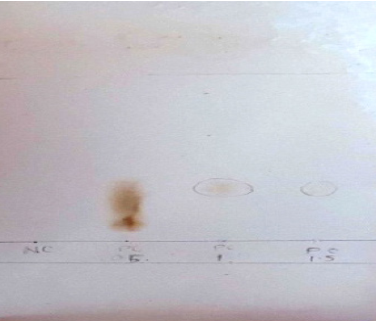
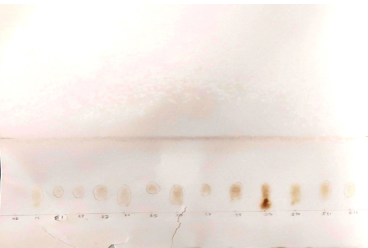
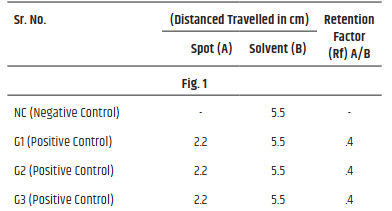
Background: Fingerprint analysis is one of the most robust biometric feature in terms of personal identification is concerned. But with the progression of science through research and development, fingerprint science is no longer considered as a potential biometric tool only. It has various other insights to it and our this study will reflect the same. Diabetes being of the most prevalent clinical condition among human population, has been considered as sample for the study. The latent dermatoghyphic analysis of diabetic individuals will depict significant results as compared to the normal individual and hence will be able to provide as a valuable disease marker. Method: Thin Layer Chromatographic technique has been used for this study and it was conducted at the Presidency University, Kolkata. 12 diabetic individual samples along with non-diabetic, positive (In 3 different dilutions) and negative control samples were run. The samples were prepared in a specific technique and the results were also taken after a specific heat treatment of the TLC plates. Rf values were measured for all the samples. Result: In case of positive control samples there were significant brownish-rust spots which were also consistent in diabetic individuals. On the other hand in case of negative control and non-diabetic individuals the spots were not visible on the plate. Conclusion: Latent dermatoglyphic prints (finger-print) of diabetic population were taken for our major subject sample and compared with non-diabetic individual using Thin Layer Chromatography (TLC) to indicate the presence of glucose in the body. This study reveals the presence of the target molecule “glucose” in diabetic individuals which was not visible in case of non-diabetic individual. The detection of diabetes is possible through latent dermatoglyphic analysis even when the sweat residues are present in challenging amount and that too through a prick-free method. Hence, our study can provide a significant diagnostic tool for diabetic individuals.
References
- 1. Ashwitha C Belludi, et al. Dermatoglyphics: A Noninvasive Diagnostic Tool in Predicting Class III Skeletal Malocclusion in Children Int J Clin Pediatr Dent. 2021 Jan-Feb; :)1(14 69–63.
- 2. Kuno Y. Human perspiration. Springfield (IL): Charles C. Thomas Publisher; 1956. [Google Scholar.
- 3. Kuno Y. Variations in secretory activity of human sweat glands. Lancet. 1938;1:299–303. [Google Scholar.
- 4. Sato K, Kang WH, Saga K, et al. Biology of sweat glands and their disorders. I. Normal sweat gland function. J Am Acad Dermatol. 1989;20(4):537–563. [PubMed [Google Scholar.
- 5. Taylor NA, MachadoMoreira CA. Regional variations in transepidermal water loss, eccrine sweat gland density, sweat secretion rates and electrolyte composition in resting and exercising humans. Extrem Physiol Med. 2013;2(1):4. [PMC free article [PubMed [Google Scholar.
- 6. Lindsay B. Baker Physiology of sweat gland function: The roles of sweating and sweat composition in human health Temperature (Austin). 2019; 6(3): 211–259.
- 7. Sani Audu Ali , Ojuolape Rafat Abdulraheem , Taiwo E. Alemika et al. Phytochemical screening and identification of compounds in the leaves of Callitris glauca (Cupresseceae) Research Journal of Pharmaceutical, Biological and Chemical Sciences ISSN: 0975-8585 April – June 2011 Volume 2 Issue 2.
- 8. R. D. Olsen, The Chemical Composition of Palmar Sweat. Fingerprint and Identification Magazine 53 (10) (1972) 3-23.
- 9. S. Bramble, Separation of Latent Fingermark Residue by Thin-Layer Chromatography. Journal of Forensic Sciences 40 (6) (1995) 969-975.
- 10. K. Bobev, Fingerprints and factors affecting their conditions. Journal of Forensic Identification 45 (1995) 176-183.
Data Sharing Statement
There are no additional data available.
Funding
This research received no funding.
Author Contributions
All authors contributed significantly to the work and approve its publication.
Ethics Declaration
This article does not involve any human or animal subjects, and therefore does not require ethics approval.
Acknowledgements
The analytical process was conducted in Presidency University, Kolkata and the authors would like to convey gratitudes for all the assistance provided by the University for this study.
Conflicts of Interest
The authors declare no conflict of interest for this research study.
About this article

Cite this article
Saha S, Babu GR. Dermatoglyphic Study of Diabetic Patients and Non-Diabetic Population using Thin Layer Chromatography as an Analytical Tool. Indian J Forensic Med Pathol. 2024;17(3):197-200.
Licence:
Attribution-Non-commercial 4.0 International (CC BY-NC 4.0)This license enables reusers to distribute, remix, adapt, and build upon the material in any medium or format for noncommercial purposes only, and only so long as attribution is given to the creator.
| Received | Accepted | Published |
|---|---|---|
| April 12, 2024 | August 03, 2024 | September 30, 2024 |
DOI: https://doi.org/10.21088/ijfmp.0974.3383.17324.7
Keywords
Dermatoglyphic patternDiabetesThin Layer ChromatographySearch for Similar Articles
Similar Articles
- Diatom Analysis in Thermophilic water bodies: A Study on Hot Water Springs of Ma...
- Morphometric Study of Supra-meatal Triangle and Mastoid process in the Adult dry...
- Histopathological Spectrum of Autopsy Cases: A One Year Retrospective Observatio...
- Forensic Differentiation of Manner of Death in Railway Fatalities: A FourCase Se...
- Understanding assault Patterns: A Cross-sectional study of Cases at Chri, Kelamb...
Article Level Metrics
Last UpdatedSunday 18 October 2026, 12:29:05 (IST)
16263
Accesses
40
3205
00
Citations
NA
NA
NA
Download citation
Article Keywords
Keyword Highlighting
Highlight selected keywords in the article text.
Timeline
| Received | April 12, 2024 |
| Accepted | August 03, 2024 |
| Published | September 30, 2024 |
licence
Attribution-Non-commercial 4.0 International (CC BY-NC 4.0)
This license enables reusers to distribute, remix, adapt, and build upon the material in any medium or format for noncommercial purposes only, and only so long as attribution is given to the creator.