Full Text (PDF)
Indian Journal of Forensic Medicine and Pathology 17(1):p 43-50, January-March 2024. | DOI: https://doi.org/10.21088/ijfmp.0974.3383.17124.7
Original Article
Detection of Gunshot Residue on Glass Fired using Airguns and Insas LMG 5.56mm
Author Information
Licence:
Attribution-Non-commercial 4.0 International (CC BY-NC 4.0)This license enables reusers to distribute, remix, adapt, and build upon the material in any medium or format for noncommercial purposes only, and only so long as attribution is given to the creator.
Indian Journal of Forensic Medicine and Pathology 17(1):p 43-50, January-March 2024. | DOI: https://doi.org/10.21088/ijfmp.0974.3383.17124.7
How Cite This Article:
Mane M, Rajiv A. Detection of Gunshot Residue on Glass Fired using Airguns and Insas LMG 5.56mm. Indian J Forensic Med Pathol. 2024;17(1):43-50.Timeline
Received : January 17, 2024
Accepted : March 26, 2024
Published : March 29, 2024
Abstract
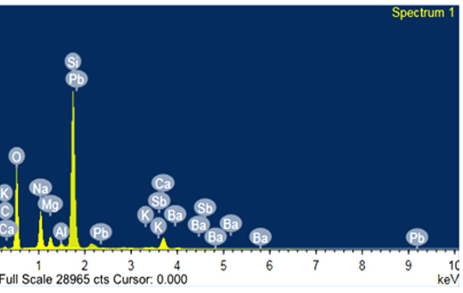
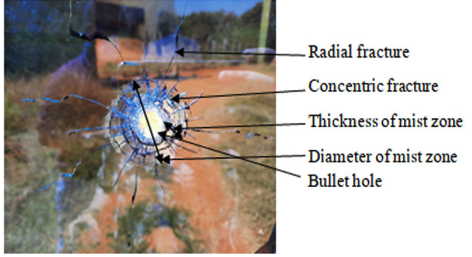
Locating and retrieving gunshot residue from the scene of the crimeis important for the investigation of shooting-related crime incidents. The presence of gunshot residue on the glass that can be hit as anintermediate target is occasional but not collected commonly because of its nature and the amount found on the glass. They may be found in crimes such as shooting where the target involves windowpanes or windshields among many other shooting related incidents. It is indicative that gunshot residues provide an exemplary source of partially burnt, completely burnt, and unburnt residues of primers and propellants that can help establish the manufacturer’s details. Gunshot residues are deposited on the hands, face, and clothing of the shooter and are commonly found on the entry hole of the targets. These residues can be recovered from the surface of intermediate targets through which the bullet travels. Detection of gunshot residue from these intermediate targets can be useful for forensic investigation. They can be promising in absence of other pieces of evidence such as cartridge cases, bullets, or firearms. The current study was performed to explore the detection of gunshot residue on glasses fired at 25 metres range. Lead, barium, and antimony were successfully detected on all samples fired at 25 metres range. The analysis provided consistent evidence that gunshot residue detected can be helpful to obtain reliable data for forensic investigation. The statistical analysis of the data revealed a significant difference in the diameter of entry, number of radial fractures, diameter and thickness of mist zone with types of glass.
References
- 1. Maitre M, Kirkbride KP, Horder M, Roux C, Beavis A. Current perspectives in the interpretation of gunshot residues in forensic science: A review. Forensic Sci Int [Internet]. 2017; 270:1–11. Available from: http://dx.doi. org/10.1016/j.forsciint.2016.09.003.
- 2. P. Waghmare N, Gupta K, Naik J. Toothpaste Pattern: A Distinctive Feature of an 8 mm Bullet Fired through a Glass Target. Arab J Forensic Sci Forensic Med [Internet]. 2019;1(10):1427–32. Available from: http://dx.doi.org/10. 26735/16586794.2019.033.
- 3. Sharma BK, Shukla VK, Rath A, Philip SA. Effect of 0.32 caliber bullets on fiberglass at various firing distances and determination of range of firing from the fracture patterns on fiberglass. Int J Innov Technol Explor Eng. 2019;8(9):2160–6.
- 4. Santos A, Magalhães T, Vieira DN, Almeida AA, Sousa A V. Firing distance estimation through the analysis of the gunshot residue deposit pattern around the bullet entrance hole by inductively coupled plasma-mass spectrometry: An experimental study. Am J Forensic Med Pathol. 2007;28(1):24–30.
- 5. Sharma SP, Lahiri SC. A preliminary investigation into the use of FTIR microscopy as a probe for the identification of bullet entrance holes and the distance of firing. Sci Justice [Internet]. 2009;49(3):197–204. Available from: http://dx.doi.org/10.1016/j.scijus. 2008.07.002.
- 6. Harshey A, Das T, Srivastava A. Analytical contributions of lanthanide based metal-organic frame works as luminescent markers: Recent trends in gunshot residue analysis. Microchem J [Internet]. 2020;154:104597. Available from: https://doi.org/10.1016/j.microc. 2020.104597.
- 7. Harshey A, Srivastava A, Das T, Nigam K, Shrivastava R, Yadav VK. Trends in Gunshot Residue Detection by Electrochemical Methods for Forensic Purpose. J Anal Test [Internet]. 2021;5(3):258–69. Available from: https:// doi.org/10.1007/s41664-020-00152-x.
- 8. Rouxel T, Sanglebœuf JC, Guin JP, Keryvin V, Soraru GD. Surface Damage Resistance of Gel-Derived Oxycarbide Glasses: Hardness, Toughness, and Scratchability. J Am Ceram Soc. 2001; 84(10):2220–4.
- 9. Jalanti T, Henchoz P, Gallusser A, Bonfanti MS. First Meeting of the European Academy of Forensic Sciences, Lausanne, Switzerland, 1997: The persistence of gunshot residue on shooters’ hands. Sci Justice - J Forensic Sci Soc. 1999;39(1):48–52.
- 10. Stefanopoulos PK, Filippakis K, Soupiou OT, Pazarakiotis VC. Wound ballistics of firearm-related injuries-Part 1: Missile characteristics and mechanisms of soft tissue wounding. Int J Oral Maxillofac Surg [Internet]. 2014;43(12):1445–58. Available from: h t t p : / / d x . d o i . o r g / 1 0 . 1 0 1 6 / j . i j o m . 2014.07.013.
- 11. Harshey A, Srivastava A, Yadav VK, Nigam K, Kumar A, Das T. Analysis of glass fracture pattern made by.177 (4.5 mm) Caliber air rifle. Egypt J Forensic Sci. 2017;7(20):1–8.
- 12. Sahu KI, Kennao P,. AKG, Saran V, Waghmare NP. Study of 9mm Improvised Pistol Pattern and Gunshot Residue with respect to Different Range. Int J Comput Sci Eng. 2018;6(5):155–60.
- 13. Saverio Romolo F, Margot P. Identification of gunshot residue: A critical review. Forensic Sci Int. 2001;119(2):195– 211.
- 14. Matoso RI, Freire AR, De Mello Santos LS, Junior ED, Rossi AC, Prado FB. Comparison of gunshot entrance morphologies caused by.40-caliber Smith & Wesson,.380-caliber, and 9-mm Luger bullets: A finite element analysis study. PLoS One. 2014;9(10).
- 15. Lucas N, Brown H, Cook M, Redman K, Condon T, Wrobel H, et al. A study into the distribution of gunshot residue particles in the random population. Forensic Sci Int [Internet]. 2016;262:150–5. Available from: http:// dx.doi.org/10.1016/j.forsciint.2016.02.050.
- 16. Zeichner A, Glattstein B. Recent developments in the methods of estimating shooting distance. Scientific WorldJournal. 2002;2:573–85.
- 17. Laza D, Nys B, Kinder J De, Kirsch-De Mesmaeker A, Moucheron C. Development of a quantitative LC-MS/ MS method for the analysis of common propellant powder stabilizers in gunshot residue. J Forensic Sci. 2007;52(4):842–50.
- 18. Fojtasek L, Vacínová J, Kolář P, Kotrlý M. Distribution of GSR particles in the surroundings of shooting pistol. Forensic Sci Int. 2003;132(2):99–105.
- 19. Doty KC, Lednev IK. Raman spectroscopy for forensic purposes: Recent applications for serology and gunshot residue analysis. TrAC - Trends Anal Chem [Internet]. 2018;103:215–22. Available from: https://doi.org/10.1016/j. trac.2017.12.003.
- 20. Dalby O, Butler D, Birkett JW. Analysis of gunshot residue and associated materials - A review. J Forensic Sci. 2010; 55(4):924–43.
- 21. Chohra M, Beladel B, Baba Ahmed L, Mouzai M, Akretche D, Zeghdaoui A, et al. Study of gunshot residue by NAA and ESEM/EDX using several kinds of weapon and ammunition. J Radiat Res Appl Sci [Internet]. 2015;8(3):404–10. Available from: http://dx.doi.org/10.1016/j.jrras. 2015.02.012
- 22. López-López M, Alvarez-Llamas C, Pisonero J, García-Ruiz C, Bordel N. An exploratory study of the potential of LIBS for visualizing gunshot residue patterns. Forensic Sci Int. 2017;273:124– 31.
- 23. Phermpornsagul Y, Arepornrat S, Na Ayuthaya WP, Khaenamkaew P. A Comparative Study of SEM-EDX and ICPMS Detection Based on Gunshot Residue Originated from AK-47 and M16 Rifles. Am J Appl Sci. 2020;17(1):69–82.
- 24. Gandy L, Najjar K, Terry M, Bridge C. A novel protocol for the combined detection of organic, inorganic gunshot residue. Forensic Chem [Internet]. 2018;8 (December):1–10. Available from: https:// doi.org/10.1016/j.forc.2017.12.009.
- 25. Seyfang KE, Lucas N, Popelka-Filcoff RS, Kobus HJ, Redman KE, Kirkbride KP. Methods for analysis of glass in glasscontaining gunshot residue (gGSR) particles. Forensic Sci Int [Internet]. 2019;298:359–71. Available from: https:// doi.org/10.1016/j.forsciint.2019.03.019.
- 26. Greely D, Weber E. Transfer and Distribution of Gunshot Residue through Glass Windows. J Forensic Sci. 2017;62(4):869–73.
- 27. Barrera V, Fliss B, Panzer S, Bolliger SA. Gunshot residue on dark materials: a comparison between infrared photography and the use of an alternative light source. Int J Legal Med. 2019; 133(4):1115–20.
- 28. Bueno J, Halámková L, Rzhevskii A, Lednev IK. Raman microspectroscopic mapping as a tool for detection of gunshot residue on adhesive tape. Anal Bioanal Chem. 2018;410(28):7295–303.
- 29. Agarwal S. Comparison of Difference in Blackening obtained from a Country made Pistol of 7.65mm at different Ranges. Int J Res Appl Sci Eng Technol. 2019;7(10):36–42.
- 30. Blakey LS, Sharples GP, Chana K, Birkett JW. Fate and Behavior of Gunshot Residue—A Review. J Forensic Sci. 2018;63(1):9–19.
- 31. Brooks EK. Statistical Assessment of the Significance of Fracture Fits in Trace Evidence. West Virginia Univ Thesis. 2020;
- 32. Rosengarten H, Israelsohn O, Pasternak Z. The risk of inter-stub contamination during SEM/EDS analysis of gunshot residue particles. Forensic Sci Int [Internet]. 2021;323:110756. Available from: https:// doi.org/10.1016/j.forsciint.2021.110756.
Data Sharing Statement
There are no additional data available.
Funding
This research received no funding.
Author Contributions
All authors contributed significantly to the work and approve its publication.
Ethics Declaration
This article does not involve any human or animal subjects, and therefore does not require ethics approval.
Acknowledgements
The authors are grateful to the Corps of Military Police, Bengaluru, Karnataka, India for their cooperation to conduct this study.
Conflicts of Interest
The authors report no conflicts of interest in this work.
About this article

Cite this article
Mane M, Rajiv A. Detection of Gunshot Residue on Glass Fired using Airguns and Insas LMG 5.56mm. Indian J Forensic Med Pathol. 2024;17(1):43-50.
Licence:
Attribution-Non-commercial 4.0 International (CC BY-NC 4.0)This license enables reusers to distribute, remix, adapt, and build upon the material in any medium or format for noncommercial purposes only, and only so long as attribution is given to the creator.
| Received | Accepted | Published |
|---|---|---|
| January 17, 2024 | March 26, 2024 | March 29, 2024 |
DOI: https://doi.org/10.21088/ijfmp.0974.3383.17124.7
Keywords
Scene of crimeIntermediate targetGlassGunshot residueGlass fractureSearch for Similar Articles
Similar Articles
- Diatom Analysis in Thermophilic water bodies: A Study on Hot Water Springs of Ma...
- Morphometric Study of Supra-meatal Triangle and Mastoid process in the Adult dry...
- Histopathological Spectrum of Autopsy Cases: A One Year Retrospective Observatio...
- Forensic Differentiation of Manner of Death in Railway Fatalities: A FourCase Se...
- Understanding assault Patterns: A Cross-sectional study of Cases at Chri, Kelamb...
Article Level Metrics
Last UpdatedMonday 19 October 2026, 15:57:29 (IST)
16344
Accesses
22
3216
00
Citations
NA
NA
NA
Download citation
Article Keywords
Keyword Highlighting
Highlight selected keywords in the article text.
Timeline
| Received | January 17, 2024 |
| Accepted | March 26, 2024 |
| Published | March 29, 2024 |
licence
Attribution-Non-commercial 4.0 International (CC BY-NC 4.0)
This license enables reusers to distribute, remix, adapt, and build upon the material in any medium or format for noncommercial purposes only, and only so long as attribution is given to the creator.