Full Text (PDF)
Indian Journal of Forensic Medicine and Pathology 17(1):p 37-42, January-March 2024. | DOI: https://doi.org/10.21088/ijfmp.0974.3383.17124.6
Original Article
Estimating Sexual Dimorphism using Anthropometric measurements of Permanent Dentition
Kashmira Kusumkant Dhote, Jyotish Guria, Ashim Mishra
Author Information
Licence:
Attribution-Non-commercial 4.0 International (CC BY-NC 4.0)This license enables reusers to distribute, remix, adapt, and build upon the material in any medium or format for noncommercial purposes only, and only so long as attribution is given to the creator.
Indian Journal of Forensic Medicine and Pathology 17(1):p 37-42, January-March 2024. | DOI: https://doi.org/10.21088/ijfmp.0974.3383.17124.6
How Cite This Article:
Dhote KK, Guria J, Mishra A. Estimating Sexual Dimorphism using Anthropometric measurements of Permanent Dentition. Indian J Forensic Med Pathol. 2024;17(1):37-42.Timeline
Received : January 16, 2024
Accepted : March 20, 2024
Published : March 29, 2024
Abstract
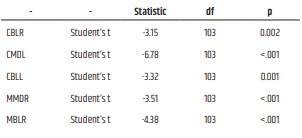
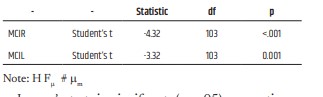
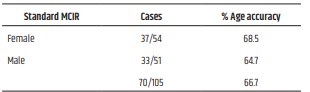
Context: The ability to determine the sex of an unknown person is extremely useful because it narrows the search to nearly half of the population. Teeth are excellent choice for identification since they are resistant to putrefaction and are well protected anatomically. Aims: The study is aimed at presence of sexual dimorphism in different tooth measurements in the lower jaw. Settings and Design: Cross sectional study Methods and Material: The study was conducted on 51 male and 54 female participants. Exclusion criteria for the subjects were: Dental caries, Crowded or excessive spacing in the anterior teeth, Orthodontic treatment, Occlusal abnormalities, Any trauma to lower jaw. Measurements were taken clinically using geometric divider and digital callipers. Odontometric dimensions included in the study taken from the lower jaw only are: Mesiodistal width (MD) and Buccolingual width (BL) for canine, central incisor and first molar (both left and right) and inter canine width (ICW). Statistical Analysis used: Jamovi Software version 2.3.24 was used for statistical analysis. Independent sample t and Binomial logistic regression was applied to see the accuracy of predictive measures for different dimensions in identifying sex of an individual. Results: Mesiodistal and buccolingual dimensions of canines, central incisor and first molar in the lower jaw differ significantly in males and females. Mesiodistal dimensions are more accurate in identifying the sexes. Mandibular canines are more sexually dimorphic compared to mandibular central incisors and first molars. Conclusions: The study findings indicate that the Mandibular dental measurements and canine indices can be used as supportive adjunct rather than the sole criteria for sex determination in forensic investigations.
References
- 1. Lakhanpal M, Gupta N, Rao NC, Vashisth S. Tooth dimension variations as a gender determinant in permanent maxillary teeth. JSM Dent. 2013;1:1014.
- 2. Grewal DS, Khangura RK, Sircar K, Tyagi KK, Kaur G, David S. Morphometric analysis of odontometric parameters for gender determination. J Clin Diagn Res. 2017;11:ZC09-13.
- 3. Ramakrishnan K, Sharma S, Sreeja C, Pratima DB, Aesha I, Vijayabanu B. Sex determination in forensic odontology: a review. J Pharm Bioallied Sci. 2015;7; Suppl 2: S398-402.
- 4. Kushal S, Patnaik VV, Sood V, Agnihotri G. Sex determination in north Indians using mandibular canine index. Journal of Indian Academy of Forensic Medicine, 2004, vol. 26, p. 45-49.
- 5. Zorba E, Moraitis K, Manolis SK. Sexual dimorphism in permanent teeth of modern Greeks. Forensic Sci Int. 2011;210(1-3):74-81.
- 6. Wankhede PK, Munde AD, Shoeb SS, Sahuji S, Niranjan VR, Meka NJ. Buccolingual dimension of teeth: A sensitive odontometric parameter in gender differentiation. J Indian Acad Oral Med Radiol. 2017;29:70-3.
- 7. Boaz K, Gupta C. Dimorphism in maxillary and mandibular canines in establishment of gender. J Forensic Dent Sci. 2009;1:42-4.
- 8. Kaeswaren Y, Weinheimer AZ. The use of mandibular and maxillary canine teeth in establishing sexual Dimorphism 002. In: The Malaysian population of Selangor. J forensic sci & criminal Inves. Vol. 11(3); 2019:555815.
- 9. Abaid S, Zafar S, Kruger E, Tennant M. Mesiodistal dimensions and sexual dimorphism of teeth of contemporary Western Australian adolescents. J Oral Sci. 2021;29;63(3):247-51.
- 10. Rao NG, Rao NN, Pai ML, Kotian MS. Mandibular canine index - A clue for establishing sex identity. Forensic Sci Int. 1989;42(3):249-54.
- 11. Garn SM, Lewis AB, Kerewsky RS. Buccolingual size asymmetry and its developmental meaning. Angle Orthod. 1967;37(3):186-93.
- 12. Singh SK, Gupta A, Padmavathi BN, Kumar S, Roy S, Kumar A. Mandibular canine index: A reliable predictor for gender identification using study cast in Indian population. Indian J Dent Res.2015;26(4):396-9.
- 13. Nair P, Rao BB, Annigeri RG. A study of tooth size, symmetry and sexual dimorphism. J Forensic Med Toxicol. 1999; 16(2):10-3.
- 14. Prabhu S, Acharya AB. Odontometric sex assessment in Indians. Forensic Sci Int. 2009;192(1-3):129.e1-5.
- 15. Muller M, Lupi-Pegurier L, Quatrehomme G, Bolla M. Odontometrical method useful in determining gender and dental alignment. Forensic Sci Int. 2001;121(3):194-7.
- 16. Agnihotri A, Chandra A, Saran V, Mishra M. Sexual dimorphism by odontometric evaluation of permanent canine teeth: A study from three cities. Int J Forensic Odontol. 2018;3(2):66-71.
- 17. Mohsenpour K, Gangadhar MR, Samehsalari S, Mandibular and maxillary canine as a tool for sex determination. J. Morphol. Sci., 2017; vol.34,247-250,
- 18 Martins Filho IE, Lopez-Capp TT, Biazevic MGH, Michel-Crosato E. Sexual dimorphism using odontometric indexes: analysis of three statistical techniques. J Forensic Leg Med. 2016; 44:37-42.
Data Sharing Statement
There are no additional data available. All raw data and code are available upon request.
Funding
This research received no funding.
Author Contributions
All authors contributed significantly to the work and approve its publication.
Ethics Declaration
This article does not involve any human or animal subjects, and therefore does not require ethics approval.
Acknowledgements
We would like to express our gratitude to the patients, their families, and all those who have contributed to this study.
Conflicts of Interest
No conflicts of interest in this work.
About this article

Cite this article
Dhote KK, Guria J, Mishra A. Estimating Sexual Dimorphism using Anthropometric measurements of Permanent Dentition. Indian J Forensic Med Pathol. 2024;17(1):37-42.
Licence:
Attribution-Non-commercial 4.0 International (CC BY-NC 4.0)This license enables reusers to distribute, remix, adapt, and build upon the material in any medium or format for noncommercial purposes only, and only so long as attribution is given to the creator.
| Received | Accepted | Published |
|---|---|---|
| January 16, 2024 | March 20, 2024 | March 29, 2024 |
DOI: https://doi.org/10.21088/ijfmp.0974.3383.17124.6
Keywords
Sexual dimorphismCanineMandibular canine IndexIntercanine widthSearch for Similar Articles
Similar Articles
- Diatom Analysis in Thermophilic water bodies: A Study on Hot Water Springs of Ma...
- Morphometric Study of Supra-meatal Triangle and Mastoid process in the Adult dry...
- Histopathological Spectrum of Autopsy Cases: A One Year Retrospective Observatio...
- Forensic Differentiation of Manner of Death in Railway Fatalities: A FourCase Se...
- Understanding assault Patterns: A Cross-sectional study of Cases at Chri, Kelamb...
Article Level Metrics
Last UpdatedSunday 18 October 2026, 08:51:12 (IST)
16253
Accesses
29
3204
00
Citations
NA
NA
NA
Download citation
Article Keywords
Keyword Highlighting
Highlight selected keywords in the article text.
Timeline
| Received | January 16, 2024 |
| Accepted | March 20, 2024 |
| Published | March 29, 2024 |
licence
Attribution-Non-commercial 4.0 International (CC BY-NC 4.0)
This license enables reusers to distribute, remix, adapt, and build upon the material in any medium or format for noncommercial purposes only, and only so long as attribution is given to the creator.