Full Text (PDF)
Indian Journal of Forensic Medicine and Pathology 19(2):p 158-166, April - June 2026. | DOI: https://doi.org/10.21088/ijfmp.0974.3383.19226.6
Original Article
Biologically Anchored AI Analysis of Craniofacial Traits for Cyber and Digital Forensics: A Multigenerational Indian Study
Author Information
Licence:
Attribution-Non-commercial 4.0 International (CC BY-NC 4.0)This license enables reusers to distribute, remix, adapt, and build upon the material in any medium or format for noncommercial purposes only, and only so long as attribution is given to the creator.
Indian Journal of Forensic Medicine and Pathology 19(2):p 158-166, April - June 2026. | DOI: https://doi.org/10.21088/ijfmp.0974.3383.19226.6
How Cite This Article:
Paras Sharma, Priyanka Verma. Biologically Anchored AI Analysis of Craniofacial Traits for Cyber and Digital Forensics: A Multigenerational Indian Study. Indian J Forensic Med Pathol. 2026; 19(2): 158-166.Timeline
Received : February 04, 2026
Accepted : April 06, 2026
Published : June 30, 2026
Abstract
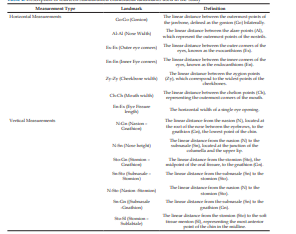
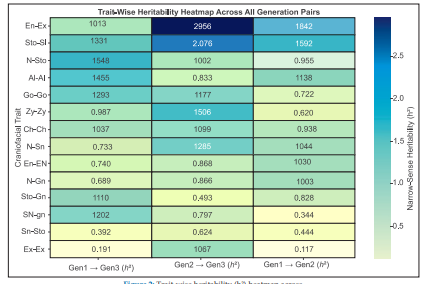
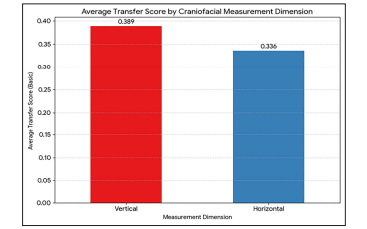
Background: Facial biometrics play a critical role in cybercrime investigations, digital identity verification, and surveillance-based forensic systems. Despite their widespread use, many artificial intelligence (AI)–driven facial recognition pipelines operate without biologically validated craniofacial feature foundations, raising concerns regarding interpretability, bias, and forensic reliability. Aim: This study aims to establish a biologically grounded framework for AI-assisted forensic facial analysis by examining the inheritance, stability, and predictability of live craniofacial anthropometric traits across three biological generations of Indian families. Methods: A total of 216 individuals from 48 Indian families spanning three generations were examined. Fourteen standardized craniofacial dimensions were recorded using calibrated vernier callipers under natural head position. Trait normalization, intergenerational comparisons, heritability estimation, transfer score analysis, and machine-learning–based predictability assessment were performed using robust statistical modeling and AI-assisted analytical techniques. Result: Craniofacial traits exhibited uneven hereditary patterns. Vertical craniofacial dimensions demonstrated greater generational resemblance, biological stability, and algorithmic predictability compared to horizontal traits. Sto-Sl, En-Ex, and ZyZy emerged as highly stable and orensically reliable craniofacial features with strong heritability and predictive performance. Conclusion: The study provides a statistically validated and biologically explainable reference framework for AI-based facial analysis in cyber and digital forensic applications. By anchoring AI models to biologically stable craniofacial traits, the findings enhance the reliability, interpretability, and forensic admissibility of facial evidence.
References
- 1. Seselj, M., Duren, D.L., Sherwood, R.J., et al. (2015). Heritability of the human craniofacial complex. The Anatomical Record, 298(9), 1535–1547. (DOI: 10.1002/ar.23186)
- 2. Adekunle, A.A., et al. (2021). Facial anthropometry measurements using 3D stereophotogrammetry. Journal of Craniofacial Surgery, 32(5), 1800–1806. (DOI: 10.1097/ SCS.0000000000008036 )
- 3. Richmond, S., et al. (2018). Craniofacial genetics and phenotypic variation. Orthodontics & Craniofacial Research, 21(1), 1–9.
- 4. Naqvi, S., et al. (2021). Shared heritability of human face and brain shape. Nature Communications, 12, 1–11. ( https://doi. org/10.1038/s41588-021-00827-w )
- 5. Bishara, S.E. (1995). Changes in facial dimensions assessed from lateral and frontal photographs. American Journal of Orthodontics and Dentofacial Orthopedics, 108(4), 389–393.
- 6. Johannsdottir, B., Thorarinsson, F., Thoradarson, A., & Magnusson, T. E. (2005). Heritability of craniofacial characteristics between parents and offspring estimated from lateral cephalograms. American Journal of Orthodontics and Dentofacial 385 Orthopedics, 127(2), 200–207.
- 7. Krishnan, A., & Rattani, A. (2023). A novel approach for bias mitigation of gender classification algorithms using consistency regularization. Image and Vision Computing, 137, 104793. https://doi.org/10.1016/j. imavis.2023.104793
- 8. Lin, Y.C., Miyazono, H., Ichinose, M., & Nakasima, A. (1998). A study to evaluate the parent-offspring similarity in the maxillofacial profile using fingerprints in Japanese families. Journal of Craniofacial Genetics and Developmental Biology, 18(2), 119–127.
- 9. Mossey, P.A. (1999). The heritability of malocclusion: Part 2. The influence of genetics in malocclusion. British Journal of Orthodontics, 26(3), 195–203
- 10. DeepFakes and beyond: A survey of face manipulation and fake detection. arXiv preprint arXiv:2001.00179.
- 11. Krishan K., Kanchan T. Measurement Error in Anthropometric Studies and its Significance in Forensic Casework. Ann Med Health Sci Res. 2016 Jan-Feb; 6(1): 62-3. doi: 10.4103/2141- 9248.180277. PMID: 27144080; PMCID: PMC4849120..
- 12. Bours, P., & Mondal, S. (2021). Biometric triage in cyber investigations. Digital Investigation, 38, 301–309.
- 13. Koseoglu, M., Ramachandran, R.A., Ozdemir, H., Ariani, M.D., Bayindir, F., & Sukotjo, C. (2024). Automated facial landmark measurement using machine learning: A feasibility study. Journal of Prosthetic Dentistry, 134(4), 1148–1155. https://doi. org/10.1016/j.prosdent.2024.04.007
- 14. Sharma, P., & Verma, P. (2024). Computational forensics & ML for intergenerational craniofacial analysis. Conference/Manuscript.
- 15. Miller, S.A., & Brown, T. (2022). Deep fake detection in forensic science. Forensic Science International, 335, 111223.
- 16. Hajian-Tilaki K. (2013). Receiver Operating Characteristic (ROC) Curve Analysis for Medical Diagnostic Test Evaluation. Caspian166 Indian Journal of Forensic Medicine and Pathology IJFMP/Volume 19 Number 2 April–June 2026 journal of internal medicine, 4(2), 627–635.
- 18. Porto, L.F., Lima, L.N.C., Franco, A., Pianto, D., Machado, C.E.P., & De Barros Vidal, F. (2020). Estimating sex and age from a face: a forensic approach using machine learning based on photo-anthropometric indexes of the Brazilian population. International Journal of Legal Medicine, 134(6), 2239–2259. https:// doi.org/10.1007/s00414-020-02346-5
- 19. Seselj, M., et al. (2019). Heritability of craniofacial traits in family-based samples. Annals of Human Biology, 46(6), 453–461. (doi: 10.1002/ar.23186 )
- 20. White, J.D., et al. (2021). Genetic architecture of facial morphology. Nature Genetics, 53, 130– 138. ( doi: 10.1038/s41588-020-00741-7)
- 21. Sharma, R. (2024). Sexual dimorphism in facial heights: A comprehensive study of Indian adults. African Journal of Biomedical Research, 1960–1964. https://doi.org/10.53555/ajbr. v27i4s.3972
- 22. Patel, J.R., & Mehta, A. (2022). Inheritance patterns of craniofacial traits in South Asian populations. Forensic Anthropology, 5(3), 210–221.
- 23. Lahoti, S.K., Karia, A.M., & Lahoti, K.B. (2013). Heritability of Facial Characteristics between Parents and Offsprings: A Photographic Study. The Journal of Indian Orthodontic Society, 47, 419–425. https://doi.org/10.5005/jpjournals-10021-1199
- 24. Stephan, C.N., & Caple, J. (2018). Reliability of facial landmarks in forensic practice. Journal of Forensic Identification, 68(2), 145–160. (https://doi.org/10.1080/20961790.2018.15 19892)
- 25. Weinberg, S.M., Naidoo, S., Govier, D.P., Martin, R.A., Kane, A.A., & Marazita, M.L. (2006). Anthropometric precision and accuracy of Digital Three-Dimensional photogrammetry. Journal of Craniofacial Surgery, 17(3), 477– 483. https://doi.org/10.1097/00001665- 200605000-00015
- 26. Benjamini, Y., Drai, D., Elmer, G., Kafkafi, N., & Golani, I. (2001). Controlling the false discovery rate in behavior genetics research. Behavioural brain research, 125(1-2), 279–284. https://doi. org/10.1016/s0166-4328(01)00297-2
- 27. Baydaş, B., Erdem, A., Yavuz, I., & Ceylan, I. (2007). Heritability of facial proportions and soft-tissue profile characteristics in Turkish Anatolian siblings. American Journal of Orthodontics and Dentofacial Orthopedics, 131(4), 504–509.
- 28. Adekunle, A.A., et al. (2021). Validation of 3D facial anthropometry for forensic applications. Forensic Science International, 321, 110741.
- 29. Saini, H., et al. (2022). AI-based biometric profiling in cybercrime. Journal of Cybersecurity, 8(1), tyac012.
- 30. Alves, Y.B. (2021) et al. Photoanthropometry as a method of facial analysis: A systematic review. Research, Society and Development, 10(14), e22101421637.(DOI: https://doi. org/10.33448/rsd-v10i2.12469)
Data Sharing Statement
There are no additional data available. All raw data and code are available upon request.
Funding
This research received no funding.
Author Contributions
All authors contributed significantly to the work and approve its publication.
Ethics Declaration
This article does not involve any human or animal subjects and therefore does not require ethics approval.
Acknowledgements
We would like to express our gratitude to the patients, their families, and all those who have contributed to this study.
Conflicts of Interest
No conflicts of interest in this work.
About this article

Cite this article
Paras Sharma, Priyanka Verma. Biologically Anchored AI Analysis of Craniofacial Traits for Cyber and Digital Forensics: A Multigenerational Indian Study. Indian J Forensic Med Pathol. 2026; 19(2): 158-166.
Licence:
Attribution-Non-commercial 4.0 International (CC BY-NC 4.0)This license enables reusers to distribute, remix, adapt, and build upon the material in any medium or format for noncommercial purposes only, and only so long as attribution is given to the creator.
| Received | Accepted | Published |
|---|---|---|
| February 04, 2026 | April 06, 2026 | June 30, 2026 |
DOI: https://doi.org/10.21088/ijfmp.0974.3383.19226.6
Keywords
Craniofacial anthropometryFacial biometricsArtificial intelligenceDigital forensicsCybercrimeForensic identificationHeritabilitySearch for Similar Articles
Similar Articles
- Diatom Analysis in Thermophilic water bodies: A Study on Hot Water Springs of Ma...
- Morphometric Study of Supra-meatal Triangle and Mastoid process in the Adult dry...
- Histopathological Spectrum of Autopsy Cases: A One Year Retrospective Observatio...
- Forensic Differentiation of Manner of Death in Railway Fatalities: A FourCase Se...
- Understanding assault Patterns: A Cross-sectional study of Cases at Chri, Kelamb...
Article Level Metrics
Last UpdatedWednesday 21 October 2026, 10:54:46 (IST)
16501
Accesses
61
3225
00
Citations
NA
NA
NA
Download citation
Article Keywords
Keyword Highlighting
Highlight selected keywords in the article text.
Timeline
| Received | February 04, 2026 |
| Accepted | April 06, 2026 |
| Published | June 30, 2026 |
licence
Attribution-Non-commercial 4.0 International (CC BY-NC 4.0)
This license enables reusers to distribute, remix, adapt, and build upon the material in any medium or format for noncommercial purposes only, and only so long as attribution is given to the creator.