Full Text (PDF)
Indian Journal of Forensic Medicine and Pathology 11(4):p 237-243, Oct-Dec 2018. | DOI: 10.21088/ijfmp.0974.3383.11418.3
Original Article
Absolute Lymphocyte Count: A Probable Substitute Marker for CD4 Count in HIV-Infected Patients in Economically Restrained Countries
Vaishnavi Pahwa, Ruchee Khanna, Shashidhar V , Vinay Khanna
Author Information
Licence:
Attribution-Non-commercial 4.0 International (CC BY-NC 4.0)This license enables reusers to distribute, remix, adapt, and build upon the material in any medium or format for noncommercial purposes only, and only so long as attribution is given to the creator
Indian Journal of Forensic Medicine and Pathology 11(4):p 237-243, Oct-Dec 2018. | DOI: 10.21088/ijfmp.0974.3383.11418.3
How Cite This Article:
Timeline
Received : September 14, 2018
Accepted : October 01, 2018
Published : November 20, 2018
Abstract
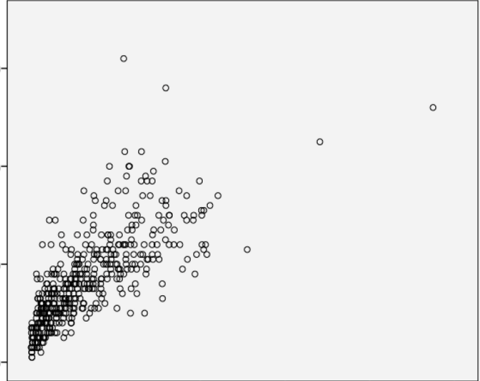
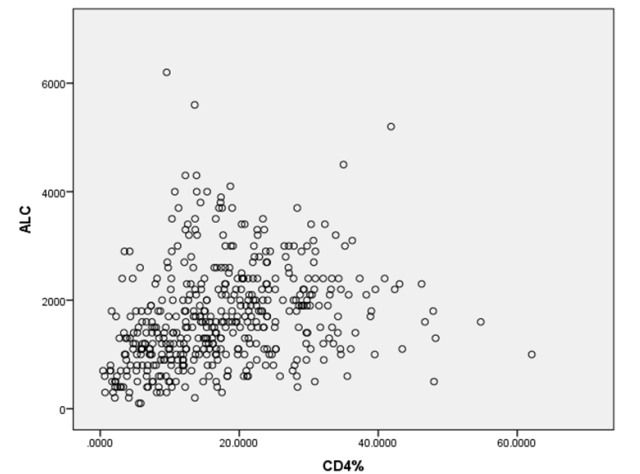
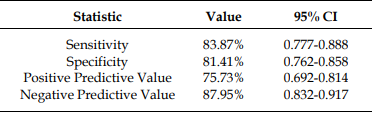
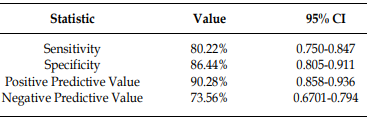
Objective: CD4 count is the mainstay criteria for initiation of HAART (Highly Active Anti-retroviral Therapy) and assessment of disease progression in HIV patients. CD4 percentage adds additional prognostic information. Our study was aimed to find out if Absolute Lymphocyte Count (ALC) could serve as a substitute marker for CD4 count and percentage. Methods: A total of 455 EDTA blood samples from HIV-infected patients were analyzed for their ALC, CD4 counts and CD4 percentages, over a period of 6 months, from January 2015 to June 2015 in Kasturba Hospital, Manipal. Correlation analysis of ALC with CD4 count and percentage, and receiver operating characteristic (ROC) analysis at CD4 200/µL andCD4 350/µL were conducted as proposed by WHO guidelines. Results: The male to female ratio was 2:1 and age ranged from 11 to 78 years. The median ALC was 1600/µL, median CD4 count was 258.58/µL and the median CD4 percentage was 16.4%. A strong positive correlation (Pearson coefficient, r= 0.741) was obtained between CD4 count and ALC. However, a weak positive correlation (r= 0.276) was seen between ALC and CD4 percentage. Areas under the ROC curve for ALC with CD4 count 200/µL andCD4 count 350/µL were 0.901 and 0.911, respectively, both of which showed an excellent correlation. But area under the ROC curve for ALC and CD4 20% was 0.659, which is poor in accuracy. Also, from the ROC analysis, the ALC cut offs at CD4 count 200/ µL (Sensitivity-83.87%, specificity-81.41%) and CD4 count 350/µL (Sensitivity-80.22%, specificity-86.44%) were 1450/µL and 1650/µL respectively. Conclusion: ALC has a strong correlation with CD4 count and the ALC cut offs corresponding to CD4 counts 200/µL and CD4 count 350/µL were 1450/µL and 1650/µL, respectively. But ALC did not have a good correlation with CD4 percentage. Hence, ALC is a credible alternate marker for CD4 count, but not for CD4 percentage.
References
- 1. World Health Organization. Consolidated guidelines on the use of antiretroviral drugs for treating and preventing HIV infection: recommendations for a public health approach. 2nd ed. Geneva: World Health Organization;
- 2. Walker BR, Colledge NR, Ralston SH, Penman ID, editors. Davidson’s principles and practice of medicine. 22nd ed. Edinburgh: Churchill Livingstone; 2014.
- 3. Sax PE. HIV infection. In: Cunha BA, editor. Antibiotic essentials. New York: Physicians Press; 2005. p. 227-33.
- 4. UNAIDS. Global AIDS update 2016 [Internet]. Geneva: Joint United Nations Programme on HIV/AIDS; 2016 World Health Organization. Scaling up antiretroviral therapy in resource-limited settings: treatment guidelines for a public health approach [Internet]. Geneva: World Health Organization;
- 5. Kumarasamy N, Flanigan TP, Hemalatha R, Mayer KH, Carpenter CC, Thyagarajan SP, et al. Total lymphocyte count (TLC) is a useful tool for the timing of opportunistic infection prophylaxis in India and other resource-constrained countries. J Acquir Immune Defic Syndr. 2002;31(4):378-83.
- 6. Jain S, Singh AK, Bajaj J, Singh RP, Damle AS. Evaluation of total lymphocyte count (TLC) as a surrogate marker for CD4 count in HIV-positive patients for resource-limited settings. Muller J Med Sci Res. 2015;6(1):23-6.
- 7. Gogia A, Byotra S, Prakash V, Kumar S, Bhargava M, Kakar A, et al. Absolute lymphocyte count: a cost-effective method of monitoring HIV-infected individuals. Indian J Pathol Microbiol. 2011;54(1):107-11.
- 8. Beck EJ, Kupek EJ, Gompels MM, Pinching AJ. Correlation between total and CD4 lymphocyte counts in HIV infection: not making the good an enemy of the not so perfect. Int J STD AIDS. 1996;7(6):422-8.
- 9. Van der Ryst E, Kotze M, Joubert G, Steyn M, Pieters H, van der Westhuizen M, et al. Correlation among total lymphocyte count, absolute CD4+ count, and CD4+ percentage in a group of HIV-1-infected South African patients. J Acquir Immune Defic Syndr Hum Retrovirol. 1998;19(3):238-44.
- 10. Chen J, Li W, Huang X, Guo C, Zou R, Yang Q, et al. Evaluating total lymphocyte count as a surrogate marker for CD4 cell count in the management of HIV-infected patients in resource-limited settings: a study from China. PLoS One. 2013;8(7):e69704.
- 11. Badri M, Wood R. Usefulness of total lymphocyte count in monitoring highly active antiretroviral therapy in resource-limited settings. AIDS. 2003;17(4):541-5.
- 12. Akinola OO, Adediran IA, Onayemi O, Kuti MO, Olawale OF. The search for a predictor of CD4 cell count continues: total lymphocyte count is not a substitute for CD4 cell count in the management of HIV infected individuals in a resource-limited setting. Clin Infect Dis. 2004;39(4):579-81.
- 13. Sagar A, Pathak A, Ambiya V, Naithani N, Vasudevan B, Agrawal S. Utility of absolute lymphocyte count as a surrogate marker of CD4 cell counts: is it useful? Med J Armed Forces India. 2014;70(1):48-52.
- 14. Angelo A, Angelo C, Torres A, Ramos A, Lima M, Netto E, et al. Evaluating total lymphocyte counts as a substitute for CD4 counts in the follow up of AIDS patients. Braz J Infect Dis. 2007;11(5):466-70.
- 15. Blatt SP, Butzin CA, Hendrix CW, Lucey DR. Total lymphocyte count as a predictor of absolute CD4+ count and CD4+ percentage in HIV-infected persons. JAMA. 1993;269(5):622-6.
- 16. Van der Ryst E, Joubert G, Steyn M, Pieters H, van der Westhuizen M, et al. Correlation among total lymphocyte count, absolute CD4+ count, and CD4+ percentage in a group of HIV-1 infected South African patients. J Acquir Immune Defic Syndr Hum Retrovirol. 1998;19(3):238-44.
- 17. Ammann A, Burrowes S. Use of total lymphocyte count vs. CD4 cell count as a marker of immunity in HIV-infected adults and children. Women Children HIV [Internet]. Stebbing J, Sawleshwarkar S, Michailidis C, Jones R, Bower M, Mandalia S, et al. Assessment of the efficacy of total lymphocyte counts as predictors of AIDS defining infections in HIV-1 infected people. Postgrad Med J. 2005;81(959):586-8.
- 18. Spacek LA, Griswold M, Quinn TC, Moore RD. Total lymphocyte count and hemoglobin combined in an algorithm to initiate the use of highly active antiretroviral therapy in resource-limited settings. AIDS. 2003;17(9):1311-7.
- 19. Moore DM, Awor A, Downing RS, Were W, Solberg P, Mermin J, et al. Determining eligibility for antiretroviral therapy in resource-limited settings using total lymphocyte counts, hemoglobin and body mass index. AIDS Res Ther. 2007;4:1.
Data Sharing Statement
There are no additional data available. All raw data and code are available upon request.
Funding
This research received no funding.
Author Contributions
Whether all authors contributed significantly to the work and approve its publication.
Ethics Declaration
This article does not involve any human or animal subjects, and therefore does not require ethics approval.
Conflicts of Interest
The authors report no conflicts of interest in this work.
About this article

Cite this article
Licence:
Attribution-Non-commercial 4.0 International (CC BY-NC 4.0)This license enables reusers to distribute, remix, adapt, and build upon the material in any medium or format for noncommercial purposes only, and only so long as attribution is given to the creator
| Received | Accepted | Published |
|---|---|---|
| September 14, 2018 | October 01, 2018 | November 20, 2018 |
DOI: 10.21088/ijfmp.0974.3383.11418.3
Keywords
Absolute Lymphocyte CountCD4 CountSearch for Similar Articles
Similar Articles
- Diatom Analysis in Thermophilic water bodies: A Study on Hot Water Springs of Ma...
- Morphometric Study of Supra-meatal Triangle and Mastoid process in the Adult dry...
- Histopathological Spectrum of Autopsy Cases: A One Year Retrospective Observatio...
- Forensic Differentiation of Manner of Death in Railway Fatalities: A FourCase Se...
- Understanding assault Patterns: A Cross-sectional study of Cases at Chri, Kelamb...
Article Level Metrics
Last UpdatedSunday 18 October 2026, 12:31:01 (IST)
16263
Accesses
10
3205
00
Citations
NA
NA
NA
Download citation
Article Keywords
Keyword Highlighting
Highlight selected keywords in the article text.
Timeline
| Received | September 14, 2018 |
| Accepted | October 01, 2018 |
| Published | November 20, 2018 |
licence
Attribution-Non-commercial 4.0 International (CC BY-NC 4.0)
This license enables reusers to distribute, remix, adapt, and build upon the material in any medium or format for noncommercial purposes only, and only so long as attribution is given to the creator