Full Text (PDF)
Indian Journal of Surgical Nursing 12(1):p 21-23, January – April 2023. | DOI: https://doi.org/10.21088/ijsn.2277.467X.12123.3
Review Article
Wilson’s disease
Author Information
Licence:
Attribution-Non-commercial 4.0 International (CC BY-NC 4.0)This license enables reusers to distribute, remix, adapt, and build upon the material in any medium or format for noncommercial purposes only, and only so long as attribution is given to the creator.
Indian Journal of Surgical Nursing 12(1):p 21-23, January – April 2023. | DOI: https://doi.org/10.21088/ijsn.2277.467X.12123.3
How Cite This Article:
Jancy J, Sheeja Sebastian/Wilson’s disease/Indian J Surg Nurs. 2023;12(1):21–23.Timeline
Received : October 08, 2022
Accepted : November 10, 2022
Published : April 30, 2023
Abstract
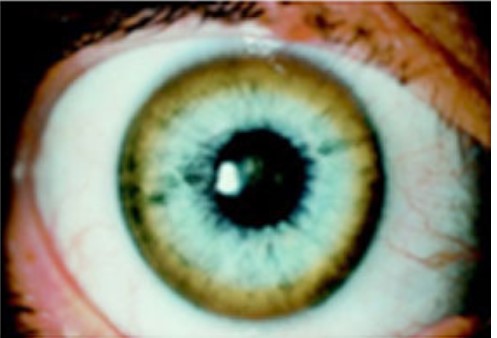
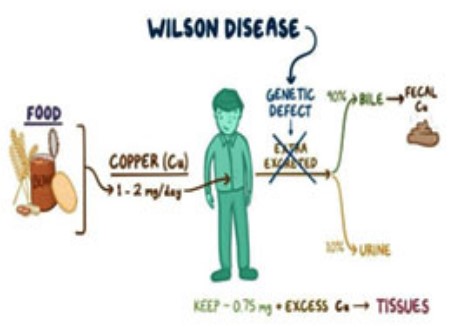
Wilson's Disease is an autosomal-recessive disorder caused by mutation in the ATP7B gene which impairs copper excretion from the bile. Impaired copper transport and decrease copper secretion into bile which leads copper accumulation, first in the liver but ultimately in the brain and other tissues, produces clinical manifestations that may include hepatic, neurological, psychiatric and ophthalmological. Treatment is only palliative and intended to restore and maintain copper balance.
References
- 1. Harrison’s. Principals of Internal Medicine. 16th edition, volume 1.
- 2. Nicki R. Colledge, Brain R. Walker, Stuart H. Ralston. Davidsons Principal and practice of Medicine. Elsevier publishers. 21st edition. Pp- 960-962.
- 3. Nagral et al., Wilson's Disease: Clinical Practice Guidelines of the Indian National Association for Study of the Liver, the Indian Society ofPediatric Gastroenterology, Hepatology and Nutrition, and the Movement Disorders Society of India, Journal of Clinical and Experimental Hepatology (2018), https://doi.org/10.1016/j.jceh.2018.08.009.
- 4. Larry E. Johnson, MDS Mannual professional version Wilson’s disease. https://www.msdmanuals.com/en-in/professional/nutritional-disorders/mineraldeficiency-and-toxicity/wilson-disease.
- 5. Prasad M,DavidD.Wilson disease: A case study.Indian J ContNsg Edn2016[2022 Oct8];17:57-61:http://www.ijcne.org/text.asp?2016/17/2/57/286300.
Data Sharing Statement
There are no additional data available. All raw data and code are available upon request.
Funding
This research received no funding.
Author Contributions
All authors contributed significantly to the work and approve its publication.
Ethics Declaration
This article does not involve any human or animal subjects, and therefore does not require ethics approval.
Acknowledgements
We would like to express our gratitude to the patients, their families, and all those who have contributed to this study.
Conflicts of Interest
No conflicts of interest in this work.
About this article

Cite this article
Jancy J, Sheeja Sebastian/Wilson’s disease/Indian J Surg Nurs. 2023;12(1):21–23.
Licence:
Attribution-Non-commercial 4.0 International (CC BY-NC 4.0)This license enables reusers to distribute, remix, adapt, and build upon the material in any medium or format for noncommercial purposes only, and only so long as attribution is given to the creator.
| Received | Accepted | Published |
|---|---|---|
| October 08, 2022 | November 10, 2022 | April 30, 2023 |
DOI: https://doi.org/10.21088/ijsn.2277.467X.12123.3
Keywords
CeruloplasmincopperWilson’s diseaseSearch for Similar Articles
Similar Articles
- Total Anomalous Pulmonary Venous Connection (TAPVC) Presenting with Respiratory...
- Dandy–Walker Syndrome (DWS): Clinical Features, Diagnosis, and Nursing Managemen...
- Benign Prostatic Hyperplasia: A Comprehensive Evidence-Based Review of Etiopatho...
- Challenges Faced During Data Collection on Substance abuse Prevention among Coll...
- Effectiveness of structured Teaching Programme on Knowledge Regarding Health Haz...
Article Level Metrics
Last UpdatedSunday 27 September 2026, 08:01:27 (IST)
1987
Accesses
6
295
00
Citations
NA
NA
NA
Download citation
Article Keywords
Keyword Highlighting
Highlight selected keywords in the article text.
Timeline
| Received | October 08, 2022 |
| Accepted | November 10, 2022 |
| Published | April 30, 2023 |
licence
Attribution-Non-commercial 4.0 International (CC BY-NC 4.0)
This license enables reusers to distribute, remix, adapt, and build upon the material in any medium or format for noncommercial purposes only, and only so long as attribution is given to the creator.