Full Text (PDF)
Indian Journal of Anatomy 13(4):p 133-138, October - December 2024. | DOI: https://doi.org/10.21088/ija.2320.0022.13424.1
Original Article
To Analyze Year One Medical Students Towards Critical Thinking at Subbaiah Institute of Medical Sciences
Suresh Rao, Divya Shanthi D’ SA null
Author Information
Licence:
Attribution-Non-commercial 4.0 International (CC BY-NC 4.0)This license enables reusers to distribute, remix, adapt, and build upon the material in any medium or format for noncommercial purposes only, and only so long as attribution is given to the creator.
Indian Journal of Anatomy 13(4):p 133-138, October - December 2024. | DOI: https://doi.org/10.21088/ija.2320.0022.13424.1
How Cite This Article:
D’Sa DS, Rao S, Rao A, et al. To Analyze Year One Medical Students Towards Critical Thinking at Subbaiah Institute of Medical Sciences. Indian J Anat. 2024; 13(4): 133-138.Timeline
Received : October 24, 2024
Accepted : December 12, 2024
Published : January 30, 2024
Abstract
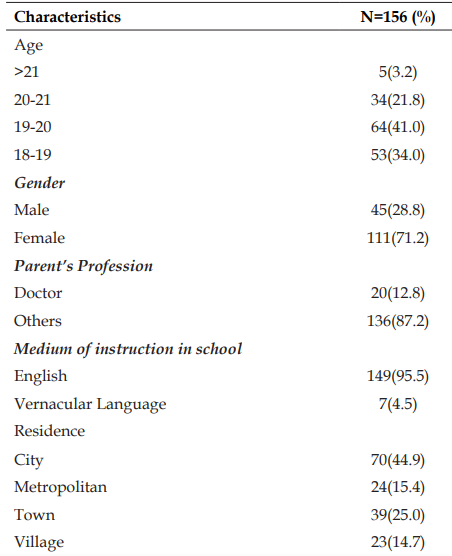
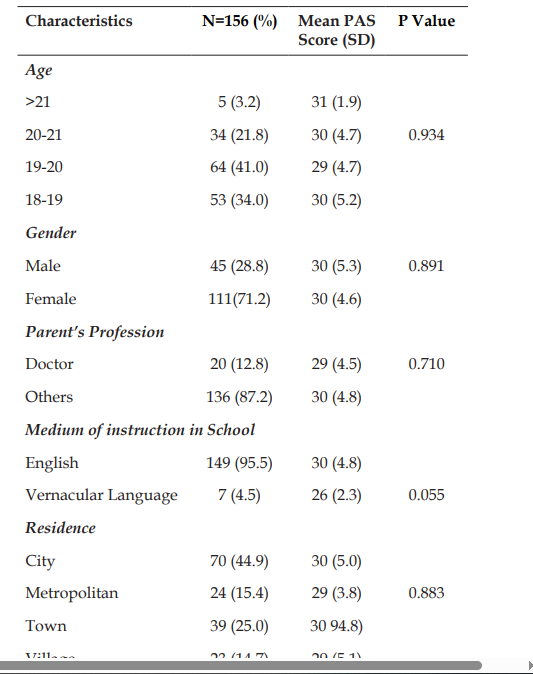
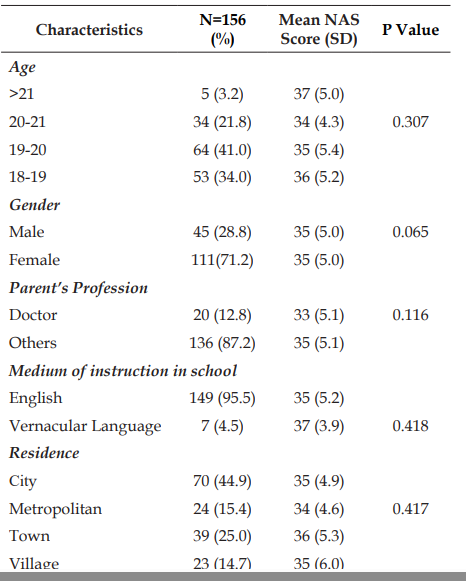
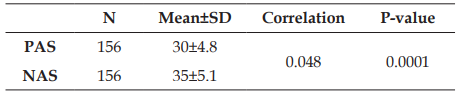
Abstract Introduction: It is imperative that medical graduates develop critical thinking abilities in light of the recent implementation of a new competency-based medical school curriculum that centers on the expected and observable capacity of Indian medical graduates in practical settings. One of the most crucial abilities that any medical student must have in order to provide high-quality care is critical thinking. More attention needs to be paid to this higher-order thinking ability, which might be a crucial quality of any medical practitioner given the evolving societal expectations of doctors. Objectives: The purpose of this study was to assess first-year medical students' perceptions of their critical thinking abilities. Methods: This descriptive and analytical cross-sectional study was conducted on 156 year one medical students at Subbaiah Institute of Medical Sciences, Shivamogga, Karnataka.who were selected by a convenient sampling method. The data were collected by demographic characteristics and modified California Critical Thinking Skills Test (CCTST). For the regularly distributed variables, parametric tests (Student's t-test and ANOVA) were employed, while non-parametric tests (Mann-Whitney's test & Kruskal -Wallis) were utilized for the other parameters by using SPSS V 20. Results: A total of 156 students participated in the study; 45 (28.8.7%) were male, and 111 (17.2%) are female. 93 (59.8%) were government funded and 63(40.4%) were self-funded. There was no significant difference between the average critical thinking skills score regarding age, gender, parents’ profession, residence, and medium of instruction.The median positive attitude score was 30±4.8. The mean negative attitude scale score was 30±5.5. A highly significant association was noted with attitude towards communication skills (p<0.000). Conclusions: Based on the results, medical students’ critical thinking skills are weak and lower than the exam average. The educational system should be reviewed in designing a curriculum to foster critical thinking.
References
- 1. Pieterse T, Lawrence H, Friedrich-Nel H. Critical thinking ability of 3rd year radiography students. Health SA Gesondheid. 2016; 21: 381-390.
- 2. Fong CJ, Kim Y, Davis CW, et al. A meta-analysis on critical thinking and community college student achievement. Thinking Skills Creativity. 2017; 26: 71-83.
- 3. Broadbear JT, Keyser BB. An approach to teaching for critical thinking in health education. J Sch Health. 2000; 70(8): 322-326.
- 4. Demir E. An examination of high school students critical thinking dispositions and analytical thinking skills. J Pedagogical Res. 2022.
- 5. Powell S. Improving Critical Thinking: A review. Educational Psychology. 1987; 7(3): 169-185.
- 6. Sabaghinejad Z, Khalaf Kabomeir A, Fakhri A. Relationship between critical thinking and information seeking behavior on the web in postgraduate and doctoral students. J Modern Med Info Sci. 2022; 8(2): 184-195.
- 7. Sharifinia R, Shakurnia A. Critical thinking of medical students: Does it change during the study in medical school? J Med Edu Develop. 2022; 15(45): 26-33.
- 8. Martin L, Thompson SD, Richards L. Online scenarios in FCS college courses: Enhancing critical thinking skills. J Family Consumer Sci. 2008; 100(2): 25-30.
- 9. Zayapragassarazan Z, Menon V, Kar SS, Batmanabane G. Understanding critical thinking to create better doctors. J Adv Med Educ Res. 2016; 1: 9–13.
- 10. Musharyanti L, Yusup RM, Priyatnanto H. Teaching method to increase critical thinking in health profession student: A literature review. Bali Med J. 2021; 10: 1083–1087.
- 11. Sheikhmoonesi F, et al. Critical thinking abilities among students of medicine in Mazandaran University of Medical Sciences, 2011. J Mazandaran Univ Med Sci. 2013; 22(98): 98-103. [Persian]
- 12. Kajal K, et al. Comparing critical thinking skills of first-and last-term baccalaureate students of nursing, midwifery and occupational therapy. Med Sci J. 2011; 21(2).
- 13. Amini M, Fazlinejad N. Critical thinking skill in Shiraz University of medical sciences students. Hormozgan Med J. 2010; 14(3): 213-218.
- 14. Shafiei S, Khalili H, Mesgarafi H. Evaluation of critical thinking skills in nursing students of Zahedan Nursing and Midwifery Faculty. J Teb va Tazkiyeh. 2004; 53: 20-24.
- 15. Sabzi Khoshnami H, et al. Study of Critical thinking skill of Students of Rehabilitation in the University of Social Welfare and Rehabilitation Sciences (2012-13). Sociological Studies. 2012; 4(13): 77-90.
- 16. Rezaeian M, et al. Comparison of the critical thinking skills among medical students in different educational levels in Rafsanjan University of Medical Sciences in 2013. J Rafsanjan Univ Med Sci. 2015; 13(8): 715-724. [Persian]
Data Sharing Statement
There are no additional data available. All raw data and code are available upon request.
Funding
This research received no funding.
Author Contributions
Whether all authors contributed significantly to the work and approve its publication.
Ethics Declaration
This article does not involve any human or animal subjects, and therefore does not require ethics approval.
Acknowledgements
We would like to express our gratitude to the patients, their families, and all those who have contributed to this study.
Conflicts of Interest
The authors report no conflicts of interest in this work.
About this article

Cite this article
D’Sa DS, Rao S, Rao A, et al. To Analyze Year One Medical Students Towards Critical Thinking at Subbaiah Institute of Medical Sciences. Indian J Anat. 2024; 13(4): 133-138.
Licence:
Attribution-Non-commercial 4.0 International (CC BY-NC 4.0)This license enables reusers to distribute, remix, adapt, and build upon the material in any medium or format for noncommercial purposes only, and only so long as attribution is given to the creator.
| Received | Accepted | Published |
|---|---|---|
| October 24, 2024 | December 12, 2024 | January 30, 2024 |
DOI: https://doi.org/10.21088/ija.2320.0022.13424.1
Keywords
Critical ThinkingKnowledgeAttitudeBehaviorSearch for Similar Articles
Similar Articles
- Supernumerary Pulmonary Vein: A Rare Anatomical Variation Observed During Cadave...
- Elongated Styloid Process: Anatomical Variations and Their Clinical Relevance: A...
- Bridging the Gap Between Dissection and Surgery: The Role of Soft Embalming in M...
- A Cadaveric Study of Retro Hepatic Segment of Inferior Vena Cava and Ostia Venae...
- Estimation of Stature from Forearm Length in Medical Undergraduate Students of a...
Article Level Metrics
Last UpdatedSunday 20 September 2026, 21:59:35 (IST)
5038
Accesses
10
601
00
Citations
NA
NA
NA
Download citation
Article Keywords
Keyword Highlighting
Highlight selected keywords in the article text.
Timeline
| Received | October 24, 2024 |
| Accepted | December 12, 2024 |
| Published | January 30, 2024 |
licence
Attribution-Non-commercial 4.0 International (CC BY-NC 4.0)
This license enables reusers to distribute, remix, adapt, and build upon the material in any medium or format for noncommercial purposes only, and only so long as attribution is given to the creator.