Full Text (PDF)
Indian Journal of Forensic Medicine and Pathology 18((2 Suppl)):p 285-292, April-June 2025. | DOI: https://doi.org/10.21088/ijfmp.0974.3383.18225.23
Review Article
The Potential of Machine Learning and Artificial Intelligence in Forensic Science: An Overview of Key Applications, Challenges, and Future Directions
Kajol Bhati, Ganesh Agrawal, Mitali Shukla
Author Information
Licence:
Attribution-Non-commercial 4.0 International (CC BY-NC 4.0)This license enables reusers to distribute, remix, adapt, and build upon the material in any medium or format for noncommercial purposes only, and only so long as attribution is given to the creator.
Indian Journal of Forensic Medicine and Pathology 18((2 Suppl)):p 285-292, April-June 2025. | DOI: https://doi.org/10.21088/ijfmp.0974.3383.18225.23
How Cite This Article:
Agrawal G, Bhati K, Shukla M. The Potential of Machine Learning and Artificial Intelligence in Forensic Science: An Overview of Key Applications, Challenges, and Future Directions. Indian J Forensic Med Pathol. 2025;18(2 Suppl):225-232.Timeline
Received : June 25, 2024
Accepted : June 14, 2025
Published : June 30, 2025
Abstract
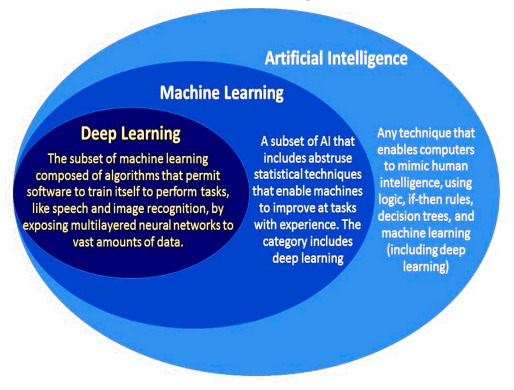
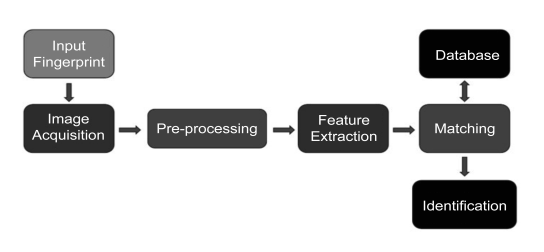
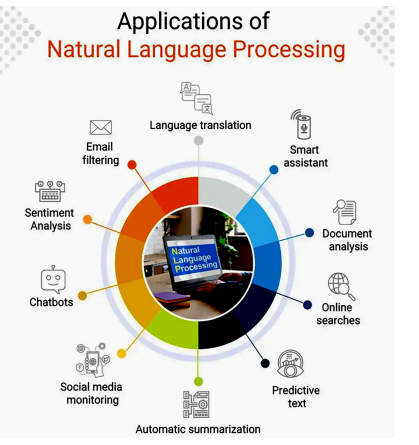
Forensic science has evolved significantly in recent years with the integration of machine learning (ML) and artificial intelligence (AI). The use of these technologies has created new possibilities and the ability to completely transform the industry. The ability to quickly and precisely analyze large volumes of data has significantly improved the effectiveness and accuracy of forensic analysis. In the context of artificial intelligence and machine learning, this paper explores the functions of image analysis, pattern recognition, bloodstain pattern analysis, anomaly detection, cybersecurity, intrusion detection, age, sex, ancestry estimation, facial reconstruction, skeletal trauma analysis, DNA analysis, genomics, fingerprint identification, and voice recognition. The function of numerous technologies, including virtual reality, neural networks, support vector machines, computer vision, CBR, and NLP, is also investigated. Despite the advantages, there are several drawbacks to using these technologies, including the requirement for high-quality data and the possibility of algorithmic bias. Therefore, it is imperative to provide moral and practical criteria for the application of AI and machine learning in forensic science. The main applications, difficulties, and potential future directions of machine learning and AI in forensics are outlined in this review paper. We aim to shed light on the possible advantages and difficulties of these technologies and provide insights into the future of forensic science by analyzing the state of the field today.
References
- 1. Gupta, S., Sharma, M.V., & Johri, P. (2020). Artificial intelligence in forensic science. International Research Journal of Engineering and Technology, 7(5), 7181-7184.
- 2. Iqbal, S., & Alharbi, S.A. (2019). Advancing automation in digital forensic investigations using machine learning forensics. In Digital Forensic Science. IntechOpen.
- 3. Awad, A.I. (2012). Machine learning techniques for fingerprint identification: A short review. In Advanced Machine Learning Technologies and Applications: First International Conference, AMLTA 2012, Cairo, Egypt, December 8-10, 2012. Proceedings 1 (pp. 524-531). Springer Berlin Heidelberg.
- 4. Yeow, W.L., Mahmud, R., & Raj, R.G. (2014). An application of case-based reasoning with machine learning for forensic autopsy. Expert Systems with Applications, 41(7), 3497-3505.
- 5. Dobay, A., Ford, J., Decker, S., Ampanozi, G., Franckenberg, S., Affolter, R., ...& Ebert, L.C. (2020). Potential use of deep learning techniques for postmortem imaging. Forensic Science, Medicine and Pathology, 16, 671-679.
- 6. Khanagar, S.B., Vishwanathaiah, S., Naik, S., Al-Kheraif, A.A., Divakar, D.D., Sarode, S.C., ... & Patil, S. (2021). Application and performance of artificial intelligence technology in forensic odontology–A systematic review. Legal Medicine, 48, 101826.
- 7. Raneri, D. (2018). Enhancing forensic investigation through the use of modern threedimensional (3D) imaging technologies for crime scene reconstruction. Australian journal of forensic sciences, 50(6), 697-707.
- 8. Grubl, T., & Lallie, H.S. (2022). Applying artificial intelligence for age estimation in digital forensic investigations. arXiv preprint arXiv: 2201.03045.
- 9. Ma, M., Zheng, H., & Lallie, H. (2010). Virtual reality and 3D animation in forensic visualization. Journal of forensic sciences, 55(5), 1227-1231.
- 10. Mitchell, F. (2010). The use of artificial intelligence in digital forensics: An introduction. Digital Evidence & Elec. Signature L. Rev., 7, 35.
- 11. Rigano, C. (2019). Using artificial intelligence to address criminal justice needs. National Institute of Justice Journal, 280(1-10), 17.
- 12. Xiao, J., Li, S., & Xu, Q. (2019). Video-based evidence analysis and extraction in digital forensic investigation. IEEE Access, 7, 55432- 55442.
- 13. Lefevre, T. (2021). Artificial Intelligence in Forensic Medicine. In Artificial Intelligence in Medicine (pp. 1-9). Cham: Springer International Publishing.
- 14. Thurzo, A., Kosnacova, H.S., Kurilova, V., Kosmel, S., Benus, R., Moravansky, N., ... & Varga, I. (2021, November). Use of advanced artificial intelligence in forensic medicine, forensic anthropology and clinical anatomy. In Healthcare (Vol. 9, No. 11, p. 1545). MDPI.
- 15. Ardiyanto, I., Suksmono, A.B., & Sardjono, T.A. (2020). Bite mark analysis using convolutional neural networks. Journal of Physics: Conference Series, 1529(2), 022068.
- 16. Tournois, L., & Lefèvre, T. (2021). AI in Forensic Medicine for the Practicing Doctor. In Artificial Intelligence in Medicine (pp. 1-11). Cham: Springer International Publishing.
- 17. Adam, E.E.B. (2021). Evaluation of fingerprint liveness detection by machine learning approach-a systematic view. Journal of ISMAC, 3(01), 16-30.
- 18. Pathak, M., & Narang, H. (2021). Application of Artificial Intelligence in the Field of Forensic Medicine. Medico-legal Update, 21(4).
- 19. Maneli, M.A., & Isafiade, O.E. (2022). 3D Forensic Crime Scene Reconstruction Involving Immersive Technology: A Systematic Literature Review. IEEE Access, 10, 88821-88857.
- 20. Hamzah, N.H., Sim, L.X., Gabriel, G.F., Osman, K., & Isa, N.M.M. (2022). Artificial Intelligence in Forensic Science: Current Applications and Future Direction. Buletin Sains Kesihatan, 6(2), 39-46.
- 21. Galante, N., Cotroneo, R., Furci, D., Lodetti, G., & Casali, M.B. (2023). Applications of artificial intelligence in forensic sciences: Current potential benefits, limitations and perspectives. International Journal of Legal Medicine, 137(2), 445-458.
- 22. Kelly, L., Sachan, S., Ni, L., Almaghrabi, F., Allmendinger, R., & Chen, Y. (2020). Explainable artificial intelligence for digital forensics: opportunities, challenges and a drug testing case study. Digital Forensic Science.
- 23. Jadhav, E.B., Sankhla, M.S., & Kumar, R. (2020). Artificial intelligence: Advancing automation in forensic science & criminal investigation. Journal of Seybold Report ISSN NO, 1533, 9211.
- 24. https://datasciencedojo.com/blog/naturallanguage-processing-applications/.
- 25. Patyal, S., & Bhatia, T. (2021) Artificial Intelligence with Radio-Diagnostic Modalities in Forensic Science - A Systematic Review.
Data Sharing Statement
There are no additional data available. All raw data and code are available upon request.
Funding
This research received no funding.
Author Contributions
All authors contributed significantly to the work and approve its publication.
Ethics Declaration
This article does not involve any human or animal subjects, and therefore does not require ethics approval.
Acknowledgements
We would like to express our gratitude to the patients, their families, and all those who have contributed to this study.
Conflicts of Interest
No conflicts of interest.
About this article

Cite this article
Agrawal G, Bhati K, Shukla M. The Potential of Machine Learning and Artificial Intelligence in Forensic Science: An Overview of Key Applications, Challenges, and Future Directions. Indian J Forensic Med Pathol. 2025;18(2 Suppl):225-232.
Licence:
Attribution-Non-commercial 4.0 International (CC BY-NC 4.0)This license enables reusers to distribute, remix, adapt, and build upon the material in any medium or format for noncommercial purposes only, and only so long as attribution is given to the creator.
| Received | Accepted | Published |
|---|---|---|
| June 25, 2024 | June 14, 2025 | June 30, 2025 |
DOI: https://doi.org/10.21088/ijfmp.0974.3383.18225.23
Keywords
Machine learningArtificial intelligenceForensic scienceCrime scene reconstructionForensic autopsyDigital forensicsFingerprint examinationSearch for Similar Articles
Similar Articles
- Diatom Analysis in Thermophilic water bodies: A Study on Hot Water Springs of Ma...
- Morphometric Study of Supra-meatal Triangle and Mastoid process in the Adult dry...
- Histopathological Spectrum of Autopsy Cases: A One Year Retrospective Observatio...
- Forensic Differentiation of Manner of Death in Railway Fatalities: A FourCase Se...
- Understanding assault Patterns: A Cross-sectional study of Cases at Chri, Kelamb...
Article Level Metrics
Last UpdatedSunday 18 October 2026, 15:54:13 (IST)
16279
Accesses
73
3209
00
Citations
NA
NA
NA
Download citation
Article Keywords
Keyword Highlighting
Highlight selected keywords in the article text.
Timeline
| Received | June 25, 2024 |
| Accepted | June 14, 2025 |
| Published | June 30, 2025 |
licence
Attribution-Non-commercial 4.0 International (CC BY-NC 4.0)
This license enables reusers to distribute, remix, adapt, and build upon the material in any medium or format for noncommercial purposes only, and only so long as attribution is given to the creator.