Full Text (PDF)
Indian Journal of Forensic Medicine and Pathology 13(3):p 383-388, July – September 2020. | DOI: https://doi.org/10.21088/ijfmp.0974.3383.13320.3
Original Article
Study on Nineteen Years (1996-2014) Trend of Illegal Abortion in the Transkeisub-Region of South Africa
Author Information
Licence:
Attribution-Non-commercial 4.0 International (CC BY-NC 4.0)This license enables reusers to distribute, remix, adapt, and build upon the material in any medium or format for noncommercial purposes only, and only so long as attribution is given to the creator.
Indian Journal of Forensic Medicine and Pathology 13(3):p 383-388, July – September 2020. | DOI: https://doi.org/10.21088/ijfmp.0974.3383.13320.3
How Cite This Article:
Dey A, Dalal D. Student's Perspective on Existing Teaching Process of Forensic Medicine and Toxicology in a Government Medical College, West Bengal. Indian Journal of Forensic Medicine & Pathology. 2020;13(3):377–382.Timeline
Received : July 02, 2020
Accepted : July 20, 2020
Published : August 30, 2020
Abstract
Background: Medical education in Indian Colleges is still mostly dependant on traditional lecture classes along with practical classes for the Undergraduate students. Teaching methods that enhance student engagement and encourage self directed learning can be effective in delivering core knowledge and explaining difficult concepts, leading to increased learning. The present study was conducted to understand the Indian Medical Graduates’ perspective on different teaching methods practised and different attributes of a good medical teacher, involved in teaching Forensic Medicine and Toxicology.
Method: This observational, cross-sectional, prospective, questionnaire based study was done among 240 MBBS students of 5th semester in FMT Department, NRSMCH, Kolkata. The study tool was a pre-designed, pre-tested and validated questionnaire with twelve questions about different teaching methods practised in department and also involving attributes of a medical educator.
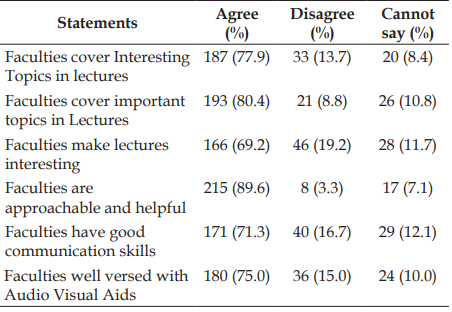
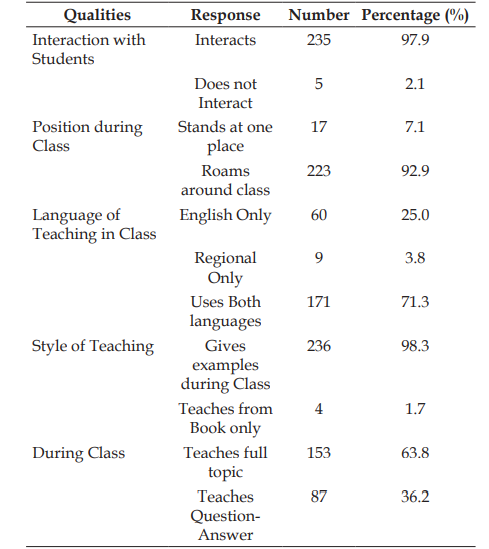
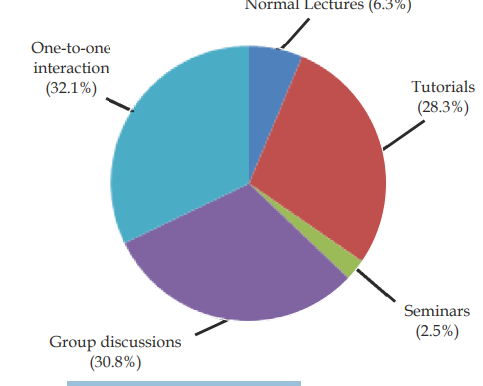
Results: 71.3% teachers had good communication skills whereas 89.6% faculties were approachable and helpful. Students preferred one-to-one interactions, group discussions and tutorials over normal traditional lectures. Most of the students liked a combination of blackboard teaching and audio-visual aided teaching over their individual use during lecture classes. Good communication skill, good sense of humour, thorough knowledge of subject and politeness emerged as the most important traits of a teacher.
Conclusion: An adaptable, approachable teacher who interacts with the students always wins their hearts. All future doctors are society’s assets and thus a Forensic Medicine and Toxicology teacher should be efficient and careful enough to ensure that the students imbibe basic medicolegal knowledge.
References
- 1. Carpenter JM. Effective Teaching Methods for Large Classes. Journal of Family and Consumer Sciences Education. 2006;24(2):13–23.
- 2. Arredondo MA. The Use of Videotaped Lectures in Surgical Oncology. Journal of Cancer Education. 1994;9(2):86–89.
- 3. Wolff M, Wagner MJ, Poznanski S, Schiller J, Santen S. Not Another Boring Lecture: Engaging Learners with Active Learning Techniques. The Journal of Emergency Medicine. 2015;48(1):85–93.
- 4. Butler JA. Use of Teaching Methods Within the Lecture Format. Medical Teacher. 1992;14(1):11–25.
- 5. Anjum A, Saeed R, Bajwa MA. Effective Lecture Delivery: The Medical Students’ Perspective. Professional Medical Journal. 2012;19(6):827–36.
- 6. Abraham G, Madhavikutty G. A Comparative Study on the Effectiveness of Interactive Lecture and Tutorial as Teaching Methodology Among Undergraduate Medical Students. International Journal of Contemporary Medical Research. 2016;3(11):3406–9.
- 7. Neumann R. Communicating Student Evaluation of Teaching Results: Rating Interpretation Guides (RIGs). Assessment & Evaluation in Higher Education. 2000;25(2):121–34.
- 8. Victoroff KZ, Hogan S. Students' Perceptions of Effective Learning Experiences in Dental School: A Qualitative Study Using a Critical Incident Technique. Journal of Dental Education. 2006;70(2):124–132.
- 9. Jaykaran, Chavda N, Yadav P, Kantharia ND. Intern Doctors’ Feedback on Teaching Methodologies in Pharmacology. Journal of Pharmacology and Pharmacotherapeutics. 2010;1(2):114–6.
- 10. McIntosh N. Why Do We Lecture? JHPIEGO Strategy Paper No. 2. Baltimore: JHPIEGO Corporation; 1996.
- 11. Edlich RF. My Last Lecture. The Journal of Emergency Medicine. 1993;11(6):771–4.
- 12. Bhowmick K, et al. Assessment of perception of first professional MBBS students in India about a teaching learning activity in Biochemistry. South East Asian Journal of Medical Education. 2009;3(2):27–34.
- 13. Dash SK, et al. Teaching Methods and Its Efficacy - An Evaluation by the Students. Journal of Indian Academy of Forensic Medicine. 2013;35(4):321–4.
- 14. Ballantyne J. Integration, Contextualization and Continuity: Three Themes for Development of Effective Music Teacher Education Programmes. International Journal of Music Education. 2007;25(2):119–136.
- 15. Levy JB. As a Last Resort, Ask the Students: What They Say Makes Someone an Effective Law Teacher. Maine Law Review. 2006;58(1):50–98.
- 16. Kelly C. Student’s Perceptions of Effective Clinical Teaching Revisited. Nurse Education Today. 2007;27(8):885–892.
- 17. Hasan T, Bani I, Ageel H. An Ideal Medical Teacher. Education in Medicine Journal. 2011;3(1):e54–e59.
- 18. Young S, Shaw DG. Profiles of Effective College and University Teachers. The Journal of Higher Education. 1999;70(6):670–686.
- 19. Hueppchen N, Dalrymple JL, Hammoud MM, et al. To the Point: Medical Education Reviews - Ongoing Call for Faculty Development. American Journal of Obstetrics and Gynecology. 2011;205(3):171–6.
- 20. Tang FI, Chou SM, Chiang HH. Students’ Perceptions of Effective and Ineffective Clinical Instructors. Journal of Nursing Education. 2005;44(4):187–192.
- 21. Haidet P, Stein HF. The Role of the Student-Teacher Relationship in the Formation of Physicians: The Hidden Curriculum as Process. Journal of General Internal Medicine. 2006;21(Suppl 1):S16–S20.
Data Sharing Statement
There are no additional data available. All raw data and code are available upon request.
Funding
This research received no funding.
Author Contributions
Whether all authors contributed significantly to the work and approve its publication.
Ethics Declaration
This article does not involve any human or animal subjects, and therefore does not require ethics approval.
Acknowledgements
We would like to express our gratitude to the patients, their families, and all those who have contributed to this study.
Conflicts of Interest
The authors report no conflicts of interest in this work.
About this article

Cite this article
Dey A, Dalal D. Student's Perspective on Existing Teaching Process of Forensic Medicine and Toxicology in a Government Medical College, West Bengal. Indian Journal of Forensic Medicine & Pathology. 2020;13(3):377–382.
Licence:
Attribution-Non-commercial 4.0 International (CC BY-NC 4.0)This license enables reusers to distribute, remix, adapt, and build upon the material in any medium or format for noncommercial purposes only, and only so long as attribution is given to the creator.
| Received | Accepted | Published |
|---|---|---|
| July 02, 2020 | July 20, 2020 | August 30, 2020 |
DOI: https://doi.org/10.21088/ijfmp.0974.3383.13320.3
Keywords
Lecture classOne-to-one interactionDemonstration classMedical EducatorCommunication skillMedicolegal knowledgeSearch for Similar Articles
Similar Articles
- Diatom Analysis in Thermophilic water bodies: A Study on Hot Water Springs of Ma...
- Morphometric Study of Supra-meatal Triangle and Mastoid process in the Adult dry...
- Histopathological Spectrum of Autopsy Cases: A One Year Retrospective Observatio...
- Forensic Differentiation of Manner of Death in Railway Fatalities: A FourCase Se...
- Understanding assault Patterns: A Cross-sectional study of Cases at Chri, Kelamb...
Article Level Metrics
Last UpdatedSunday 18 October 2026, 14:52:35 (IST)
16276
Accesses
10
3209
00
Citations
NA
NA
NA
Download citation
Article Keywords
Keyword Highlighting
Highlight selected keywords in the article text.
Timeline
| Received | July 02, 2020 |
| Accepted | July 20, 2020 |
| Published | August 30, 2020 |
licence
Attribution-Non-commercial 4.0 International (CC BY-NC 4.0)
This license enables reusers to distribute, remix, adapt, and build upon the material in any medium or format for noncommercial purposes only, and only so long as attribution is given to the creator.