Full Text (PDF)
Indian Journal of Forensic Medicine and Pathology 11(2):p 129-135, April-June 2018. | DOI: 10.21088/ijfmp.0974.3383.11218.16
Review Article
Renal Failure Associated with Plant Toxin
Suraj Sundaragiri, Chaitanya Mittal, Benjy Tom Varughese, Srikanth Tandur
Author Information
Licence:
Attribution-Non-commercial 4.0 International (CC BY-NC 4.0)This license enables reusers to distribute, remix, adapt, and build upon the material in any medium or format for noncommercial purposes only, and only so long as attribution is given to the creator.
Indian Journal of Forensic Medicine and Pathology 11(2):p 129-135, April-June 2018. | DOI: 10.21088/ijfmp.0974.3383.11218.16
How Cite This Article:
Timeline
Received : March 07, 2018
Accepted : April 02, 2018
Published : May 30, 2018
Abstract
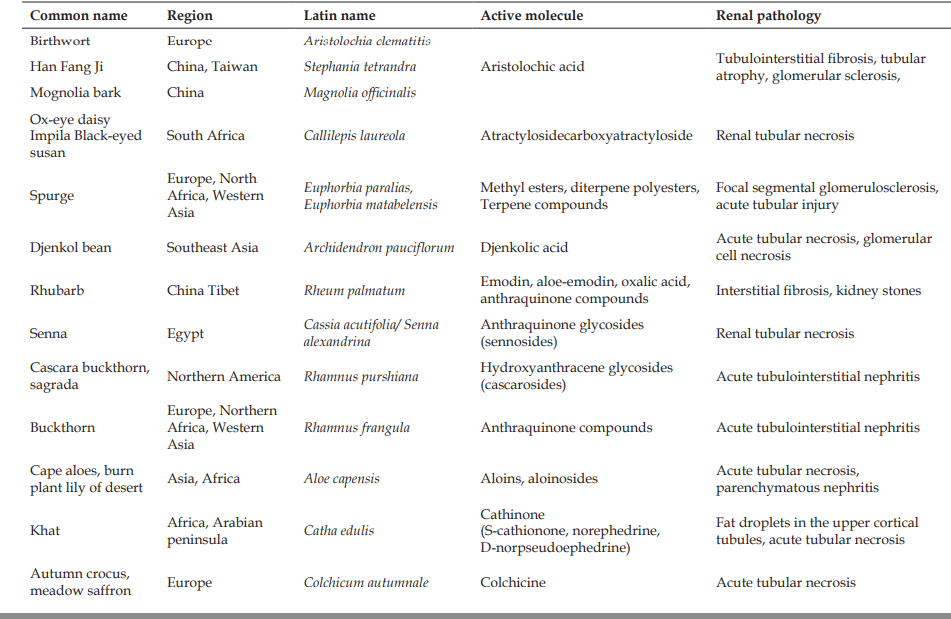
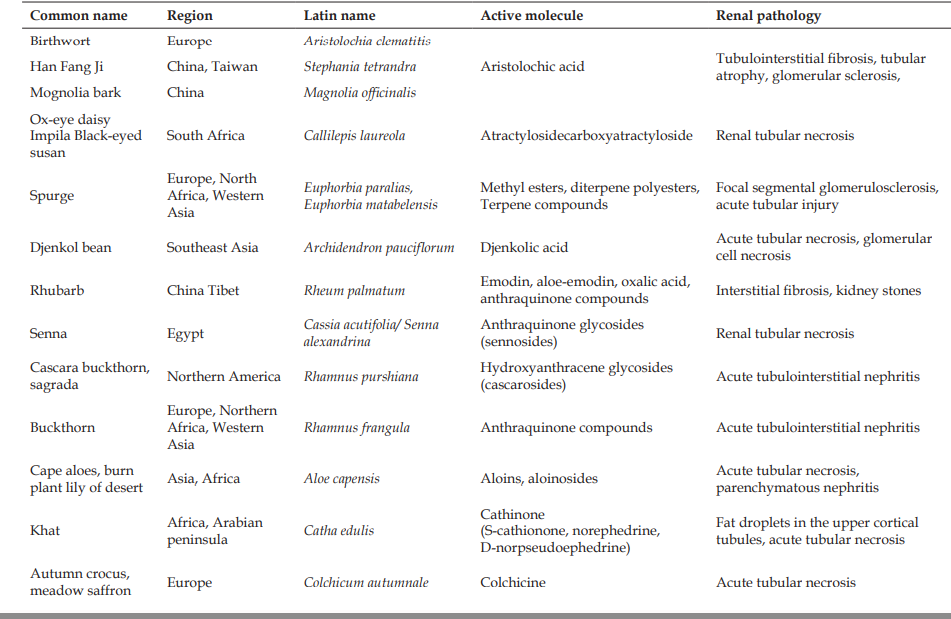
After cardiovascular disease, renal failure is a frequent cause of morbidity and mortality in the population worldwide. Humans are exposed to numerous plant toxins that cause deterioration of renal function with noticeable histopathological changes. Despite of extensive studies in past, recently only few articles have reported with an integrated approach to their nephrotoxic effects. In this article, we present plants which are involved in nephrotoxicity
References
- 1. Froberg B, Ibrahim D, Furbee RB. Plant poisoning. Emerg Med Clin North Am. 2007;25(2):375-433.
- 2. Eddleston M, Persson H. Acute plant poisoning and antitoxin antibodies: antivenoms. J Toxicol Clin Toxicol. 2003;41(3):309-15.
- 3. Sundaragiri S, Tandur S. Electrocardiographic profile of cardiotoxic plants and animals. Int J Med Res Health Sci. 2016;5(11):719-25.
- 4. Kristanc L, Kreft S. European medicinal and edible plants associated with subacute and chronic toxicity part I: Plants with carcinogenic, teratogenic and endocrine-disrupting effects. Food Chem Toxicol. 2016;92:150-64.
- 5. Ouarghidi A, Powell B, Martin GJ, De Boer H, Abbad A. Species substitution in medicinal roots and possible implications for toxicity of herbal remedies in Morocco. Econ Bot. 2012;66(4):370-82.
- 6. Efferth T, Kaina B. Toxicities by herbal medicines with emphasis to traditional Chinese medicine. Curr Drug Metab. 2011;12(10):989-96.
- 7. Meyer MM, Chen TP, Bennett WM. Chinese herb nephropathy. Proc (Bayl Univ Med Cent). 2000;13(4):334-7.
- 8. Luyckx VA, Steenkamp V, Stewart MJ. Acute renal failure associated with the use of traditional folk remedies in South Africa. Renal Fail. 2005;27(1):35-43.
- 9. Jha V. Herbal medicines and chronic kidney disease. Nephrology (Carlton). 2010;15(Suppl 2):10-7.
- 10. Vanherweghem JL, Tielemans C, Abramowicz D, Depierreux M, Vanhaelen-Fastre R, Vanhaelen M, et al. Rapidly progressive interstitial renal fibrosis in young women: association with slimming regimen including Chinese herbs. Lancet. 1993;341(8842):387-91.
- 11. Cosyns JP. Aristolochic acid and ‘Chinese herbs nephropathy’. Drug Saf. 2003;26(1):33-48.
- 12. Popat A, Shear NH, Malkiewicz I, Stewart MJ, Steenkamp V, Thomson S, et al. The toxicity of Callilepis laureola, a South African traditional herbal medicine. Clin Biochem. 2001;34(3):229-36.
- 13. Boubaker K, Ounissi M, Brahmi N, Goucha R, Hedri H, Abdellah TB, et al. Acute renal failure by ingestion of Euphorbia paralias. Saudi J Kidney Dis Transpl. 2013;24(3):571-5.
- 14. Bunawan NC, Rastegar A, White KP, Wang NE. Djenkolism: case report and literature review. Int Med Case Rep J. 2014;7:79-84.
- 15. Wong JS, Chua HH, Tan C, Ong TA. Acute anuric renal failure following jering bean ingestion. Asian J Surg. 2007;30(1):80-1.
- 16. Au TC. Acute renal failure associated with prolonged intake of slimming pills containing anthraquinones. Hong Kong Med J. 2006;12(5):394-7.
- 17. Vanderperren B, Rizzo M, Angenot L, Haufroid V, Jadoul M, Hantson P. Acute liver failure with renal impairment related to the abuse of senna anthraquinone glycosides. Ann Pharmacother. 2005;39(7-8):1353-7.
- 18. Adesunloye BA. Acute renal failure due to the herbal remedy CKLS. Am J Med. 2003;115(6):506-7.
- 19. Luyckx VA, Ballantine R, Claeys M, Cuyckens F, Van den Heuvel H, Cimanga RK, et al. Herbal remedy-associated acute renal failure secondary to Cape aloes. Am J Kidney Dis. 2002;39(3):E13.
- 20. Al-Mamary M, Al-Habori M, Al-Aghbari AM, Baker MM. Investigation into the toxicological effects of Catha edulis leaves: a short term study in animals. Phytother Res. 2002;16(2):127-32.
- 21. Sundov Z, Nincevic Z, Definis-Gojanovic M, Glavina-Durdov M, Jukic I, Hulina N, et al. Fatal colchicine poisoning by accidental ingestion of meadow saffron: case report. Forensic Sci Int. 2005;149(2-3):253-6.
- 22. Saito T, Tsuboi Y, Fujisawa G, Sakuma N, Honda K, Okada K, et al. An autopsy case of licorice-induced hypokalemic rhabdomyolysis associated with acute renal failure: special reference to profound calcium deposition in skeletal and cardiac muscle. Nihon Jinzo Gakkai Shi. 1994;36(11):1308-14.
- 23. Kim CS, Kim SM, Choi JS, Bae EH, Kim SW. Dioscorea quinqueloba induces acute kidney injury: two case reports. J Clin Toxicol. 2011;1(107):2161-0495.
- 24. Smith AY, Feddersen RM, Gardner KD Jr, Davis CJ Jr. Cystic renal cell carcinoma and acquired renal cystic disease associated with consumption of chaparral tea: a case report. J Urol. 1994;152(6 Pt 1):2089-91.
- 25. Dapar LM, Maxwell P, Aguiyi CJ, Wannang NN, Gyang SS, Tanko MN. The histopathologic effects of Securidaca longepedunculata on heart, liver, kidney and lungs of rats. Afr J Biotechnol. 2007;6(5):591-5.
- 26. Eiam-Ong S, Sitprija V. Tropical plant associated nephropathy. Nephrology (Carlton). 1998;4(5-6):313-9.
- 27. Weisbord SD, Soule JB, Kimmel PL. Poison on line—acute renal failure caused by oil of wormwood purchased through the Internet. N Engl J Med. 1997;337(12):825-7.
- 28. Hilepo JN, Bellucci AG, Mossey RT. Acute renal failure caused by ‘cat’s claw’ herbal remedy in a patient with systemic lupus erythematosus. Nephron. 1997;77(3):361.
- 29. Tandon HD. Handling toxicoses of unknown origin. Food Addit Contam. 1993;10(1):105-13.
- 30. Bone K. Echinacea: When should it be used? Alt Med Rev. 1997;2(6):451-8.
- 31. Akdogan M, Kilinc I, Oncu M, Karaoz E, Delibas N. Investigation of biochemical and histopathological effects of Mentha piperita L. and Mentha spicata L. on kidney tissue in rats. Hum Exp Toxicol. 2003;22(4):213-9.
- 32. Anderson IB, Mullen WH, Meeker JE, Khojasteh-Bakht SC, Oishi S, Nelson SD, et al. Pennyroyal toxicity: measurement of toxic metabolite levels in two cases and review of the literature. Ann Intern Med. 1996;124(8):726-34.
- 33. Sandler B, Aronson P. Yohimbine-induced cutaneous drug eruption, progressive renal failure, and lupus-like syndrome. Urology. 1993;41(4):343-5.
- 34. Aboyade OM, Styger G, Gibson D, Hughes G. Sutherlandia frutescens: the meeting of science and traditional knowledge. J Altern Complement Med. 2014;20(2):71-6.
- 35. Filippich LJ, Zhu J, Oelrichs P, Alsalami MT, Doig AJ, Cao GR, et al. Hepatotoxic and nephrotoxic principles in Terminalia oblongata. Res Vet Sci. 1991;50(2):170-7.
- 36. Chrispal A. Cleistanthus collinus poisoning. J Emerg Trauma Shock. 2012;5(2):160-6.
- 37. Chou WC, Wu CC, Yang PC, Lee YT. Hypovolemic shock and mortality after ingestion of Tripterygium wilfordii Hook F.: a case report. Int J Cardiol. 1995;49(2):173-7.
- 38. Lee JJ, Chen HC. Flavonoid-induced acute nephropathy by Cupressus funebris Endl (Mourning Cypress). Am J Kidney Dis. 2006;48(5):e81-5.
- 39. Langston CE. Acute renal failure caused by lily ingestion in six cats. J Am Vet Med Assoc. 2002;220(1):49-52.
- 40. Adekomi DA, Musa AA, Tijani AA, Adeniyi TD, Usman B. Exposure to smoke extract of Datura stramonium leaf: Some of its effects on the heart, liver, lungs, kidneys and testes of male Sprague Dawley rats. J Pharmacognosy Phytother. 2011;3(5):67-75.
- 41. Lin JL, Ho YS. Flavonoid-induced acute nephropathy. Am J Kidney Dis. 1994;23(3):433-40.
- 42. Vetter J. Poison hemlock (Conium maculatum L.). Food Chem Toxicol. 2004;42(9):1373-82.
- 43. Blau JJ. Ephedrine nephrolithiasis associated with chronic ephedrine abuse. J Urol. 1998;160(3 Pt 1):825.
- 44. Chen CL, Fang HC, Chou KJ, Wang JS, Chung HM. Acute oxalate nephropathy after ingestion of star fruit. Am J Kidney Dis. 2001;37(2):418-22.
- 45. Huang HH, Yen DH, Wu ML, Deng JF, Huang CI, Lee CH. Acute Erycibe henryi Prain (“Ting Kung Teng”) poisoning. Clin Toxicol (Phila). 2006;44(1):71-5.
- 46. Samal KK, Sahu HK, Gopalakrishnakone P. Clinico-pathological study of Thevetia peruviana (yellow oleander) poisoning. J Wildern Med. 1992;3(4):382-6.
- 47. Terris MK, Issa MM, Tacker JR. Dietary supplementation with cranberry concentrate tablets may increase the risk of nephrolithiasis. Urology. 2001;57(1):26-9.
- 48. Aslani MR, Maleki M, Mohri M, Sharifi K, Najjar-Nezhad V, Afshari E. Castor bean (Ricinus communis) toxicosis in a sheep flock. Toxicon. 2007;49(3):400-6.
- 49. Gabardi S, Cormier C, Cina J, Luyckx VA. Renal dysfunction associated with herbal remedies and dietary supplements. Nephrol Rounds. 2003;2:304-14.
- 50. Li YJ, Lin JL, Yang CW, Yu CC. Acute renal failure induced by a Brazilian variety of propolis. Am J Kidney Dis. 2005;46(6):e125-9.
- 51. Akiyasu T, Paudyal B, Paudyal P, Kumiko M, Kazue U, Takuji N, et al. A case report of acute renal failure associated with bee pollen contained in nutritional supplements. Ther Apher Dial. 2010;14(1):93-7.
- 52. Kirchmair M, Carrilho P, Pfab R, Haberl B, Felgueiras J, Carvalho F, et al. Amanita poisonings resulting in acute, reversible renal failure: new cases, new toxic Amanita mushrooms. Nephrol Dial Transplant. 2012;27(4):1380-6.
- 53. Frank H, Zilker T, Kirchmair M, Eyer F, Haberl B, Tuerkoglu-Raach G, et al. Acute renal failure by ingestion of Cortinarius species confounded with psychoactive mushrooms: a case series and literature survey. Clin Nephrol. 2009;71(5):557-62.
Data Sharing Statement
There are no additional data available. All raw data and code are available upon request.
Funding
This research received no funding.
Author Contributions
Whether all authors contributed significantly to the work and approve its publication.
Ethics Declaration
This article does not involve any human or animal subjects, and therefore does not require ethics approval.
Acknowledgements
We would like to express our gratitude to the patients, their families, and all those who have contributed to this study.
Conflicts of Interest
The authors report no conflicts of interest in this work.
About this article

Cite this article
Licence:
Attribution-Non-commercial 4.0 International (CC BY-NC 4.0)This license enables reusers to distribute, remix, adapt, and build upon the material in any medium or format for noncommercial purposes only, and only so long as attribution is given to the creator.
| Received | Accepted | Published |
|---|---|---|
| March 07, 2018 | April 02, 2018 | May 30, 2018 |
DOI: 10.21088/ijfmp.0974.3383.11218.16
Keywords
PlantPoisoningNephrotoxicityRenal failureAcute tubular necrosisSearch for Similar Articles
Similar Articles
- Diatom Analysis in Thermophilic water bodies: A Study on Hot Water Springs of Ma...
- Morphometric Study of Supra-meatal Triangle and Mastoid process in the Adult dry...
- Histopathological Spectrum of Autopsy Cases: A One Year Retrospective Observatio...
- Forensic Differentiation of Manner of Death in Railway Fatalities: A FourCase Se...
- Understanding assault Patterns: A Cross-sectional study of Cases at Chri, Kelamb...
Article Level Metrics
Last UpdatedMonday 19 October 2026, 13:06:52 (IST)
16333
Accesses
29
3216
00
Citations
NA
NA
NA
Download citation
Article Keywords
Keyword Highlighting
Highlight selected keywords in the article text.
Timeline
| Received | March 07, 2018 |
| Accepted | April 02, 2018 |
| Published | May 30, 2018 |
licence
Attribution-Non-commercial 4.0 International (CC BY-NC 4.0)
This license enables reusers to distribute, remix, adapt, and build upon the material in any medium or format for noncommercial purposes only, and only so long as attribution is given to the creator.