Full Text (PDF)
Indian Journal of Forensic Medicine and Pathology 15(1):p 37-41, January-March 2022. | DOI: https://doi.org/10.21088/ifjmp.0974.3383.15122.16
Original Article
Profile of Deaths due to Drowning in a Tertiary Care Centre Located along Sea Shore and River Bank
Dr. Yogesh C, Shashikantha Naik CR, Lohith Kumar R, Abishek Yadav
Author Information
Licence:
Attribution-Non-commercial 4.0 International (CC BY-NC 4.0)This license enables reusers to distribute, remix, adapt, and build upon the material in any medium or format for noncommercial purposes only, and only so long as attribution is given to the creator
Indian Journal of Forensic Medicine and Pathology 15(1):p 37-41, January-March 2022. | DOI: https://doi.org/10.21088/ifjmp.0974.3383.15122.16
How Cite This Article:
Singh A, Baraw R, Yadav J. Robustness index of clavicle: a beneficial but less explored parameter for sex determination. Indian J Forensic Med Pathol. 2022;15(1):33-6.Timeline
Received : December 14, 2022
Accepted : February 10, 2022
Published : March 30, 2022
Abstract
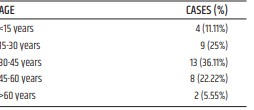
Context: Profiling of drowning is essential for understanding its full burden which is vital to resourcing and directing prevention efforts as drowning is still aone of the leading causes of morbidity and mortality. aim: The aim of this study is to analyse the factors associated with drowning cases recoded in a tertiary care centre located along sea shore and river bank in one year. settings and design: A retrospective content based analysis of drowning cases recorded in one year from January 1st 2019 to 31stDecember 2019 in a tertiary care centre located along sea shore and river bank and the results were tabulated. results: Of the 36 cases, 26 cases were males and 10 were females accounting for 76.3% and 27.7% respectively with 88.88% (32 cases) accidental drowning and 36.11% (13 cases) in the age group of 30-45 years. conclusions: Our study concludes that the middle-aged rural males form the majority of drowning in large water bodies highlighting the absence of safety measures and awareness of swimming skills contributing to the causal factors of drowning.
References
- 1. World Health Organization. Global report on drowning: preventing a leading killer. Geneva: World Health Organization; 2014.
- 2. Van Beeck EF, Branche CM, Szpilman D, Modell JH, Bierens JJ. A new definition of drowning: Towards documentation and prevention of a global public health problem. Bull World Health Organ. 2005;83:853–6.
- 3. Peden MM, McGee K. The epidemiology of drowning worldwide. Inj Control SafPromot. 2003;10:195–9.
- 4. Veetil JN, Parambath VA, Rajanbabu B, Suresh S. An epidemiological study of drowning survivors among school children. J Family Med Prim Care. 2017;6(4):844-847. Doi:10.4103/jfmpc. jfmpc_349_16.
- 5. Franklin RC, Scarr JP, Pearn JH. Reducing drowning deaths: the continued challenge of immersion fatalities in Australia. MJA. 2010;192(3):123–6.
- 6. Rahman A, Giashuddin SM, Svanstrom L, et al. Drowning- a major but neglected child health problem in rural Bangladesh: implications for low income countries. Int J Inj Control SafPromot. 2006;13(2):101–5.
- 7. Lin C, Wang Y, Lu T, et al. Unintentional drowning mortality, by age and body of water: an analysis of 60 countries. InjPrev 2015;21:e43–350.
- 8. World Health Organization. Preventing drowning: an implementation guide. Geneva: World Health Organization; 2017.
- 9. RM Tan, The epidemiology and prevention of drowning in Singapore. Singapore medical journal 45 (7), 324-329, 2004.
- 10. Won KC, Mok RM, Kuo RS. The distribution of injury mortality of children aged 1 to 14 in GeeChen County. Chin J Prev Med. 1995:2958–60.
- 11. Wintemute GJ, Drake C, Wright M (1991) Immersion events in residential swimming pools: evi-dence for the experience effect. Am J Dis Child 101:200– 20. 12. Saunders CJ, Adriaanse R, Simons A, van Niekerk A. Fatal drowning in the Western Cape, South Africa: a 7-year retrospective, epidemiological study. Inj Prev. 2019;25(6):529-534.
- 13. Morris N.K., Du Toit-Prinsloo L., Saayman G. Drowning in Pretoria, South Africa: A 10-year review. J. Forensic Leg. Med. 2016;37:66–70.
- 14. Turgut A. A study on multiple drowning syndromes. Int J Inj Control SafPromot. 2012;19(1):63–67.
- 15. Grainger C.R. Drowning accidents in the Seychelles. J. R. Soc. Health. 1985;105:129– 130. Doi: 10.1177/146642408510500408.
- 16. Peden, A.E., Franklin, R.C. & Clemens, T. Exploring the burden of fatal drowning and data characteristics in three high income countries: Australia, Canada and New Zealand. BMC Public Health 19, 794 (2019).
- 17. Kobusingye O., Tumwesigye N.M., Magoola J., Atuyambe L., Olange O. Drowning among the lakeside fishing communities in Uganda: Results of a community survey. Int. J. Inj. Control Saf. Promot. 2017;24:363–370.
- 18. Yang L, Nong QQ, Li CL, Feng QM, Lo SK. Risk factors for childhood drowning in rural regions of a developing country: a case-control study. Injury prevention. 2007;13(3):178–182.
- 19. Lunetta P, Smith GS, Pentilä A, et al. Unintentional drowning in Finland 1970–2000: a population-based study. Int J Epidemiol2004;33:1053–63.
- 20. Yang L, Nong QQ, Li CL, Feng QM, Lo SK. Risk factors for childhood drowning in rural regions of a developing country: A case-control study. Inj Prev. 2007;13:178– 82.
- 21. Asher KN, Rivara FP, Felix D, Vance L, Dunne R. Water safety training as a potential means of reducing risk of young children’s drowning. Inj Prev. 1995;1:228– 33.
- 22. Consumers‘ Association of Quality of Life (1998) Safety on ferryboats. “EKPIZO“ Consumers‘ Association of Quality of Life bulletin 1:23–2.
- 23. Peden AE, Franklin RC, Leggat PA. Fatal River drowning: identification of research gaps through a systematic literature review. Injury Prevention. 2016;22:202–9.
- 24. Miller L, Alele FO, Emeto TI, Franklin RC. Epidemiology, Risk Factors and Measures for Preventing Drowning in Africa: A Systematic Review. Medicina (Kaunas). 2019;55(10):637. Published 2019 Sep
- 25. doi:10.3390/medicina55100637.
Data Sharing Statement
There are no additional data available. All raw data and code are available upon request.
Funding
This research received no funding.
Author Contributions
All authors contributed significantly to the work and approve its publication.
Ethics Declaration
This article does not involve any human or animal subjects, and therefore does not require ethics approval.
Acknowledgements
We would like to express our gratitude to the patients, their families, and all those who have contributed to this study.
Conflicts of Interest
No conflicts of interest in this work.
About this article

Cite this article
Singh A, Baraw R, Yadav J. Robustness index of clavicle: a beneficial but less explored parameter for sex determination. Indian J Forensic Med Pathol. 2022;15(1):33-6.
Licence:
Attribution-Non-commercial 4.0 International (CC BY-NC 4.0)This license enables reusers to distribute, remix, adapt, and build upon the material in any medium or format for noncommercial purposes only, and only so long as attribution is given to the creator
| Received | Accepted | Published |
|---|---|---|
| December 14, 2022 | February 10, 2022 | March 30, 2022 |
DOI: https://doi.org/10.21088/ifjmp.0974.3383.15122.16
Keywords
drowningaccidental deathsswimming deathsdrowning preventiondrowing safety measuresSearch for Similar Articles
Similar Articles
- Diatom Analysis in Thermophilic water bodies: A Study on Hot Water Springs of Ma...
- Morphometric Study of Supra-meatal Triangle and Mastoid process in the Adult dry...
- Histopathological Spectrum of Autopsy Cases: A One Year Retrospective Observatio...
- Forensic Differentiation of Manner of Death in Railway Fatalities: A FourCase Se...
- Understanding assault Patterns: A Cross-sectional study of Cases at Chri, Kelamb...
Article Level Metrics
Last UpdatedSunday 18 October 2026, 11:00:55 (IST)
16257
Accesses
12
3205
00
Citations
NA
NA
NA
Download citation
Article Keywords
Keyword Highlighting
Highlight selected keywords in the article text.
Timeline
| Received | December 14, 2022 |
| Accepted | February 10, 2022 |
| Published | March 30, 2022 |
licence
Attribution-Non-commercial 4.0 International (CC BY-NC 4.0)
This license enables reusers to distribute, remix, adapt, and build upon the material in any medium or format for noncommercial purposes only, and only so long as attribution is given to the creator