Full Text (PDF)
Indian Journal of Forensic Medicine and Pathology 17(2):p 113-120, January – June 2024. | DOI: https://doi.org/10.21088/ijfmp.0974.3383.17224.7
Original Article
Pattern of Suicidal Deaths and Most Affected Section of Society during Covid-19 Pandemic Time in Bhopal Region
Drishti Patel, Ashish Jain, Sahajad Khilji, Rajendra Baraw
Author Information
Licence:
Attribution-Non-commercial 4.0 International (CC BY-NC 4.0)This license enables reusers to distribute, remix, adapt, and build upon the material in any medium or format for noncommercial purposes only, and only so long as attribution is given to the creator.
Indian Journal of Forensic Medicine and Pathology 17(2):p 113-120, January – June 2024. | DOI: https://doi.org/10.21088/ijfmp.0974.3383.17224.7
How Cite This Article:
Patel D, Jain A, Khilji S, et al. Pattern of suicidal Deaths and Most Affected Section of Society during Covid-19 Pandemic time in Bhopal Region. Indian J Forensic Med Pathol. 2024;17(2):113-120.Timeline
Received : April 04, 2024
Accepted : June 01, 2024
Published : June 30, 2024
Abstract
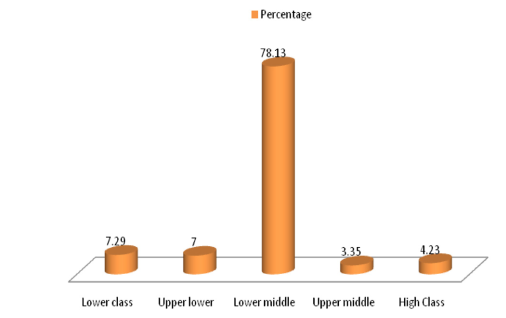
Globally, the COVID-19 pandemic presented previously unheard-of difficulties that affected a number of aspects of daily life. This study aims to illustrate the most impacted segments of the population during the COVID-19 pandemic and investigates the suicide trend in Madhya Pradesh’s central area, providing insight into the possible effects of the crisis on mental health. India is a country with a large population and a wide range of socioeconomic backgrounds, and it has been severely affected by the pandemic. People’s stress levels increased as a result of the nation’s widespread lockdowns, economic downturns, pressure on the healthcare system, and social unrest. These elements have added to an increased psychological pressure, as have the worries of being sick, being alone, and losing loved ones. Anecdotal data and preliminary research point to a concerning spike in suicide rates in India during the pandemic. Frontline healthcare professionals, migrants, and vulnerable people are just a few of the demographic groups that have been affected. Aside from this the groups with the highest suicide rates are married people, lower middle economic class, nuclear families, jobless people, and students. Probable reason behind that according to our study is hopelessness and guilt of not able to meet family expectations due to unemployment or loss of job during covid era. Things get worse when stigma, lack of awareness, and restricted access to mental health resources are combined. To create successful treatments and support networks, it is essential to comprehend the complex relationships that exist between the COVID-19 pandemic and suicide rates in India. To address the mental health issues brought on by the epidemic in India and other comparable settings, more study is needed to determine the long-term effects and create focused mitigation mechanisms. This research demonstrates the most impacted segment of the population and the suicide trends during the COVID-19 pandemic reported to the mortuary of a tertiary care center of central region of Madhya Pradesh.
References
- 1. Wang H, Naghavi M, Allen C, Barber RM, Bhutta ZA, Carter A, Casey DC,Charlson FJ, Chen AZ,Coates MM,Coggeshall M. Global, regional, and national life expectancy, all-cause mortality, and cause-specificmortality for 249 causes of death,1980–2015:a systematic analysis for the Global Burden of Disease Study 2015. The lancet. 2016 Oct 8;388 (10053):1459-544.
- 2. Dandona R, Kumar GA, Dhaliwal RS, Naghavi M, Vos T, Shukla DK, Vijayakumar L, Gururaj G, Thakur JS, Ambekar A, Sagar R. Gender differentials and state variations in suicide deaths in India: the Global Burden of Disease Study 1990–2016. The Lancet Public Health. 2018 Oct 1;3(10):e478-89.
- 3. Mohanty S, Sahu G, Mohanty MK, Patnaik M. Suicide in India–A four year retrospective study. Journal of forensic and legal medicine. 2007 May1;14(4):185-9.
- 4. Deaths by suicide at their highest rate in 2021, shows NCRB data, https:// www.hindustantimes.com/india-news/ suicide-rate-soars-to-highest-ever-in- 2021-crimes-accidents-close-in-on- 2019-levels-101661711716349.html.
- 5. Pooja R, Kochar SR. Suicide in youth: Shifting paradigm. Governing Council 2010-2012. 2010 Jan;32:45.
- 6. Gupta SC, Singh H. Psychiatric illness in suicide attempters. Indian journal of psychiatry.1981Jan;23(1):69.
- 7. Upadhyaya SK, Nijhawan M, Sharma DK. Study of Sociodemographicand Family Factors in Suicide Attempters in Kota. Journal of MedicalScienceandResear ch.2012;3(1):6.
- 8. Kumar PS. Ananalysis of suicide attempters versus completers in Kerala.Indian journal of psychiatry.2004Apr;46(2):144.
- 9. Anil RA, Nadkarni A. Suicide in India: a systematic review. Shanghai archives of psychiatry. 2014Apr;26(2):69.
- 10. Srivastava A. Psychological attributes and sociodemographic profile of hundred completed suicide victims in the state of Goa, India. Indian journal of psychiatry. 2013 Jul;55(3):268.
- 11. Bastia BK, Kar N. A psychological autopsy study of suicidal hangingfrom Cuttack, India:Focus on stressful life situations. Archives of Suicide Research.2009 Jan 9;13(1):100-4.
- 12. Shetty CK. Suicide cases in Manipal, South India: an autopsy study. Int J Forensic Sci Pathol. 2014 Aug 19;2(7):50-6.
- 13. Prasad J, AbrahamVJ, Minz S, Abraham S, Joseph A, Muliyil JP, George K, Jacob KS. Rates and factors associated with suicide in Kaniyambadi block, Tamil Nadu, South India, 2000–2002. International Journal of Social Psychiatry. 2006 Jan;52(1):65-71.
- 14. Vijaya kumari N. Suicidal hanging: a prospective study. Journal of Indian Academy of Forensic Medicine.2011;33(4):353-5.
Data Sharing Statement
There are no additional data available. All raw data and code are available upon request.
Funding
This research received no funding.
Author Contributions
All authors contributed significantly to the work and approve its publication.
Ethics Declaration
The study was approved by the Institutional Ethics Committee.
Acknowledgements
We would like to express our gratitude to the patients, their families, and all those who have contributed to this study
Conflicts of Interest
No conflicts of interest in this work.
About this article

Cite this article
Patel D, Jain A, Khilji S, et al. Pattern of suicidal Deaths and Most Affected Section of Society during Covid-19 Pandemic time in Bhopal Region. Indian J Forensic Med Pathol. 2024;17(2):113-120.
Licence:
Attribution-Non-commercial 4.0 International (CC BY-NC 4.0)This license enables reusers to distribute, remix, adapt, and build upon the material in any medium or format for noncommercial purposes only, and only so long as attribution is given to the creator.
| Received | Accepted | Published |
|---|---|---|
| April 04, 2024 | June 01, 2024 | June 30, 2024 |
DOI: https://doi.org/10.21088/ijfmp.0974.3383.17224.7
Keywords
COVID-19SuicideSocietyPandemicPost mortemSearch for Similar Articles
Similar Articles
- Diatom Analysis in Thermophilic water bodies: A Study on Hot Water Springs of Ma...
- Morphometric Study of Supra-meatal Triangle and Mastoid process in the Adult dry...
- Histopathological Spectrum of Autopsy Cases: A One Year Retrospective Observatio...
- Forensic Differentiation of Manner of Death in Railway Fatalities: A FourCase Se...
- Understanding assault Patterns: A Cross-sectional study of Cases at Chri, Kelamb...
Article Level Metrics
Last UpdatedSunday 18 October 2026, 08:53:18 (IST)
16253
Accesses
20
3204
00
Citations
NA
NA
NA
Download citation
Article Keywords
Keyword Highlighting
Highlight selected keywords in the article text.
Timeline
| Received | April 04, 2024 |
| Accepted | June 01, 2024 |
| Published | June 30, 2024 |
licence
Attribution-Non-commercial 4.0 International (CC BY-NC 4.0)
This license enables reusers to distribute, remix, adapt, and build upon the material in any medium or format for noncommercial purposes only, and only so long as attribution is given to the creator.