Full Text (PDF)
Indian Journal of Forensic Medicine and Pathology 13(1):p 83-88, January-March 2020. | DOI: https://doi.org/10.21088/ijfmp.0974.3383.13120.12
Original Article
Pattern of Cervical Cytology using Papanicolaou Stain: An Experience from a Tertiary Hospital
Ankitha Hebbar, Rashmi Shetty, Nagarekha Kulkarni, Bharath C null, Pavithra P null
Author Information
Licence:
Attribution-Non-commercial 4.0 International (CC BY-NC 4.0)This license enables reusers to distribute, remix, adapt, and build upon the material in any medium or format for noncommercial purposes only, and only so long as attribution is given to the creato
Indian Journal of Forensic Medicine and Pathology 13(1):p 83-88, January-March 2020. | DOI: https://doi.org/10.21088/ijfmp.0974.3383.13120.12
How Cite This Article:
Shetty R, Hebbar A, Kulkarni N, et al. Pattern of Cervical Cytology using Papanicolaou Stain: An Experience from a Tertiary Hospital. Indian J Forensic Med Pathol. 2020;13(1):83–88.Timeline
Received : September 08, 2019
Accepted : November 02, 2019
Published : December 30, 2019
Abstract
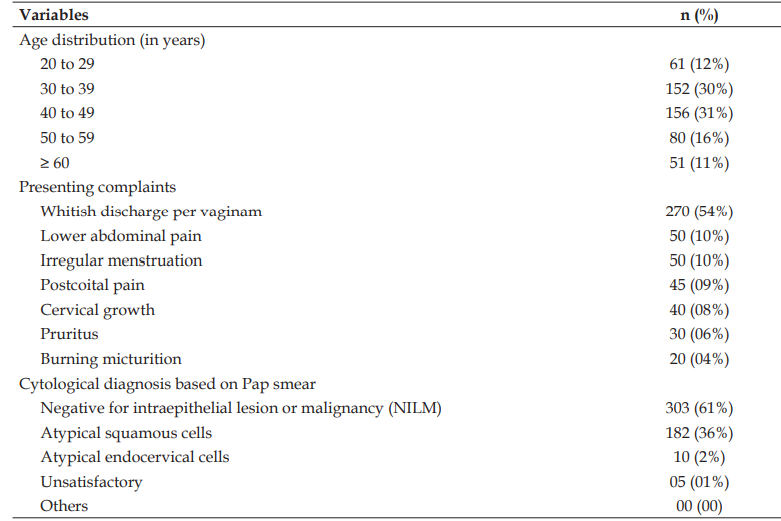
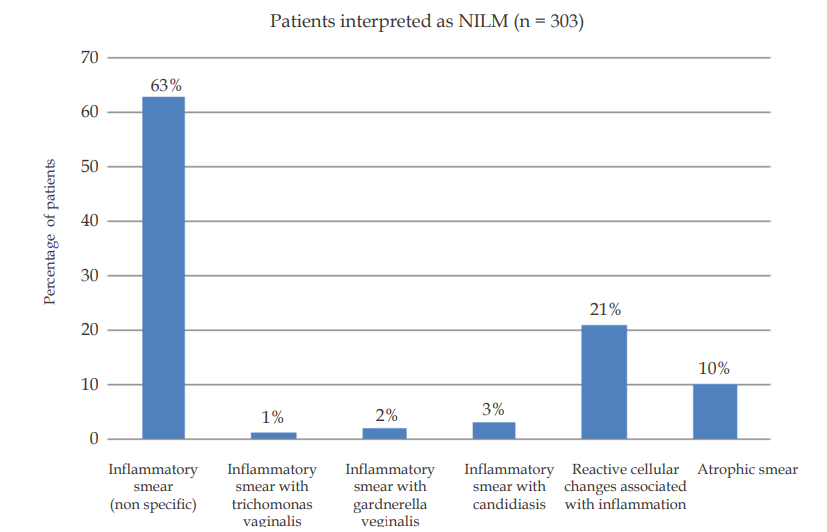
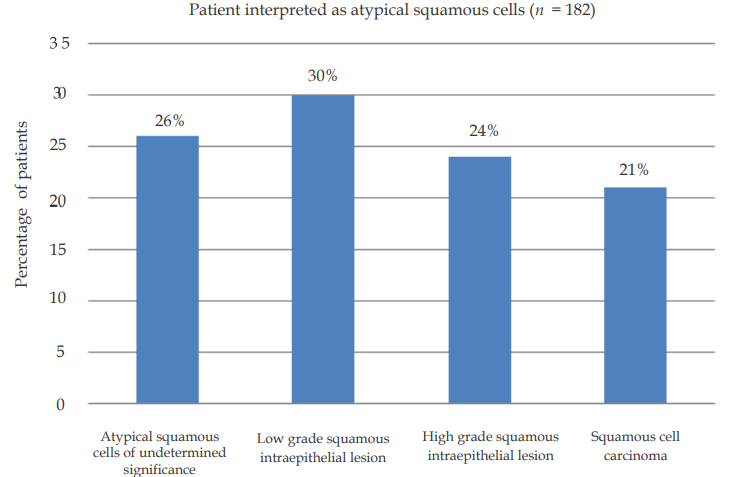
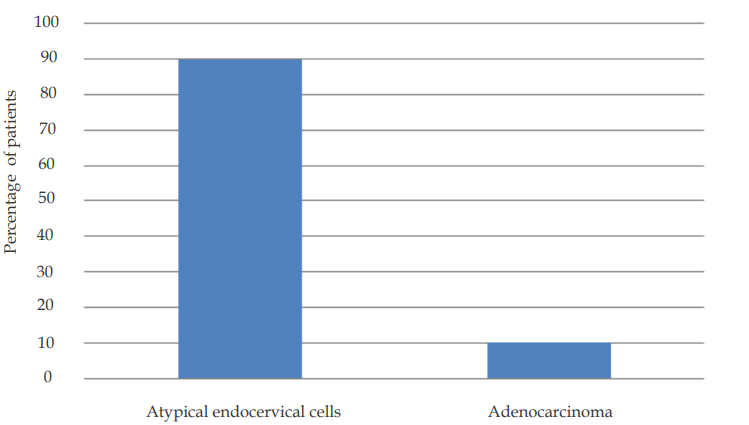
Introduction: Cervical cancer screening using Pap smear is the cornerstone of any cancer control program. The study aimed to know the burden of various cervical lesions which were assessed by conventional Pap smear study. Methodology: We included 500 referred symptomatic patients in the study. The history, deatiled clinical examination, per speculum examination and a vaginal examination were performed for all women. Pap smear was used to screen all women for cervical cancer. Results: Mean age of the study population was 44 years and the most common complaint was whitish discharge per vaginam (54%). Classifying patients according to the Bethesda System 2001 Guidelines, we observed 61% (n = 303) cases to be Negative for Intraepithelial Lesion or Malignancy (NILM), 36% (n = 182) as Atypical Squamous Cells (ASC), 2% (n = 10) as Atypical Endocervical Cells (AEC) and 1% (n = 05) as unsatisfactory. Of the 303 cases of NILM, non-specific inflammatory changes were seen in 63%, reactive cellular changes in 21%, atrophic changes in 10%, candidiasis in 3%, Gardnerella vaginalis in 2% and inflammation with Trichomonas in 1%. Of the 182 ASC, 30% had low-grade squamous intrapeithelial lesion, 26% atypical squamous cells of underdetermined significance, 24% with high-grade squamous intraepithelial lesion and 21% with squamous cell carcinoma. Of the 10 AEC cases, 1 case had adenocarcinoma. Conclusions: Pap smear is less invasive, cost-effective and simple procedure which can be used to detect dysplasia in the cervix.
References
- 1. Mittra I, Mishra GA, Singh S, et al. A cluster randomized, controlled trial of breast and cervix cancer screening in Mumbai, India: methodology and interim results after three rounds of screening. International Journal of Cancer. 2010;126(4):976–84.
- 2. Sankaranarayanan R, Budukh AM, Rajkumar R. Effective screening programmes for cervical cancer in low- and middle-income developing countries. Bull World Health Organ. 2001;79(10):954–62.
- 3. Krishnan S, Madsen E, Porterfield D, et al. Advancing cervical cancer prevention in India: implementation science priorities. Oncologist. 2013;18(12):1285–97.
- 4. Salhan S. Bethesda system of grading of cervical cancer. Text Book of Gynaecology. 1st ed. New Delhi: Jaypee Brothers Medical Publishers Private Ltd; 2011. pp. 311–2.
- 5. Bamanikar SA, Baravkar D, Chandanwale S, et al. Study of cervical cytology and its correlation with clinical and histopathological findings. Clinical Cancer Investigation Journal. 2016 Sep 1;5(5):403.
- 6. Kaveri SB, Khandelwal S. Role of Pap smear and cervical biopsy in unhealthy cervix. Journal of Scientific and Innovative Research. 2015;4(1):4–9.
- 7. Verma A, Verma S, Vashist S, et al. A study on cervical cancer screening in symptomatic women using Pap smear in a tertiary care hospital in rural area of Himachal Pradesh, India. Middle East Fertility Society Journal. 2017 Mar 1;22(1):39–42.
- 8. Atla BL, Uma P, Shamili M, et al. Cytological patterns of cervical Pap smears with histopathological correlation. Int J Res Med Sci. 2015;3(8):1911–6.
- 9. Sharma S. Down staging of carcinoma cervix: A suitable of approach for low resource settings. J NP Med Assoc. 2000;39:195–98.
- 10. Alsharif M, Kjeldahl K, Curran C, et al. Clinical significance of the diagnosis of low-grade squamous intraepithelial lesion, cannot exclude high-grade squamous intraepithelial lesion. Cancer. 2009;117:92.
- 11. Bal MS, Goyal R, Suri AK, et al. Detection of abnormal cervical cytology in Papanicolaou smears. J Cytol. 2012 Jan;29(1):45–7.
- 12. Nayir T, Okyay AR, Nizlican E, et al. Cervical cancer screening in an early diagnosis and screening centre in Mersin, Turkey. Asian Pac J Cancer Prev. 2015;16(16):6909–12.
- 13. Sachan PL, Singh M, Patel ML, et al. A study on cervical cancer screening using Pap smear test and clinical correlation. Asia Pac J Oncol Nurs. 2018 Jul-Sep;5(3):337–341.
- 14. Padmini CP, Indira N, Chaitra R, et al. Cytological and colposcopic evaluation of unhealthy cervix. J Evid Med Healthc. 2015;2:6920–7.
Data Sharing Statement
There are no additional data available. All raw data and code are available upon request.
Funding
This research received no funding.
Author Contributions
Whether all authors contributed significantly to the work and approve its publication.
Ethics Declaration
This article does not involve any human or animal subjects, and therefore does not require ethics approval.
Acknowledgements
We would like to express our gratitude to the patients, their families, and all those who have contributed to this study.
Conflicts of Interest
The authors report no conflicts of interest in this work.
About this article

Cite this article
Shetty R, Hebbar A, Kulkarni N, et al. Pattern of Cervical Cytology using Papanicolaou Stain: An Experience from a Tertiary Hospital. Indian J Forensic Med Pathol. 2020;13(1):83–88.
Licence:
Attribution-Non-commercial 4.0 International (CC BY-NC 4.0)This license enables reusers to distribute, remix, adapt, and build upon the material in any medium or format for noncommercial purposes only, and only so long as attribution is given to the creato
| Received | Accepted | Published |
|---|---|---|
| September 08, 2019 | November 02, 2019 | December 30, 2019 |
DOI: https://doi.org/10.21088/ijfmp.0974.3383.13120.12
Keywords
Cervical malignancyHSILLSILPap smearSearch for Similar Articles
Similar Articles
- Diatom Analysis in Thermophilic water bodies: A Study on Hot Water Springs of Ma...
- Morphometric Study of Supra-meatal Triangle and Mastoid process in the Adult dry...
- Histopathological Spectrum of Autopsy Cases: A One Year Retrospective Observatio...
- Forensic Differentiation of Manner of Death in Railway Fatalities: A FourCase Se...
- Understanding assault Patterns: A Cross-sectional study of Cases at Chri, Kelamb...
Article Level Metrics
Last UpdatedSunday 18 October 2026, 14:50:07 (IST)
16275
Accesses
19
3209
00
Citations
NA
NA
NA
Download citation
Article Keywords
Keyword Highlighting
Highlight selected keywords in the article text.
Timeline
| Received | September 08, 2019 |
| Accepted | November 02, 2019 |
| Published | December 30, 2019 |
licence
Attribution-Non-commercial 4.0 International (CC BY-NC 4.0)
This license enables reusers to distribute, remix, adapt, and build upon the material in any medium or format for noncommercial purposes only, and only so long as attribution is given to the creato