Full Text (PDF)
Indian Journal of Forensic Medicine and Pathology 13(1 (Special Issue)):p 161-170, January-March 2020. | DOI: 10.21088/ijfmp.0974.3383.13120.21
Original Article
Investigation of the Biogeochemical Anomalies of Euphorbia cyparissias plant in Gümüshacıköy—Amasya Pb-Zn-Ag Deposits, Turkey
Author Information
Licence:
Attribution-Non-commercial 4.0 International (CC BY-NC 4.0)This license enables reusers to distribute, remix, adapt, and build upon the material in any medium or format for noncommercial purposes only, and only so long as attribution is given to the creator
Indian Journal of Forensic Medicine and Pathology 13(1 (Special Issue)):p 161-170, January-March 2020. | DOI: 10.21088/ijfmp.0974.3383.13120.21
How Cite This Article:
Gullu Kirat. Investigation of the Biogeochemical Anomalies of Euphorbia cyparissias plant in Gümüshacıköy—Amasya Pb-Zn-Ag Deposits, Turkey. Indian J Forensic Med Pathol. 2020;13(1 Special):161–170.
Timeline
Received : January 02, 2020
Accepted : February 02, 2020
Published : March 30, 2020
Abstract
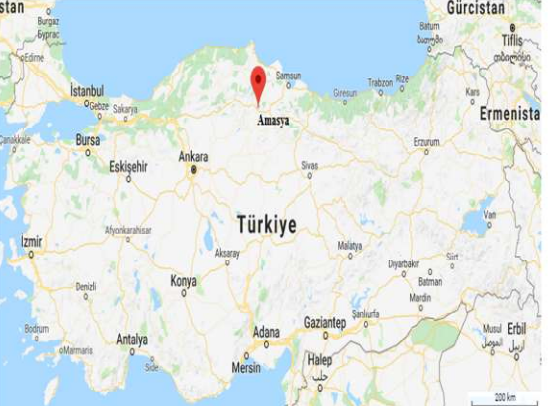
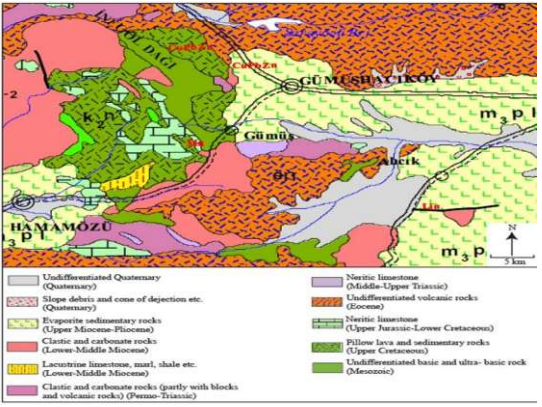
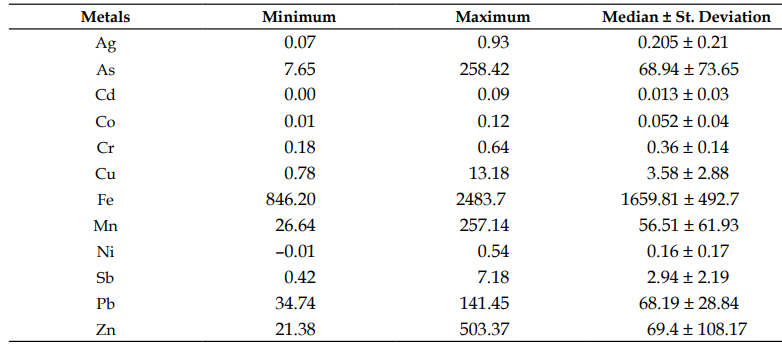
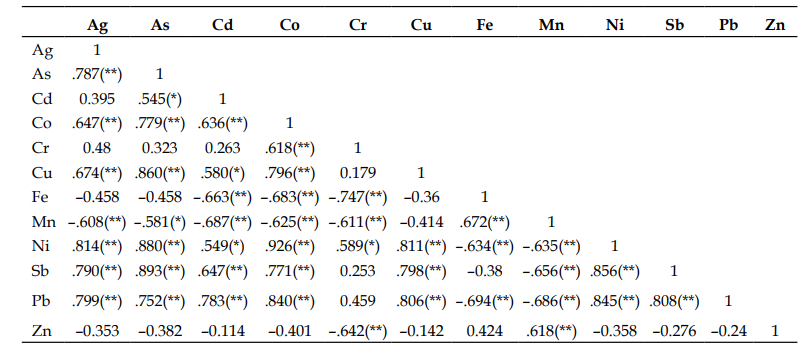
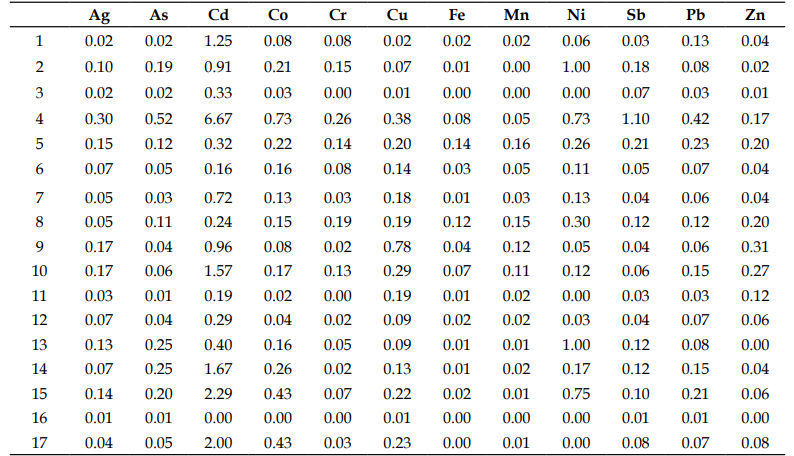
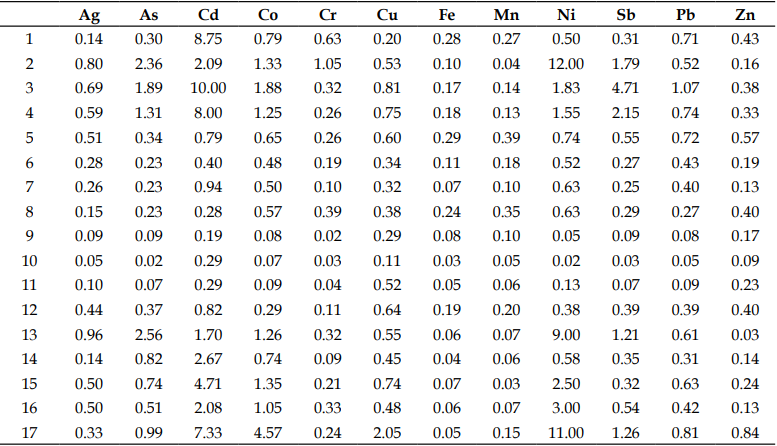
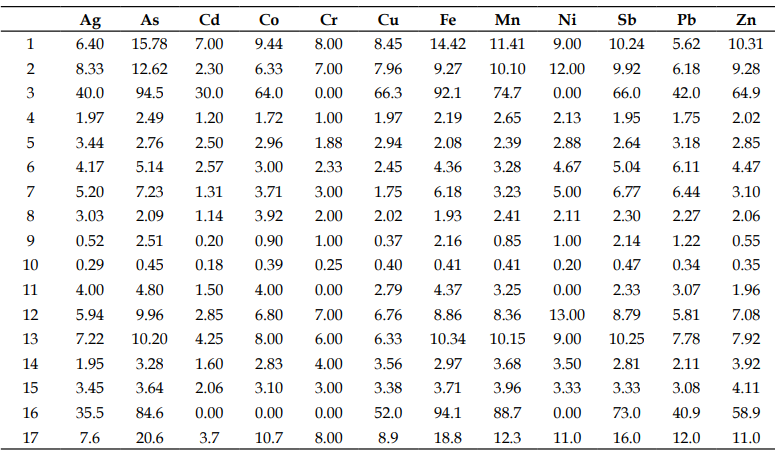
The study area is located in Çorum G34 a3 and a4 section in GümüÅŸhacıköy (Amasya). 17 samples of Euphorbia cyparissias plant grown in this region and related soil samples were collected and analyzed. The metal content of the investigated soil samples is as follows: Fe > Zn > As > Mn > Pb > Cu > Sb > Cr >> Ag > Ni > Co > Cd. The soil pH controlling the metal transfer in the soil, the pH values of the examined soil samples are between 4.66 and 8.22. This range indicates that the soil samples are in acidic and basic conditions. Metal pollution (toxicity) due to increased mining activities may affect the environment and public health. The correlation coefficient was a strong positive correlation between Ni with Co and Ag, As with Sb (0.89); Ni (0.88) and Cu (0.86), Pb with Co (0.84), Cu (0.81), Ni (0.85) and Sb (0.81), Ni with Cu (0.81) and Sb (0.86), while there is a negative correlation between Mn with Ag, As, Cd, Co, Cr, Ni, Sb and Pb, and Fe with Cd, Co, Cr, Ni and Pb. The bioaccumulation factor (BAC) values of Euphorbia cyparissias have been found between not accumulate— high accumulator or hyperaccumulator plants in both root/soil and leaf/soil. The translocation factors (TF) of all metals (10 in location), Cr and Ni (3 in location), Co, Cu, Mn and Zn in the (9 in location), Ni (11 in location), and Cd, Co, Cr, and Ni values (16 in location) are less than 1. TF values calculated outside these locations are greater than 1. TF values greater than 1 showed that the metal concentration in the leaves was higher than the roots.
References
- 1. Davies BE. Heavy metal contamination from base metal mining and smelting: implications for man and his environment. In: Thornton I (Ed). Applied Environmental Geochemistry. London: Academic Press; 1983. pp. 425-462.
- 2. LeDuc DL, Terry N. Phytoremediation of toxic trace elements in soil and water. J Ind Microbiol Biotechnol. 2005 Dec;32(11-12):514–20.
- 3. Ahmet S, Merve S. The phytoremediation potential for strontium of indigenous plants growing in a mining area. Environ Exp Bot. 2009;67:139–44.
- 4. Friesl-Hanl W, Platzer K, Horak O, Gerzabek MH. Immobilising of Cd, Pb and Zn contaminated arable soils close to a former Pb/Zn smelter: a field study in Austria over 5 years. Environ Geochem Health. 2009;31(5):581–94.
- 5. Jieng-feng P, Yong-hui S, Peng Y, et al. Remediation of heavy metal contaminated sediment. J Hazard Mater. 2009;161:633-40.
- 6. Massa N, Andreucci F, Poli M, et al. Screening for heavy metal accumulator among autochthonous plants in polluted site in Italy. Ecotoxicol Environ Saf. 2010;73(8):1988–1997.
- 7. Srilert C, Say KO, Chakkaphan S, Khemarath O. Competitive sorption and transport of Pb2+ Ni2+ Mn2+ and Zn2+ in lateritic soil columns. J Hazard Mater. 2011;190(1-3):391–396.
- 8. Järup L. Hazards of heavy metal contamination. Br Med Bull. 2003;68(1):167–182.
- 9. Pulford ID, Watson C. Phytoremediation of heavy metal contaminated land by trees. Environ Int. 2003 Jul;29(4):529–40.
- 10. Padmavathiamma PK, Li LY. Phytoremediation technology: Hyperaccumulation metals in plants. Water Air Soil Pollut. 2007;184:105-126.
- 11. Mwegoha WJ. The use of phytoremediation technology for abatement soil and groundwater pollution in Tanzania: Opportunities and challenges. J Sustain Dev Afr. 2008;10(1):140-56.
- 12. Tlustoš P, Száková J, Hrubý J, et al. Removal of As Cd Pb and Zn from contaminated soil by high biomass producing plants. Plant Soil Environ. 2006;52(9):413–423.
- 13. Chehregan A, Noori M, Yazdi HL. Phytoremediation of heavy-metal-polluted soils: Screening for new accumulator plants in Angouran mine Iran and evaluation of removal ability. Ecotoxicol Environ Saf. 2009;72:1349–53.
- 14. Mkumbo S, Mwegoha W, Renman G. Assessment of the phytoremediation potential for Pb Zn and Cu of indigenous plants growing in a gold mining area in Tanzania. Int J Environ Sci. 2012;2(4):2425–34.
- 15. Mitchell RL, Burridge SC. Trace Element in soils and crops. Phil Trans Royal Soc London B. 1979;288:15–24.
- 16. Williams CH, David J. The accumulation of Cadmium from Phosphorus Fertilisers and their effect on the Cadmium Content of Plants. Soil Sci. 1976;121:86–93.
- 17. Dickshroon W, Van Broekhoven LW, Lampe JEM. Photo toxicity of Zn Ni Cd Cu and Cr in three pasture plant species supplied with graduated amount from the soil. Nz Agric Sc. 1979;27:241–53.
- 18. Underwood EJ. Trace Elements in human and animal nutrition. New York: Academic Press; 1971. pp. 461–77.
- 19. Barbieri M. The Importance of Enrichment Factor EF and Geoaccumulation Index Igeo to Evaluate the Soil Contamination. J Geol Geophys. 2016;5:237.
- 20. Yoon J, Xinde C, Qixing Z, Ma LQ. Accumulation of Pb Cu and Zn in native plants growing on a contaminated Florida site. Sci Total Environ. 2006 Sep 15;368(2-3):456–64.
- 21. Kupper H, Lombi E, Zhao FJ, McGrath SP. Cellular compartmentation of cadmium and zinc in relation to other elements in the hyperaccumulator Arabidopsis halleri. Planta. 2000;212(1):75–84.
- 22. Clemens S. Toxic metal accumulation responses to exposure and mechanisms of tolerance in plants. Biochimie. 2006 Nov;88(11):1707–19.
- 23. Milone MT, Sgherri C, Clijsters H, et al. Antioxidative responses of wheat treated with realistic concentration of cadmium. Environ Exp Bot. 2003;50:265–76.
- 24. Tang YT, Qiua RL, Zenga XW, et al. Lead zinc cadmium hyperaccumulation and growth stimulation in Arabis paniculata Franch. Environ Exp Bot. 2009;66:126–134.
- 25. Bozkaya G, Gökce A, Efe A. Gümüşhacıköy Amasya Pb-Zn-Ag Yataklarının Jeolojisi [Geology of Gümüşhacıköy Amasya Pb-Zn-Ag Deposits]. Cumhuriyet Üniversitesi Mühendislik Fakültesi Dergisi. 1995-1996;12-13(1-1):73.
- 26. Vural A. Assessment of metal pollution associated with an alteration area: Old Gümüshane NE Black Sea. Environ Sci Pollut Res. 2014;22(5):3219–28.
- 27. Kirat G. Biogeochemical examination of Euphorbia cyparissias plant in Terzili-Yerköy-Yozgat Cu deposits and its around Turkey. Pamukkale Univ J Eng Sci. 2018;24(3):538–44.
- 28. Iritas SB, Turksoy VA, Deniz S, et al. A quality assessment of public water fountains and relation to human health: a case study from Yozgat Turkey. Water Environ J. 2018. doi: 10.1111/wej.12422.
- 29. Jackson C. The Geochemical Trends of Major and Select Trace Elements through a Soil Profile Near Mt Daisen Japan. [Thesis]. Georgia State University; 2015.
- 30. Chakroun HK, Souissi F, Bouchardon JL, et al. Transfer and accumulation of lead zinc cadmium and copper in plants growing in abandoned mining-district area. Afr J Environ Sci Technol. 2010;4(10):651–59.
- 31. He Z, Huang C, Xu W, et al. Difference of Cd Enrichment and Transport in Alfalfa Medicago Sativa L and Indian Mustard Brassica Juncea L and Cd Chemical Forms in Soil. Appl Ecol Environ Res. 2018;16(3):2795-2804.
- 32. Baker AJM, Brooks RR. Terrestrial higher plants which hyperaccumulate metallic elements-a review of their distribution ecology and phytochemistry. Biorecovery. 1989;1:81-126.
- 33. Zhang L, Wu LK, Li BQ, et al. Research progress on difference of cd accumulating pattern and its mechanism among crop varieties. Northern Horticulture. 2017;2:184–90.
- 34. Fayiga AQ, Ma LQ. Using phosphate rock to immobilize metals in soils and increase arsenic uptake in Pteris vittata. Sci Total Environ. 2006 Apr 15;359(1-3):17–25.
- 35. Rezvani M, Zaefarian F. Bioaccumulation and translocation factors of cadmium and lead in Aeluropus littoralis. Aust J Agric Eng. 2011;24:114–19.
- 36. Sun YY, Guan P, He S, Shi JM. Effects of Cd stress on Cd accumulation physiological response and ultrastructure of Lolium multiflorum. Pratacultural Science. 2016;33(8):1589–97.
- 37. Ma LQ, Komar KM, Tu C, et al. A fern that hyper accumulates arsenic. Nature. 2001 Feb 1;409(6820):579–82.
- 38. Cluis C. Junk-greedy greens: phytoremediation as a new option for soil decontamination. Biotech J. 2004;2:60–67.
- 39. Kalender L, Alcicek ON. Astragalus angustifolius Artemisia ve Juncus effusus’un Uranyum ve Toryum için Biyoakümülatör Özellikleri [Bioaccumulator Properties of Astragalus... for Uranium and Thorium]. Science and Eng J of Fırat Univ. 2016;28(2):267–73.
- 40. Radulescu C, Stihi C, Popescu IV, et al. Heavy Metal Accumulation And Translocation In Different Parts Of Brassica Oleracea L. Rom Journ Phys. 2013;58(9–10):1337–54.
- 41. Beijer K, Jernelöv A. General aspects of and specific data on ecological effects of metals. In: Friberg L, Nordberg GF, Vouk V (Eds). Handbook on the Toxicology of Metals. 1986. pp. 253–68.
- 42. Goldschmidt VM. Geochemistry. Oxford: Oxford University Press; 1958. p. 468.
- 43. ATSDR. Toxicological Profile for Arsenic. Agency for Toxic Substances and Disease Registry; 2000.
- 44. EPA. Exposure and risk assessment for arsenic. Washington DC: US Environmental Protection Agency; 1982. EPA 440/4-85-005.
- 45. Mehes-Smith M, Nkongolo KK, Narendrula R, Cholewa E. Mobility Of Heavy Metals In Plants And Soil: A Case Study From A Mining Region In Canada. Am J Environ Sci. 2013;9(6):483–93.
- 46. Siahaan MTA, Ambariyanto, Yulianto B. Pengaruh pemberian timbal Pb... [Effect of Lead Pb... on Mangrove Rhizophora]. Journal of Marine Research. 2013;22:111–19.
- 47. Tam NEY, Wong YS, Lan CY, Wang LN. Litter production and decomposition in a subtropical mangrove swamp receiving wastewater. J Exp Mar Biol Ecol. 1988;226(1):1–18.
- 48. Takarina ND, Pin TG. Bioconcentration Factor BCF and Translocation Factor TF of Heavy Metals in Mangrove Trees of Blanakan Fish Farm. Makara J Sci. 2017;21(2):77–81.
- 49. Majid NM, Islam MM, Rauf RA, et al. Assessment of heavy metal uptake and translocation in Dyera costulata for phytoremediation of cadmium contaminated soil. Acta Agric Scand. 2012a;62(3):245–50.
- 50. Majid NM, Islam MM, Riasmi Y, Abdu A. Assessment of heavy metal uptake and translocation by Pluchea indica L from sawdust sludge contaminated soil. J Food Agric Environ. 2012b;10:849–55.
- 51. Zacchini M, Pietrini F, Mugnozza GS, et al. Metal tolerance accumulation and translocation in poplar and willow clones treated with cadmium in hydroponics. Water Air Soil Pollut. 2009;197:23–34.
- 52. Galfati I, Bilal E, Sassi AB, et al. Accumulation of heavy metals in native plants growing near the phosphate treatment industry Tunisia. Carpath J Earth Environ. 2011;6:85–100.
- 53. Rajoo KS, Abdu A, Singh DK, et al. Heavy metal uptake and translocation by Dipterocarpus verrucosus from sewage sludge contaminated soil. Am J Environ Sci. 2013;9:259–68.
Data Sharing Statement
There are no additional data available. All raw data and code are available upon request.
Funding
This research received no funding.
Author Contributions
Whether all authors contributed significantly to the work and approve its publication.
Ethics Declaration
This article does not involve any human or animal subjects, and therefore does not require ethics approval.
Acknowledgements
We would like to express our gratitude to the patients, their families, and all those who have contributed to this study.
Conflicts of Interest
The authors report no conflicts of interest in this work.
About this article

Cite this article
Gullu Kirat. Investigation of the Biogeochemical Anomalies of Euphorbia cyparissias plant in Gümüshacıköy—Amasya Pb-Zn-Ag Deposits, Turkey. Indian J Forensic Med Pathol. 2020;13(1 Special):161–170.
Licence:
Attribution-Non-commercial 4.0 International (CC BY-NC 4.0)This license enables reusers to distribute, remix, adapt, and build upon the material in any medium or format for noncommercial purposes only, and only so long as attribution is given to the creator
| Received | Accepted | Published |
|---|---|---|
| January 02, 2020 | February 02, 2020 | March 30, 2020 |
DOI: 10.21088/ijfmp.0974.3383.13120.21
Keywords
Euphorbia cyparissiasTranslocationBioaccumulationMetal pollutionSearch for Similar Articles
Similar Articles
- Diatom Analysis in Thermophilic water bodies: A Study on Hot Water Springs of Ma...
- Morphometric Study of Supra-meatal Triangle and Mastoid process in the Adult dry...
- Histopathological Spectrum of Autopsy Cases: A One Year Retrospective Observatio...
- Forensic Differentiation of Manner of Death in Railway Fatalities: A FourCase Se...
- Understanding assault Patterns: A Cross-sectional study of Cases at Chri, Kelamb...
Article Level Metrics
Last UpdatedSunday 18 October 2026, 18:20:36 (IST)
16285
Accesses
24
3209
00
Citations
NA
NA
NA
Download citation
Article Keywords
Keyword Highlighting
Highlight selected keywords in the article text.
Timeline
| Received | January 02, 2020 |
| Accepted | February 02, 2020 |
| Published | March 30, 2020 |
licence
Attribution-Non-commercial 4.0 International (CC BY-NC 4.0)
This license enables reusers to distribute, remix, adapt, and build upon the material in any medium or format for noncommercial purposes only, and only so long as attribution is given to the creator