Full Text (PDF)
Journal of Pharmaceutical and Medicinal Chemistry 10(2):p 49-56, July - Dec 2024. | DOI: https://doi.org/10.21088/jpmc.2395.6615.10224.2
Original Article
Formulation, Development, and Evaluation of Polyherbal Formulation as an Energy Supplement
Jiya Soni, Harsh null, Kuldeep Dagar, Manish Kumar, Ranjan Kumar Singh
Author Information
Licence:
Attribution-Non-commercial 4.0 International (CC BY-NC 4.0)This license enables reusers to distribute, remix, adapt, and build upon the material in any medium or format for noncommercial purposes only, and only so long as attribution is given to the creator.
Journal of Pharmaceutical and Medicinal Chemistry 10(2):p 49-56, July - Dec 2024. | DOI: https://doi.org/10.21088/jpmc.2395.6615.10224.2
How Cite This Article:
Jiya Soni, Harsh, et al., Formulation, Development, and Evaluation of Polyherbal Formulation as an Energy Supplement. J Pharmaceut Med Chem. 2024;10(2): 49-56.Timeline
Received : June 24, 2024
Accepted : July 31, 2024
Published : December 25, 2024
Abstract
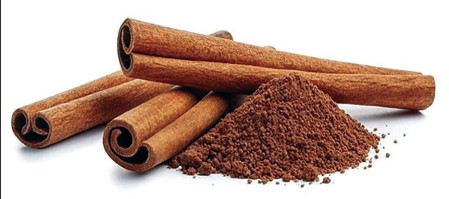
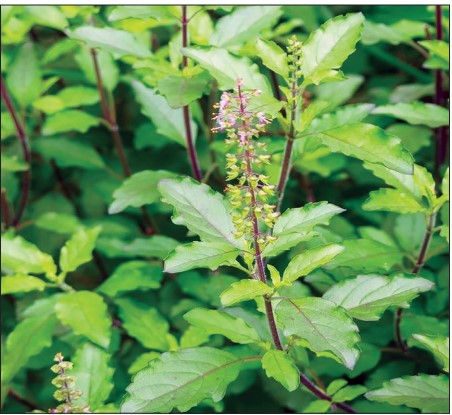
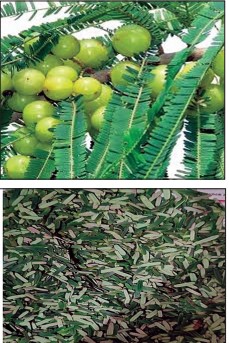
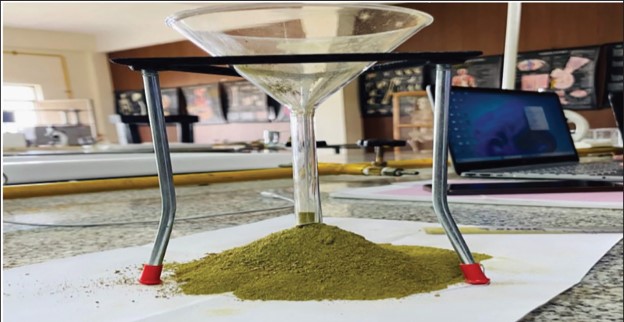
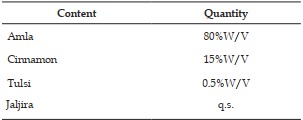
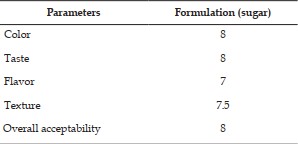
This study created a poly-herbal powder drink using traditional herbs with established nutritional benefits. Cinnamon bark, Amla leaves, and tulsi leaves were chosen for their refreshing, cooling, and energizing effects throughout the hot months. The final formulation was chosen based on taste and physicochemical attributes, following multiple experiments. The physicochemical study of the prepared drink revealed an optimal pH level, consistent with commercial guidelines. The drink received high ratings for color, taste, flavor, and texture on a nine-point hedonic scale. The created herbal drink offers consumers a costeffective and tasty option with possible health benefits. The present drink has the potential to replace synthetic drinks on the market.
References
- 1. P.V. Rao and S.H. Gan, “Cinnamon: A multifaceted medicinal plant,” Evidence-based Complement. Altern. Med., vol. 2014, 2014, doi: 10.1155/2014/642942.
- 2. K. Singletary, “Cinnamon: Update of Potential Health Benefits,” Nutr. Today, vol. 54, no. 1, pp. 42–52, 2019, doi: 10.1097/NT.0000000000000319.
- 3. R. Hamidpour, M. Hamidpour, S. Hamidpour, and M. Shahlari, “Cinnamon from the selection of traditional applications to its novel effects on the inhibition of angiogenesis in cancer cells and prevention of Alzheimer’s disease, and a series of functions such as antioxidant, anticholesterol, antidiabetes, antibacteri,” J. Tradit. Complement. Med., vol. 5, no. 2, pp. 66–70, 2015, doi: 10.1016/j. jtcme.2014.11.008.
- 4. Y. Ashwani, P. Yadav, S. Sahu, S. Maurya, and T. Yadav, “A Review on Cinnamon species,” Int. J. Creat. Res. Thoughts, vol. 9, no. 1, pp. 2226–2232, 2021.
- 5. B. Goel and S. Mishra, “Medicinal and Nutritional Perspective of Cinnamon: A Mini-review,” European J. Med. Plants, vol. 31, no. 3, pp. 10–16, 2020, doi: 10.9734/ejmp/2020/v31i330218.
- 6. M. Gul et al., “Functional and Nutraceutical Significance of Amla (Phyllanthus emblica L.): A Review,” Antioxidants, vol. 11, no. 5, pp. 1–15, 2022, doi: 10.3390/antiox11050816.
- 7. G. Pandey and S. Madhuri, “Pharmacological activities of Ocimum sanctum (Tulsi): A review,” Int. J. Pharm. Sci. Rev. Res., vol. 5, no. 1, pp. 61–66, 2010, doi: 10.56726/irjmets48783.
- 8. N. Jamshidi and M.M. Cohen, “The Clinical Efficacy and Safety of Tulsi in Humans: A Systematic Review of the Literature,” Evidencebased Complement. Altern. Med., vol. 2017, 2017, doi: 10.1155/2017/9217567.
- 9. D.D. Jyoti Sen Pharm, “A Critical Review of Tulsi - Ocimum Sanctum,” World J. Pharm. Sci., vol. 5, no. 1, pp. 1–10, 2017.
- 10. P. Prakash and N. Gupta, “Therapeutic Uses of Ocimum Sanctum Linn (Tulsi) With A Note on Eugenol and its Pharmacological Actions: A Short Review,” vol. 49, no. 2, pp. 125–131, 2005.
- 11. P. Bhadra, “A Review Paper on Tulsi Plant ( Ocimum sanctum L .) A Review Paper on Tulsi Plant ( Ocimum sanctum L .),”Indian J. Nat. Sci., vol. 9, no. July, pp. 515–524, 2020, [Online]. Available: https://www.researchgate.net/profile/PreethaBhadra-2/publication/342674549_A_Review_ Paper_on_Tulsi_Plant_Ocimum_sanctum_L/ links/5fb430f0299bf10c36898243/A-ReviewPaper-on-Tulsi-Plant-Ocimum-sanctum-L.pdf
- 12. M. M. Cohen, “Tulsi - Ocimum sanctum: A herb for all reasons,” J. Ayurveda Integr. Med., vol. 5, no. 4, pp. 251–259, 2014, doi: 10.4103/0975- 9476.146554.“1 ., 1 ., 1 .,” vol. 46, no. 1, pp. 101– 109, 2021.
- 13. S. Dasaroju and K. M. Gottumukkala, “Review Article Current Trends in the Research of,” Int.J.Phara.Sci.Rev.Res, vol. 24, no. 2, pp. 150–159, 2014.
- 14. B.C. Variya, A.K. Bakrania, and S.S. Patel, “Emblica officinalis (Amla): A review for its phytochemistry, ethnomedicinal uses and medicinal potentials with respect to molecular mechanisms,” Pharmacol. Res., vol. 111, pp. 180– 200, 2016, doi: 10.1016/j.phrs.2016.06.013.
- 15. S. McDonald, P.D. Prenzler, M. Antolovich, and K. Robards, “Phenolic content and antioxidant activity of olive extracts,” Food Chem., vol. 73, no. 1, pp. 73–84, 2001, doi: 10.1016/S0308- 8146(00)00288-0.
- 16. C.C. Chang, M.H. Yang, H.M. Wen, and J.C. Chern, “Estimation of total flavonoid content in propolis by two complementary colometric methods,” J. Food Drug Anal., vol. 10, no. 3, pp. 178–182, 2002, doi: 10.38212/2224-6614.2748.
- 17. P.G. Waterman, “Phytochemical Dictionary. A Handbook of Bioactive Compounds from Plants,” Biochem. Syst. Ecol., vol. 21, no. 8, p. 849, 1993, doi: 10.1016/0305-1978(93)90098-c.
Data Sharing Statement
There are no additional data available. All raw data and code are available upon request.
Funding
This research received no funding.
Author Contributions
All authors contributed significantly to the work and approve its publication.
Ethics Declaration
This article does not involve any human or animal subjects, and therefore does not require ethics approval.
Acknowledgements
We gratefully acknowledge our Professor, Dr. Ch. MM. Prasada Rao, for providing work facilities as well as guidance. We appreciate the cooperation of the institute’s Mentors, Principal, and Other faculty members.
Conflicts of Interest
No conflicts of interest in this work.
About this article

Cite this article
Jiya Soni, Harsh, et al., Formulation, Development, and Evaluation of Polyherbal Formulation as an Energy Supplement. J Pharmaceut Med Chem. 2024;10(2): 49-56.
Licence:
Attribution-Non-commercial 4.0 International (CC BY-NC 4.0)This license enables reusers to distribute, remix, adapt, and build upon the material in any medium or format for noncommercial purposes only, and only so long as attribution is given to the creator.
| Received | Accepted | Published |
|---|---|---|
| June 24, 2024 | July 31, 2024 | December 25, 2024 |
DOI: https://doi.org/10.21088/jpmc.2395.6615.10224.2
Keywords
Polyherbal powder drinkSensory evaluationHerbal drugsSearch for Similar Articles
Similar Articles
- Pharmaceutical Care in Primary Healthcare: A Study of Nurses
- Artificial Intelligence in Pharmaceutical Research and Development: From Target...
- Developing a Structured Teaching Program for Precision Medicine in Nursing Pract...
- Comprehensive Scientific Review on the Natural Process of Aging, Anti-Aging Mech...
- Formulation and Evaluation of Curcumin Lozenges to Treat Throat Infections
Article Level Metrics
Last UpdatedMonday 26 October 2026, 23:22:37 (IST)
1383
Accesses
7
118
00
Citations
NA
NA
NA
Download citation
Article Keywords
Keyword Highlighting
Highlight selected keywords in the article text.
Timeline
| Received | June 24, 2024 |
| Accepted | July 31, 2024 |
| Published | December 25, 2024 |
licence
Attribution-Non-commercial 4.0 International (CC BY-NC 4.0)
This license enables reusers to distribute, remix, adapt, and build upon the material in any medium or format for noncommercial purposes only, and only so long as attribution is given to the creator.