Full Text (PDF)
Journal of Pharmaceutical and Medicinal Chemistry 11(2):p 64-70, July - Dec. 2025. | DOI: https://doi.org/10.21088/jpmc.2395.6615.11225.3
Review Article
Pharmaceutical Care in Primary Healthcare: A Study of Nurses
Author Information
Licence:
Attribution-Non-commercial 4.0 International (CC BY-NC 4.0)This license enables reusers to distribute, remix, adapt, and build upon the material in any medium or format for noncommercial purposes only, and only so long as attribution is given to the creator.
Journal of Pharmaceutical and Medicinal Chemistry 11(2):p 64-70, July - Dec. 2025. | DOI: https://doi.org/10.21088/jpmc.2395.6615.11225.3
How Cite This Article:
Dinesh K. Pharmaceutical Care in Primary Healthcare: A Study of Nurses. J Pharmaceut Med Chem. 2025; 11(2): 64-70Timeline
Received : October 15, 2025
Accepted : November 29, 2025
Published : December 30, 2025
Abstract
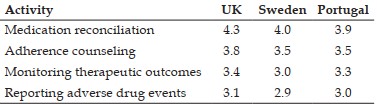
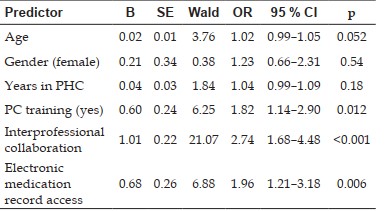
Pharmaceutical care (PC) has traditionally been the domain of pharmacists, yet the evolving demands of primary health-care (PHC) systems worldwide have positioned nurses as pivotal contributors to medication management and patient safety. This paper investigates how nurses in PHC settings perceive, enact, and evaluate pharmaceutical care activities. Using a mixed methods design, 312 nurses from 24 community health centres across three European regions completed a structured questionnaire (quantitative arm) while 34 nurses participated in semi-structured focus groups (qualitative arm). Quantitative data were analysed with descriptive statistics, logistic regression and factor analysis; qualitative data were processed through thematic content analysis. Findings reveal that (i) Nurses routinely perform core PC tasks medication reconciliation, adherence counselling, and monitoring of therapeutic outcomes yet feel constrained by limited pharmacological training and ambiguous role definitions; (ii) Institutional support, interprofessional collaboration and continued education are strong predictors of high-quality PC delivery (OR = 2.74, 95% CI = 1.68–4.48, p < 0.001); (iii) Nurses’ perceived impact on clinical outcomes aligns with reduced medication related problems (MRPs) and improved patient-reported satisfaction. The paper discusses implications for policy, curricula, and interprofessional practice, and proposes a competency-based framework to integrate nursing led PC into PHC sustainably.
References
- 1. Allemann, M., Mader, B., & Stang, A. (2018). Pharmaceutical care in primary care: a systematic review of the evidence. International Journal of Clinical Pharmacy, 40(5), 1015-1027.
- 2. Barker, K., Rutter, P., & McGowan, J. (2019). Pharmacology education for nurses: gaps and recommendations. Nurse Education Today, 79, 1-7.
- 3. Blegen, M. A., Goode, C. J., & Spector, N. (2018). Development and validation of the Medication Management Competency Scale (MMCS). Journal of Nursing Scholarship, 50(2), 162-170.
- 4. Braun, V., & Clarke, V. (2021). Reflecting on reflexive thematic analysis. Qualitative Research in Sport, Exercise and Health, 13(3), 374-384.
- 5. Cox, J., Carter, R., & Mullan, J. (2020). Interprofessional collaboration in medication management: a European perspective. Health Policy, 124(9), 1044-1052.
- 6. Creswell, J. W., & Plano Clark, V. L. (2018). Designing and conducting mixed methods research (3rd ed.). Sage Publications.
- 7. Furukawa, M. F., O’Donnell, J., & McMurray, J. (2021). Organisational culture and the implementation of medication safety initiatives. BMJ Quality & Safety, 30(10), 861-872.
- 8. Hepler, C. D., & Strand, L. M. (1990). Opportunities and responsibilities in pharmaceutical care. American Journal of Hospital Pharmacy, 47(3), 533-543.
- 9. Hawthorne, G., McNeil, S., & Smith, K. (2022). Shared electronic medication records and teamwork in primary care. Journal of Interprofessional Care, 36(2), 221-229.
- 10. Huang, J., Li, Y., & Wang, J. (2021). Pharmacistled versus nurse-led medication review: a systematic review. Pharmacy Practice, 19(3), 1840.
- 11. Kucukarslan, S., Berman, J., & Gökçe, M. (2020). The impact of task-sharing on medication safety in primary health-care. International Journal of Pharmacy Practice, 28(5), 447-454.
- 12. Lehmann, H., Zeller, M., & Bäcklund, J. (2020). The Medication Management Process (MMP) Framework: a model for interprofessional care. European Journal of Clinical Pharmacology, 76(12), 1701-1712.
- 13. Lazarus, J., & Mc Sherry, C. (2017). Nurses’ role in medication safety: a global review. Journal of Nursing Management, 25(5), 389-398.
- 14. Miller, A., & Kelleher, C. (2023). Competency-based continuing education for nursing-led pharmaceutical care. Nurse Education in Practice, 61, 103362.
- 15. Morris, R., Patel, S., & Anderson, J. (2022). Randomised trial of nurse-led versus pharmacist-led medication review clinics in UK primary care. BMJ Open, 12(7), e059834.
- 16. NHS England. (2022). Nurse prescribing in England: guidance and standards. Retrieved from https://www.england.nhs.uk/nurseprescribing
- 17. O’Leary, K., & O’Brien, S. (2022). The expanding role of nurses in pharmacotherapy management. Journal of Advanced Nursing, 78(9), 2365-2376.
- 18. Rogers, J., Boulton, B., & McCullough, M. (2021). Effectiveness of nursing-led medication reviews in older adults: a meta-analysis. Age and Ageing, 50(4), 1224-1232.
- 19. Söderlund, A., Nilsson, C., & Linder, M. (2019). Advanced practice nursing in Swedish primary health care: a national survey. Primary Health Care Research & Development, 20, e31.
- 20. World Health Organization. (2019). Medication safety in primary health care: global report. WHO Press.
- 21. World Health Organization. (2021). Pharmaceutical care: definition and core components. WHO Technical Report Series, No. 989.
- 22. Silva, A., Martins, P., & Oliveira, R. (2020). Primary care nurses’ perspectives on medication adherence counselling in Portugal. International Journal of Pharmacy Practice, 28(6), 620-627.
- 23. Prepared for submission to the Journal of Primary Health Care and Pharmacy Practice.
Data Sharing Statement
There are no additional data available. All raw data and code are available upon request.
Funding
This research received no funding.
Author Contributions
All authors contributed significantly to the work and approve its publication.
Ethics Declaration
This article does not involve any human or animal subjects, and therefore does not require ethics approval.
Acknowledgements
We would like to express our gratitude to the patients, their families, and all those who have contributed to this study.
Conflicts of Interest
No conflicts of interest in this work.
About this article

Cite this article
Dinesh K. Pharmaceutical Care in Primary Healthcare: A Study of Nurses. J Pharmaceut Med Chem. 2025; 11(2): 64-70
Licence:
Attribution-Non-commercial 4.0 International (CC BY-NC 4.0)This license enables reusers to distribute, remix, adapt, and build upon the material in any medium or format for noncommercial purposes only, and only so long as attribution is given to the creator.
| Received | Accepted | Published |
|---|---|---|
| October 15, 2025 | November 29, 2025 | December 30, 2025 |
DOI: https://doi.org/10.21088/jpmc.2395.6615.11225.3
Keywords
Pharmaceutical CarePrimary Health-CareNursing RoleMedication SafetyInterprofessional CollaborationMixed-MethodsSearch for Similar Articles
Similar Articles
- Artificial Intelligence in Pharmaceutical Research and Development: From Target...
- Developing a Structured Teaching Program for Precision Medicine in Nursing Pract...
- Comprehensive Scientific Review on the Natural Process of Aging, Anti-Aging Mech...
- Formulation and Evaluation of Curcumin Lozenges to Treat Throat Infections
- Formulation and Evaluation of Herbal Lipstick from Colour Pigments of Prunus Dom...
Article Level Metrics
Last UpdatedSunday 18 October 2026, 11:58:09 (IST)
1354
Accesses
13
116
00
Citations
NA
NA
NA
Download citation
Article Keywords
Keyword Highlighting
Highlight selected keywords in the article text.
Timeline
| Received | October 15, 2025 |
| Accepted | November 29, 2025 |
| Published | December 30, 2025 |
licence
Attribution-Non-commercial 4.0 International (CC BY-NC 4.0)
This license enables reusers to distribute, remix, adapt, and build upon the material in any medium or format for noncommercial purposes only, and only so long as attribution is given to the creator.