Full Text (PDF)
Journal of Pharmaceutical and Medicinal Chemistry 10(2):p 43-47, July - Dec 2024. | DOI: https://doi.org/10.21088/jpmc.2395.6615.10224.1
Original Article
Anti-anxiety Activity of Achyranthes aspera Linn. Stem Extracts on the Elevated Plus-maze Model on Wistar Rats
Fulchand V. Kajale, Shubhangi B. Dorle, Mahavir H. Ghante, Yugraj G
Author Information
Licence:
Attribution-Non-commercial 4.0 International (CC BY-NC 4.0)This license enables reusers to distribute, remix, adapt, and build upon the material in any medium or format for noncommercial purposes only, and only so long as attribution is given to the creator.
Journal of Pharmaceutical and Medicinal Chemistry 10(2):p 43-47, July - Dec 2024. | DOI: https://doi.org/10.21088/jpmc.2395.6615.10224.1
How Cite This Article:
Shubhangi B. Dorle, Fulchand V. Kajale, et al., Anti-anxiety Activity of Achyranthes aspera Linn. Stem Extracts on the Elevated Plus-maze Model on Wistar Rats. J Pharmaceut Med Chem. 2024;10(2): 43-47Timeline
Received : November 01, 2024
Accepted : December 06, 2024
Published : December 25, 2024
Abstract
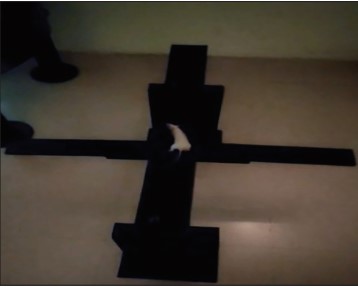
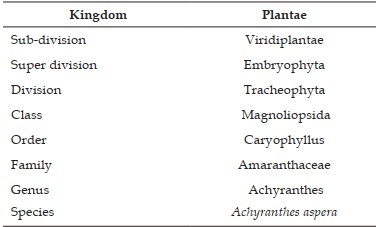
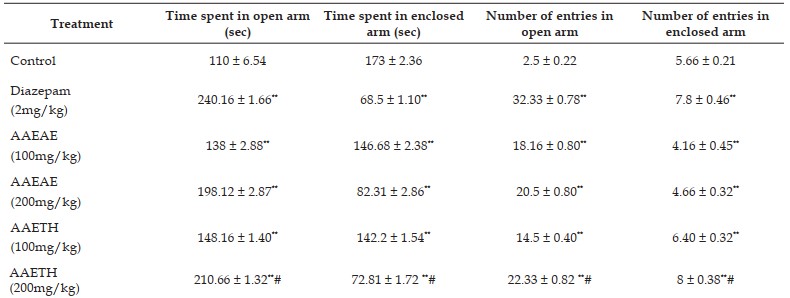
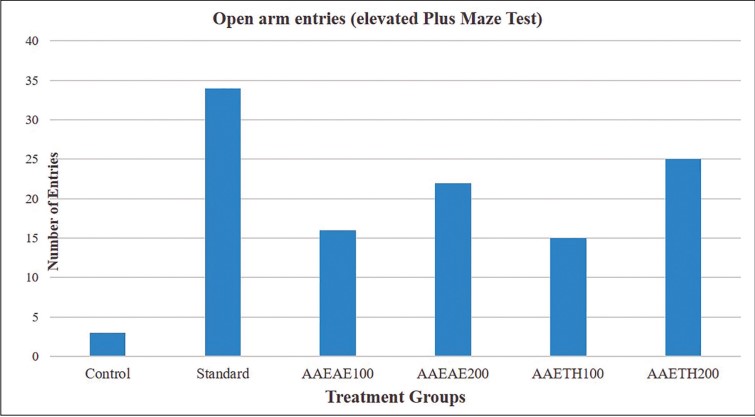
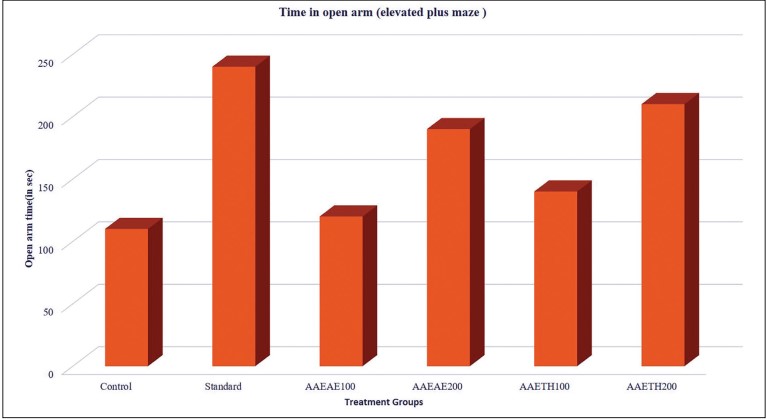
Achyranthes aspera Linn. has been broadly used as traditionally medicine in several countries. All parts of this plant have been used in treatment and prevention of several complications. Taxonomically Achyranthes aspera Linn. belong to family Amaranthaceae. In the present study, stem of Achyranthes aspera Linn. were subjected to Pharmacognostic evaluation. Various methods including macroscopic, microscopic, physiochemical and phytochemical methods were applied to determine the features for the identification and standardization of intact and powdered drug of stem of Achyranthes aspera Linn. This analysis is proved useful to differentiate it from other drug material. The powdered plant material was removed by Soxhlet extractor in Ethyl acetate and ethanol after defatting with petroleum ether.Phytochemical testing of extracts discovered presence of glycosides, flavonoids, carbohydrates, etc. The total phenolic and flavonoid content of plant extracts was expressed as Gallic acid equivalents and as quercetin equivalents separately. Antioxidant activity was carried out by 2,2-diphenyl-1-picrylhyrazyl (DPPH) assay. DPPH scavenging assay were performed to evaluate the antioxidant activity which was found maximum at 100 microgram concentration for both extracts. The results of acute oral toxicity studies of plant extracts as per standard references revealed median lethal dose (LD50) could be greater than 2000mg/kg body weight in rats. Accordinglysafe experimental dose was calculated as 100 and 200mg/kg. The evaluation of in-vivo anxiolytic activity in rats was done using elevated plus maze model. The results showed increases locomotor activity in both extracts at dose of 200mg/kg compared to vehicle group.
References
- 1. Tripathi, K.D. (2013) Essentials of Medical Pharmacology. 7th Edition, Jaypee Brothers Medical Publishers (P) Ltd., New Delhi, 816-835.
- 2. Doukkali Z, Taghzouti, et al. (2016) Anti-Anxiety Effects of Mercurialis annua Aqueous Extract in the Elevated Plus Maze Test. J Pharma Reports 1: 104.doi: 10.4172/jpr.1000104.
- 3. Anxiety Disorders Association of America https://adaa.org.
- 4. World Health Organization, https://www. researchgate.net.
- 5. Pemminati S, et al. Anxiolytic activity of ethanolic extract of leaves of Ocimum Sanctum in rats, Department of Pharmacology, Kasturba Medical College, Manipal University, Manglore- 575 001 Karnatka, INDIA. Vol.2.February 2010
- 6. Depression and other common mental disorders; global health estimates 2017.
- 7. World Health Organization, https://www. researchgate.net.
- 8. Depression and Other Common Mental Disorders: Global Health Estimates. Geneva: World Health Organization pp- 22-24, 2021
- 9. Srivastav S, Scholar Research Library. Achyranthes aspera- An important medicinal plant: A Review, 2011,1 (1): 1-14.
- 10. Nehete JY, Deshmukh VN, Shewale VV, Narkhede MR, Auranagabadkar VW, In vitro antioxidant activity of Achyranthes aspera L. Journal of Pharmacy Research 2(9), 2009, 220-223.
- 11. Khandelwal KR. Practical Pharmacology. Edn.18, Nirali Publication, Pune; 10-14.2007
- 12. Kokate C. Pharmacognosy Vol- 1 & 2, 47th edition, Nirali Prakashan, 2012; 7.9-7.11.
- 13. Hans Gerhard Vogel, Drug Discovery and Evaluation: Pharmacological Assay third edition, 2008.
- 14. OECD guideline for testing of acute oral toxicity of chemicals, No 420, 423,425. Environmental health and safety monograph series on testing and assessment 2000
- 15. Dinesh Y. Gawande, Journal of Ethnopharmacology, Anticonvulsant activity and acute neurotoxic profile of Achyranthes aspera Linn. 202 (2017) 97-102.
Data Sharing Statement
There are no additional data available. All raw data and code are available upon request.
Funding
This research received no funding.
Author Contributions
All authors contributed significantly to the work and approve its publication.
Ethics Declaration
This article does not involve any human or animal subjects, and therefore does not require ethics approval.
Acknowledgements
We would like to express our gratitude to the patients, their families, and all those who have contributed to this study.
Conflicts of Interest
No conflicts of interest in this work.
About this article

Cite this article
Shubhangi B. Dorle, Fulchand V. Kajale, et al., Anti-anxiety Activity of Achyranthes aspera Linn. Stem Extracts on the Elevated Plus-maze Model on Wistar Rats. J Pharmaceut Med Chem. 2024;10(2): 43-47
Licence:
Attribution-Non-commercial 4.0 International (CC BY-NC 4.0)This license enables reusers to distribute, remix, adapt, and build upon the material in any medium or format for noncommercial purposes only, and only so long as attribution is given to the creator.
| Received | Accepted | Published |
|---|---|---|
| November 01, 2024 | December 06, 2024 | December 25, 2024 |
DOI: https://doi.org/10.21088/jpmc.2395.6615.10224.1
Keywords
Anti-anxietyAchyranthes aspera LinnElevated plus mazeAnti-oxidant activitySearch for Similar Articles
Similar Articles
- Pharmaceutical Care in Primary Healthcare: A Study of Nurses
- Artificial Intelligence in Pharmaceutical Research and Development: From Target...
- Developing a Structured Teaching Program for Precision Medicine in Nursing Pract...
- Comprehensive Scientific Review on the Natural Process of Aging, Anti-Aging Mech...
- Formulation and Evaluation of Curcumin Lozenges to Treat Throat Infections
Article Level Metrics
Last UpdatedMonday 26 October 2026, 23:24:56 (IST)
1383
Accesses
6
118
00
Citations
NA
NA
NA
Download citation
Article Keywords
Keyword Highlighting
Highlight selected keywords in the article text.
Timeline
| Received | November 01, 2024 |
| Accepted | December 06, 2024 |
| Published | December 25, 2024 |
licence
Attribution-Non-commercial 4.0 International (CC BY-NC 4.0)
This license enables reusers to distribute, remix, adapt, and build upon the material in any medium or format for noncommercial purposes only, and only so long as attribution is given to the creator.