Full Text (PDF)
Indian Journal of Forensic Medicine and Pathology 19(3):p 292-300, July -Sept. 2026. | DOI: https://doi.org/10.21088/ijfmp.0974.3383.19326.2
Original Article
Forensic Interchangeability of Live and AI-Derived Photographic Craniofacial Measurements in Cyber and Digital Forensics: A Multigenerational Study of the Indian Population
Author Information
Licence:
Attribution-Non-commercial 4.0 International (CC BY-NC 4.0)This license enables reusers to distribute, remix, adapt, and build upon the material in any medium or format for noncommercial purposes only, and only so long as attribution is given to the creator.
Indian Journal of Forensic Medicine and Pathology 19(3):p 292-300, July -Sept. 2026. | DOI: https://doi.org/10.21088/ijfmp.0974.3383.19326.2
How Cite This Article:
Paras Sharma, Priyanka Verma. Forensic Interchangeability of Live and AI-Derived Photographic Craniofacial Measurements in Cyber and Digital Forensics: A Multigenerational Study of the Indian Population. Indian J Forensic Med Pathol. 2026; 19(3): 292-300Timeline
Received : February 04, 2026
Accepted : May 01, 2026
Published : September 30, 2026
Abstract
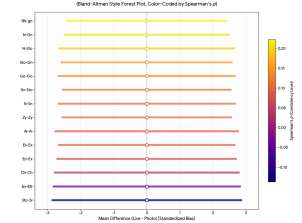
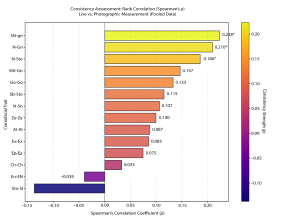
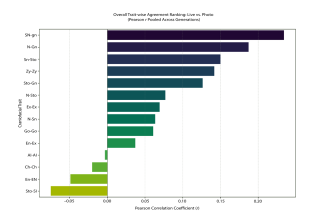
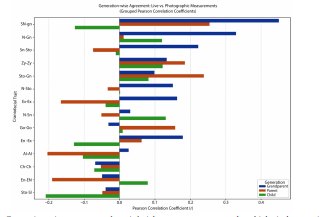
Background: In cyber and digital forensic investigations, facial measurements are commonly derived from images and video evidence rather than direct physical examination. However, forensic substitution is scientifically defensible only when photographic measurements demonstrate acceptable agreement, consistency, and interchangeability with biologically grounded reference standards. Aim: To evaluate the forensic equivalence and interchangeability of live craniofacial anthropometry and AI-assisted photographic photo-anthropometry across three biological generations of Indian families. Methods: A total of 216 individuals from 48 multigenerational Indian families were analyzed using fourteen standardized craniofacial landmarks. Live measurements were obtained using calibrated vernier calipers, while photographic measurements were extracted using AI-based facial landmark detection from standardized frontal images. Z-score normalization enabled cross-modal comparison. Agreement was assessed using Bland–Altman analysis, rank consistency using Spearman’s correlation (ρ), and linear association using Pearson’s correlation (r), with analyses stratified by generation. Results: Population-level bias between live and photographic measurements was minimal across traits. However, substantial individual-level variability was observed. Only vertical skeletal traits, particularly N–Gn and Sn–Gn, demonstrated conditional agreement and limited interchangeability across modalities. Horizontal and soft-tissue-dominated traits exhibited poor agreement and inconsistent rank preservation. Conclusion: Photographic craniofacial measurements cannot be universally substituted for live anthropometry in forensic applications. The findings define modality-aware operational boundaries for AI-driven facial analysis systems and reinforce the necessity of biological validation to ensure the reliability and admissibility of facial evidence in cyber and digital forensic contexts.
References
- 1. Koseoglu, M., Ramachandran, R.A., Ozdemir, H., Ariani, M.D., Bayindir, F., & Sukotjo, C. (2024). Automated facial landmark measurement using machine learning: A feasibility study. Journal of Prosthetic Dentistry, 134(4), 1148–1155. https://doi. org/10.1016/j.prosdent.2024.04.007
- 2. Porto, L.F., Lima, L.N.C., Franco, A., Pianto, D., Machado, C.E.P., & De Barros Vidal, F. (2020). Estimating sex and age from a face: a forensic approach using machine learning based on photo-anthropometric indexes of the Brazilian population. International Journal of Legal Medicine, 134(6), 2239–2259. https:// doi.org/10.1007/s00414-020-02346-5.
- 3. Wu, Y., & Ji, Q. (2018). Facial landmark detection: A literature survey. International Journal of Computer Vision, 127, 115–142. (https://doi.org/10.1007/s11263-018-1097-z )
- 4. Çeli̇K, A., & Arica, N. (2019). Enhancing face pose normalization with deep learning. Turkish Journal of Electrical Engineering & Computer Sciences, 27(5), 3699–3712. https:// doi.org/10.3906/elk-1810-192
- 5. Bours, P., & Mondal, S. (2021). Biometric triage in cyber investigations. Digital Investigation, 38, 301–309.
- 6. Wu, X., Feng, X., Cao, X., Xu, X., Hu, D., López, M. B., & Liu, L. (2022). Facial Kinship Verification: A Comprehensive Review and Outlook. International journal of computer vision, 130(6), 1494–1525. https://doi. org/10.1007/s11263-022-01605-9
- 7. Claes, P., et al. (2018). Modeling facial shape from genetic data using ML. PLOS Genetics, 14(4), e1007373. (DOI: 10.1371/journal. pgen.1004224)
- 8. Saini, H., et al. (2022). AI-based biometric profiling in cybercrime. Journal of Cybersecurity, 8(1), tyac012.
- 9. Hajian-Tilaki K. (2013). Receiver Operating Characteristic (ROC) Curve Analysis for Medical Diagnostic Test Evaluation. Caspian journal of internal medicine, 4(2), 627–635.
- 10. Reegan, A.S. (2024). Age and Gender Prediction from Facial Images Using Deep Learning Approach. International Journal of Scientific Research and Engineering Trends, 10(2), 348– 354. https://doi.org/10.61137/ijsret.vol.10. issue2.312
- 11. Kalha, A.S., Latif, A., & Govardhan, S.N. (2008). Soft-tissue cephalometric norms in a South Indian ethnic population. American Journal of Orthodontics and Dentofacial Orthopedics, 133(6), 876–881.
- 12. Šešelj, M., Duren, D.L., Sherwood, R.J., et al. (2015). Heritability of the human craniofacial complex. The Anatomical Record, 298(9), 1535– 1547. (DOI: 10.1002/ar.23186)Adekunle, A. A., et al.(2021). Facial anthropometry measurements using 3D stereophotogrammetry. Journal of Craniofacial Surgery, 32(5), 1800–1806. ( DOI: 10.1097/SCS.0000000000008036 )
- 13. Johannsdottir, B., Thorarinsson, F., Thoradarson, A., & Magnusson, T.E. (2005). Heritability of craniofacial characteristics between parents and offspring estimated from lateral cephalograms. American Journal of Orthodontics and Dentofacial 385 Orthopedics, 127(2), 200–207.
- 14. Patel, J.R., & Mehta, A. (2022). Inheritance patterns of craniofacial traits in South Asian populations. Forensic Anthropology, 5(3), 210–221.
- 15. Singh, N., & Kaur, J. (2025). Ethical and forensic implications of facial AI in India. AI & Society (In Press).
- 16. Sharma, P., & Verma, P. (2024). Computational forensics & M.L. for intergenerational craniofacial analysis. Conference/Manuscript.
- 17. Weinberg, S.M., Naidoo, S., Govier, D.P., Martin, R. A., Kane, A. A., & Marazita, M. L. (2006). Anthropometric precision and accuracy of Digital Three-Dimensional photogrammetry. Journal of Craniofacial Surgery, 17(3), 477–483. https://doi.org/10.1097/00001665-200605000- 00015
- 18. Stephan, C.N., & Caple, J. (2018). Reliability of facial landmarks in forensic practice. Journal of Forensic Identification, 68(2), 145–160. (https://doi.org/10.1080/20961790.2018.1519 892)
- 19. Alves, Y.B. (2021) et. al. Photoanthropometry as a method of facial analysis: A systematic review. Research, Society and Development, 10(14), e22101421637.( DOI: https://doi. org/10.33448/rsd-v10i2.12469)
- 20. Bishara, S.E. (1995). Changes in facial dimensions assessed from lateral and frontal photographs. American Journal of Orthodontics and Dentofacial Orthopedics, 108(4), 389–393.
- 21. Savoye, I., Loos, R., Carels, C., Derom, C., & Viletinck, R. (1998). A genetic study of anteroposterior and vertical facial proportions using model-fitting. Angle Orthodontist, 68(5), 467–470.
- 22. Krishnan, A., & Rattani, A. (2023). A novel approach for bias mitigation of gender classification algorithms using consistency regularization. Image and Vision Computing, 137, 104793. https://doi.org/10.1016/j. imavis.2023.104793
- 23. Garg, M., Garg, A.P., & Siddiqui, M.A. (2025). Biometric authentication and cybersecurity in the digital age. Biometrics & Biostatistics International Journal, 14(2), 77–83.
- 24. Tome, P., Vera-Rodriguez, R., Fierrez, J., & Ortega-Garcia, J. (2015). Facial soft biometric features for forensic face recognition. Forensic Science International, 257, 271–284. https:// oi.org/10.1016/j.forsciint.2015.09.002
- 25. Lahoti, S.K., Karia, A.M., & Lahoti, K.B. (2013). Heritability of Facial Characteristics between Parents and Offsprings: A Photographic Study. The Journal of Indian Orthodontic Society, 47, 419–425. https://doi.org/10.5005/ jp-journals-10021-1199
- 26. Benjamini, Y., Drai, D., Elmer, G., Kafkafi, N., & Golani, I. (2001). Controlling the false discovery rate in behavior genetics research. Behavioural brain research, 125(1-2), 279–284. https://doi. org/10.1016/s0166-4328(01)00297-2
- 27. Miller, S.A., & Brown, T. (2022). Deep fake detection in forensic science. Forensic Science International, 335, 111223.
- 28. Richmond, S., et al. (2018). Craniofacial genetics and phenotypic variation. Orthodontics & Craniofacial Research, 21(1), 1–9.
- 29. Mittal, S., & Tayal, I. (2025). Identification of Unknown Dead Bodies: Integrating AI and Forensic Biometrics in Facial Recognition, Fingerprint Databases, Forensic Odontology, and DNA Profiling. International Journal of Ethics, Trauma & Victimology, 11(01), 30-32.
- 30. Mitteroecker, P., et al. (2020). Machine learning in morphometrics. Evolutionary Biology, 47, 25–40. ( DOI:10.1007/978-3-319-33038-9_119-1)
- 31. Vanco, C., Kasait, K., Serge, R., Richards, L. C., & Townsend, G.C. (1995). Genetic and environmental influences on facial profile. Australian Dental Journal, 40(2), 104–109.
- 32. Tiddeman, B., et al. (2020). Accuracy limits of 2D facial measurements. Image and Vision Computing, 98, 103908.
- 33. Krishan K., Kanchan T. Measurement Error in Anthropometric Studies and its Significance in Forensic Casework. Ann Med Health Sci Res. 2016 Jan-Feb; 6(1): 62-3. doi: 10.4103/2141- 9248.180277. PMID: 27144080; PMCID: PMC4849120.
- 34. Tiddeman, B., et al. (2020). Accuracy limits of 2D facial measurements. Image and Vision Computing, 98, 103908.
- 35. Sharma, R. (2024). Sexual dimorphism in facial heights: A comprehensive study of Indian adults. African Journal of Biomedical Research, 1960–1964. https://doi.org/10.53555/ajbr. v27i4s.3972
- 36. Fourie, Z., Damstra, J., Gerrits, P.O., & Ren, Y. (2010). Accuracy and reliability of facial soft tissue depth measurements using cone beam computer tomography. Forensic science international, 199(1-3), 9–14. https://doi. org/10.1016/j.forsciint.2010.02.018
Data Sharing Statement
There are no additional data available. All raw data and code are available upon request.
Funding
This research received no funding.
Author Contributions
All authors contributed significantly to the work and approve its publication.
Ethics Declaration
This article does not involve any human or animal subjects, and therefore does not require ethics approval.
Acknowledgements
We would like to express our gratitude to the patients, their families, and all those who have contributed to this study.
Conflicts of Interest
No conflicts of interest in this work.
About this article

Cite this article
Paras Sharma, Priyanka Verma. Forensic Interchangeability of Live and AI-Derived Photographic Craniofacial Measurements in Cyber and Digital Forensics: A Multigenerational Study of the Indian Population. Indian J Forensic Med Pathol. 2026; 19(3): 292-300
Licence:
Attribution-Non-commercial 4.0 International (CC BY-NC 4.0)This license enables reusers to distribute, remix, adapt, and build upon the material in any medium or format for noncommercial purposes only, and only so long as attribution is given to the creator.
| Received | Accepted | Published |
|---|---|---|
| February 04, 2026 | May 01, 2026 | September 30, 2026 |
DOI: https://doi.org/10.21088/ijfmp.0974.3383.19326.2
Keywords
Artificial Intelligence & Machine LearningCraniofacial anthropometryForensic biometricsDigital forensicsFacial landmarkingMeasurement agreementCyber forensicsBland–AltmanPhoto-anthropometrySearch for Similar Articles
Similar Articles
- Diatom Analysis in Thermophilic water bodies: A Study on Hot Water Springs of Ma...
- Morphometric Study of Supra-meatal Triangle and Mastoid process in the Adult dry...
- Histopathological Spectrum of Autopsy Cases: A One Year Retrospective Observatio...
- Forensic Differentiation of Manner of Death in Railway Fatalities: A FourCase Se...
- Understanding assault Patterns: A Cross-sectional study of Cases at Chri, Kelamb...
Article Level Metrics
Last UpdatedSaturday 17 October 2026, 09:05:05 (IST)
16171
Accesses
48
3204
00
Citations
NA
NA
NA
Download citation
Article Keywords
Keyword Highlighting
Highlight selected keywords in the article text.
Timeline
| Received | February 04, 2026 |
| Accepted | May 01, 2026 |
| Published | September 30, 2026 |
licence
Attribution-Non-commercial 4.0 International (CC BY-NC 4.0)
This license enables reusers to distribute, remix, adapt, and build upon the material in any medium or format for noncommercial purposes only, and only so long as attribution is given to the creator.