Full Text (PDF)
Indian Journal of Forensic Medicine and Pathology 18((2 Suppl)):p 329-338, April-June 2025. | DOI: https://doi.org/10.21088/ijfmp.0974.3383.18225.35
Review Article
Enhancing Forensic Processes with Quantum Cryptographic Techniques: A Comprehensive Investigation
Vinny Sharma, Shyam Narayan Singh, Nikhil Khapra, Tushar Mathpal
Author Information
Licence:
Attribution-Non-commercial 4.0 International (CC BY-NC 4.0)This license enables reusers to distribute, remix, adapt, and build upon the material in any medium or format for noncommercial purposes only, and only so long as attribution is given to the creator.
Indian Journal of Forensic Medicine and Pathology 18((2 Suppl)):p 329-338, April-June 2025. | DOI: https://doi.org/10.21088/ijfmp.0974.3383.18225.35
How Cite This Article:
Singh SN, Sharma V, Khapral N, et al. Enhancing Forensic Processes with Quantum Cryptographic Techniques: A Comprehensive Investigation. Indian J Forensic Med Pathol. 2025;18(2 Suppl):329-338.Timeline
Received : June 27, 2024
Accepted : June 24, 2025
Published : June 30, 2025
Abstract
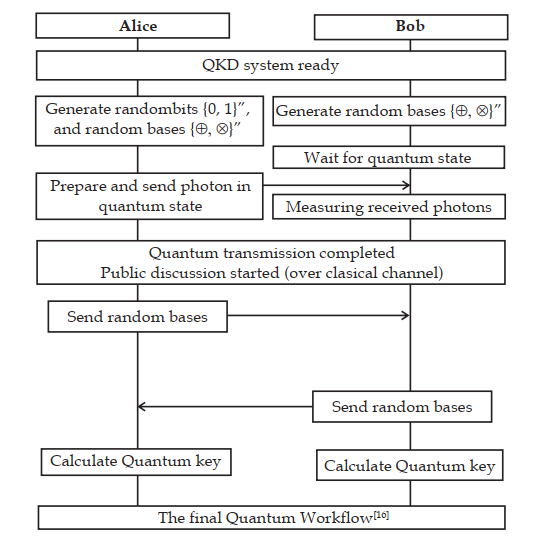
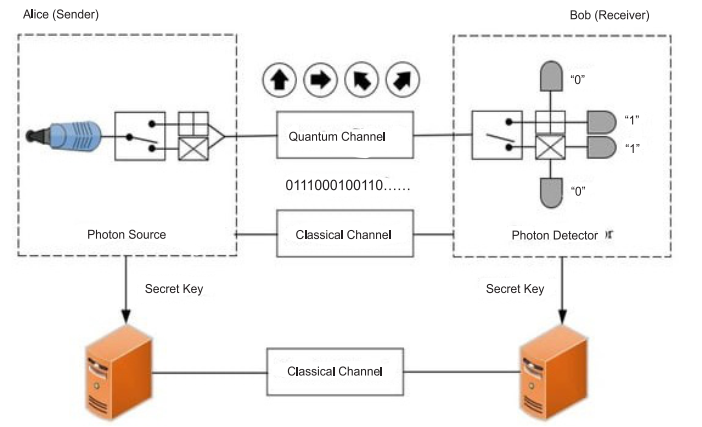
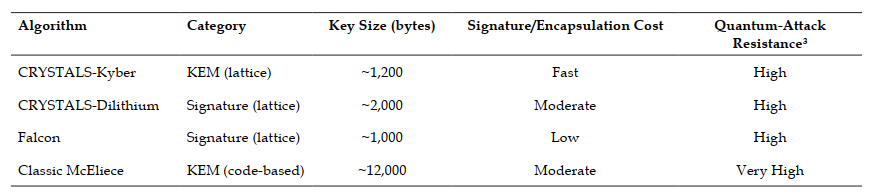
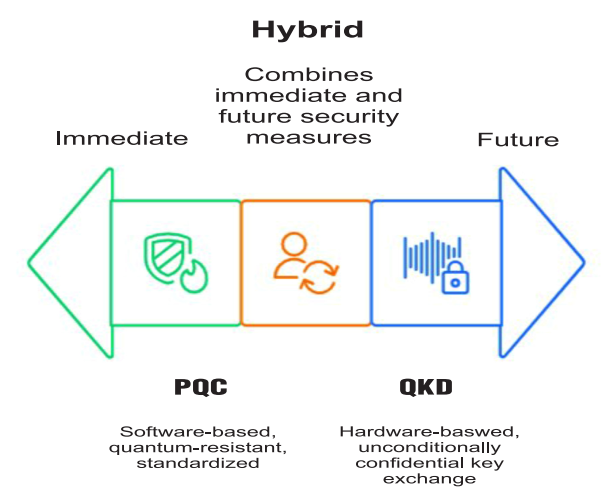
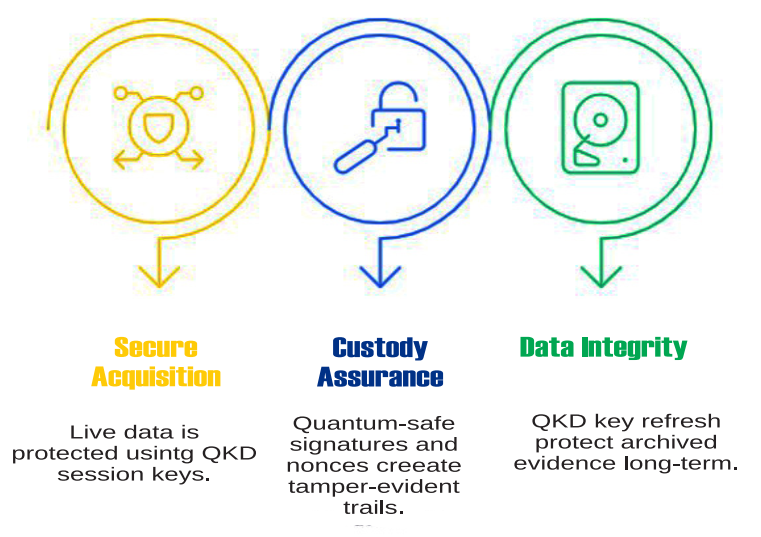
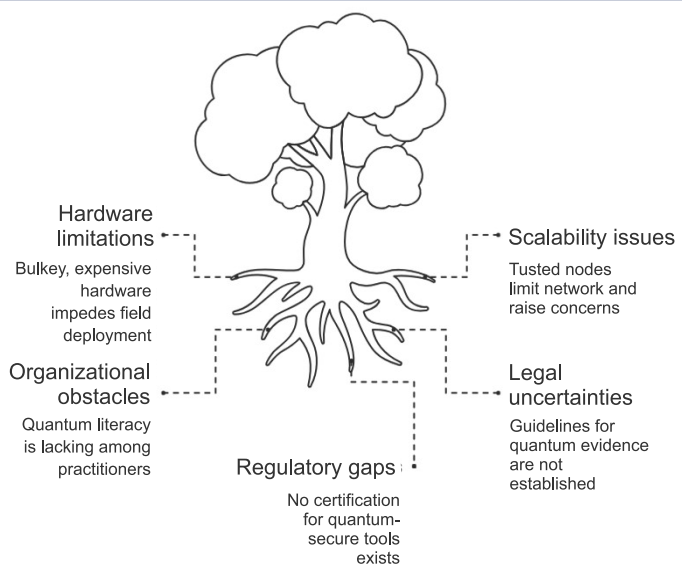
Every day, forensic investigators find themselves buried under an avalanche of digital evidence, terabytes of files, logs, and signals that can make even the most seasoned analyst feel overwhelmed. At the same time, cybercriminals are sharpening their tools, probing weaknesses in traditional encryption, and leaving us vulnerable just when we need airtight security most. Enter quantum cryptography: a radical shift in how we protect information, where the very laws of physics guard our data. Quantum Key Distribution (QKD) uses delicate photons to forge encryption keys that, if tampered with, immediately betray an eavesdropper’s presence. Alongside this, post-quantum cryptographic schemes promise software defenses that even future quantum computers can’t crack.1 In this review, we’ll walk you through how these quantum-powered techniques can transform three critical stages of forensic work: capturing evidence without fear of interception, preserving an unbreakable chain of custody, and verifying data integrity long after a case closes. You’ll learn about the nuts and bolts of QKD networks,2 the latest in quantum-resistant algorithms, and how hybrids of the two can give investigators both immediate and future-proof protection. We’ll also tackle the real-world hurdles, bulky hardware, system integration headaches, and the need for common standards, and point toward research paths and practical roadmaps that could bring quantum-secure forensics into every lab.
References
- 1. Amanzholova S., Priyanka A.C. Exploring advancements, applications, and challenges in the realm of quantum cryptography. Next Generation Mechanisms for Data Encryption. 2025 Jan 24: 116.
- 2. van Daalen O. From Encryption to Quantum Computing: The Governance of Information Security and Human Rights. Springer Nature; 2024.
- 3. Sarkar A., Guha Roy D., Datta P. An Overview of the Discrete Logarithm Problem in Cryptography. In International Conference on Advanced Computing and Applications 2024 Feb 23 (pp. 129-143). Singapore: Springer Nature Singapore.
- 4. Hammoudeh M., Firth C.M., Bounceur A., Adebisi B., Vasan D. Quantum Key Distribution Principles and Protocols. In Quantum Computing 2024 Dec 27 (pp. 95-117). CRC Press.
- 5. Bhuyan A.K., Dutta H. Harnessing Quantum Entanglement: Comprehensive Strategies for Enhanced Communication and Beyond in Quantum Networks. arXiv preprint arXiv: 2406.08833. 2024 Jun 13.
- 6. 6. Trenyi R., Ball S., Glynn D.G., Curty M. Geometrical constructions of purity testing protocols and their applications to quantum communication. arXiv preprint arXiv: 2503.14003. 2025 Mar 18.
- 7. The NIST PQC standardization process, summarized by Chen et al. has shortlisted lattice-based (e.g., CRYSTALS-Kyber), code-based, and multivariate schemes for standardization. Lyubashevsky’s Fiat–Shamir– based signature protocols illustrate how PQC enables quantum-safe digital signatures without specialized hardware.
- 8. Scalise P., Garcia R., Boeding M., Hempel M., Sharif H. An Applied Analysis of Securing 5G/6G Core Networks with Post-Quantum Key Encapsulation Methods. Electronics. 2024 Oct 30; 13(21): 4258.
- 9. Baseri Y., Chouhan V., Hafid A. Navigating quantum security risks in networked environments: A comprehensive study of quantum-safe network protocols. Computers & Security. 2024 May 1: 103883.
- 10. Nguyen H., Huda S., Nogami Y., Nguyen T.T. Security in post-quantum era: A comprehensive survey on lattice-based algorithms. IEEE Access. 2025 May 19.
- 11. Kumar P., Kundu N.K., Kar B. Quantum Key Distribution Routing Protocol in Quantum Networks: Overview and Challenges. arXiv preprint arXiv: 2407.13156. 2024 Jul 18.
- 12. Okunola A., Kay J., Draght M. InformationTheoretic Security Analysis of QKD Protocols under Realistic Noise Models Authors. Available at SSRN 5228949. 2025 Apr 24.
- 13. Aydeger A., Zeydan E., Yadav A.K., Hemachandra K.T., Liyanage M. Towards a quantum-resilient future: Strategies for transitioning to post-quantum cryptography. In 2024 15th International Conference on Network of the Future (NoF) 2024 Oct 2 (pp. 195-203). IEEE.
- 14. Faba J., Brito J.P., Cresta J., Pastor A., Lopez D., Brito R., Buruaga J.S., Martin V. A hybrid approach to address the transition to quantumresistant cryptography in telecommunication environments. In 2025 International Conference on Quantum Communications, Networking, and Computing (QCNC) 2025 Mar 31 (pp. 122- 126). IEEE.
- 15. Erukala S.B., Tokmakov D., Perumalla A., Kaluri R., Bekyarova-Tokmakova A., Mileva N., Lubomirov S. A secure end-to-end communication framework for cooperative IoT networks using hybrid blockchain system. Scientific Reports. 2025 Apr 1; 15(1): 11077.
- 16. Abdullah, Alharith & Obeid, Noor. (2021). Efficient Implementation for PRINCE Algorithm in FPGA Based on the BB84 Protocol. Journal of Physics: Conference Series. 1818. 012216. 10.1088/1742-6596/1818/1/012216.
- 17. Adnan M.H., Ahmad Zukarnain Z., Harun N.Z. Quantum Key Distribution for 5G Networks: A Review, State of Art and Future Directions. Future Internet Internet. 2022 Feb 25; 14(3): 73. Available from: http://dx.doi. org/10.3390/fi14030073
Data Sharing Statement
There are no additional data available. All raw data and code are available upon request.
Funding
This research received no funding.
Author Contributions
All authors contributed significantly to the work and approve its publication.
Ethics Declaration
This article does not involve any human or animal subjects, and therefore does not require ethics approval.
Acknowledgements
We would like to express our gratitude to the patients, their families, and all those who have contributed to this study.
Conflicts of Interest
No conflicts of interest in this work.
About this article

Cite this article
Singh SN, Sharma V, Khapral N, et al. Enhancing Forensic Processes with Quantum Cryptographic Techniques: A Comprehensive Investigation. Indian J Forensic Med Pathol. 2025;18(2 Suppl):329-338.
Licence:
Attribution-Non-commercial 4.0 International (CC BY-NC 4.0)This license enables reusers to distribute, remix, adapt, and build upon the material in any medium or format for noncommercial purposes only, and only so long as attribution is given to the creator.
| Received | Accepted | Published |
|---|---|---|
| June 27, 2024 | June 24, 2025 | June 30, 2025 |
DOI: https://doi.org/10.21088/ijfmp.0974.3383.18225.35
Keywords
Quantum cryptographyQuantum Key DistributionDigital forensicsChain of custodyData integrityPost-quantum cryptographySearch for Similar Articles
Similar Articles
- Diatom Analysis in Thermophilic water bodies: A Study on Hot Water Springs of Ma...
- Morphometric Study of Supra-meatal Triangle and Mastoid process in the Adult dry...
- Histopathological Spectrum of Autopsy Cases: A One Year Retrospective Observatio...
- Forensic Differentiation of Manner of Death in Railway Fatalities: A FourCase Se...
- Understanding assault Patterns: A Cross-sectional study of Cases at Chri, Kelamb...
Article Level Metrics
Last UpdatedSunday 18 October 2026, 15:53:13 (IST)
16279
Accesses
78
3209
00
Citations
NA
NA
NA
Download citation
Article Keywords
Keyword Highlighting
Highlight selected keywords in the article text.
Timeline
| Received | June 27, 2024 |
| Accepted | June 24, 2025 |
| Published | June 30, 2025 |
licence
Attribution-Non-commercial 4.0 International (CC BY-NC 4.0)
This license enables reusers to distribute, remix, adapt, and build upon the material in any medium or format for noncommercial purposes only, and only so long as attribution is given to the creator.