Full Text (PDF)
Indian Journal of Forensic Medicine and Pathology 18((2 Suppl)):p 339-346, April-June 2025. | DOI: https://doi.org/10.21088/ijfmp.0974.3383.18225.36
Review Article
Advancements in Analytical Techniques for Water Source Contamination Analysis in Forensics: A Comprehensive Review
Ankit Singh, Animesh Pandey, Gunjan Saxena
Author Information
Licence:
Attribution-Non-commercial 4.0 International (CC BY-NC 4.0)This license enables reusers to distribute, remix, adapt, and build upon the material in any medium or format for noncommercial purposes only, and only so long as attribution is given to the creator.
Indian Journal of Forensic Medicine and Pathology 18((2 Suppl)):p 339-346, April-June 2025. | DOI: https://doi.org/10.21088/ijfmp.0974.3383.18225.36
How Cite This Article:
Pandey A, Saxena G, Singh A. Advancements in Analytical Techniques for Water Source Contamination Analysis in Forensics: A Comprehensive Review. Indian J Forensic Med Pathol. 2025;18(2 Suppl):339-346.Timeline
Received : June 28, 2024
Accepted : June 16, 2025
Published : June 30, 2025
Abstract
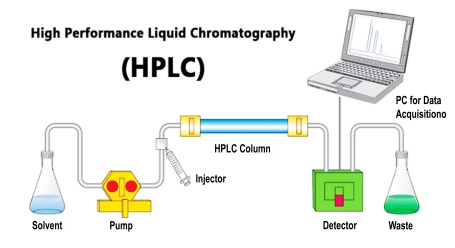
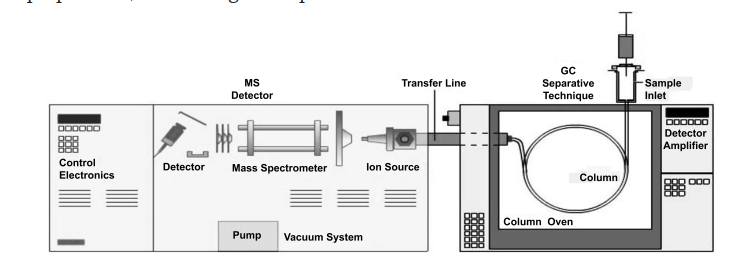
An essential aspect of forensic science is the analysis of water source pollution, which offers vital insights into crimes against the environment, health-related occurrences, and the recognition of those responsible. Contamination of water sources is a major problem for forensic investigations, requiring sophisticated analytical methods for precise and prompt identification of pollutants. This review presents a variety of cutting-edge techniques, tools, and interdisciplinary approaches that have greatly improved the accuracy, sensitivity, and effectiveness of water analysis. The use of remote sensing technologies and the difficulties in applying them to forensic water analysis are given particular attention. It explores developments in chromatographic methods, such as liquid and gas chromatography (GC and LC), and explains their application and contribution to the evaluation of water quality. After that, there is a focus on sensor technologies, explaining how new real-time monitoring sensors such as electrochemical, optical, and nano sensors have emerged and how they are used in forensic settings. The review concludes by outlining the challenges of applying advanced techniques to forensic water analysis and identifies key areas for future research, underscoring the need for continued methodological innovation. This thorough investigation seeks to promote improvements in the watery field source pollution analysis by serving as a useful resource for scholars, forensic scientists, and legislators.
References
- 1. Saferstein, R. (2004). Criminalistics: An introduction to forensic science.
- 2. Brettell, T.A., Butler, J.M., & Almirall, J.R. (2011). Forensic science. Analytical Chemistry,83(12), 45394556.
- 3. Roux, C.; Bucht, R.; Crispino, F.; De Forest, P.; Lennard, C.; Margot, P.; Miranda, M.D.; NicDaeid, N.; Ribaux, O.; Ross, A.; et al. The Sydney declaration—Revisiting the essence of forensic science through its fundamental principles. Forensic Sci. Int. 2022, 332, 111182.
- 4. Ramirez, A.I., & Herrera, A. (2016). Forensic hydrology. In Forensic Analysis-From Death to Justice. IntechOpen.
- 5. Schweitzer, L., & Noblet, J. (2018). Water contamination and pollution. In Green chemistry (pp. 261-290). Elsevier.
- 6. Suleyman, G., Alangaden, G., & Bardossy, A.C. (2018). The role of environmental contamination in the transmission of nosocomial pathogens and healthcare-associated infections. Current infectious disease reports, 20, 1-11.
- 7. Brusseau, M.L., & Artiola, J.F. (2019). Chemical contaminants. In Environmental and pollution science (pp. 175-190). Academic Press.
- 8. He, Z., Shentu, J., Yang, X., Baligar, V.C., Zhang, T., & Stoffella, P. J. (2015). Heavy metal contamination of soils: sources, indicators and assessment.
- 9. Madhav, S., Ahamad, A., Singh, A.K., Kushawaha, J., Chauhan, J.S., Sharma, S., & Singh, P. (2020). Water pollutants: sources and impact on the environment and human health. Sensors in water pollutants monitoring: Role of material, 43-62.
- 10. Weber, W. J., & Smith, E. H. (1986). Removing dissolved organic contaminants from water. Environmental science & technology, 20(10), 970-979
- 11. Hu, Q.H., Weng, J.Q., & Wang, J.S. (2010). Sources of anthropogenic radionuclides in the environment: a review. Journal of environmental radioactivity, 101(6), 426-437.
- 12. Rochman, C.M., Brookson, C., Bikker, J., Djuric, N., Earn, A., Bucci, K., … & Hung, C. (2019). Rethinking microplastics as a diverse contaminant suite. Environmental toxicology and chemistry, 38(4), 703-711.
- 13. Zoumis, T., Schmidt, A., Grigorova, L., & Calmano, W. (2001). Contaminants in sediments: remobilisation and demobilisation. Science of the total environment, 266(1-3), 195-202.
- 14. Malish-Sazdovska, M., Murgoski, B., & Latifi, L. (2018). Forensic analysis in environmental crimes. Kriminalističkateorija I praksa, 5(2/2018.), 55-63.
- 15. Oehme, M., Berger, U., Brombacher, S., Kuhn, F., & Kölliker, S. (2002). Trace analysis by HPLC-MS: contamination problems and systematic errors. TrAC Trends in Analytical Chemistry, 21(5), 322-331.
- 16. Lough, W.J., & Wainer, I.W. (Eds.) (1995). High performance liquid chromatography: fundamental principles and practice. cRc press.
- 17. Hubschmann, H.J. (2015). Handbook of GCMS: fundamentals and applications. John Wiley & Sons.
- 18. Stan, H.J. (2005). GC-MS. I: Basic principles and technical aspects of GC-MS for pesticide residue analysis. In Comprehensive Analytical Chemistry (Vol. 43, pp. 269-337). Elsevier.
- 19. Komorowicz, I., Gramowska, H., & Barałkiewicz, D. (2010). Estimation of the lake water pollution by determination of 18 elements using ICP-MS method and their statistical analysis. Journal of Environmental Science and Health, Part A, 45(3), 348-354.
- 20. Thomas, R. (2001). A beginner’s guide to ICPMS. Spectroscopy, 16(4), 38-42.
- 21. Thillaiarasu, P., Murugan, A., &Inba, J.K. (2014). Atomic absorption spectrophotometric studies on heavy metal contamination in groundwater in and around Tiruchendur, Tamilnadu, India. Chem Sci Trans, 3, 812-818.
- 22. García, R., & Báez, A.P. (2012). Atomic absorption spectrometry (AAS). Atomic absorption spectroscopy, 1, 1-13.
- 23. Krentz, C.A., Prystajecky, N., & Isaac-Renton, J. (2013). Identification of fecal contaminationsources in water using host-associated markers. Canadian journal of microbiology, 59(3), 210-220.
- 24. Kadri, K. (2019). Polymerase chain reaction (PCR): Principle and applications. Synthetic Biology-New Interdisciplinary Science, 1-17.
- 25. Richardson, S.D., & Ternes, T.A. (2014). Water analysis: emerging contaminants and current issues. Analytical chemistry, 86(6), 2813-2848.
- 26. De Graaf, R.A. (2019). In vivo NMR spectroscopy: principles and techniques. John Wiley & Sons.
- 27. Rane, N., Choudhary, S., & Rane, J. (2024). Enhancing water and air pollution monitoring and control through ChatGPT and similar generative artificial intelligence implementation. Available at SSRN 4681733.
- 28. 28. Perez-Beltran, C.H., Robles, A.D., Rodriguez, N.A., Ortega-Gavilán, F., & Jimenez-Carvelo, A.M. (2024). Artificial intelligence and water quality: From drinking water to wastewater. TrAC Trends in Analytical Chemistry, 117597.
- 29. Roy, T., Chowdhury, A.A., Basak, N., & Islam, E. (2024). Omics insight into the bacterial PPCPs removal mechanisms. In Development in Wastewater Treatment Research and Processes (pp. 199-221). Elsevier.
- 30. Al-Maliki, S.Q. A. K., Ahmed, A.A., Al-Ghobiri, M.A., & Nasr, O.A. (2024). Water Resource Management Using Geographical Information System and Remote Sensing Technologies: A Case of Jazan, Saudi Arabia.
- 31. Abioye, S., Majooni, Y., Moayedi, M., Rezvani, H., Kapadia, M., & Yousefi, N. (2024). Graphene-based nanomaterials for the removal of emerging contaminants of concern from water and their potential adaptation for pointof-use applications. Chemosphere, 141728.
- 32. Sevak, P., & Pushkar, B. (2024). Arsenic pollution cycle, toxicity and sustainable remediation technologies: A comprehensive review and bibliometric analysis. Journal of Environmental Management, 349, 119504.
Data Sharing Statement
There are no additional data available. All raw data and code are available upon request.
Funding
This research received no funding.
Author Contributions
All authors contributed significantly to the work and approve its publication.
Ethics Declaration
This article does not involve any human or animal subjects, and therefore does not require ethics approval.
Acknowledgements
We would like to express our gratitude to the patients, their families, and all those who have contributed to this study.
Conflicts of Interest
No conflicts of interest.
About this article

Cite this article
Pandey A, Saxena G, Singh A. Advancements in Analytical Techniques for Water Source Contamination Analysis in Forensics: A Comprehensive Review. Indian J Forensic Med Pathol. 2025;18(2 Suppl):339-346.
Licence:
Attribution-Non-commercial 4.0 International (CC BY-NC 4.0)This license enables reusers to distribute, remix, adapt, and build upon the material in any medium or format for noncommercial purposes only, and only so long as attribution is given to the creator.
| Received | Accepted | Published |
|---|---|---|
| June 28, 2024 | June 16, 2025 | June 30, 2025 |
DOI: https://doi.org/10.21088/ijfmp.0974.3383.18225.36
Keywords
ContaminationAnalysisEnvironmental crimeAnalytical TechniquesChromatographicSearch for Similar Articles
Similar Articles
- Diatom Analysis in Thermophilic water bodies: A Study on Hot Water Springs of Ma...
- Morphometric Study of Supra-meatal Triangle and Mastoid process in the Adult dry...
- Histopathological Spectrum of Autopsy Cases: A One Year Retrospective Observatio...
- Forensic Differentiation of Manner of Death in Railway Fatalities: A FourCase Se...
- Understanding assault Patterns: A Cross-sectional study of Cases at Chri, Kelamb...
Article Level Metrics
Last UpdatedSunday 18 October 2026, 15:53:20 (IST)
16279
Accesses
40
3209
00
Citations
NA
NA
NA
Download citation
Article Keywords
Keyword Highlighting
Highlight selected keywords in the article text.
Timeline
| Received | June 28, 2024 |
| Accepted | June 16, 2025 |
| Published | June 30, 2025 |
licence
Attribution-Non-commercial 4.0 International (CC BY-NC 4.0)
This license enables reusers to distribute, remix, adapt, and build upon the material in any medium or format for noncommercial purposes only, and only so long as attribution is given to the creator.