Full Text (PDF)
Indian Journal of Surgical Nursing 15(1):p 7-9, Jan-April 2026. | DOI: 10.21088/ijsn.2277.467X.15126.1
Original Article
Effectiveness of a Structured Scalp-Care Education Program on Reducing Alopecia Severity among Young Adults: A Quasi-Experimental Study
Anjum Abbasi, Devendra Kumar, Nancy Thakur, Deepika Bajwan
Author Information
Licence:
Attribution-Non-commercial 4.0 International (CC BY-NC 4.0)This license enables reusers to distribute, remix, adapt, and build upon the material in any medium or format for noncommercial purposes only, and only so long as attribution is given to the creator.
Indian Journal of Surgical Nursing 15(1):p 7-9, Jan-April 2026. | DOI: 10.21088/ijsn.2277.467X.15126.1
How Cite This Article:
Kumar D, Abbasi A, Thakur N, et al. Effectiveness of a structured scalp-care education program on reducing alopecia severity among young adults: a quasi-experimental study. J Surg Nurs. 2026;15(1):7-9.Timeline
Received : November 28, 2025
Accepted : December 31, 2025
Published : April 30, 2026
Abstract
Background: Alopecia is a common dermatological condition characterized by hair loss that affects individuals physically, emotionally, and socially. Young adults increasingly experience early-onset alopecia due to stress, poor dietary habits, chemical hair treatments, and improper scalp hygiene. Educational interventions led by nurses may help reduce the severity of alopecia. This study evaluated the effectiveness of a structured scalp-care education program in improving hair density and reducing hair-fall among young adults.
Methods: A quasi-experimental pretest–posttest control group design was used among 120 young adults aged 18–35 years diagnosed with Grade I–II alopecia. The experimental group received structured scalp-care education covering scalp hygiene, nutrition, stress management, and safe hair-care practices. Hair Density Score (HDS) and standardized Hair Fall Count Test were used for data collection.
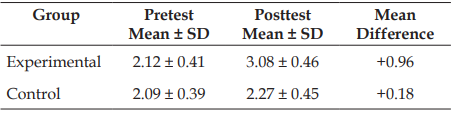
Results: The experimental group showed a significant improvement in HDS (mean increase +0.96) compared to the control group (mean increase +0.18). Daily hair-fall reduced by 25.3 strands/day in the experimental group compared to 6.4 strands/day in the control group.
Conclusion: The structured scalp-care educational program effectively reduced alopecia severity and daily hair shedding. Nurse-led interventions are costeffective strategies to promote scalp health among young adults.
References
- 1. Gupta M, Tosti A. Pathogenesis and management of androgenetic alopecia. J Dermatolog Treat. 2020;31(7):666-73.
- 2. Patel V, Singh A, Sharma R. Impact of scalp hygiene on hair density. Int J Trichology. 2020;12(4):155-62.
- 3. Sinclair R. Hair shedding and alopecia: causes and management. BMJ. 2015;350:h345.
- 4. Norwood O. Classification of male pattern baldness. South Med J. 1975;68(11):1359-65.
- 5. Ludwig E. Classification of female pattern alopecia. Arch Dermatol. 1977;113(9):1043-7.
- 6. Singh PK, Kumar A. Stress as a contributing factor in telogen effluvium. Indian Dermatol Online J. 2019;10(3):245-51.
- 7. Smith L, Patel V, George R. Effect of scalp-care education on hair density. Int J Trichology. 2021;13(2):85-90.
- 8. Mehta K. Nutritional interventions for hair loss. J Clin Aesthet Dermatol. 2020;13(11):32-9.
- 9. Khanna N, Rasool S. Chemical hair treatments and alopecia. J Cosmet Dermatol. 2018;17(6):1175-81.
- 10. Rossi A. Role of micronutrients in hair loss. Dermatol Ther. 2019;32(6):e13045.
- 11. Almohanna HM. Vitamins and minerals in hair loss. Dermatol Pract Concept. 2019;9(1):15-30.
Data Sharing Statement
There are no additional data available. All raw data and code are available upon request.
Funding
This research received no funding.
Author Contributions
Whether all authors contributed significantly to the work and approve its publication.
Ethics Declaration
This article does not involve any human or animal subjects, and therefore does not require ethics approval.
Acknowledgements
We would like to express our gratitude to the patients, their families, and all those who have contributed to this study.
Conflicts of Interest
The authors report no conflicts of interest in this work.
About this article

Cite this article
Kumar D, Abbasi A, Thakur N, et al. Effectiveness of a structured scalp-care education program on reducing alopecia severity among young adults: a quasi-experimental study. J Surg Nurs. 2026;15(1):7-9.
Licence:
Attribution-Non-commercial 4.0 International (CC BY-NC 4.0)This license enables reusers to distribute, remix, adapt, and build upon the material in any medium or format for noncommercial purposes only, and only so long as attribution is given to the creator.
| Received | Accepted | Published |
|---|---|---|
| November 28, 2025 | December 31, 2025 | April 30, 2026 |
DOI: 10.21088/ijsn.2277.467X.15126.1
Keywords
AlopeciaHair densityScalp-care educationNursing interventionYoung adultsHair fall reductionSearch for Similar Articles
Similar Articles
- Total Anomalous Pulmonary Venous Connection (TAPVC) Presenting with Respiratory...
- Dandy–Walker Syndrome (DWS): Clinical Features, Diagnosis, and Nursing Managemen...
- Benign Prostatic Hyperplasia: A Comprehensive Evidence-Based Review of Etiopatho...
- Challenges Faced During Data Collection on Substance abuse Prevention among Coll...
- Effectiveness of structured Teaching Programme on Knowledge Regarding Health Haz...
Article Level Metrics
Last UpdatedMonday 19 October 2026, 07:28:57 (IST)
2171
Accesses
28
313
00
Citations
NA
NA
NA
Download citation
Article Keywords
Keyword Highlighting
Highlight selected keywords in the article text.
Timeline
| Received | November 28, 2025 |
| Accepted | December 31, 2025 |
| Published | April 30, 2026 |
licence
Attribution-Non-commercial 4.0 International (CC BY-NC 4.0)
This license enables reusers to distribute, remix, adapt, and build upon the material in any medium or format for noncommercial purposes only, and only so long as attribution is given to the creator.