Full Text (PDF)
Indian Journal of Forensic Medicine and Pathology 19(1):p 35-39, Jan - March 2026. | DOI: https://doi.org/10.21088/ijfmp.0974.3383.19126.5
Original Article
E-Professionalism in Medical Education: Assessing Social Media Practices and Ethical Awareness among Students
R. Monisha, Ebrahim A.R., A. Sherley Alwin, Pirithiviraja P.
Author Information
Licence:
Attribution-Non-commercial 4.0 International (CC BY-NC 4.0)This license enables reusers to distribute, remix, adapt, and build upon the material in any medium or format for noncommercial purposes only, and only so long as attribution is given to the creator.
Indian Journal of Forensic Medicine and Pathology 19(1):p 35-39, Jan - March 2026. | DOI: https://doi.org/10.21088/ijfmp.0974.3383.19126.5
How Cite This Article:
Ebrahim A.R., R. Monisha, A. Sherley Alwin, et al. E-Professionalism in Medical Education: Assessing Social Media Practices and Ethical Awareness among Students. Indian J Forensic Med Pathol. 2026; 19(1): 35-39.Timeline
Received : August 14, 2025
Accepted : December 13, 2025
Published : March 30, 2026
Abstract
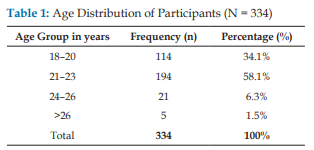
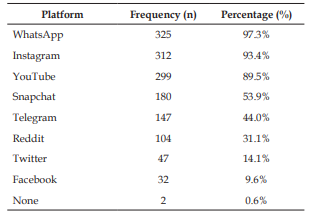
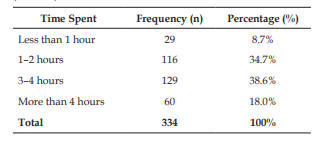
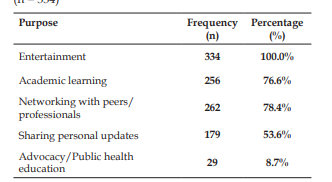
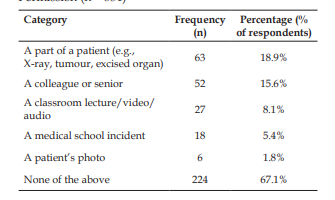
Background: social media is widely used by medical students for communication, learning, and networking. However, it can blur personal–professional boundaries, posing ethical challenges related to confidentiality and professionalism. Aim: To assess patterns of social media use, awareness of e-professionalism, and prevalence of unprofessional behaviour among clinical-year MBBS students. Objectives: To assess social media usage, awareness of e-professionalism guidelines, and prevalence of unprofessional conduct, and to explore associations between privacy practices and professionalism breaches. Materials and Methods: A cross-sectional online survey was conducted among 334 clinical-year MBBS students at Chettinad Hospital and Research Institute using a pre-validated questionnaire. Data included demographics, usage patterns, posting behaviours, and policy awareness. Results: Most participants (58.1%) were aged 21–23 years and female (62.9%). WhatsApp (97.3%), Instagram (93.4%), and YouTube (89.5%) were the most used platforms. Daily use was 3–4 hours for 38.6% of students. Entertainment (100%), networking (78.4%), and academic learning (76.6%) were the main purposes. Unprofessional postings included clinical images (18.9%), colleague-related content (15.6%), and classroom material (8.1%). Most (94.9%) refrained from offering unsolicited medical advice. Conclusion: Social media is integral to students’ academic and social lives. While most demonstrate responsible online behaviour, lapses in digital professionalism remain. Incorporating structured training on e-professionalism into medical curricula can strengthen ethical awareness and online conduct.
References
- 1. Farsi S., Sabbahi A., Sait D., Kabli R., Abduljabar G. Ethical use of social media and sharing of patient information by medical students at a university hospital in Saudi Arabia: crosssectional survey. JMIR Med Educ. 2025; 11: e57812.
- 2. Imran S., Yasmeen R., Mansoor M. Development and validation of self-assessment instrument to measure the digital professionalism of healthcare professionals using social media. BMC Med Educ. 2024; 24: 243.
- 3. Kitsis E.A., Milan F.B., Cohen H.W., Myers D., Herron P., McEvoy M., et al. Who’s misbehaving? Perceptions of unprofessional social media use by medical students and faculty. BMC Med Educ. 2016; 16:67.
- 4. Gale R., Nimmon L., Parker D., Kennedy P. Preserving professional identity, behaviors, and values in the digital era: A literature review. BMC Med Educ. 2021; 21:28.
- 5. Pander T., Pinilla S., Dimitriadis K., Fischer M.R. The use of social media in medical education: a literature review. Creat Educ. 2014; 5(24): 2057-61.
- 6. Mahmood N., Ahmad S., Qureshi R. The dangers and benefits of social media on e-professionalism of healthcare professionals: a scoping review. J Med Internet Res. 2021; 23(11): e25770.
- 7. Moorley C., Guo A., Lengersberg F. Social media in undergraduate medical education: Systematic review and synthesis. Med Educ. 2021; 45(7): 14567.
- 8. Al-Adwan A.H., Al-Sallal K., Salloum S.A. Attitudes towards social media and its impact on medical students: cross-sectional survey. Integr J Res Med Sci. 2025.
- 9. Chretien K.C., Tuck M.G. Online professionalism: A synthetic review. Int Rev Psychiatry. 2015; 27(2): 106-17.
- 10. Arumugam S., Balabaskaran S., Abhilash B.A., Sowmiya K., Krishna P.B., Prabakaran K., Surya B.N. Exploring the social media usage among healthcare professionals in Chennai, India. International Journal of Pharmaceutical and Clinical Research. 2024; 16(3): 258–62.
Data Sharing Statement
There are no additional data available. All raw data and code are available upon request.
Funding
This research received no funding.
Author Contributions
All authors contributed significantly to the work and approve its publication.
Ethics Declaration
This article does not involve any human or animal subjects and therefore does not require ethics approval.
Acknowledgements
We would like to express our gratitude to the patients, their families, and all those who have contributed to this study.
Conflicts of Interest
No conflicts of interest in this work.
About this article

Cite this article
Ebrahim A.R., R. Monisha, A. Sherley Alwin, et al. E-Professionalism in Medical Education: Assessing Social Media Practices and Ethical Awareness among Students. Indian J Forensic Med Pathol. 2026; 19(1): 35-39.
Licence:
Attribution-Non-commercial 4.0 International (CC BY-NC 4.0)This license enables reusers to distribute, remix, adapt, and build upon the material in any medium or format for noncommercial purposes only, and only so long as attribution is given to the creator.
| Received | Accepted | Published |
|---|---|---|
| August 14, 2025 | December 13, 2025 | March 30, 2026 |
DOI: https://doi.org/10.21088/ijfmp.0974.3383.19126.5
Keywords
E-professionalismSocial mediaMedical educationMedical studentsSearch for Similar Articles
Similar Articles
- Diatom Analysis in Thermophilic water bodies: A Study on Hot Water Springs of Ma...
- Morphometric Study of Supra-meatal Triangle and Mastoid process in the Adult dry...
- Histopathological Spectrum of Autopsy Cases: A One Year Retrospective Observatio...
- Forensic Differentiation of Manner of Death in Railway Fatalities: A FourCase Se...
- Understanding assault Patterns: A Cross-sectional study of Cases at Chri, Kelamb...
Article Level Metrics
Last UpdatedSaturday 17 October 2026, 05:50:45 (IST)
16164
Accesses
40
3204
00
Citations
NA
NA
NA
Download citation
Article Keywords
Keyword Highlighting
Highlight selected keywords in the article text.
Timeline
| Received | August 14, 2025 |
| Accepted | December 13, 2025 |
| Published | March 30, 2026 |
licence
Attribution-Non-commercial 4.0 International (CC BY-NC 4.0)
This license enables reusers to distribute, remix, adapt, and build upon the material in any medium or format for noncommercial purposes only, and only so long as attribution is given to the creator.