Full Text (PDF)
Indian Journal of Forensic Medicine and Pathology 11(3):p 183-186, Jul-Sep 2018. | DOI: 10.21088/ijfmp.0974.3383.11318.6
Original Article
Dried Salivary Stain Detection using Ultraviolet- Light Spectrophotometer, Fluorescent and Raman Spectroscopy
Ramesh C. , Nonitha S.1 null, Yogesh T.L.3 null, Nandaprasad4 null, Tejavathy5 null, Yashwanth Reddy6 null
Author Information
Licence:
Attribution-Non-commercial 4.0 International (CC BY-NC 4.0)This license enables reusers to distribute, remix, adapt, and build upon the material in any medium or format for noncommercial purposes only, and only so long as attribution is given to the creator.
Indian Journal of Forensic Medicine and Pathology 11(3):p 183-186, Jul-Sep 2018. | DOI: 10.21088/ijfmp.0974.3383.11318.6
How Cite This Article:
Timeline
Received : August 28, 2018
Accepted : September 17, 2018
Published : October 30, 2018
Abstract
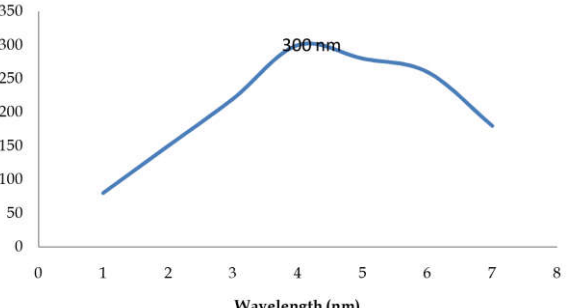
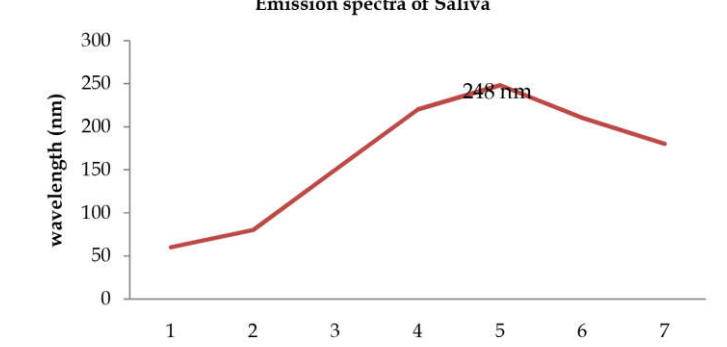
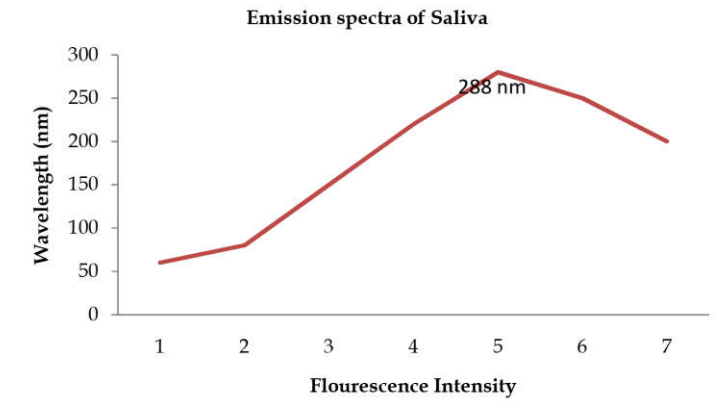
Objectives: To detect the salivary stains, in particular, any improvement in the ability to target an area of DNA analysis. To evaluate the efficacy in detection of salivary stains between UV light, fluorescent and Raman spectroscopy. Study Design: Prospective randomised study. Place & Duration of Study: Department of Oral & Maxillofacial Pathology, Sri Rajiv Gandhi College of Dental Sciences & Hospital; Forensic science laboratory, Bangalore Test Centre & Indian institute of Science, Bangalore, Karnataka; between August 2013 to December 2014. Patients & Methods: Dried salivary stain samples from 20 volunteers were collected and exposed to ultraviolet-light spectrophotometer, Fluorescent spectroscopy and Raman spectroscopy. Water was used as a control sample and Tryptophan, to assess the presence of saliva from the collected samples. Results: A total number of 20 volunteers dried salivary stain samples were taken. The absorption spectra of the saliva samples revealed the excited wavelength of 240 to 248 nm coinciding with the excited wavelength of tryptophan in case of ultraviolet spectroscopy; the excited wavelength was 280 to 288 nm coinciding with the excited wavelength of tryptophan with less concentration of saliva in case of fluorescent spectroscopy; and in case of Raman spectroscopy, saliva was not detected instead the diluted content of KCL solution was only noted. Conclusions: Ultraviolet light spectrophotometer and fluorescent spectroscopy are a rapid and non-invasive technique for the detection of dried salivary stain, in which the sensitivity and accuracy is best with the fluorescent spectroscopy.
References
- 1. Pink R, Simek J, Vondrakova J, Faber E, Michl P, Pazdera J, et al. Saliva as a diagnostic medium. Biomed Pap Med Fac Univ Palacky Olomouc Czech Repub. 2009;153(2):103–10.
- 2. Anzai-Kanto E, Hirata MH, Hirata RDC, Nunes FD, Melani RFH, Oliveira RN. DNA extraction from human saliva deposited on skin and its use in forensic identification procedures. Braz Oral Res. 2005;19(3):216-22.
- 3. Lignen I, Willems G. DNA research in forensic dentistry. Methods Find Exp Clin Pharmacol. 2001;23(9):511-7.
- 4. Nanda KDS, Ranganathan K, Umadevi KM, Joshua E. A rapid and noninvasive method to detect dried saliva stains from human skin using fluorescent spectroscopy. J Oral Maxillofac Pathol. 2011;15(1):22–5.
- 5. Soukos NS, Crowley K, Bamberg MP, Gillies R, Doukas AG, Evans R, et al. A rapid method to detect dried saliva stains swabbed from human skin using fluorescence spectroscopy. Forensic Sci Int. 2000;114(3):133-8.
- 6. Lee WC, Khoo BE. Forensic science light sources for detection of biological evidences in crime scene investigation: a review. Malays J Forensic Sci. 2010;1(1):17-28.
- 7. Virkler K, Lednev IK. Analysis of body fluids for forensic purposes: from laboratory testing to non-destructive rapid confirmatory identification at a crime scene. Forensic Sci Int. 2009;188(1-3):1–17.
- 8. Sikirzhytski V, Virkler K, Lednev IK. Discriminant analysis of Raman spectra for body fluid identification for forensic purposes. Sensors (Basel). 2010;10(4):2869-84.
Data Sharing Statement
There are no additional data available. All raw data and code are available upon request.
Funding
This research received no funding.
Author Contributions
Whether all authors contributed significantly to the work and approve its publication.
Ethics Declaration
This article does not involve any human or animal subjects, and therefore does not require ethics approval.
Acknowledgements
We would like to express our gratitude to the patients, their families, and all those who have contributed to this study.
Conflicts of Interest
The authors report no conflicts of interest in this work.
About this article

Cite this article
Licence:
Attribution-Non-commercial 4.0 International (CC BY-NC 4.0)This license enables reusers to distribute, remix, adapt, and build upon the material in any medium or format for noncommercial purposes only, and only so long as attribution is given to the creator.
| Received | Accepted | Published |
|---|---|---|
| August 28, 2018 | September 17, 2018 | October 30, 2018 |
DOI: 10.21088/ijfmp.0974.3383.11318.6
Keywords
SpectroscopySalivaForensic ScienceSalivary AmylaseLight SourceSearch for Similar Articles
Similar Articles
- Diatom Analysis in Thermophilic water bodies: A Study on Hot Water Springs of Ma...
- Morphometric Study of Supra-meatal Triangle and Mastoid process in the Adult dry...
- Histopathological Spectrum of Autopsy Cases: A One Year Retrospective Observatio...
- Forensic Differentiation of Manner of Death in Railway Fatalities: A FourCase Se...
- Understanding assault Patterns: A Cross-sectional study of Cases at Chri, Kelamb...
Article Level Metrics
Last UpdatedSunday 18 October 2026, 08:50:23 (IST)
16253
Accesses
16
3204
00
Citations
NA
NA
NA
Download citation
Article Keywords
Keyword Highlighting
Highlight selected keywords in the article text.
Timeline
| Received | August 28, 2018 |
| Accepted | September 17, 2018 |
| Published | October 30, 2018 |
licence
Attribution-Non-commercial 4.0 International (CC BY-NC 4.0)
This license enables reusers to distribute, remix, adapt, and build upon the material in any medium or format for noncommercial purposes only, and only so long as attribution is given to the creator.