Full Text (PDF)
Indian Journal of Forensic Medicine and Pathology 18(3):p 441-448, July-Sep 2025. | DOI: https://doi.org/10.21088/ijfmp.0974.3383.18325.2
Original Article
COX-2 and Ki-67 in Breast Cancer: A New Perspective on Tumor Pathology and Progression
Akanksha Hegde,, Usha M., Rashmi K
Author Information
Licence:
Attribution-Non-commercial 4.0 International (CC BY-NC 4.0)This license enables reusers to distribute, remix, adapt, and build upon the material in any medium or format for noncommercial purposes only, and only so long as attribution is given to the creator.
Indian Journal of Forensic Medicine and Pathology 18(3):p 441-448, July-Sep 2025. | DOI: https://doi.org/10.21088/ijfmp.0974.3383.18325.2
How Cite This Article:
Hegde A., Usha M., Rashmi K. COX-2 and Ki-67 in Breast Cancer: A New Perspective on Tumor Pathology and Progression. Indian J Forensic Med Pathol. 2025; 18(3): 151-158.Timeline
Received : June 14, 2025
Accepted : August 14, 2025
Published : September 30, 2025
Abstract
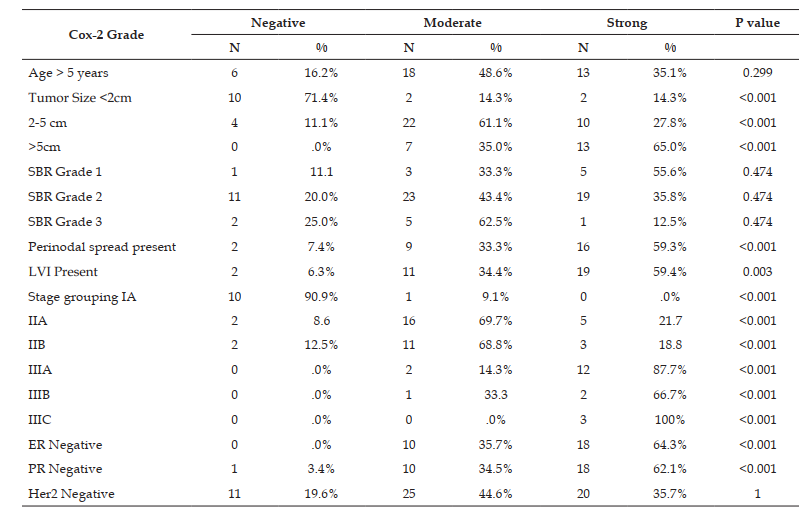
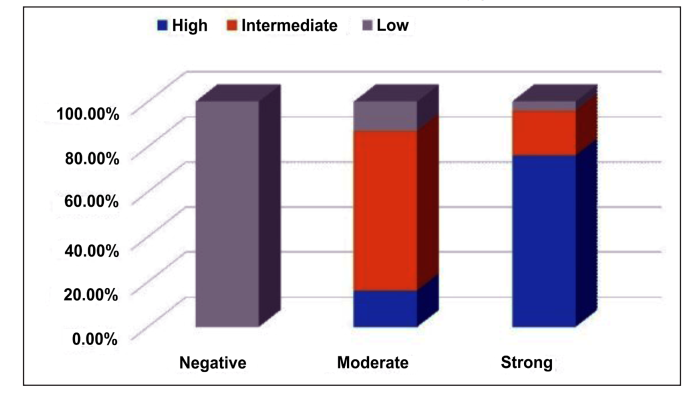
Background: Breast cancer is a formidable health issue, necessitating continuous research for improved prognostic and therapeutic strategies. Cycloxygenase-2 (COX-2) is linked to aggressive breast cancers, characterized by high-grade tumors, large size, lymph node involvement, HER-2 overexpression, and ER negativity. Ki-67, which is used to measure cell growth, is predictive of chemotherapy response in ER and PR-negative breast cancers. High Ki-67 is associated with elevated recurrence rate and poorer prognosis. This study evaluated COX-2 and Ki-67 expression in breast carcinoma and their correlation with clinicopathological features. Elevated Ki-67 is linked to higher recurrence and poorer prognosis. Methods: This retrospective cross-sectional study included 70 cases of invasive breast carcinoma diagnosed between August 2022 and July 2024. Immunohistochemistry was performed on formalin-fixed, paraffin-embedded tissue sample for COX-2 and Ki-67. COX-2 expression was scored based on quantity and intensity, while Ki-67 was scored using St. Gallen Consensus thresholds. ssociations were analyzed using Pearson’s Chi-square or Fisher’s exact test, with p<0.05 considered significant. Results: The study revealed significant associations between high expression levels of COX-2, Ki-67 with aggressive tumor characteristics, including larger tumor size, advanced stage, lymphovascular invasion (LVI), perinodal spread and ER/PR negativity (P -<0.001). Though no significant association was found with age, SBR(Scarff-Bloom-Richardson) grade, N stage, perineural invasion(PNI) and Her2 status. Conclusion: High COX-2 and Ki-67 expression correlate with aggressive breast cancer features, supporting their role as prognostic markers and potential therapeutic targets, particularly in hormone receptor-negative and triple-negative subtypes
References
- 1. Malvia S., Bagadi S.A., Dubey U.S., Saxena S. Epidemiology of breast cancer in Indian women. Asia Pac J Clin Oncol. 2017; 13(4): 289-295.
- 2. World Health Organization. Breast cancer. Geneva: World Health Organization; updated May 2022; cited 2022 May.
- 3. Orrantia-Borunda E., Anchondo-Nunez P., Acuna-Aguilar L.E., et al. Subtypes of Breast Cancer. In: Mayrovitz H.N., editor. Breast Cancer. Brisbane (AU): Exon Publications; 2022. Chapter 3.
- 4. Solanki R., Agrawal N., Ansari M., Jain S., Jindal A. COX-2 Expression in Breast Carcinoma with Correlation to Clinicopathological Parameters. Asian Pac J Cancer Prev. 2018; 19(7): 1971-1975.
- 5. Hoellen F., Kelling K., Dittmer C., Diedrich K., Friedrich M., Thill M. Impact of cyclooxygenase-2 in breast cancer. Anticancer Res. 2011; 31(12): 4359-4367.
- 6. Liu B., Qu L., Yan S. Cyclooxygenase-2 promotes tumor growth and suppresses tumor immunity. Cancer Cell Int. 2015; 15: 106.
- 7. Sibby M., Krishnamurthy B., Banu N., Srinivasan S. BRCA1 and Ki-67 in breast cancer: A review. Indian J Pathol Oncol. 2021; 8(1): 5-9.
- 8. Shetageri S.N., Suchitha S., Manjunath V.G. A study of Ki 67 immunostaining in breast carcinomas: Correlation with histopathological prognostic factors. Indian J Pathol Oncol. 2017; 4(1): 98-102.
- 9. Singh A., Kumar P., Chandrashekhara S.H., Kumar A. Unravelling chloroma: review of imaging findings. Br J Radiol. 2017; 90(20160710): 1-9.
- 10. Finkelman B.S., Zhang H., Hicks D.G., Turner B.M. The Evolution of Ki-67 and Breast Carcinoma: Past Observations, Present Directions, and Future Considerations. Cancers (Basel). 2023; 15(3): 808.
- 11. Jana D., Sarkar D.K., Ganguly S., Saha S., Sa G., Manna A.K., et al. Role of Cyclooxygenase 2 (COX-2) in Prognosis of Breast Cancer. Indian J Surg Oncol. 2014; 5(1): 59-65.
- 12. Aman N.A., Doukoure B., Koffi K.D., Koui B.S., Traore Z.C., Kouyate M., et al. Immunohistochemical Evaluation of Ki-67 and Comparison with Clinicopathologic Factors in Breast Carcinomas. Asian Pac J Cancer Prev. 2019; 20(1): 73-79.
- 13. Feriancová M., Walter I., Singer C.F., Gazdarica J., Pohlodek K. Expression of COX-2, p16, and Ki67 in the range from normal breast tissue to breast cancer. Neoplasma. 2021; 68(2): 342-351.
- 14. Qiu X., Mei J., Yin J., Wang H., Wang J., Xie M. Correlation analysis between expression of PCNA, Ki-67 and COX-2 and X-ray features in mammography in breast cancer. Oncol Lett. 2017; 14(3): 2912-2918.
- 15. Shim J.Y., An H.J., Lee Y.H., Kim S.K., Lee K.P.,Lee K.S. Overexpression of cyclooxygenase-2 is
- 16. Gogoi S., Das B., Borgohain M., Gogoi G., Das J. Ki67 and P53 expression in breast cancer and their correlation with clinicopathological parameters. Indian J Pathol Oncol. 2021; 8(4): 478-484.
- 17. Coutinho L.L., Femino E.L., Gonzalez A.L., Moffat R.L., Heinz W.F., Cheng R.Y.S., et al. NOS2 and COX-2 Co-Expression Promotes Cancer Progression: A Potential Target for Developing Agents to Prevent or Treat Highly Aggressive Breast Cancer. Int J Mol Sci. 2024; 25(11): 6103.
- 18. Freitas-Alves D.R., Pinto J.B., Rodrigues F.R., Valverde P., Fernandes D.C.S., Accioly M.T., et al. COX-2 expression in breast cancer and impact on survival outcomes. J Cancer Sci Clin Ther. 2020; 4(2): 120-132.
- 19. Wongmaneerung P., Chitapanarux I., Traisathit P., et al. The association between Ki-67 expression and survival in breast cancer subtypes: a cross-sectional study of Ki-67 cutpoint in northern Thailand. BMC Cancer. 2025; 25: 346.
- 20. Schandiz H., Farkas L., Park D., Liu Y., Andersen S.N., Sauer T., Geisler J. High Ki67 expression, HER2 over expression, and low progesterone receptor levels in high-grade DCIS: significant associations with clinical practice implications. Front Oncol. 2025; 15: 1467664.
Data Sharing Statement
There are no additional data available. All raw data and code are available upon request.
Funding
This research received no funding.
Author Contributions
All authors contributed significantly to the work and approve its publication.
Ethics Declaration
This article does not involve any human or animal subjects, and therefore does not require ethics approval.
Acknowledgements
We would like to express our gratitude to the patients, their families, and all those who have contributed to this study.
Conflicts of Interest
No conflicts of interest in this work.
About this article

Cite this article
Hegde A., Usha M., Rashmi K. COX-2 and Ki-67 in Breast Cancer: A New Perspective on Tumor Pathology and Progression. Indian J Forensic Med Pathol. 2025; 18(3): 151-158.
Licence:
Attribution-Non-commercial 4.0 International (CC BY-NC 4.0)This license enables reusers to distribute, remix, adapt, and build upon the material in any medium or format for noncommercial purposes only, and only so long as attribution is given to the creator.
| Received | Accepted | Published |
|---|---|---|
| June 14, 2025 | August 14, 2025 | September 30, 2025 |
DOI: https://doi.org/10.21088/ijfmp.0974.3383.18325.2
Keywords
COX-2Invasive ductal carcinomaKi-67Prognostic markersERPRSearch for Similar Articles
Similar Articles
- Diatom Analysis in Thermophilic water bodies: A Study on Hot Water Springs of Ma...
- Morphometric Study of Supra-meatal Triangle and Mastoid process in the Adult dry...
- Histopathological Spectrum of Autopsy Cases: A One Year Retrospective Observatio...
- Forensic Differentiation of Manner of Death in Railway Fatalities: A FourCase Se...
- Understanding assault Patterns: A Cross-sectional study of Cases at Chri, Kelamb...
Article Level Metrics
Last UpdatedSunday 18 October 2026, 15:55:02 (IST)
16279
Accesses
54
3209
00
Citations
NA
NA
NA
Download citation
Article Keywords
Keyword Highlighting
Highlight selected keywords in the article text.
Timeline
| Received | June 14, 2025 |
| Accepted | August 14, 2025 |
| Published | September 30, 2025 |
licence
Attribution-Non-commercial 4.0 International (CC BY-NC 4.0)
This license enables reusers to distribute, remix, adapt, and build upon the material in any medium or format for noncommercial purposes only, and only so long as attribution is given to the creator.