Full Text (PDF)
Indian Journal of Forensic Medicine and Pathology 18(2):p 119-124, Jan-June 2025. | DOI: https://doi.org/10.21088/ijfmp.0974.3383.18225.5
Original Article
Correlation and Examination of the Predominant Palatal Arch form within the Male and Female between North Indian and Negroid Population
Ishika Bhardwaj, Sally Lukose, M. Siddharth
Author Information
Licence:
Attribution-Non-commercial 4.0 International (CC BY-NC 4.0)This license enables reusers to distribute, remix, adapt, and build upon the material in any medium or format for noncommercial purposes only, and only so long as attribution is given to the creator.
Indian Journal of Forensic Medicine and Pathology 18(2):p 119-124, Jan-June 2025. | DOI: https://doi.org/10.21088/ijfmp.0974.3383.18225.5
How Cite This Article:
Bhardwaj I, Lukose S, Siddharth M. Correlation and Examination of the Predominant Palatal Arch form within the Male and Female between North Indian and Negroid Population. Indian J Forensic Med Pathol. 2025;18(2):119-124.Timeline
Received : April 02, 2025
Accepted : June 02, 2025
Published : June 25, 2025
Abstract
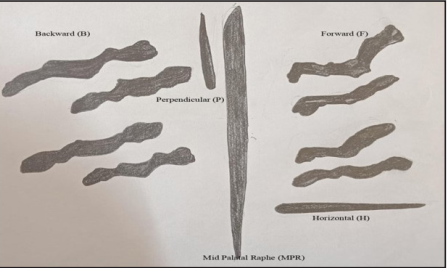
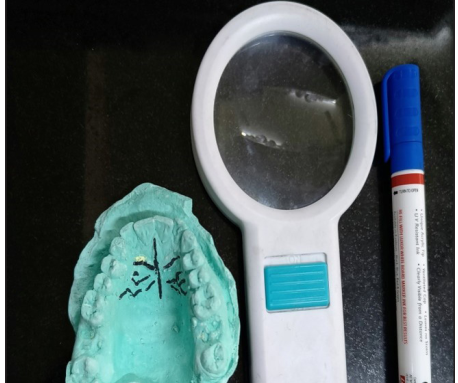
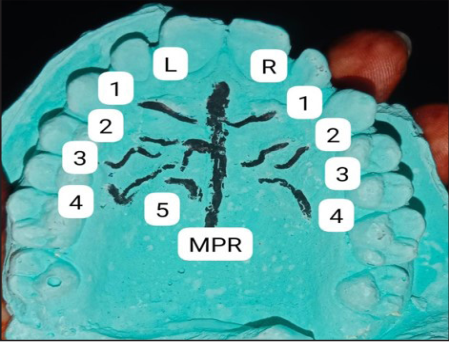
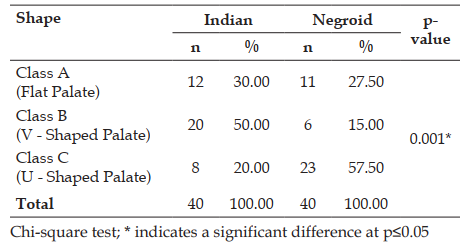
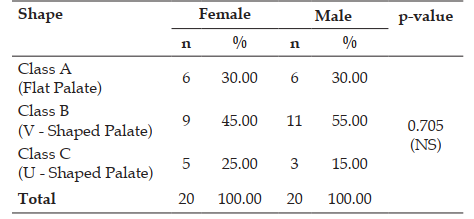
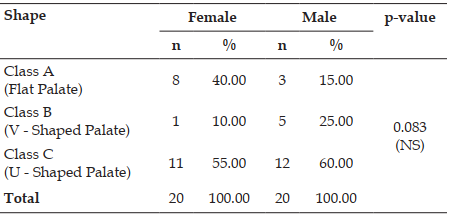
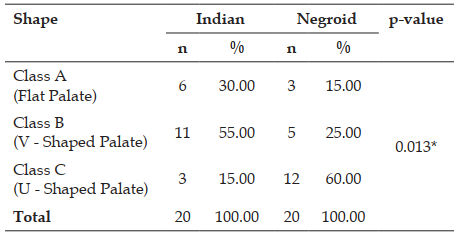
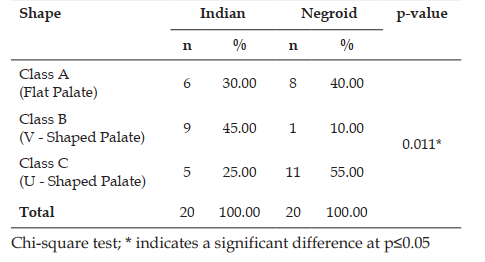
Background: Palatal rugoscopy is the examination of the palatal rugae. The majority of people concur that a person’s rugae pattern remains constant throughout their lives. The rugae pattern can endure injury or burns better than most other anatomical structures because of their interior placement in the head. Because rugae patterns are believed to be unique, much like fingerprints, they are also utilised for personal identification. Examining and correlating the dominant palatal arch form with the male and female groups in North Indian and Negroid populations was the aim of this study. The sample consists of 80 plaster casts, ages 18 to 25, split equally across two groups and genders. Method: After taking an impression of the maxillary arch, a plaster cast was made using alginate impression material. The rugae were recognised on the cast and described in accordance with Thomas and Kotze (1983) and Kapali et al. (1983) using a sharp graphite pencil and adequate illumination and magnification Result: Class B (V-shaped palate) was the most common palatal arch form (16/40; 40.00%) in Negroid subjects, followed by Class C shape. In Indian subjects, Class C (U-shaped palate) was the most common palatal arch form (19/40; 47.50%), followed by Class A and Class B shapes. Conclusion: The rugae pattern is another method of distinguishing between North Indian and Negroid, based on the limitations of the current study.
References
- 1. Berkovitz BKB, Holland GR, Moxham BJ. Oral anatomy, histology and embryology. 5th ed. London: Elsevier Health Sciences; 2017.
- 2. Nanci A, editor. Ten Cate’s oral histology: development, structure, and function. 9th ed. St. Louis (MO): Elsevier Health Sciences; 2017.
- 3. Pueyo VM, Garrido BR, Sánchez JS. Odontología legalmente forense. [place unknown]: [publisher unknown]; 1994. Vol. 23.
- 4. English WR, Robison SF, Summitt JB, Oesterle LJ, Brannon RB, Morlang WM. Individuality of human palatal rugae. J Forensic Sci. 1988;33(3):718-26.
- 5. Hauser G, Daponte A, Roberts MJ. Palatal rugae. J Anat. 1989;165:237.
- 6. Lysell L. Plicae palatinae transversae and papilla incisiva in man; a morphologic and genetic study. Acta Odontol Scand. 1955;13(Suppl. 18):5-137.
- 7. Venegas VH, Valenzuda JS. Palatal rugae: systemic analysis of its shape and dimensions for use in human dentition. Indian J Dent Res. 2005;16:51-5.
- 8. Thomas CJ, Kotze TJ. The palatal ruga pattern in six southern African human populations. Part II: Inter-racial differences. J Dent Assoc S Afr. 1983;38(3):166-72.
- 9. Kalia KP. Palatal rugae pattern in Mysorean and Tibetan populations. J Dent Res. 2005;16(2):51-5.
- 10. Nayak P, Acharya AB, Padmini AT, Kaveri H. Differences in the palatal rugae shape in two populations of India. Arch Oral Biol. 2007;52(10):977-82.
- 11. Thomas CJ, Kotze TJ. The palatal ruga pattern: a new classification. J Dent Assoc S Afr. 1983;38(3):153-7.
- 12. Sekhar SM, Vyas N, Unnikrishnan MK, Rodrigues GS, Mukhopadhyay C. Correlation of palatal rugoscopy with gender, palatal vault height and ABO blood groups in three different Indian populations. Ann Med Health Sci Res. 2014;769-74.
- 13. English WR, Robison SF, Summitt JB, Oesterle LJ, Brannon RB, Morlang WM. Individuality of human palatal rugae. J Forensic Sci. 1988;33(3):718-26.
- 14. Thomas CJ, Kotze TJ. The palatal ruga pattern: a new classification. J Dent Assoc S Afr. 1983;38(3):153-7.
- 15. Peavy DC Jr, Kendrick GS. The effects of tooth movement on the palatine rugae. J Prosthet Dent. 1967;18(6):536-42.
- 16. Kapali S, Townsend G, Richards L, Parish T. Palatal rugae patterns in Australian Aborigines and Caucasians. Aust Dent J. 1997;42(2):129-33.
- 17. Thomas CJ, Kotze TJ. The palatal ruga pattern in six southern African human populations. Part I: A description of the populations an a method for its investigation. J Dent Assoc S Afr. 1983;38(3):158-65.
- 18. Kalia KP. Palatal rugae pattern in Mysorean and Tibetan populations. J Dent Res. 2005;16(2):51-5.
- 19. Almeida MA, Phillips C, Kula K, Tulloch C. Stability of the palatal rugae as landmarks for analysis of dental casts. Angle Orthod. 1995;65(1):43-8.
- 20. Hauser G, Daponte A, Roberts MJ. Palatal rugae. J Anat. 1989;165:237.
- 21. Palatinas R, de su Forma SDA. Palatal rugae: systematic analysis of its shape and dimensions for use in human identification. Int J Morphol. 2009;27(3):819-25.
- 22. Pillai J, Banker A, Bhattacharya A, Gandhi R, Patel N, Parikh S. Quantitative and qualitative analysis of palatal rugae patterns in Gujarati population: A retrospective, cross-sectional study. J Forensic Dent Sci. 2016;8(3):126.
Data Sharing Statement
There are no additional data available. All raw data and code are available upon request.
Funding
This research received no funding.
Author Contributions
All authors contributed significantly to the work and approve its publication.
Ethics Declaration
This article does not involve any human or animal subjects, and therefore does not require ethics approval.
Acknowledgements
We would like to express our gratitude to the patients, their families, and all those who have contributed to this study
Conflicts of Interest
The authors report no conflicts of interest in this work.
About this article

Cite this article
Bhardwaj I, Lukose S, Siddharth M. Correlation and Examination of the Predominant Palatal Arch form within the Male and Female between North Indian and Negroid Population. Indian J Forensic Med Pathol. 2025;18(2):119-124.
Licence:
Attribution-Non-commercial 4.0 International (CC BY-NC 4.0)This license enables reusers to distribute, remix, adapt, and build upon the material in any medium or format for noncommercial purposes only, and only so long as attribution is given to the creator.
| Received | Accepted | Published |
|---|---|---|
| April 02, 2025 | June 02, 2025 | June 25, 2025 |
DOI: https://doi.org/10.21088/ijfmp.0974.3383.18225.5
Keywords
Rugae patternsForensic Identification and Palatal rugaeOrthodonticsPalatoscopy and Forensic dentistryPalatal arch formSearch for Similar Articles
Similar Articles
- Diatom Analysis in Thermophilic water bodies: A Study on Hot Water Springs of Ma...
- Morphometric Study of Supra-meatal Triangle and Mastoid process in the Adult dry...
- Histopathological Spectrum of Autopsy Cases: A One Year Retrospective Observatio...
- Forensic Differentiation of Manner of Death in Railway Fatalities: A FourCase Se...
- Understanding assault Patterns: A Cross-sectional study of Cases at Chri, Kelamb...
Article Level Metrics
Last UpdatedMonday 19 October 2026, 18:39:03 (IST)
16355
Accesses
55
3216
00
Citations
NA
NA
NA
Download citation
Article Keywords
Keyword Highlighting
Highlight selected keywords in the article text.
Timeline
| Received | April 02, 2025 |
| Accepted | June 02, 2025 |
| Published | June 25, 2025 |
licence
Attribution-Non-commercial 4.0 International (CC BY-NC 4.0)
This license enables reusers to distribute, remix, adapt, and build upon the material in any medium or format for noncommercial purposes only, and only so long as attribution is given to the creator.