Full Text (PDF)
Indian Journal of Forensic Medicine and Pathology 19(1):p 63-76, Jan - March 2026. | DOI: https://doi.org/10.21088/ijfmp.0974.3383.19126.9
Original Article
Chemical Constituents in Latent Fingermarks as Indicators of Lifestyle using Gas Chromatography Mass Spectrometry
Vartika Khare,, Anu Singla, Shashi Shekhar, Neha Ahirwar
Author Information
Licence:
Attribution-Non-commercial 4.0 International (CC BY-NC 4.0)This license enables reusers to distribute, remix, adapt, and build upon the material in any medium or format for noncommercial purposes only, and only so long as attribution is given to the creator.
Indian Journal of Forensic Medicine and Pathology 19(1):p 63-76, Jan - March 2026. | DOI: https://doi.org/10.21088/ijfmp.0974.3383.19126.9
How Cite This Article:
Vartika K, Anu S, Shashi S, et al. Chemical Constituents in Latent Fingermarks as Indicators of Lifestyle using Gas Chromatography Mass Spectrometry. Indian J Forensic Med Pathol. 2026;19(1):63-76.Timeline
Received : November 26, 2025
Accepted : January 21, 2026
Published : March 30, 2026
Abstract
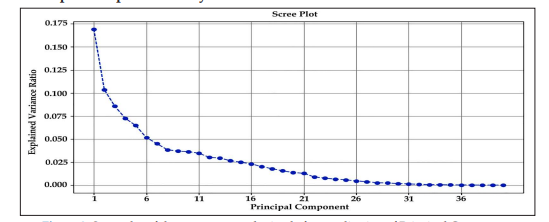
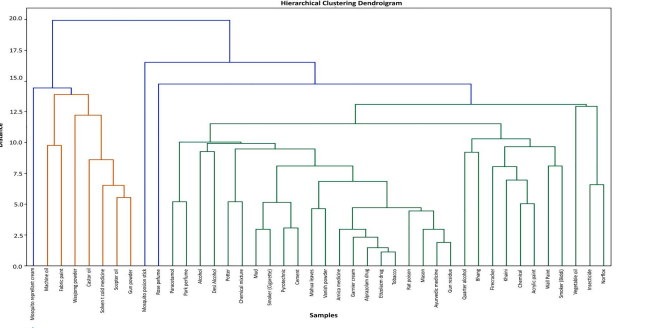
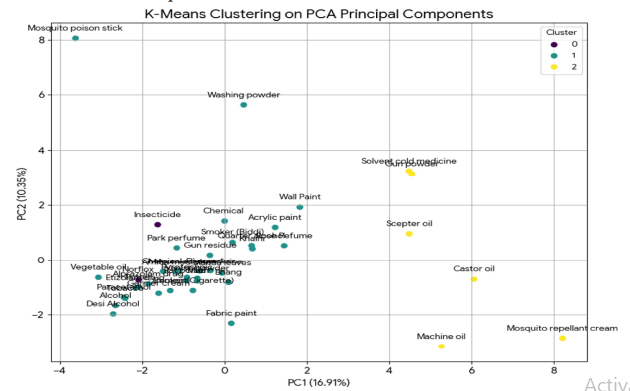
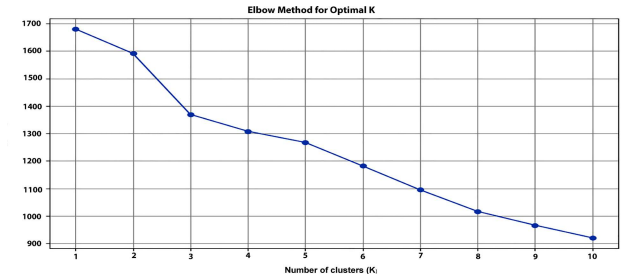
Background: Fingermarks can be used to profile donors by providing details about their gender, age, lifestyle, and interaction with illegal substances. Chemical constituents in the fingermarks can reveal significant information about the fingerprint’s origin, which is particularly beneficial in situations where the donor’s identity is unclear or the print is smudged, deformed or unclear. Aim: To study the exogenous and endogenous substance present in the fingermarks of individuals with respect to their lifestyles. Material and Methods: In this study, the latent fingermarks donated by 42 individuals of Jhansi, Uttar Pradesh, India were analyzed using Gas Chromatograph Mass Spectrometry to determine the exogenous and endogenous constituents present respectively. Results: Multivariate technique of Principal Component Analysis was applied on the GC data. Further, Hierarchical Cluster Analysis and K means Cluster technique were applied on the results of PCA, to validate the results. PCA showed that the high-dimensional data could be summarized in a few principal components, with the first two components capturing over 27% of the total variance. The biplot showed that the samples are not randomly distributed but instead form discernible groups, with some samples being chemically similar and other samples being distinct outliers. K-Means clustering provided a quantitative validation by assigning each sample to one of three distinct clusters, which were consistent with the visual groupings from both the PCA and HCA plots. Conclusion: It can be effectively stated that an individual’s daily lifestyle and occupation have a significant influence on the exogenous and endogenous constituents of his finger mark. Key Message: Donor profiling using chemical constituents of fingermarks, is anticipated to become a common practice in the near future as part of the crime scene investigation.
References
- 1. M.V. Buchanan, K. Asano and A. Bohanon, Chemical Characterization of Fingermarks74 Indian Journal of Forensic Medicine and Pathology IJFMP/Volume 19 Number 1 January–March 2026 from Adults and Children in Forensic Evidence Analysis and Crime Scene Investigation, SPIE (International Society for Optical Engineering), (1997), 89-95.
- 2. G.M. Mong, C.E. Petersen and T.R.W. Clauss, Advanced Fingerprint Analysis Project. Fingerprint Constituents, PNNL Report No. 3019 (1999), Pacific Northwest National Laboratory: Richland, WA.
- 3. M. Fitzgerald and R.C. Murphy, Electrospray Mass Spectrometry of Human Hair Wax Esters, Jour. of Lip. Res., 48:5 (2007), 1231-1246.
- 4. R.S. Croxton, M.G. Baron, D. Butler, T. Kent and V.G. Sears, Development of a GC-MS method for the Simultaneous Analysis of Latent Fingerprints, Jour of Forensic. Scie. 51:6 (2006), 1329-1333.
- 5. K.M. Antoine, S. Mortazavi, A.D. Miller and L.M. Miller, Chemical Differences are observed in Children’s Versus Adults’ Latent Fingerprints as a Function of Time, Jour of For. Scie. 55: 2 (2010), 513-518.
- 6. A. Girod and C. Weyermann, Lipid Composition of Fingermark Residue and Donor Classification using GC/MS, For. Scie. Int., 238 (2014) 68-82.
- 7. N.E. Archer, Y .Charles, J.A. Elliott and S. Jickells, Changes in the Lipid Composition of Latent Fingerprint Residue with Time after Deposition on a Surface, For. Scie. Int., 154:2-3 (2005), 224-239.
- 8. P. Fritz, A.A. Frick, W.V. Bronswijk and S.W. Lewis, A. Beaudoin, S. Bleay and C. Lennard, Variability and Subjectivity in the Grading Process for Evaluating the Performance of Latent Fingermark Detection Techniques, Jour. of For. Ident., 65:5, (2015), 851-867.
- 9. A.A. Frick, C. Busetti, A. Cross, and S.W. Lewis, Aqueous Nile Blue: A Simple, Versatile and Safe Reagent for the Detection of Latent Fingermarks, Chem. Comm., 50: 25 (2014), 3341-3343.
- 10. R. Michael-Jubeli, J. Bleton and A. Baillet-Gufroy, High-Temperature Gas Chromatography Mass Spectrometry for Skin Surface Lipids Profiling, Jour. of Lipid Res., 52 (2011), 143- 155.
- 11. N. Liappis, S.D. Kelderbacher, K. Kesseler, and P. Bantzer, Quantitative Study of Free Amino Acids in Human Eccrine Sweat Excreted from the Forearms of Healthy Trained and Untrained Men During Exercise, European Jour. of App. Phys., 42 (1979), 227−234.
- 12. J.N. Labows, G. Preti, E. Hoelzle, J. Leyden and Kligman A., Steroid Analysis of Human Apocrine Secretion, Steroids, 34 (1979), 249−258.
- 13. M.E. Stewart and D.T. Downing, Proportions of Various Straight and Branched Fatty Acid Chain Types in the Sebaceous Wax Esters of Young Children, Jour. of Invest. Derm., 84 (1985), 501−503.
- 14. U.R. Bernier, D.L. Kline, D.R. Barnard, C.E. Schreck and R.A. Yost, Analysis of Human Skin Emanations by Gas Chromatography/ Mass Spectrometry. Identification of Volatile Compounds that are Candidate Attractants for the Yellow Fever Mosquito (Aedes aegypti), Anal. Chem., 72 (2002), 747−756.
- 15. Z.M. Zhang, J.J. Cai, G.H. Ruan and G.K.Li, The Study of Fingerprint Characteristics of the Emanations from Human Arm Skin Using the Original Sampling System by SPME-GC/MS, Jour. of Chrom., 822 (2005), 244−252.
- 16. L. Ferguson, R. Bradshaw, R. Wolstenholme, M. Clench and S. Francese, Two-Step Matrix Application for the Enhancement and Imaging of Latent Fingermarks, Anal. Chem., 83 (2011), 5585−5591.
- 17. B. Hartzell-Baguley, R.E. Hipp, N.R. Morgan and S. L. Morgan, Chemical Composition of Latent Fingerprints by Gas Chromatography− Mass Spectrometry-An Experiment for an Instrumental Analysis Course, Jour. of Chem. Edu., 84 (2007), 689.
- 18. S. Michalski, R. Shaler and F.L. Dorman, The Evaluation of Fatty Acid Ratios in Latent Fingermarks by Gas Chromatography/Mass Spectrometry (GC/MS) Analysis, Jour. of For. Scie., 58 (2013), S215−S220.
- 19. D.J. Penn, E. Oberzaucher, K. Grammer, G. Fischer, H.A. Soini, D. Wiesler, M.V. Novotny, S.J. Dixon, Y. Xu and R.G. Brereton, Individual and Gender Fingerprints in Human Body Odour, Jour. of the Royal Society Int., 4 (2007), 331−340.
- 21. A. Hemmila, J. McGill and D. Ritter, Fourier Transform Infrared Reflectance Spectra of Latent Fingerprints: A Biometric Gauge for the Age of an Individual, Jour of For. Sci., 53 (2008), 369−376
- 22. M.M. Houck, Fundamentals of Forensic Science, 2nd ed. (2010), Academic Press: Burlington, MA.
- 23. J.E. Girard, Criminalistics: Forensic Science, Crime, and Terrorism, 3rd ed.; Jones & Bartlett Learning, Sudbury, MA, (2013).
- 24. K. Michael, The Legal, Social and Ethical Controversy of the Collection and Storage of Fingerprint Profiles and DNA Samples in Forensic Science, IEEE International Symposium on Technology and Society; IEEE (2010), Wollongong, NSW, Australia, 48−60, http://works.bepress.com/kmichael/191/.
- 25. S.A.G. Lambrechts, A. Van Dam, J. de Vos, A. Van Weert, T. Sijen and M.C.G. Aalders, On the Autofluorescence of Fingermarks, For. Scie. Int., 222: 1–3 (2012), 89-93.
- 26. K. Kuwayama, K. Tsujikawa, H. Miyaguchi, T. Kanamori, Y.T. Iwata and H. Inoue, TimeCourse Measurements of Caffeine and its Metabolites Extracted from Fingertips after Coffee Intake: A Preliminary Study for the Detection of Drugs from Fingerprints, Anal. and Bio. Chem. (2012), 1-8. 27. S. King, S. Benson, T. Kelly and C. Lennard, Determining the Effects of Routine Fingermark Detection Techniques on the Subsequent Recovery and Analysis of Explosive Residues on Various Substrates, For. Scie. Int., 233:1–3 (2013), 257-264.
- 28. M. Benton, M.J. Chua, F.Gu, F. Rowell and J. Ma, Environmental Nicotine Contamination in Latent Fingermarks from Smoker Contacts and Passive Smoking, For. Scie. Int., 200: 1–3 (2010), 28-34.
- 29. V.C. Nayak, P. Rastogi, T. Kanchan, K. Yoganarasimha, G.P. Kumar and R.G. Menezes, Sex Differences from Fingerprint Ridge Density in Chinese and Malaysian Population, For. Scie. Int., 197: 1–3 (2010), 67-69.
- 30. S.R. Robert, Composition of Latent Print Residue, Advances in Fingerprint Technology, (2010) Boca Raton, CRC Press.
- 31. A. Girod, R. Ramotowski and C. Weyermann, Composition of Fingermark Residue: A Qualitative and Quantitative Review, For. Scie. Int., 223: 1-3 (2012), 10-24.
- 32. S.H. James, J.J. Nordby and S. Bell, Forensic Science: An Introduction to Scientific and Investigative Techniques, (2005), Boca Raton, CRC press.
- 33. M.A. Acree, Is There A Gender Difference in Fingerprint Ridge Density?, For. Scie. Int., 102:1 (1999), 35-44.
- 34. M. Nazzaro-Porro, S. Passi, L. Boniforti and F. Belsito, Effects of Aging on Fatty Acids in Skin Surface Lipids, Jour. of Invest. Derm., 73: 1 (1979), 112-117.
- 35. K.G. Asano, C.K. Bayne, K.M. Horsman and M.V. Buchanan, Chemical Composition of Fingerprints for Gender Determination, Jour. of For. Scie., 47:4 (2002), 805-807.
- 36. P. Ramasastry, P.E. Pochi and J.S. Strauss, Chemical Composition of Human Skin Surface Lipids from Birth to Puberty, Jour. of Invest. Derm., 54: 2 (1970), 139-144.
- 37. E. Bartick, R. Schwartz, R. Bhargava, M. Schaeberle, D. Fernandez and I. Levin, Spectrochemical Analysis and Hyperspectral Imaging of Latent Fingerprints, Proceedings of the 16th Meeting of the International Association of Forensic Sciences, (2002), 2-7.
- 38. D. Ashbaugh, The Friction Ridge Medium, Quantitative-Qualitative Friction Ridge Analysis: An Introduction to Basic and Advanced Ridgeology, (1999) Boca Raton, CRC Press.
- 39. R.B. Cody, J.A. Laramée and H.D. Durst, Versatile New Ion Source for the Analysis of Materials in Open Air under Ambient Conditions, Anal. Chem., 77: 8 (2005), 2297- 2302.
- 40. W.V. Helmond, A.W.V. Herwijnen, J.J.H. Riemsdijk, M.A.V. Bochove, C.D. de Poot, and M. de Puit, Chemical Profiling of Fingerprints using Mass Spectrometry, For. Chem., 16 (2019), 100183, 1-11.
- 41. T.C. Boysen, S. Yanagawa, F. Sato and K. Sato, A Modified Anaerobic Method of Sweat Collection, J. Appl. Physiol., 56: 5 (1984), 1302– 1307.
- 42. K. Sato, The Physiology, Pharmacology, and Biochemistry of the Eccrine Sweat Gland, Rev. Physiol. Biochem. Pharmacol, 79 (1979), 51–131.
- 43. W.C. Lobitz and H.L. Mason, Chemistry of Palmar Sweat: VII. Discussion of Studies on Chloride, Urea, Glucose, Uric Acid, Ammonia– Nitrogen, and Creatinine, Arch. Dermatol. Syphilol., 57 (1948), 907–915.
- 44. L. Förström, M.E. Goldyne, R.K. Winkelmann, IgE in Human Eccrine Sweat, J. Invest. Derm., 64:3, (1975), 156–157.
- 45. H.L. Johnson and H.I. Maibach, Drug Excretion in Human Eccrine Sweat, J. Invest. Derm., 56: 3 (1971), 182–188.
- 46. T.B. Vree, A. Muskens and J. M. Van Rossum, Excretion of Amphetamines in Human Sweat, Archives Internationales de Pharmacodynamie et de Therapie, 199: 2 (1972), 311–317.
- 47. K. Naitoh, Y. Inai and T. Hirabayashi, Direct Temperature-Controlled Trapping System and Its Use for the Gas Chromatographic Determination of Organic Vapour Released from Human Skin, Anal. Chem., 72: 13 (2010), 2797–2801.
- 48. J.S. Hawthorne and M.H. Wojcik, Alcohol Measurement: A Review of the Literature. Can. Soc. Fore. Sci. J., 39: 2 (2006), 65–71.
- 49. B.N. Dorakumbura, R.E. Boseley, T. Becker, D.E. Martin, A. Richter, M.J. Tobin, W.V. Bronswjik, J. Vongsvivut, M.J. Hackett and S. W. Lewis, Revealing the Spatial Distribution of Chemical Species within Latent Fingermarks using Vibrational Spectroscopy, Anal., 143: 17 (2019), 4027-4039.
- 50. R.S. Croxton, M.G. Baron, D. Butler, T. Kent and V. G. Sears, Variation in Amino Acid and Lipid Composition of Latent Fingerprints, For. Scie. Int., 199: 1-3 (2010), 93-102.
- 51. P. Hinners, K.C. O’Neill and Y.J. Lee, Revealing Individual Lifestyles through Mass Spectrometry Imaging of Chemical Compounds in Fingerprints”, Sci. Rep., 8:5149 (2018), 1-10. DOI: https://doi.org/10.1038/ s41598-018-23544-7.
- 52. A. Bouslimani, A.V. Melnik, Z. Xu, A. Amir, R.R. da Silva, M. Wang, N. Bandeira, T. Alexandrov, R. Knight and P.C. Dorrestein, Lifestyle Chemistries from Phones for Individual Profiling, Proceedings of the National Academy of Sciences of the United States of America, (2016), E7645–E7654.
Data Sharing Statement
There are no additional data available. All raw data and code are available upon request.
Funding
This research received no funding.
Author Contributions
All authors contributed significantly to the work and approve its publication.
Ethics Declaration
This article does not involve any human or animal subjects, and therefore does not require ethics approval.
Acknowledgements
We would like to express our gratitude to the patients, their families, and all those who have contributed to this study.
Conflicts of Interest
No conflicts of interest in this work.
About this article

Cite this article
Vartika K, Anu S, Shashi S, et al. Chemical Constituents in Latent Fingermarks as Indicators of Lifestyle using Gas Chromatography Mass Spectrometry. Indian J Forensic Med Pathol. 2026;19(1):63-76.
Licence:
Attribution-Non-commercial 4.0 International (CC BY-NC 4.0)This license enables reusers to distribute, remix, adapt, and build upon the material in any medium or format for noncommercial purposes only, and only so long as attribution is given to the creator.
| Received | Accepted | Published |
|---|---|---|
| November 26, 2025 | January 21, 2026 | March 30, 2026 |
DOI: https://doi.org/10.21088/ijfmp.0974.3383.19126.9
Keywords
Fingermark residueExogenous constituentsEndogenous constituentsGas Chromatography-Mass SpectrometryPrincipal component analysisChemical profilingSearch for Similar Articles
Similar Articles
- Diatom Analysis in Thermophilic water bodies: A Study on Hot Water Springs of Ma...
- Morphometric Study of Supra-meatal Triangle and Mastoid process in the Adult dry...
- Histopathological Spectrum of Autopsy Cases: A One Year Retrospective Observatio...
- Forensic Differentiation of Manner of Death in Railway Fatalities: A FourCase Se...
- Understanding assault Patterns: A Cross-sectional study of Cases at Chri, Kelamb...
Article Level Metrics
Last UpdatedWednesday 21 October 2026, 06:40:32 (IST)
16493
Accesses
88
3225
00
Citations
NA
NA
NA
Download citation
Article Keywords
Keyword Highlighting
Highlight selected keywords in the article text.
Timeline
| Received | November 26, 2025 |
| Accepted | January 21, 2026 |
| Published | March 30, 2026 |
licence
Attribution-Non-commercial 4.0 International (CC BY-NC 4.0)
This license enables reusers to distribute, remix, adapt, and build upon the material in any medium or format for noncommercial purposes only, and only so long as attribution is given to the creator.