Full Text (PDF)
Indian Journal of Forensic Medicine and Pathology 13(1):p 41-45, January-March 2020. | DOI: https://doi.org/10.21088/ijfmp.0974.3383.13120.5
Original Article
Assessment of Dermatoglyphic Pattern in Relation with Blood Group: A Cross-Sectional Study
Author Information
Licence:
Attribution-Non-commercial 4.0 International (CC BY-NC 4.0)This license enables reusers to distribute, remix, adapt, and build upon the material in any medium or format for noncommercial purposes only, and only so long as attribution is given to the creator
Indian Journal of Forensic Medicine and Pathology 13(1):p 41-45, January-March 2020. | DOI: https://doi.org/10.21088/ijfmp.0974.3383.13120.5
How Cite This Article:
Ashish Tyagi, Hitesh Chawla. Assessment of Dermatoglyphic Pattern in Relation with Blood Group: A Cross-Sectional Study. Indian J. Forensic Med Pathol. 2020;13(1):41-45Timeline
Received : January 02, 2020
Accepted : February 02, 2020
Published : March 30, 2020
Abstract
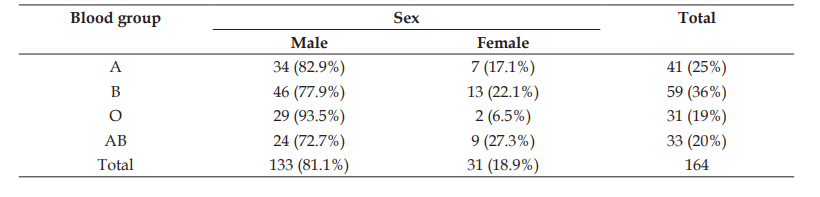
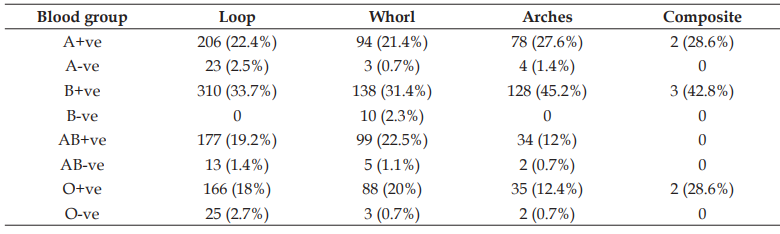
Objectives: The study was contemplated to ascertain the trends of dermatoglyphic pattern in individuals with different ABO and Rh blood groups and to evaluate the relationship between the pattern of fingerprints and blood groups. Methodology: The study was carried out in the Department of Forensic Medicine at Government Medical College of southern Haryana. Medical students of the age group 18–24 years knowing their blood group and considering their accessibility to the department of Forensic Medicine were randomly selected for the study. Plain and rolled fingerprints for all digits of both hands were taken with ink pad on non-glazed paper. Results: The study revealed that loop was most frequently seen fingerprint followed by whorl, arch and composite. B positive is the most common blood group, and loops pattern of the fingerprint is predominant in all blood groups and Rh-positive and negative subjects, followed by whorls. Conclusion: Each fingerprint is unique; hence, it can be effectively used for corroborative identification of an individual in mass disasters as well as in other forensic applications. More studies with larger sample size should be conducted to enhance the reliability of correlation of dactylographic pattern with sex and blood group.
References
- 1. Cummins H, Midlo C. Palmar and plantar epidermal ridge configurations (dermatoglyphics) in European-Americans. Am J Phys Anthropol. 1926;9(4):471–502.
- 2. Bhavana D, Ruchi J, Prakash T, JL K. Study of fingerprint patterns in relationship with blood group and gender-a statistical review. Arches. 2013;1(1):15–7.
- 3. Vij K. Textbook of forensic medicine and toxicology. 3rd ed. New Delhi: Elsevier; 2005. p. 89–91.
- 4. Kanchan T, Chattopadhyay S. Distribution of fingerprint patterns among medical students. J Indian Acad Forensic Med. 2006;28:65–8.
- 5. Pillay VV. Textbook of forensic medicine and toxicology. 15th ed. Hyderabad: Paras Medical Publishers; 2009. p. 53–94.
- 6. Galton F. Finger prints. London: Macmillan and Co.; 1892.
- 7. Lee HC, Gaensslen RE. Methods of latent fingerprint development. In: Lee HC, Gaensslen RE, editors. Advances in fingerprint technology. 2nd ed. Boca Raton (FL): CRC Press; 2001. p. 105–75.
- 8. Landsteiner K, Wiener AS. An agglutinable factor in human blood recognised by immune sera for rhesus blood. Proc Soc Exp Biol Med. 1940;43(1):223–4.
- 9. Jaff MS, O'Briain DS. Excess of blood group B in primary myelofibrosis. Vox Sang. 1987;52(3):250–3.
- 10. Gangne SD. Genetics of blood groups. In: Human genetics. 1st ed. Edinburgh: Churchill Livingstone; 1992. p. 88–90.
- 11. Harmening DM, Firestone D. The ABO blood group system. In: Modern blood banking transfusion practices. 3rd ed. New Delhi: Jaypee Brothers Medical Publishers; 1998. p. 87.
- 12. Deopa D, Prakash C, Tayal I. A study of fingerprint in relation to gender and blood group among medical students in Uttarakhand region. J Indian Acad Forensic Med. 2014;36(1):23–7.
- 13. Bharadwaja A, Saraswat PK, Aggarwal SK, Banerji P, Bharadwaja S. Pattern of finger-prints in different ABO blood groups. J Indian Acad Forensic Med. 2004;26(1):6–9.
- 14. Rastogi P, Pillai KR. A study of fingerprints in relation to gender and blood group. J Indian Acad Forensic Med. 2010;32(1):11–4.
- 15. Singh B, Jafar S, Dixit RK. Role of finger print pattern in relationship with blood group and gender. J Med Sci Clin Res. 2016;98(4):9651–5.
- 16. Shivhare PR, Sharma SK, Ray SK, et al. Dermatoglyphic pattern in relation to ABO, Rh blood group and gender among the population of Chhattisgarh. Int J Sci Stud. 2017;4(11):61–5. • Cummins H, Midlo C. Palmar and plantar epidermal ridge configurations (dermatoglyphics) in European-Americans. Am J Phys Anthropol. 1926;9(4):471–502.
- 17. Bhavana D, Ruchi J, Prakash T, JL K. Study of fingerprint patterns in relationship with blood group and gender-a statistical review. Arches. 2013;1(1):15–7.
- 18. Vij K. Textbook of forensic medicine and toxicology. 3rd ed. New Delhi: Elsevier; 2005. p. 89–91.
- 19. Kanchan T, Chattopadhyay S. Distribution of fingerprint patterns among medical students. J Indian Acad Forensic Med. 2006;28:65–8.
- 20. Pillay VV. Textbook of forensic medicine and toxicology. 15th ed. Hyderabad: Paras Medical Publishers; 2009. p. 53–94.
- 21. Galton F. Finger prints. London: Macmillan and Co.; 1892.
- 22. Lee HC, Gaensslen RE. Methods of latent fingerprint development. In: Lee HC, Gaensslen RE, editors. Advances in fingerprint technology. 2nd ed. Boca Raton (FL): CRC Press; 2001. p. 105–75.
- 23. Landsteiner K, Wiener AS. An agglutinable factor in human blood recognised by immune sera for rhesus blood. Proc Soc Exp Biol Med. 1940;43(1):223–4.
- 24. Jaff MS, O'Briain DS. Excess of blood group B in primary myelofibrosis. Vox Sang. 1987;52(3):250–3.
- 25. Gangne SD. Genetics of blood groups. In: Human genetics. 1st ed. Edinburgh: Churchill Livingstone; 1992. p. 88–90.
- 26. Harmening DM, Firestone D. The ABO blood group system. In: Modern blood banking transfusion practices. 3rd ed. New Delhi: Jaypee Brothers Medical Publishers; 1998. p. 87.
- 27. Deopa D, Prakash C, Tayal I. A study of fingerprint in relation to gender and blood group among medical students in Uttarakhand region. J Indian Acad Forensic Med. 2014;36(1):23–7.
- 28. Bharadwaja A, Saraswat PK, Aggarwal SK, Banerji P, Bharadwaja S. Pattern of finger-prints in different ABO blood groups. J Indian Acad Forensic Med. 2004;26(1):6–9.
- 29. Rastogi P, Pillai KR. A study of fingerprints in relation to gender and blood group. J Indian Acad Forensic Med. 2010;32(1):11–4.
- 30. Singh B, Jafar S, Dixit RK. Role of finger print pattern in relationship with blood group and gender. J Med Sci Clin Res. 2016;98(4):9651–5.
- 31. Shivhare PR, Sharma SK, Ray SK, et al. Dermatoglyphic pattern in relation to ABO, Rh blood group and gender among the population of Chhattisgarh. Int J Sci Stud. 2017;4(11):61–5.
- 32. Hamid S, Hassan AU, Yasin S, et al. Pattern of finger-prints in different blood groups among first year medical students. Sch J App Med Sci. 2016;4(7D):2575–8.
- 33. Hamid S, Hassan AU, Yasin S, et al. Pattern of finger-prints in different blood groups among first year medical students. Sch J App Med Sci. 2016;4(7D):2575–8.
Data Sharing Statement
There are no additional data available. All raw data and code are available upon request.
Funding
This research received no funding.
Author Contributions
Whether all authors contributed significantly to the work and approve its publication.
Ethics Declaration
This article does not involve any human or animal subjects, and therefore does not require ethics approval.
Acknowledgements
We would like to express our gratitude to the patients, their families, and all those who have contributed to this study.
Conflicts of Interest
The authors report no conflicts of interest in this work.
About this article

Cite this article
Ashish Tyagi, Hitesh Chawla. Assessment of Dermatoglyphic Pattern in Relation with Blood Group: A Cross-Sectional Study. Indian J. Forensic Med Pathol. 2020;13(1):41-45
Licence:
Attribution-Non-commercial 4.0 International (CC BY-NC 4.0)This license enables reusers to distribute, remix, adapt, and build upon the material in any medium or format for noncommercial purposes only, and only so long as attribution is given to the creator
| Received | Accepted | Published |
|---|---|---|
| January 02, 2020 | February 02, 2020 | March 30, 2020 |
DOI: https://doi.org/10.21088/ijfmp.0974.3383.13120.5
Keywords
FingerprintDactylographyDermatoglyphicsABO blood groupIdentificationSearch for Similar Articles
Similar Articles
- Diatom Analysis in Thermophilic water bodies: A Study on Hot Water Springs of Ma...
- Morphometric Study of Supra-meatal Triangle and Mastoid process in the Adult dry...
- Histopathological Spectrum of Autopsy Cases: A One Year Retrospective Observatio...
- Forensic Differentiation of Manner of Death in Railway Fatalities: A FourCase Se...
- Understanding assault Patterns: A Cross-sectional study of Cases at Chri, Kelamb...
Article Level Metrics
Last UpdatedSunday 18 October 2026, 12:24:30 (IST)
16262
Accesses
15
3205
00
Citations
NA
NA
NA
Download citation
Article Keywords
Keyword Highlighting
Highlight selected keywords in the article text.
Timeline
| Received | January 02, 2020 |
| Accepted | February 02, 2020 |
| Published | March 30, 2020 |
licence
Attribution-Non-commercial 4.0 International (CC BY-NC 4.0)
This license enables reusers to distribute, remix, adapt, and build upon the material in any medium or format for noncommercial purposes only, and only so long as attribution is given to the creator