Full Text (PDF)
Indian Journal of Forensic Medicine and Pathology 17(1):p 57-61, January-March 2024. | DOI: https://doi.org/10.21088/ijfmp.0974.3383.17124.9
Case Report
An Approach to Obscure Death: A Case Series
Rahul M. Band, Nilesh V. Vaidya, Sadhana V. Lakhute, Ajay L. Ghangale, Sanjay D. Gaiwale, Anshuman D. Dhumal
Author Information
Licence:
Attribution-Non-commercial 4.0 International (CC BY-NC 4.0)This license enables reusers to distribute, remix, adapt, and build upon the material in any medium or format for noncommercial purposes only, and only so long as attribution is given to the creator.
Indian Journal of Forensic Medicine and Pathology 17(1):p 57-61, January-March 2024. | DOI: https://doi.org/10.21088/ijfmp.0974.3383.17124.9
How Cite This Article:
Band RM, Vaidya NV, Lakhute SV, et al. An Approach to Obscure Death: A Case Series. Indian J Forensic Med Pathol. 2024;17(1):57-61.Timeline
Received : August 19, 2023
Accepted : February 24, 2024
Published : March 29, 2024
Abstract
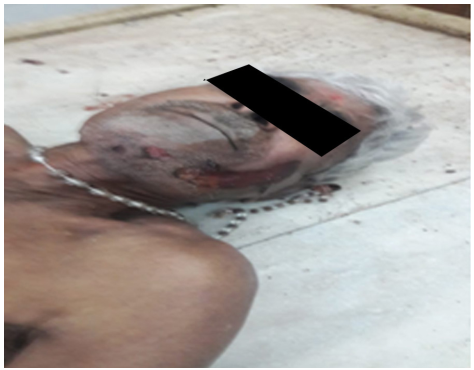
Introduction: An Autopsy doesn’t always yield cause of death easily. In 20-25% cases detailed history, visit to scene of incident, histological, toxicological& microbiological investigations might be required. Even then circumstantial evidence plays important role. Case Reports: Article presents and discusses four cases, two of electrocution, one natural neonatal death and one accidental phosphorous poisoning. How challenging it can be to ascertain cause of death at rural hospital set up. Discussion: Various natural and unnatural causes can lead to death without any evident pathology or signs such as sudden infant deaths, biochemical disturbances, functional disorders like epilepsy, electrocution, concealed trauma, certain poisonings, vagal and anaphylactic shocks. Conclusion & Recommendations: All necessary and possible investigations should be done in obscure deaths to exclude such causes and to prevent allegations that the death was not investigated as fully as it should have been. Special efforts are needed to raise awareness regarding use and storage of hazardous materials to prevent accidental deaths.
References
- 1. Dr. Reddy KSN, Dr. Murty OP. The Essentials of Forensic medicine and Toxicology. Death and its cause. Jaypee, New Delhi. 33rd Edition; 2014:135-151.
- 2. Vij K. Textbook of Forensic Medicine and Toxicology: principles and practice. Medico-legal Autopsy, Exhumation, Obscure Autopsy, Anaphylactic Deaths and Artefacts. Elsevier, Chennai, India. Sixth Edition;2016:17-34.
- 3. Karger B, Süggeler O, Brinkman B. Electrocution – autopsy study with emphasis on
- 4. Kuhtic, I. Bakovic M, Mayer D, Strinovic D, Petrovecki V. Electrical Mark in Electrocution Deaths – A 20-Years Study. The Open Forensic Science Journal, 2012;14:23–7.
- 5. Muthiharan K, Patnaik A K. Modi’s Medical Jurisprudence and Toxicology. Infanticide. 23rd ed. New Delhi: Lexis Nexis Butterworths India; 2005:981- 1009.
- 6. Herman-Giddens ME, Smith JB, Mittal M, et al., Newborns killed or left to die by a parent: a population-based study. JAMA. 2003 Mar19; 289(11):1425-9.
- 7. Pillay VV. Comprehensive Medical Toxicology. Inorganic Elements. 1st Ed. Paras; 2003:87- 96.
- 8. Fernandez OU, Canizares LL. Acute hepatotoxicity from ingestion of yellow phosphorus-containing fireworks. J Clin Gastroenterol.1995; 21:139-42.
- 9. S. Khaja Mohideen. K. Senthil Kumar. Should ratol paste be banned? Indian J Crit Care Med. 2015 Feb; 19(2): 128–129.
Data Sharing Statement
There are no additional data available.
Funding
This research received no funding.
Author Contributions
All authors contributed significantly to the work and approve its publication."
Ethics Declaration
This article does not involve any human or animal subjects, and therefore does not require ethics approval.
Acknowledgements
Information not provide.
Conflicts of Interest
The authors report no conflicts of interest in this work.
About this article

Cite this article
Band RM, Vaidya NV, Lakhute SV, et al. An Approach to Obscure Death: A Case Series. Indian J Forensic Med Pathol. 2024;17(1):57-61.
Licence:
Attribution-Non-commercial 4.0 International (CC BY-NC 4.0)This license enables reusers to distribute, remix, adapt, and build upon the material in any medium or format for noncommercial purposes only, and only so long as attribution is given to the creator.
| Received | Accepted | Published |
|---|---|---|
| August 19, 2023 | February 24, 2024 | March 29, 2024 |
DOI: https://doi.org/10.21088/ijfmp.0974.3383.17124.9
Keywords
Obscure autopsyElectrocutionPoisoningInfant DeathsSearch for Similar Articles
Similar Articles
- Diatom Analysis in Thermophilic water bodies: A Study on Hot Water Springs of Ma...
- Morphometric Study of Supra-meatal Triangle and Mastoid process in the Adult dry...
- Histopathological Spectrum of Autopsy Cases: A One Year Retrospective Observatio...
- Forensic Differentiation of Manner of Death in Railway Fatalities: A FourCase Se...
- Understanding assault Patterns: A Cross-sectional study of Cases at Chri, Kelamb...
Article Level Metrics
Last UpdatedSunday 18 October 2026, 12:27:08 (IST)
16263
Accesses
19
3205
00
Citations
NA
NA
NA
Download citation
Article Keywords
Keyword Highlighting
Highlight selected keywords in the article text.
Timeline
| Received | August 19, 2023 |
| Accepted | February 24, 2024 |
| Published | March 29, 2024 |
licence
Attribution-Non-commercial 4.0 International (CC BY-NC 4.0)
This license enables reusers to distribute, remix, adapt, and build upon the material in any medium or format for noncommercial purposes only, and only so long as attribution is given to the creator.