Full Text (PDF)
Indian Journal of Forensic Medicine and Pathology 15(1):p 49-52, January-March 2022. | DOI: https://doi.org/10.21088/ijfmp.0974.3383.15122.7
Original Article
A Study of Inheritance Pattern of Palatal Rugae among Two Generations
Priyanka Verma, Rajvinder Kaur
Author Information
Licence:
Attribution-Non-commercial 4.0 International (CC BY-NC 4.0)This license enables reusers to distribute, remix, adapt, and build upon the material in any medium or format for noncommercial purposes only, and only so long as attribution is given to the creator
Indian Journal of Forensic Medicine and Pathology 15(1):p 49-52, January-March 2022. | DOI: https://doi.org/10.21088/ijfmp.0974.3383.15122.7
How Cite This Article:
Verma P, Kaur R. A study of inheritance pattern of palatal rugae among two generations. Indian J Forensic Med Pathol. 2022;15(1):49-52.Timeline
Received : January 19, 2022
Accepted : March 24, 2022
Published : March 30, 2022
Abstract
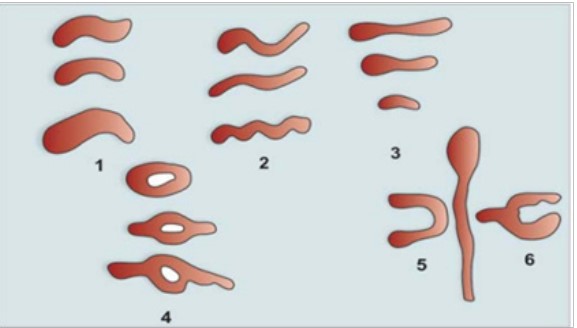
Context: Palatal rugae plays very important role in identification of individual. It is important dental evidence as it remains unchanged during lifetime. Palatal rugae are roof of hard palate on anterior portion. Studies have been done that no two palates are alike in their layout. Many factors, such as chemical treatments, heat, or disease do not effect on outline and shape of pattern. aims: To study of inheritance of palatal rugae pattern among two generation 60 dental casts were selected of father, mother and off springs. They are examined for any similarity and dissimilarity in palatal rugae pattern. Examination of rugae pattern was done according to Thomas and kotze classification. conclusion: No significant difference was seen in rugae pattern from father to offspring and mother to offspring. This study shows the percentage of inheritance on the basis of total number of rugae pattern in among from father to offspring is 30% and from mother to offspring is 25% and dissimilarities from father to offspring is 70% and mother to offspring is 75%. Palatal rugae are unique to every individual. Palatal rugae can be used as an ancillary tool in identification of individual in forensic science.
References
- 1. Indira, A.P. Gupta, M., & David, M.P.(2011).Rugoscopy for establishing individuality, Indian J Dent Adv,vol. 3, no.1,pp. 427-432.
- 2. Krishnappa, S., Srinath, S., Bhardwaj, P., & Ch, M. (2013). Palatal Rugoscopy: Implementation in forensic odontology-a review. J adv med dent scie, 1(2), 53-59.
- 3. Shetty, D., Juneja, A., Jain, A., Khanna, K. S., Pruthi, N., Gupta, A., & Chowdhary, M. (2013). Assessment of palatal rugae pattern and their reproducibility for application in forensic analysis. Journal of forensic dental sciences, 5(2), 106.
- 4. Ahmed, A. A., & Hamid, A. (2015). Morphological study of palatal rugae in a Sudanese population. International journal of dentistry, 2015.
- 5. Shukla, D., Chowdhry, A. ,Bablani, D., Jain, P. , & Thapar, R. (2011). Establishing the reliability of palatalrugae pattern in individual identification. (following orthodontic treatment). The Journal of forensic odonto- stomatology. vol.29,no.1,pp.20-29.
- 6. Suhartono, A.W., Syafitri, K., Puspita, A.D., Soedarsono, N., Gultom, F.P., Widodo, P.T., & Auekari E.I. (2016). Palatal rugae pattering in a modern population. International journal of legal medicine, vol.130, no.3, pp.818-887.
- 7. Bing, L., Wu, X.P., Feng, Y., Wang, Y. J., Liu, H.C., Bing, L., & Liu, H.(2014). Palatal rugae for the construction of forensic identification. Int J Morphol, vol.32, no.546,pp. 546-50.
- 8. Kesri R, Das G, Tote. J. & Thakur, P.(2014). Rugoscopy Science of Palatal Rugae: AInt J Dent Med Res NOV-DEC, vol.1,no.4,pp.103.
- 9. Kamala, R., Gupta, N., Bansal, A., & Sinha, A. (2011). Palatal rugae pattern as an aid for personal identification: a forensic study. Journal of Indian Academy of Oral Medicine and Radiology, 23(3), 173.
Data Sharing Statement
There are no additional data available. All raw data and code are available upon request.
Funding
This research received no funding.
Author Contributions
All authors contributed significantly to the work and approve its publication.
Ethics Declaration
This article does not involve any human or animal subjects, and therefore does not require ethics approval.
Acknowledgements
We would like to express our gratitude to the patients, their families, and all those who have contributed to this study.
Conflicts of Interest
No conflicts of interest in this work.
About this article

Cite this article
Verma P, Kaur R. A study of inheritance pattern of palatal rugae among two generations. Indian J Forensic Med Pathol. 2022;15(1):49-52.
Licence:
Attribution-Non-commercial 4.0 International (CC BY-NC 4.0)This license enables reusers to distribute, remix, adapt, and build upon the material in any medium or format for noncommercial purposes only, and only so long as attribution is given to the creator
| Received | Accepted | Published |
|---|---|---|
| January 19, 2022 | March 24, 2022 | March 30, 2022 |
DOI: https://doi.org/10.21088/ijfmp.0974.3383.15122.7
Keywords
dental castsinheritanceodontologypalatal rugaerugoscopySearch for Similar Articles
Similar Articles
- Diatom Analysis in Thermophilic water bodies: A Study on Hot Water Springs of Ma...
- Morphometric Study of Supra-meatal Triangle and Mastoid process in the Adult dry...
- Histopathological Spectrum of Autopsy Cases: A One Year Retrospective Observatio...
- Forensic Differentiation of Manner of Death in Railway Fatalities: A FourCase Se...
- Understanding assault Patterns: A Cross-sectional study of Cases at Chri, Kelamb...
Article Level Metrics
Last UpdatedMonday 19 October 2026, 13:58:53 (IST)
16338
Accesses
24
3216
00
Citations
NA
NA
NA
Download citation
Article Keywords
Keyword Highlighting
Highlight selected keywords in the article text.
Timeline
| Received | January 19, 2022 |
| Accepted | March 24, 2022 |
| Published | March 30, 2022 |
licence
Attribution-Non-commercial 4.0 International (CC BY-NC 4.0)
This license enables reusers to distribute, remix, adapt, and build upon the material in any medium or format for noncommercial purposes only, and only so long as attribution is given to the creator