Full Text (PDF)
Indian Journal of Anatomy 12(1):p 37-40, January-March 2023. | DOI: https://doi.org/10.21088/ija.2320.0022.12123.4
Case Report
A Case Report of a Left long leaf of a Bifid Xiphisternum Misdiagnosed Intraoperatively as a Xeno-osteum and Iatrogenically Excised
Saleh Alhasan, Hamad Alajmi, Samy Magdy
Author Information
Licence:
Attribution-Non-commercial 4.0 International (CC BY-NC 4.0)This license enables reusers to distribute, remix, adapt, and build upon the material in any medium or format for noncommercial purposes only, and only so long as attribution is given to the creator.
Indian Journal of Anatomy 12(1):p 37-40, January-March 2023. | DOI: https://doi.org/10.21088/ija.2320.0022.12123.4
How Cite This Article:
Alajmi H, Magdy S, Alhasan S. A case report of a left long leaf of a bifid xiphisternum misdiagnosed intraoperatively as a xeno-osteum and iatrogenically excised. Indian J Anat. 2023;12(1):37–40.Timeline
Received : January 10, 2023
Accepted : January 27, 2023
Published : February 28, 2023
Abstract
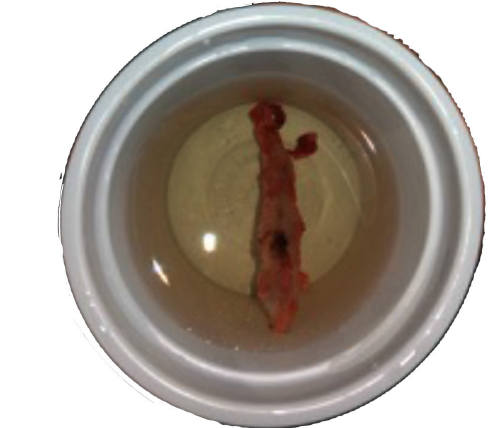
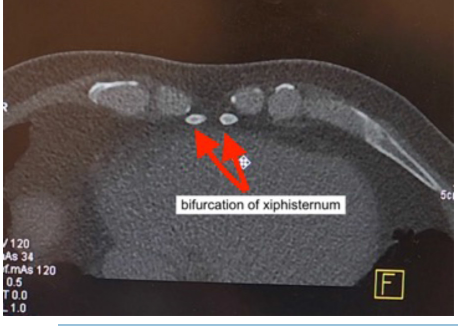
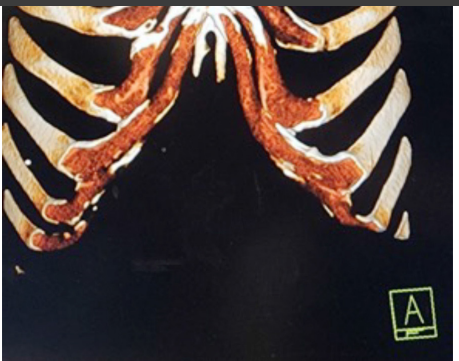
Anatomical variations and aberrations represent an ever-present challenge to clinicians in general and surgeons in particular. This is particularly true if the variation is rare and the clinical context doesn’t permit a thorough investigation, such as would happen intraoperatively. The unfamiliarity with abnormal anatomy and contextual time constraints may preclude their timely recognition, which may result, subsequently in significant morbidity. The shifting paradigms in anatomy education in both undergraduate and residency medical programs may be linked to an increasingly cited “abnormal anatomy “as a cause for morbidity and mortality in litigious literature. Therefore, Continuous, and self-directed learning, in the face of diminished formal anatomy curricula, is essential to achieving this end. In this case report we describe an incident of iatrogenic excision of a leaf of a bifid xiphisternum mistaken for a migrated ingested bone and the clinical lessons imparted from it. We also provide a relevant literature review.
References
- 1. Altalib AA, Miao KH, Menezes RG. Anatomy, thorax, sternum [Internet]. In: StatPearls. Treasure Island (FL): StatPearls Publishing; 2022 [cited 2026 Jan 19].
- 2. Vatzia K, Fanariotis M, Makridis K, Vlychou M, Fezoulidis I. Frequency of sternal variations and anomalies in living individuals evaluated by MDCT. Eur J Radiol. 2021;142:109828.
- 3. Lachkar S, Iwanaga J, Tubbs RS. An elongated dorsally curved xiphoid process. Anat Cell Biol. 2019;52(1):102–4.
- 4. Kirum GG, Munabi IG, Kukiriza J, Tumusiime G, Kange M. Anatomical variations of the sternal angle and anomalies of adult human sterna from the Galloway osteological collection at Makerere University Anatomy Department. Folia Morphol (Warsz). 2017;76(4):689–94.
- 5. Macaluso PJ, Lucena J. Morphological variations of the anterior thoracic skeleton and their forensic significance: radiographic findings in a Spanish autopsy sample. Forensic Sci Int. 2014;241:220.e1–220.e7.
- 6. Akin K, Kosehan D, Topcu A, Koktener A. Anatomic evaluation of the xiphoid process with 64-row multidetector computed tomography. Skeletal Radiol. 2011;40(4):447–52.
- 7. Standring S, editor. Gray's Anatomy: The Anatomical Basis of Clinical Practice. 41st ed. Edinburgh: Churchill Livingstone; 2015.
- 8. Mashriqi F, D'Antoni AV, Tubbs RS. Xiphoid process variations: a review with an extremely unusual case report. Cureus. 2017;9(8):e1613.
- 9. Turkay R, Inci E, Ors S, Nalbant M, Gurses I. Frequency of sternal variations in living individuals. Surg Radiol Anat. 2017;39(11):1273–8.
- 10. Yekeler E, Tunaci M, Tunaci A, Dursun M, Acunas G. Frequency of sternal variations and anomalies evaluated by MDCT. AJR Am J Roentgenol. 2006;186(4):956–60.
- 11. Xie YZ, Wang BJ, Yun JS, Chung GH, Ma ZB. Morphology of the human xiphoid process: dissection and radiography of cadavers and MDCT of patients. Surg Radiol Anat. 2014;36(3):209–17.
- 12. Romero-Reverón R. Venezuelan surgeons' view concerning teaching human anatomical dissection. Anat Cell Biol. 2017;50(1):12–3.
- 13. Sheikh AH, Barry DS, Gutierrez H, Cryan JF, O'Keeffe GW. Cadaveric anatomy in the future of medical education: what is the surgeons' view? Anat Sci Educ. 2016;9(2):203–8.
- 14. Turney BW. Anatomy in a modern medical curriculum. Ann R Coll Surg Engl. 2007;89(2):104–7.
- 15. Kirum GG, Munabi IG, Kukiriza J, Tumusiime G, Kange M. Anatomical variations of the sternal angle and anomalies of adult human sterna from the Galloway osteological collection at Makerere University Anatomy Department. Folia Morphol (Warsz). 2017;76(4):689–94.
Data Sharing Statement
There are no additional data available. All raw data and code are available upon request.
Funding
This research received no funding.
Author Contributions
Whether all authors contributed significantly to the work and approve its publication.
Ethics Declaration
This article does not involve any human or animal subjects, and therefore does not require ethics approval.
Acknowledgements
We would like to express our gratitude to the patients, their families, and all those who have contributed to this study.
Conflicts of Interest
The authors report no conflicts of interest in this work.
About this article

Cite this article
Alajmi H, Magdy S, Alhasan S. A case report of a left long leaf of a bifid xiphisternum misdiagnosed intraoperatively as a xeno-osteum and iatrogenically excised. Indian J Anat. 2023;12(1):37–40.
Licence:
Attribution-Non-commercial 4.0 International (CC BY-NC 4.0)This license enables reusers to distribute, remix, adapt, and build upon the material in any medium or format for noncommercial purposes only, and only so long as attribution is given to the creator.
| Received | Accepted | Published |
|---|---|---|
| January 10, 2023 | January 27, 2023 | February 28, 2023 |
DOI: https://doi.org/10.21088/ija.2320.0022.12123.4
Keywords
anatomical variationbifidxiphisternumSearch for Similar Articles
Similar Articles
- Supernumerary Pulmonary Vein: A Rare Anatomical Variation Observed During Cadave...
- Elongated Styloid Process: Anatomical Variations and Their Clinical Relevance: A...
- Bridging the Gap Between Dissection and Surgery: The Role of Soft Embalming in M...
- A Cadaveric Study of Retro Hepatic Segment of Inferior Vena Cava and Ostia Venae...
- Estimation of Stature from Forearm Length in Medical Undergraduate Students of a...
Article Level Metrics
Last UpdatedMonday 21 September 2026, 23:42:54 (IST)
5056
Accesses
26
655
00
Citations
NA
NA
NA
Download citation
Article Keywords
Keyword Highlighting
Highlight selected keywords in the article text.
Timeline
| Received | January 10, 2023 |
| Accepted | January 27, 2023 |
| Published | February 28, 2023 |
licence
Attribution-Non-commercial 4.0 International (CC BY-NC 4.0)
This license enables reusers to distribute, remix, adapt, and build upon the material in any medium or format for noncommercial purposes only, and only so long as attribution is given to the creator.