Full Text (PDF)
New Indian Journal of Surgery 15(1):p 7-10, January - March 2024. | DOI: 10.21088/nijs.0976.4747.15124.1
Original Article
Study of Outcome of Diathermic Incision Cautery more than 5 cms in General and Urologic Surgery Operations
Sheetal Patil, Sanjay P Dhangar, Ketan Karande
Author Information
Licence:
Attribution-Non-commercial 4.0 International (CC BY-NC 4.0)This license enables reusers to distribute, remix, adapt, and build upon the material in any medium or format for noncommercial purposes only, and only so long as attribution is given to the creator.
New Indian Journal of Surgery 15(1):p 7-10, January - March 2024. | DOI: 10.21088/nijs.0976.4747.15124.1
How Cite This Article:
Divya R, Shama P, Tabassum A, et al. To compare the effect of core strengthening with conventional therapy versus task oriented exercise with conventional therapy in improving balance and function in stroke. Physio and Occ Therapy Jr. 2024;17(4):191-199.Timeline
Received : October 20, 2023
Accepted : November 30, 2023
Published : March 30, 2024
Abstract
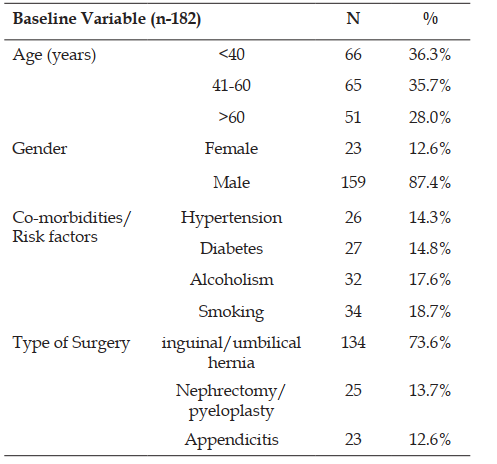
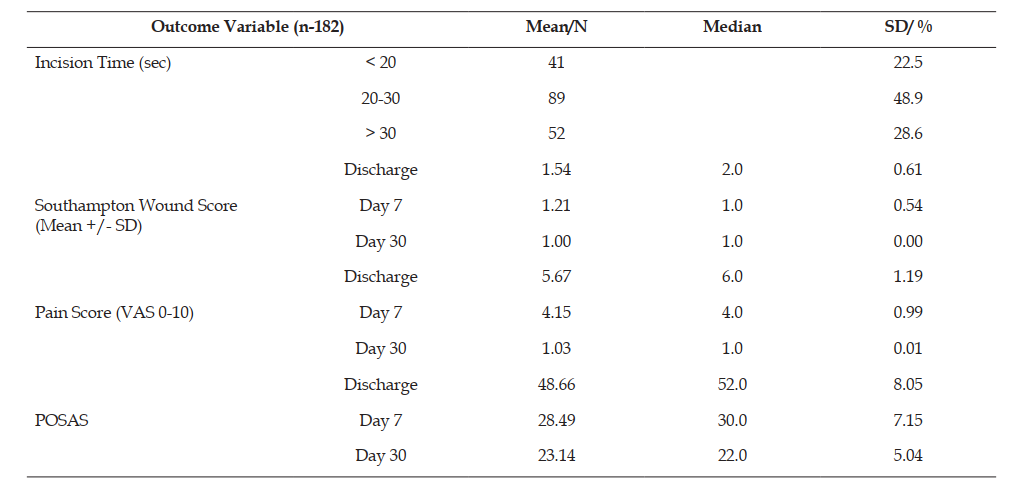
Introduction: Cutting diathermy is a more recent alternative to scalpel for surgical incisions. Its use was limited due to fear of increased risk of infection, impair healing and decrease cosmesis. However, recent studies suggest otherwise, claiming that diathermy may offer potential advantages with respect to blood loss, incision time and post-operative pain. The aim of this study was thus to evaluate the outcome of diathermic incision in terms of healing, post-op pain and scar characteristics in operations with incisions more than 5 cm in size. Materials & Methods: A hospital based observational study included 182 cases scheduled to undergo surgery requiring more than approximately 5 cm of incision. Cases were operated by surgeons who have a minimum of 3 years of experience. Incision time, wound healing, post-op pain and scar characteristics were noted at discharge and follow up at 7th and 30th day. Results: Mean incision time was 24.5 seconds with almost half of the cases (48.9%) had incision time between 20-30 seconds. A significant improvement was observed in all cases regarding mean Southampton wound score and pain score from day of discharge till day 30th of follow up. A significant improvement was also observed in patient and observer scar assessment scale in all the sub categories from day of discharge till day 30th of follow up None of the cases complaint of any surgical site infections or scar related complications. Conclusion: Electrocautery can be considered as effective and safe in making large skin incision. It is associated with less incision time, faster healing, low post-operative pain and good scar characteristics. Conclusion: Electrocautery can be considered as effective and safe in making large skin incision. It is associated with less incision time, faster healing, low post-operative pain and good scar characteristics.
References
- 1. Johnson CD, Serpell JW. Wound infection after abdominal incision with scalpel or diathermy. Br J Surg. 1990;77(6):626–7.
- 2. Kearns SR, Connoly EM, Mc Nally S, McNamara DA. Deasy J. Randomized clinical trial of diathermy versus scalpel incision in elective midline laparotomy. Br J Surg.2001; 88:41-44.
- 3. Dixon AR. Watkin DF. Electrosurgical skin incision versus conventional scalpel: A prospective trial. J R CollSurg Edinb.1990;35:299-301.
- 4. Kearns SR, Connolly EM, McNally S, McNamara DA, Deasy J. Randomized clinical trial of diathermy versus scalpel incision in elective midline laparotomy. Br J Surg. 2001;88 (1):41–4.
- 5. Shamim M. Diathermy vs. scalpel skin incisions in general surgery: double-blind, randomized, clinical trial. World J Surg. 2009;33(8):1594–9.
- 6. Ly J, Mittal A, Windsor J. Systematic review and meta-analysis of cutting diathermy versus scalpel for skin incision. Br J Surg. 2012 May; 99(5):613-20.
- 7. Madden JE, Edlich RF, Custer JR, Panek PH, Thul J, Wangensteen OH. Studies in the management of the contaminated wound. IV. Resistance to infection of surgical wounds made by knife, electrosurgery, and laser. Am J Surg. 1970;119(3):222–4.
- 8. Draaijers LJ, Tempelman FR, Botman YA, Tuinebreijer WE, Middelkoop E, Kreis RW, Van Zuijlen PP. The patient and observer scar assessment scale: a reliable and feasible tool for scar evaluation. Plastic and reconstructive Surgery. 2004 Jun 1;113(7):1960-5.
- 9. Mahmud R, Faisal MF, Mahmud F, Miah M, Reza MN, Hoque KR, Khan MM, Khan AS. Clinical Outcome of Surgical Diathermy in Elective Surgery-Prospective Randomized Controlled Tria. KYAMC Journal. 2019 Dec 23;10(3):143-6.
- 10. Talpur AA, Khaskheli AB, Kella N, Jamal A. Randomized, clinical trial on diathermy and scalpel incisions in elective general surgery. Iran Red Crescent Med J. 2015 Feb 21;17(2):e14078.
Data Sharing Statement
There are no additional data available.
Funding
This research received no funding.
Author Contributions
All authors contributed significantly to the work and approve its publication.
Ethics Declaration
This article does not involve any human or animal subjects, and therefore does not require ethics approval.
Acknowledgements
Information not provide.
Conflicts of Interest
The authors report no conflicts of interest in this work.
About this article

Cite this article
Divya R, Shama P, Tabassum A, et al. To compare the effect of core strengthening with conventional therapy versus task oriented exercise with conventional therapy in improving balance and function in stroke. Physio and Occ Therapy Jr. 2024;17(4):191-199.
Licence:
Attribution-Non-commercial 4.0 International (CC BY-NC 4.0)This license enables reusers to distribute, remix, adapt, and build upon the material in any medium or format for noncommercial purposes only, and only so long as attribution is given to the creator.
| Received | Accepted | Published |
|---|---|---|
| October 20, 2023 | November 30, 2023 | March 30, 2024 |
DOI: 10.21088/nijs.0976.4747.15124.1
Keywords
DiathermyScar CosmesisSurgical IncisionsWound HealingSearch for Similar Articles
Similar Articles
- Laparoscopy-Guided Bilateral Oblique Subcostal Transversus Abdominis Plane Bloc...
- Recognizing the Columnar Cell Subtype of Papillary Thyroid Carcinoma: A Case Rep...
- Randomized Controlled Study To Compare Intraperitoneal Plus Port-Site Instillat...
- Single Preoperative Dose Versus Conventional Multidose Antibiotic Prophylaxis In...
- To Compare the Dissection of Gallbladder by Ultrasonic Harmonic Scalpel Versus...
Article Level Metrics
Last UpdatedWednesday 30 September 2026, 19:20:24 (IST)
5322
Accesses
18
438
00
Citations
NA
NA
NA
Download citation
Article Keywords
Keyword Highlighting
Highlight selected keywords in the article text.
Timeline
| Received | October 20, 2023 |
| Accepted | November 30, 2023 |
| Published | March 30, 2024 |
licence
Attribution-Non-commercial 4.0 International (CC BY-NC 4.0)
This license enables reusers to distribute, remix, adapt, and build upon the material in any medium or format for noncommercial purposes only, and only so long as attribution is given to the creator.