Full Text (PDF)
Indian Journal of Library and Information Sciences 20(3):p 255-262, September-December 2026. | DOI: https://doi.org/10.21088/ijlis.0973.9548.20326.1
Original Article
Research Excellence on ChatGPT Literature in Medicine: A Scientometric Sketch
Author Information
Licence:
Attribution-Non-commercial 4.0 International (CC BY-NC 4.0)This license enables reusers to distribute, remix, adapt, and build upon the material in any medium or format for noncommercial purposes only, and only so long as attribution is given to the creator.
Indian Journal of Library and Information Sciences 20(3):p 255-262, September-December 2026. | DOI: https://doi.org/10.21088/ijlis.0973.9548.20326.1
How Cite This Article:
Chandran Velmurugan. Research Excellence on ChatGPT Literature in Medicine: A Scientometric Sketch. Ind J Lib Inf Sci 2026; 20 (3): 255–262.Timeline
Received : July 17, 2026
Accepted : August 25, 2026
Published : December 30, 2026
Abstract
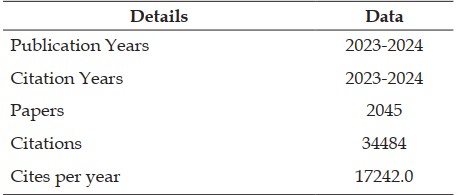
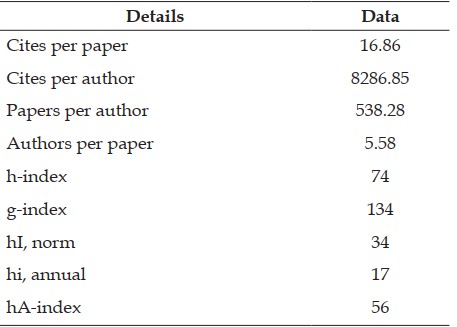
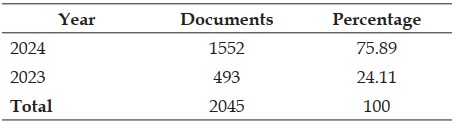
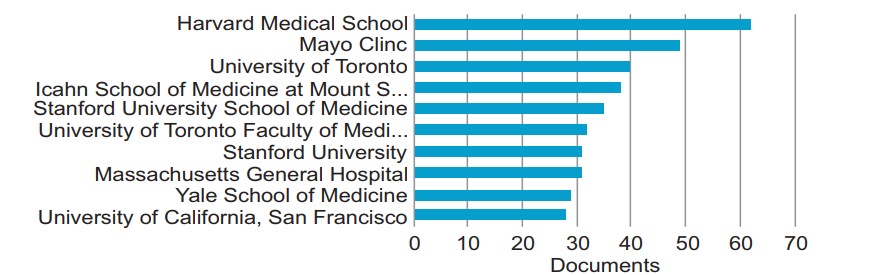
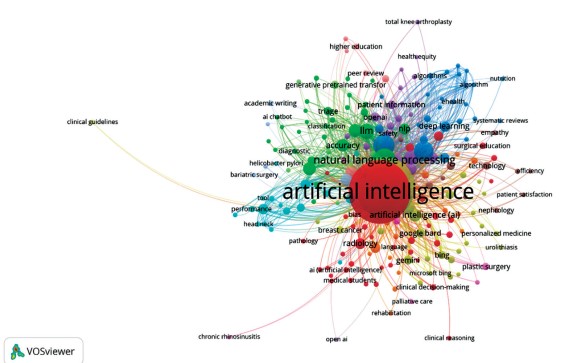
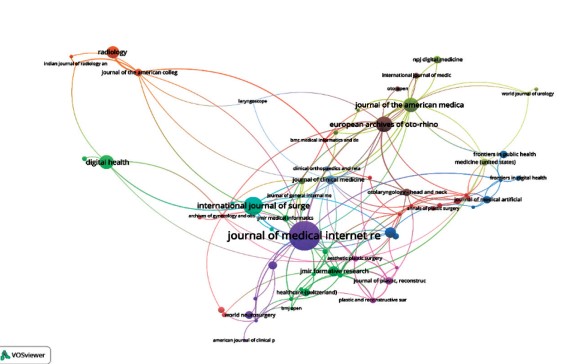
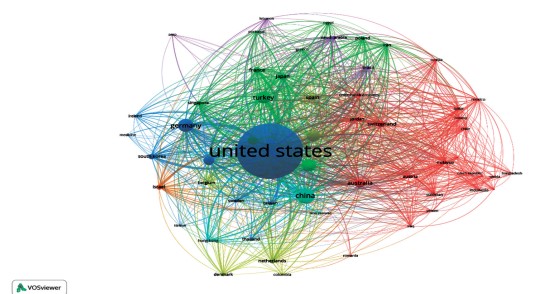
ChatGPT, also known as Chat Generative Pre-trained Transformer, was developed by OpenAI and is a versatile chatbot recognized for generating human-like text responses. Since its launch in November 2022, ChatGPT has sparked interest and debate. This chapter aims to examine the scientific publications of AI-based ChatGPT in medicine by analyzing research output, yearly frequency, citations, leading journals, authors, subjects, and keywords using bibliometric tools. We collected data from the Scopus Elsevier database regarding publications containing the keyword “ChatGPT in Medicine” at a global level between 2022 and 2025, identifying a total of 720 research publications. Ultimately, we selected only 2,045 published articles, with an average citation rate of 16.86 per article, excluding articles in press. Additionally, for data analysis, we applied bibliographic coupling and co-citation analysis using VOSviewer software version 1.6.20. The results reveal that the United States led in publications (45.82%), followed by China (8.51%) and Germany (7.14%). The leading institutions producing publications, such as Harvard Medical School, followed by the Mayo Clinic and the University of Toronto, were the most prolific.
References
- 1. Dossantos J, and Javan, R. (2023) Eyes on AI: ChatGPT's Transformative Potential Impact on Ophthalmology. Cureus 15(6): e40765. DOI 10.7759/cureus.40765
- 2. Radford, A., Narasimhan, K., Salimans, T., and Sutskever, I. (2018). Improving language understanding by generative pre-training.
- 3. Mokmin, N. A. M., and Ibrahim, N. A. (2021). The evaluation of chatbot as a tool for health literacy education among undergraduate students. EducInfTechnol (Dordr) 26, 6033– 6049. doi: 10.1007/s10639-021-10542-y.
- 4. Han, J-.W., Park, J., and Lee, H. (2022). Analysis of the effect of an artificial intelligence chatbot educational program on non-face-to-face classes: a quasiexperimental study. BMC Med. Educ. 22, 830. doi: 10.1186/s12909-022-03898-3.
- 5. You, Y., and Gui, X. (2020). Self-diagnosis through AI-enabled chatbot-base symptom checkers: user experiences and design considerations. AMIA AnnuSymp Proc 2020, 1354-1363.
- 6. Khosravi, Het al. (2024). Chatbots and ChatGPT: A bibliometric analysis and systematic review of publications in Web of Science and Scopus databases. Int. J. Data Min. Model. Manag. 16, 113–147.
- 7. Baber, H et al. (2024). The beginning of ChatGPT-A systematic and bibliometric review of the literature. Inf.Learn. Sci. 125, 587–614.
- 8. Ahmed, M.K.K. and Sab, C.M. (2023). Analyzing the impact of ChatGPT using scientometrics. Int. J. Pharm. Investig. 2023, 13, 895–903.
- 9. Liu, L.et al. (2024). Global trends and hotspots of ChatGPT in medical research: A bibliometric and visualized study. Front. Med. 2024, 11, 1406842.
- 10. Gande, S.; Gould, M and Ganti, L. (2024). Bibliometric analysis of ChatGPT in medicine. Int. J. Emerg. Med. 17, 50.
- 11. Barrington, N.M. et al. (2023). Bibliometric analysis of the rise of ChatGPT in medical research. Med. Sci.11, 61.
- 12. Levin, G.; Brezinov, Y. and Meyer, R. (2023). Exploring the use of ChatGPT in OBGYN: A bibliometric analysis of the first ChatGPTrelated publications. Arch. Gynecol. Obstet. 308, 1785–1789.
- 13. Zheltukhina, M.R. et al. (2024). A bibliometric analysis of publications on ChatGPT in education: Research patterns and topics. Online J. Commun. Media Technol. 14, e202 405.
- 14. Olinski, M.; Krukowski, K. and Siecinski, K. (2024). Bibliometric Overview of ChatGPT: New Perspectives in Social Sciences. Publications, 12, 9.
- 15. Liu, H.Y. et al. (2024). Can ChatGPT be the plastic surgeon’s new digital assistant? A bibliometric analysis and scoping review of ChatGPT in plastic surgery literature. Aesthet. Plast. Surg. 2024, 48, 1644–1652.
- 16. Yalcinkaya, T and Cinar Yucel, S. (2024). Bibliometric and content analysis of ChatGPT research in nursing education: The rabbit hole in nursing education. Nurse Educ. Pract, 77, 103956.
- 17. Ho, S.Y.; Chien, T.W and Chou, W. (2023). Circle packing charts generated by ChatGPT to identify the characteristics of articles by anesthesiology authors in 2022: Bibliometric analysis. Medicine, 102, e34511.
- 18. Sahu, Mahendra Kumar. (2021). Bibliographic coupling and co-citation networking analysis determining research contributions of business school between 1965-June, 2020: With special reference to Indian Institute of Management, India. Library Philosophy and Practice (e-journal). 5210. https://digitalcommons.unl. edu/libphilprac/5210
- 19. Shukla, N et al. (2020). Half a century of computer methods and programs in biomedicine: A bibliometric analysis from 1970 to 2017. Computer Methods and Programs in Biomedicine, 183. https://doi.org/10.1016/j. cmpb.2019.105075
Data Sharing Statement
There are no additional data available. All raw data and code are available upon request.
Funding
This research received no funding.
Author Contributions
All authors contributed significantly to the work and approve its publication.
Ethics Declaration
This article does not involve any human or animal subjects, and therefore does not require ethics approval.
Acknowledgements
We would like to express our gratitude to the patients, their families, and all those who have contributed to this study.
Conflicts of Interest
No conflicts of interest in this work.
About this article

Cite this article
Chandran Velmurugan. Research Excellence on ChatGPT Literature in Medicine: A Scientometric Sketch. Ind J Lib Inf Sci 2026; 20 (3): 255–262.
Licence:
Attribution-Non-commercial 4.0 International (CC BY-NC 4.0)This license enables reusers to distribute, remix, adapt, and build upon the material in any medium or format for noncommercial purposes only, and only so long as attribution is given to the creator.
| Received | Accepted | Published |
|---|---|---|
| July 17, 2026 | August 25, 2026 | December 30, 2026 |
DOI: https://doi.org/10.21088/ijlis.0973.9548.20326.1
Keywords
BibliometricsScientometricsChatGPTArtificial intelligenceAINatural language processingMedicineHealthcareSearch for Similar Articles
Similar Articles
- Newspaper Reading Habits among Undergraduate Students: A Case Study
- Transforming Classrooms: The Role of AI in Indian Education
- Information Seeking Behavior of Legal Practitioners in the Digital Era: A Review...
- Assessment of Library Collection and Services in Automated System in Institute o...
- Prospective Approaches for Artificial Intelligence Integration in Indian School...
Article Level Metrics
Last UpdatedThursday 12 November 2026, 18:56:45 (IST)
5970
Accesses
2
1004
00
Citations
NA
NA
NA
Download citation
Article Keywords
Keyword Highlighting
Highlight selected keywords in the article text.
Timeline
| Received | July 17, 2026 |
| Accepted | August 25, 2026 |
| Published | December 30, 2026 |
licence
Attribution-Non-commercial 4.0 International (CC BY-NC 4.0)
This license enables reusers to distribute, remix, adapt, and build upon the material in any medium or format for noncommercial purposes only, and only so long as attribution is given to the creator.