Full Text (PDF)
Indian Journal of Library and Information Sciences 16(3):p 221-228, September-December 2022. | DOI: https://doi.org/10.21088/ijlis.0973.9548.16322.7
Review Article
Research Contribution of Knowledge Management Among Verious Countries: A Study
Author Information
Licence:
Attribution-Non-commercial 4.0 International (CC BY-NC 4.0)This license enables reusers to distribute, remix, adapt, and build upon the material in any medium or format for noncommercial purposes only, and only so long as attribution is given to the creator.
Indian Journal of Library and Information Sciences 16(3):p 221-228, September-December 2022. | DOI: https://doi.org/10.21088/ijlis.0973.9548.16322.7
How Cite This Article:
Rajeev R Paithankar/Research Contribution of Knowledge Management Among Verious Countries: A Study/Indian J Lib Inf Sci 2022;16(3):221–228.Timeline
Received : May 14, 2022
Accepted : June 16, 2022
Published : December 25, 2022
Abstract
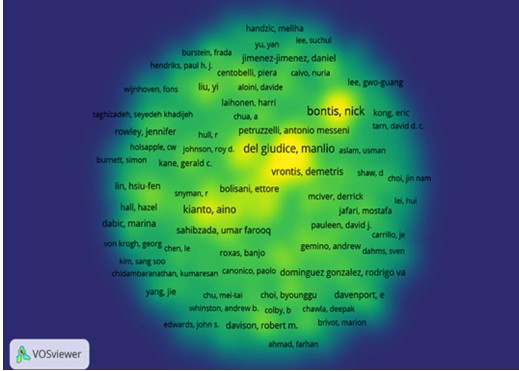
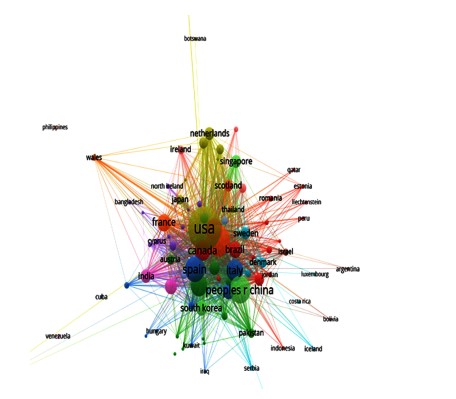
The literature on knowledge management (KM) has been steadily growing around the world. This research aims to map published knowledge management literature in the Web of Science database and determine the productivity of Knowledge Management literature in the Web of Science. The purpose of this research is to look at the progress in the field of knowledge management productivity using the web of science database. To gain insight into the most productive author country in the field of knowledge management.
References
- 1. Abrahamson, E. (1991) Managerial fads and fashions: The diffusion and rejection of innovations. The Academy of Management Review, Vol. 16, No. 3, pp. 586-612.
- 2. Anand, A. & Walsh, I. (2016. Should Knowledge be Shared Generously? Tracing Insights from Past to Present and Describing a Model. Journal of Knowledge Management, 20(4), 713-730.
- 3. Andreeva, Tatiana & Kianto, Aino. (2012). Does knowledge management really matter? Linking knowledge management practices, competitiveness and economic performance. Journal of Knowledge Management. 16. 617-636. 10.1108/13673271211246185.
- 4. Ansari, M., Youshanlouei, H. R. & Mood, M. M. (2012). A Conceptual Model for Success in Implementing Knowledge Management: A Case Study in Tehran Municipality. Journal of Service Science and Management, 5(1), 212-222.
- 5. Bhojaraju, G. (2005). Knowledge Management: Why Do We Need It for Corporates. Malaysian Journal of Library & Information Science, 10(2), 37-50.
- 6. Borges, R. (2013). Tacit Knowledge Sharing between IT Workers: The Role of Organizational Culture and Social Environment. Management Research Review, 36(1), 89-108.
- 7. Bueren, A., Schierholz, R., Kolbe, L. & Brenner, W. (2005). Improving Performance of CustomerProcesses with Knowledge Management. Business Process Management, 11(5).
- 8. Cerchione Roberto, Esposito Emilio (2017). Using knowledge management systems: A taxonomy of SME strategies., elsevierScience direct.com/https://doi.org/10.1016/j.ijinfomgt.2016.10.007.
- 9. Mikki, S. (2010) Comparing Google Scholar and ISI Web of Science for Earth Sciences. Scientometrics (2010) 82:321–331 DOI 10.1007/s11192-009-0038-6.
- 10. Nonaka, I. (1991) The Knowledge Creating Company, Harvard Business Review Nov-Dec 1991.
- 11. Nonaka, I., and Takeuchi, H. (1995) The knowledgecreating company. New York: Oxford University Press.
- 12. Ponzi, L. J. and Koening, M. (2002) Knowledge management: another management fad? Information Research, Vol. 8 No. 1, October 2002.
- 13. Tanriverdi, H. (2005) Information Technology Relatedness, Knowledge Management Capability, and Performance of Multi Business Firms. MIS Quarterly. Vol. 29 No. 2. June 2005.
- 14. Wilson, T.D. (2002) The Nonsense of Knowledge Management, Information Research, Vol. 8 No. 1, October 2002.
Data Sharing Statement
There are no additional data available. All raw data and code are available upon request.
Funding
This research received no funding.
Author Contributions
All authors contributed significantly to the work and approve its publication.
Ethics Declaration
This article does not involve any human or animal subjects, and therefore does not require ethics approval.
Acknowledgements
We would like to express our gratitude to the patients, their families, and all those who have contributed to this study.
Conflicts of Interest
No conflicts of interest in this work.
About this article

Cite this article
Rajeev R Paithankar/Research Contribution of Knowledge Management Among Verious Countries: A Study/Indian J Lib Inf Sci 2022;16(3):221–228.
Licence:
Attribution-Non-commercial 4.0 International (CC BY-NC 4.0)This license enables reusers to distribute, remix, adapt, and build upon the material in any medium or format for noncommercial purposes only, and only so long as attribution is given to the creator.
| Received | Accepted | Published |
|---|---|---|
| May 14, 2022 | June 16, 2022 | December 25, 2022 |
DOI: https://doi.org/10.21088/ijlis.0973.9548.16322.7
Keywords
Knowledge Management; Bibliographic Analysis; Metrics; Web of Science.Knowledge ManagementBibliographic AnalysisMetricsWeb of ScienceSearch for Similar Articles
Similar Articles
- Scientometric Portrait of Dr. Anil Kumar Dhiman, an Information Scientist-Part I...
- A Study on Humanities Students’ Literacy Skills at Alagappa University in Using...
- Awareness and Utilization of Artificial Intelligence Tools (ChatGPT) among Stude...
- Global Trends on Artificial Intelligence in Science Research: A Scientometric Ob...
- Information Needs of Persons with Visual Impairments: A Socioeconomic Analysis
Article Level Metrics
Last UpdatedThursday 10 September 2026, 02:38:22 (IST)
3922
Accesses
9
738
00
Citations
NA
NA
NA
Download citation
Article Keywords
Keyword Highlighting
Highlight selected keywords in the article text.
Timeline
| Received | May 14, 2022 |
| Accepted | June 16, 2022 |
| Published | December 25, 2022 |
licence
Attribution-Non-commercial 4.0 International (CC BY-NC 4.0)
This license enables reusers to distribute, remix, adapt, and build upon the material in any medium or format for noncommercial purposes only, and only so long as attribution is given to the creator.