Full Text (PDF)
Indian Journal of Library and Information Sciences 20(2):p 219-228, May - August 2026. | DOI: https://doi.org/10.21088/ijlis.0973.9548.20226.10
Original Article
A Study on Humanities Students’ Literacy Skills at Alagappa University in Using Social Media to Bridge the Digital Divide
S. Thanuskodi, K.G. Anila Berlin, S. Raja
Author Information
Licence:
Attribution-Non-commercial 4.0 International (CC BY-NC 4.0)This license enables reusers to distribute, remix, adapt, and build upon the material in any medium or format for noncommercial purposes only, and only so long as attribution is given to the creator.
Indian Journal of Library and Information Sciences 20(2):p 219-228, May - August 2026. | DOI: https://doi.org/10.21088/ijlis.0973.9548.20226.10
How Cite This Article:
K.G. Anila Berlin, S. Thanuskodi, S. Raja. A Study on Humanities Students’ Literacy Skills at Alagappa University in Using Social Media to Bridge the Digital Divid. Ind J Lib Inf Sci 2026; 20 (2): 219–228.Timeline
Received : February 03, 2026
Accepted : March 15, 2026
Published : August 30, 2026
Abstract
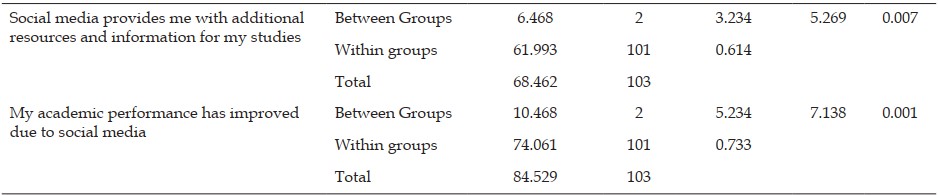
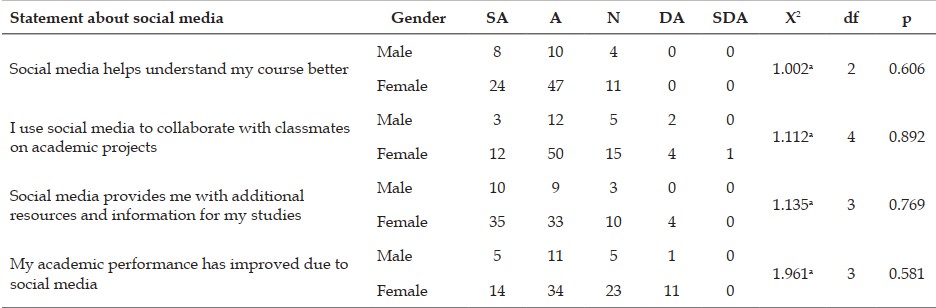
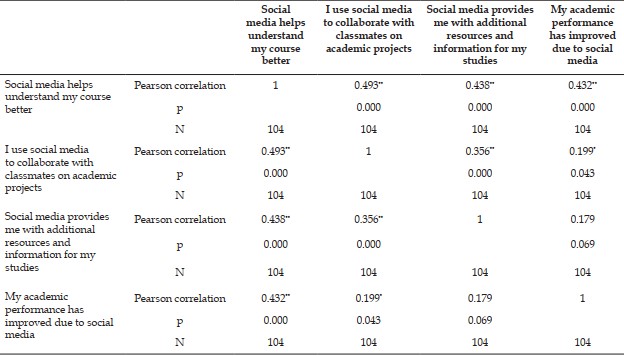
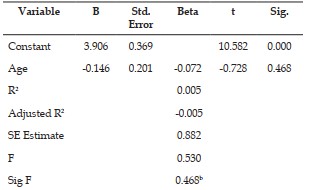
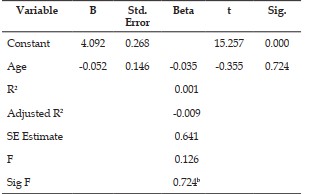
This study explores the use of social media for educational purposes among postgraduate students at Alagappa University, focusing on how demographic factors such as gender and age influence usage patterns and proficiency. Utilising quantitative methods, including Chi-square tests, Pearson correlation, and linear regression, the research examines students’ frequency of use, self-reported proficiency, and their perceptions of social media’s academic benefits. The findings indicate no significant association between gender or age and the frequency or proficiency of social media use. However, a significant positive correlation was found between students’ perceptions of social media as a tool for enhancing course understanding and its other academic benefits, such as collaboration, access to resources, and improved performance. The study concludes that while demographic factors do not significantly affect social media usage, students view it as a supportive educational tool. The paper recommends that institutions integrate social media more effectively into academic settings and support this with libraryled digital literacy programs to maximise its educational potential.
References
- 1. Arikpo, I.I., Osofisan, A., & Usoro, A. (2009). Bridging the digital divide: the Nigerian journey so far. International Journal of Global Business, 2(1), 181-204.
- 2. Broadbent, R., & Papadopoulos, T. (2013). Bridging the digital divide–an Australian story. Behaviour & Information Technology, 32(1), 4-13.
- 3. Chetty, K., Aneja, U., Mishra, V., Gcora, N., & Josie, J. (2018). Bridging the digital divide in the G20: skills for the new age. Economics, 12(1), 20180024.
- 4. Edet Ani, O., Uchendu, C., & Atseye, E.U. (2007). Bridging the digital divide in Nigeria: a study of internet use in Calabar Metropolis, Nigeria. Library Management, 28(6/7), 355-365.
- 5. Gamage, P., & Halpin, E.F. (2007). E-Sri Lanka: bridging the digital divide. The Electronic Library, 25(6), 693-710.
- 6. Maji, S.K., & Laha, A. (2022). The role of digital skill in mitigating digital divide: evidences from Asia-Pacific region. Rajagiri Management Journal, 16(3), 260-271.
- 7. Mutula, S. M. (2005). Peculiarities of the digital divide in sub-Saharan Africa. Program, 39(2), 122-138.
- 8. Obeidat, O., & Genoni, P. (2010). Assessing the digital divide in a Jordanian academic library. Library Review, 59(6), 384-400.
- 9. Obiora Omekwu, C. (2006). Managing information and technology: critical roles for librarians in developing countries. The electronic library, 24(6), 847-863.
- 10. Rogers, S.E. (2016). Bridging the 21st century digital divide. TechTrends, 60(3), 197-199.
- 11. Russell, S.E., & Huang, J. (2009). Libraries’ role in equalizing access to information. Library management, 30(1/2), 69-76.
- 12. Shuva, N.Z., & Akter, R. (2011). Bridging digital divide through public, school and college libraries: A case study of Bangladesh. Journal of the Bangladesh Association of Young Researchers, 1(1), 49-77.
- 13. Singh, P.K., & Gangopadhyay, S. (2017). Digital Divide in Higher Education: Role of Academic Libraries to Bridge the Gap. Vaichariki, 7 (4), 35- 40. (ISSN: 2249-8907).
- 14. Vassilakopoulou, P., & Hustad, E. (2023). Bridging digital divides: A literature review and research agenda for information systems research. Information Systems Frontiers, 25(3), 955-969.
- 15. Wong, Y.C., Fung, J.Y.C., Law, C.K., Lam, J.C.Y., & Lee, V.W.P. (2009). Tackling the digital divide. British Journal of Social Work, 39(4), 754-767.
Data Sharing Statement
There are no additional data available. All raw data and code are available upon request.
Funding
This research received no funding.
Author Contributions
All authors contributed significantly to the work and approve its publication.
Ethics Declaration
This article does not involve any human or animal subjects, and therefore does not require ethics approval.
Acknowledgements
We would like to express our gratitude to the patients, their families, and all those who have contributed to this study.
Conflicts of Interest
No conflicts of interest in this work.
About this article

Cite this article
K.G. Anila Berlin, S. Thanuskodi, S. Raja. A Study on Humanities Students’ Literacy Skills at Alagappa University in Using Social Media to Bridge the Digital Divid. Ind J Lib Inf Sci 2026; 20 (2): 219–228.
Licence:
Attribution-Non-commercial 4.0 International (CC BY-NC 4.0)This license enables reusers to distribute, remix, adapt, and build upon the material in any medium or format for noncommercial purposes only, and only so long as attribution is given to the creator.
| Received | Accepted | Published |
|---|---|---|
| February 03, 2026 | March 15, 2026 | August 30, 2026 |
DOI: https://doi.org/10.21088/ijlis.0973.9548.20226.10
Keywords
Digital DivideHigher EducationLiteracy SkillsSocial Media and e-resourcesSearch for Similar Articles
Similar Articles
- Information Seeking Behavior of Legal Practitioners in the Digital Era: A Review...
- Assessment of Library Collection and Services in Automated System in Institute o...
- Prospective Approaches for Artificial Intelligence Integration in Indian School...
- COVID – 19 Pandemic and Readiness on Provision of Library Services in Selected A...
- Digital Library A Channel to Achieve Sustainable Information Society
Article Level Metrics
Last UpdatedSunday 18 October 2026, 10:03:55 (IST)
5199
Accesses
16
835
00
Citations
NA
NA
NA
Download citation
Article Keywords
Keyword Highlighting
Highlight selected keywords in the article text.
Timeline
| Received | February 03, 2026 |
| Accepted | March 15, 2026 |
| Published | August 30, 2026 |
licence
Attribution-Non-commercial 4.0 International (CC BY-NC 4.0)
This license enables reusers to distribute, remix, adapt, and build upon the material in any medium or format for noncommercial purposes only, and only so long as attribution is given to the creator.