Full Text (PDF)
New Indian Journal of Surgery 14(4):p 193-197, October-December 2023. | DOI: https://dx.doi.org/10.21088/nijs.0976.4747.14423.4
Case Report
Neonatal Severe Hyperparathyroidism: A Case Report
Manikandan u, Meenakshi Sundari s, Karuppasamy N, Srinivasakumar R, Aravindan C, Selvakumar G.
Author Information
Licence:
Attribution-Non-commercial 4.0 International (CC BY-NC 4.0)This license enables reusers to distribute, remix, adapt, and build upon the material in any medium or format for noncommercial purposes only, and only so long as attribution is given to the creator.
New Indian Journal of Surgery 14(4):p 193-197, October-December 2023. | DOI: https://dx.doi.org/10.21088/nijs.0976.4747.14423.4
How Cite This Article:
Manikandan U, Sundari SM, Karuppasamy N, et al. Neonatal severe hyperparathyroidism: a case report. New Indian J Surg. 2023;14(3):193-197.Timeline
Received : July 27, 2023
Accepted : September 01, 2023
Published : December 26, 2023
Abstract
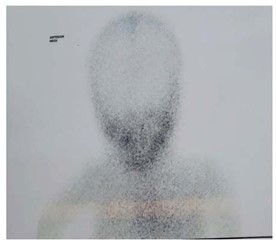
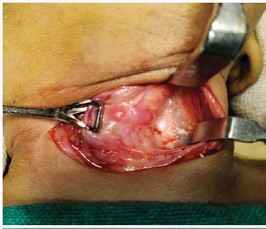
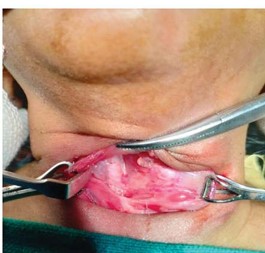
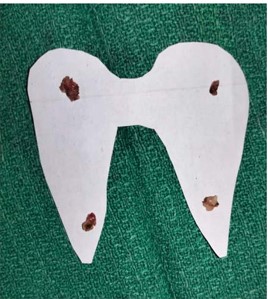
Background: Neonatal severe hyperparathyroidism is an extremely rare condition that presents in the first few months of life. Recognition at the early stage followed by prompt surgical intervention are of vital importance for survival. Hypotonia, respiratory distress, lethargy and delay in growth and development occur in association with the elevated serum parathormone levels and hypercalcemia. Definitive therapy involves total parathyroidectomy. Case Description: We are presenting a case with Neonatal severe hyperparathyroidism, who underwent total parathyroidectomy. The patient had been followed up with medical therapy until. Parathormone levels rapidly declined following total parathyroidectomy and the patient was discharged with full recovery. Literature Review: Sestamibi scintigraphy might fail to show an ectopic parathyroid gland. In such conditions, on table confirmation of parathyroid glands by frozen section and Intra operative parathormone monitoring is vital at this point. Persistently elevated parathormone levels might suggest a remnant parathyroid tissue at the surgical site or an ectopic parathyroid gland that should be excised. Clinical Relavance: Neonatal severe hyperparathyroidism is a life-threatening disease. In the present case surgery performed at the early is life-saving due to the failure of medical therapy to control the disease.
References
- 1. Anthony W. Gannon, Heather M. Monk, Michael A. Levine, Cinacalcet monotherapy in neonatal severe hyperparathyroidism: a case study and review, J. Clin. Endocrinol. Metab. 99 (January (1)) (2014) 7–11, http://dx.doi. org/10.1210/jc.2013 2834.
- 2. R.A. Agha, M.R. Borrelli, R. Farwana, K. Koshy, A. Fowler, D.P. Orgill, For the SCARE Group, The SCARE 2018 statement: updating consensus surgical CAse REport (SCARE) guidelines, Int. J. Surg. 60 (2018) 132–136.
- 3. J. Tfelt-Hansen, E.M. Brown, The calcium sensing receptor in normal physiology and pathophysiology: a review, Crit. Rev. Clin. Lab. Sci. 42 (2005) 35–70.
- 4. G.N. Hendy, David E.C. Cole, Genetic defects associated with familial and sporadic hyperparathyroidism, Front. Horm. Res. 41 (2013) 149–165, http://dx.doi.org/10.1159/000345675, Epub 2013 Mar 19.
- 5. G.N. Hendy, L. D’Souza-Li, B. Yang, L. Canaff, D.E. Cole, Mutations of the calcium sensing receptor (CASR) in familial hypocalciuric hypercalcemia, neonatal severe hyperparathyroidism, and autosomal dominant hypocalcemia, Hum. Mutat. 16 (2000) 281–296.
- 6. Todd M. Brickman, Matthew W. Stark, Anita Jeyakumar, Unusual case of neonatal hypercalcemia, Int. J. Pediatr. Otorhinolaryngol. 79 (5) (2015) 758–759, http://dx.doi.org/10.1016/j. ijporl.2015.02.029.
- 7. J.C. Pallais, E.H. Kemp, C. Bergwitz, L. Kantham, D.M. Slovik, A.P. Weetman, E.M. Brown, Autoimmune hypocalciuric hypercalcemia unresponsive to glucocorticoid therapy in a patient with blocking autoantibodies against the calcium sensing receptor, J. Clin. Endocrinol. Metab. 96 (2011) 672–680.
- 8. S.J. Marx, D.M. Lourenc¸ o Jr., Familial hyperparathyroidism – disorders of growth and secretion in hormone-secretory tissue, Horm. Metab. Res. 49 (November (11)) (2017) 805–815, http://dx.doi.org/10.1055/s-0043-120670, Epub 2017 Nov 14.
- 10. N. Ahmed, Neonatal severe hyperparathyroidism secondary to an novel homozygous CASR gene mutation, Clin. Cases Miner. Bone Metab. 14 (3) (2017) 354–358.
- 9. S. Al-Shanafey, R. Al-Hosaini, A. Al-Ashwal, A. Al Rabeeah, Surgical management of severe neonatal hyperparathyroidism: one center’s experience, J. Pediatr. Surg. 45 (April (4))(2010) 714–717, http:// dx.doi.org/ 10.1016/j.jpedsurg.2009.08.005.
Data Sharing Statement
There are no additional data available.
Funding
This research received no funding.
Author Contributions
All authors contributed significantly to the work and approve its publication.
Ethics Declaration
This article does not involve any human or animal subjects, and therefore does not require ethics approval
Acknowledgements
Information Not Provided
About this article

Cite this article
Manikandan U, Sundari SM, Karuppasamy N, et al. Neonatal severe hyperparathyroidism: a case report. New Indian J Surg. 2023;14(3):193-197.
Licence:
Attribution-Non-commercial 4.0 International (CC BY-NC 4.0)This license enables reusers to distribute, remix, adapt, and build upon the material in any medium or format for noncommercial purposes only, and only so long as attribution is given to the creator.
| Received | Accepted | Published |
|---|---|---|
| July 27, 2023 | September 01, 2023 | December 26, 2023 |
DOI: https://dx.doi.org/10.21088/nijs.0976.4747.14423.4
Keywords
Severe HyperparathyroidismHypercalcemiaCinacalcetSestamibi scintigraphyCaSR GeneSearch for Similar Articles
Similar Articles
- Laparoscopy-Guided Bilateral Oblique Subcostal Transversus Abdominis Plane Bloc...
- Recognizing the Columnar Cell Subtype of Papillary Thyroid Carcinoma: A Case Rep...
- Randomized Controlled Study To Compare Intraperitoneal Plus Port-Site Instillat...
- Single Preoperative Dose Versus Conventional Multidose Antibiotic Prophylaxis In...
- To Compare the Dissection of Gallbladder by Ultrasonic Harmonic Scalpel Versus...
Article Level Metrics
Last UpdatedWednesday 30 September 2026, 14:42:45 (IST)
5309
Accesses
6
438
00
Citations
NA
NA
NA
Download citation
Article Keywords
Keyword Highlighting
Highlight selected keywords in the article text.
Timeline
| Received | July 27, 2023 |
| Accepted | September 01, 2023 |
| Published | December 26, 2023 |
licence
Attribution-Non-commercial 4.0 International (CC BY-NC 4.0)
This license enables reusers to distribute, remix, adapt, and build upon the material in any medium or format for noncommercial purposes only, and only so long as attribution is given to the creator.