Full Text (PDF)
Indian Journal of Pathology: Research and Practice 15(1):p 39-47, Jan-Apr 2026. | DOI: 10.21088/ijprp.2278.148X.15126.4
Review Article
Lyme Disease Pathogenesis, Immune Dysregulation and Therapeutic Challenges: An Integrative Pathology–Pharmacology Review
Author Information
Licence:
Attribution-Non-commercial 4.0 International (CC BY-NC 4.0)This license enables reusers to distribute, remix, adapt, and build upon the material in any medium or format for noncommercial purposes only, and only so long as attribution is given to the creator.
Indian Journal of Pathology: Research and Practice 15(1):p 39-47, Jan-Apr 2026. | DOI: 10.21088/ijprp.2278.148X.15126.4
How Cite This Article:
Choudhary AK. Lyme Disease Pathogenesis, Immune Dysregulation and Therapeutic Challenges: An Integrative Pathology–Pharmacology Review. Ind Jr of Path: Res and Practice. 2026;15(1):39-47.Timeline
Received : December 07, 2025
Accepted : January 08, 2026
Published : April 30, 2026
Abstract
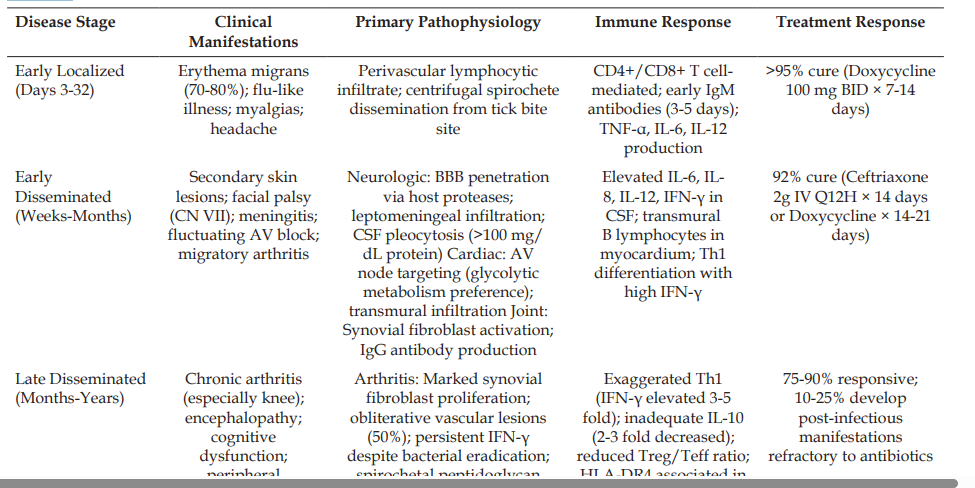
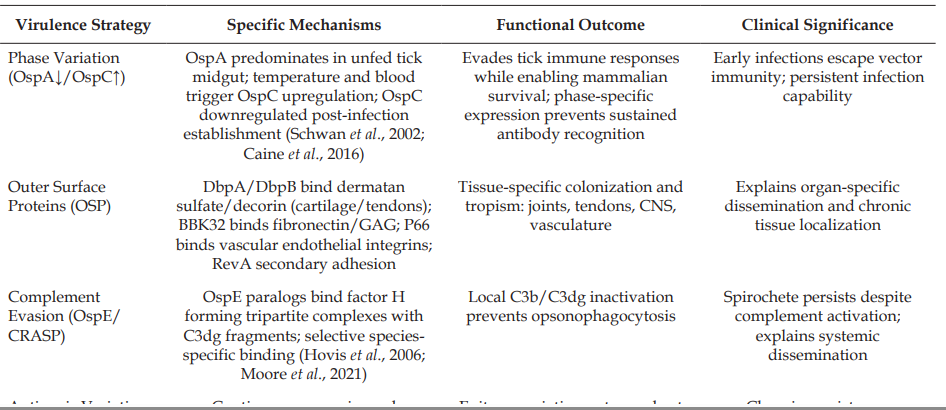
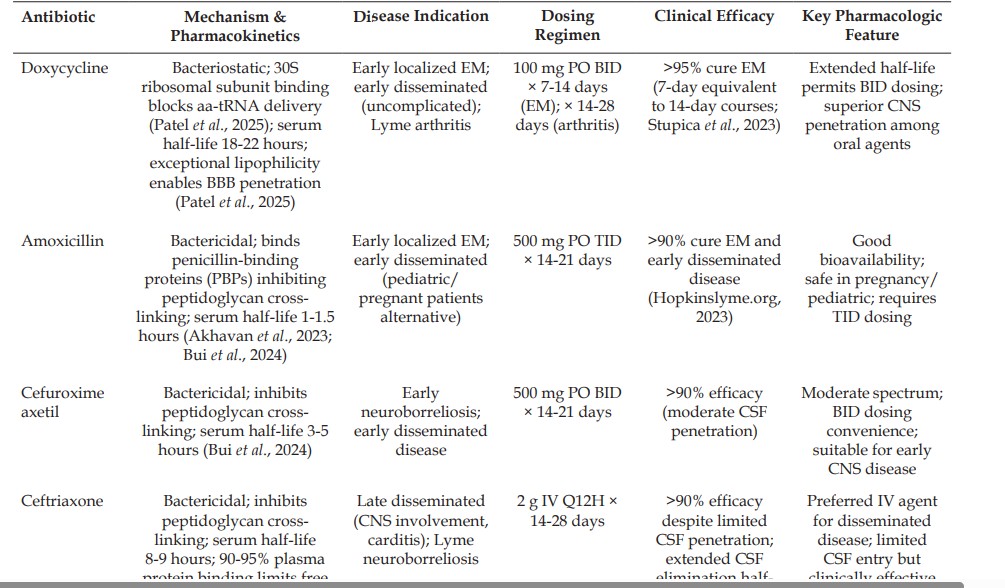
Lyme disease is the leading vector-borne infection in temperate climates and presents with heterogeneous cutaneous, neurologic, cardiac, and rheumatologic manifestations that complicate diagnosis and follow-up. This narrative review integrates current evidence on Borrelia burgdorferi transmission dynamics, virulence strategies, organ-specific pathophysiology, host immune responses, and pharmacologic management. We summarize how phase-regulated outer surface proteins, complement evasion, antigenic variation and biofilm-like phenotypes enable persistent infection, while dysregulated Th1-skewed immunity, inadequate IL-10 signalling and genetic susceptibility contribute to antibiotic-refractory arthritis and post-treatment Lyme disease symptoms. Key diagnostic issues, including limitations of two-tier serology in early localized disease and the role of modified ELISA algorithms and CSF analysis in neuroborreliosis, are critically appraised. Finally, we outline evidence-based antimicrobial regimens for stagespecific disease and highlight the need for immunomodulatory strategies in refractory cases. A mechanistic understanding of pathogen–host interactions is essential to improving outcomes and long-term functional recovery in this increasingly prevalent multisystem disorder.
References
- 1. Akhavan BJ, Karaman M, Paragas V. Amoxicillin. In: StatPearls [Internet]. Treasure Island (FL): StatPearls Publishing; 2023.
- 2. Barthold SW, Hodzic E, Imai DM, Feng S, Yang X, Luft BJ. Antibiotic treatment of animals infected with Borrelia burgdorferi. Clin Microbiol Rev. 2009;22(3):552–574.
- 3. Arvikar SL, Steere AC. Lyme arthritis. Curr Opin Rheumatol. 2022;34(3):289–295.
- 4. Bankhead T. Role of the VlsE lipoprotein in immune avoidance by the Lyme disease spirochete. Microbes Infect. 2016;18(8):567–573.
- 5. Bockenstedt LK, Gonzalez DG, Habluetzel A, et al. Immune response to Borrelia: Lessons from Lyme disease and Lyme borreliosis. Front Immunol. 2020;11:3396.
- 6. Branda JA, Aguero-Rosenfeld ME, Ferraro MJ, et al. Evaluation of modified 2-tiered serodiagnostic testing algorithms for early Lyme disease. Clin Infect Dis. 2017;64(8):1074–1080.
- 7. Bui T, Preuss CV, Sticco KL. Cephalosporins. In: StatPearls [Internet]. Treasure Island (FL): StatPearls Publishing; 2024.
- 8. Caine JA, Coburn J. Multifunctional and redundant roles of Borrelia burgdorferi outer surface proteins in tissue adhesion, colonization, and vascular transmigration. Front Immunol. 2016;7:442.
- 9. Dennis VA, Jefferson T. Interleukin-10 anti-inflammatory response to Borrelia burgdorferi, the agent of Lyme disease. J Clin Immunol. 2006;26(1):92–107.
- 10. Feng J, Leone J, Schweitzer F, et al. Ceftriaxone pulse dosing fails to eradicate biofilm-like microcolonies of Borrelia burgdorferi. Front Microbiol. 2016;7:1744.
- 11. Frontiers in Immunology. Borrelia burgdorferi keeps moving and carries on [Internet]. 2017 [cited 2026 Mar 12].
- 12. Grab DJ, Nyarko E, Obando D, et al. Borrelia burgdorferi, host-derived proteases, and the blood–brain barrier. Infect Immun. 2005;73(2):1014–1022.
- 13. Golovchenko M, Grubhoffer L, Rudenko N. Borrelia burgdorferi sensu lato complex: An updated overview of geographical distribution, epidemiology and epidemiological situation in Eurasia. Ticks Tick Borne Dis. 2023;14(5):102168.
- 14. Hovis KM, Tran E, Sundy CM, et al. Selective binding of Borrelia burgdorferi OspE paralogs to factor H and serum proteins from different animals demonstrating the concept of a microbial mechanism for expanding the host range. J Immunol. 2006;177(11):7650–7659.
- 15. Johns Hopkins Lyme Disease Research Center. Lyme disease treatment and prognosis [Internet]. 2023 [cited 2026 Mar 12].
- 16. Iliopoulou BP, Alroy J, Huber BT, Steere AC. HLA-DR alleles determine responsiveness to Borrelia antigens in Lyme arthritis. J Immunol. 2009;174(4):2048–2055.
- 17. Jutras BL, Chenail AM, Stevenson B, et al. Borrelia burgdorferi peptidoglycan is a persistent antigen in patients with Lyme arthritis. PNAS. 2019;116(27):13498–13507.
- 18. Klein JO. History of macrolide use in pediatrics. Pediatr Infect Dis J. 1997;16(4):427–431.
- 19. Logan JJ, Ackerman LA, Hovis MF, et al. Ixodes scapularis density and Borrelia burgdorferi infection rates in naturally infected ticks across the northeastern United States. Sci Rep. 2024;14:14725.
- 20. Miraflor AP, Reardon JM, Seoane BL, et al. The many masks of cutaneous Lyme disease. J Am Acad Dermatol. 2016;74(4):763–768.
- 21. Moore SR, Belperron AA, Bockenstedt LK, et al. Hijacking factor H for complement immune evasion. Front Immunol. 2021;12:602277.
- 22. MSD Manual Professional Version. Lyme disease [Internet]. 2025 [cited 2026 Mar 12].
- 23. Murthy PK, Tran RV, Piesman J, Fikrig E. Interleukin-10 modulates proinflammatory cytokines in the brain of mice infected with Borrelia burgdorferi. J Infect Dis. 2000;182(1):420–425.
- 24. Nature Communications. Targeted volume imaging reveals early vascular interactions and intravasation by Borrelia burgdorferi [Internet]. 2025 [cited 2026 Mar 12].
- 25. Nau R, Sörgel F, Eiffert H. Penetration of drugs through the blood-cerebrospinal fluid barrier. Clin Pharmacokinet. 2010;49(3):159–188.
- 26. Patel RS, Gifford RM, Eby GA. Doxycycline hyclate. In: StatPearls [Internet]. Treasure Island (FL): StatPearls Publishing; 2025.
- 27. Pepin KM, Eisen RJ, Mead PS, Piesman J. Geographic variation in the relationship between human Lyme disease incidence and density of infected host-seeking Ixodes tick nymphs in the United States. Am J Trop Med Hyg. 2012;86(6):1005–1010.
- 28. Radesich C, Montalbetti L, Manstretta E, et al. Lyme carditis: From pathophysiology to clinical management. Pathogens. 2022;11(5):556.
- 29. Rupprecht TA, Elste C, Meilicke C, et al. The pathogenesis of Lyme neuroborreliosis: From infection to inflammation. J Neurovirol. 2007;13(2):128–137.
- 30. Sadovsky R, Ochwansky SL, Scarpellino M. Antibacterial activity of azithromycin in children. Am Fam Physician. 1998;57(10):2503–2508.
- 31. Schwan TG, Piesman J, Golde WT, et al. Vector interactions and molecular adaptations of Lyme disease spirochetes. Curr Opin Microbiol. 2002;5(3):318–324.
- 32. Steere AC, Angelis SM, Duray PH, et al. Antibiotic-refractory Lyme arthritis is associated with HLA-DR molecules that bind a Bb outer-surface protein epitope. J Exp Med. 2006;203(4):961–971.
- 33. Stupica D, Cerar T, Strle F, Ruzic-Sabljic E. Treatment of erythema migrans with doxycycline for 7 days versus 14 days. Emerg Infect Dis. 2023;29(3):497–503.
- 34. Tan X, Jayasekera K, Yang XF. VlsE, the nexus for antigenic variation of the Lyme disease spirochete. Pathogens. 2022;11(5):565.
- 35. Frontiers in Veterinary Science. Erythema migrans-like lesions associated with Borrelia [Internet]. 2025 [cited 2026 Mar 12
- 36. Vrijmoeth HD, Schoen RT, Ratcliffe AH, et al. Determinants of persistent symptoms after treatment for Lyme borreliosis: A prospective, multi-site study. eBioMedicine. 2023;97:104809.
- 37. Wilson TC, Fournier MR, Klimas NG. Erythema migrans: A spectrum of histopathologic changes. Int J Dermatol. 2012;52(8):1033–1039.
- 38. Young S, Yeung A, Baranchuk A. Lyme carditis: A can’t-miss diagnosis. BC Med J. 2020;62(9):351–356.
- 39. Zhao Y, Caradonna PB, Abdelnour E, et al. Systemic pharmacokinetics and cerebrospinal fluid uptake of ceftriaxone in rats with experimental Lyme disease. Antimicrob Agents Chemother. 2014;58(5):2675–2680.
Data Sharing Statement
There are no additional data available. All raw data and code are available upon request.
Funding
This research received no funding.
Author Contributions
Whether all authors contributed significantly to the work and approve its publication.
Ethics Declaration
This article does not involve any human or animal subjects, and therefore does not require ethics approval.
Acknowledgements
We would like to express our gratitude to the patients, their families, and all those who have contributed to this study.
Conflicts of Interest
The authors report no conflicts of interest in this work.
About this article

Cite this article
Choudhary AK. Lyme Disease Pathogenesis, Immune Dysregulation and Therapeutic Challenges: An Integrative Pathology–Pharmacology Review. Ind Jr of Path: Res and Practice. 2026;15(1):39-47.
Licence:
Attribution-Non-commercial 4.0 International (CC BY-NC 4.0)This license enables reusers to distribute, remix, adapt, and build upon the material in any medium or format for noncommercial purposes only, and only so long as attribution is given to the creator.
| Received | Accepted | Published |
|---|---|---|
| December 07, 2025 | January 08, 2026 | April 30, 2026 |
DOI: 10.21088/ijprp.2278.148X.15126.4
Keywords
Lyme diseaseBorrelia burgdorferiPathophysiologyImmune dysregulationAntibiotic-refractory arthritisPost-treatment Lyme diseasePharmacologic managementSearch for Similar Articles
Similar Articles
- Clinico-Pathological and Immunohistochemical Study of Primary CNS Tumors in a Te...
- The Role of SGLT2 Inhibitors in Cardiovascular Protection Beyond Diabetes: A Co...
- Epidermal Inclusion Cyst Presenting as 4th Ventricle Space Occupying Lesion: A R...
- Silent Retroperitoneal Seminoma Arising from an Occult Undescended Testis: Diagn...
- Scapular Metastasis of Oral Squamous Cell Carcinoma: A Case Report of an Unusual...
Article Level Metrics
Last UpdatedSunday 20 September 2026, 22:00:54 (IST)
3662
Accesses
45
541
00
Citations
NA
NA
NA
Download citation
Article Keywords
Keyword Highlighting
Highlight selected keywords in the article text.
Timeline
| Received | December 07, 2025 |
| Accepted | January 08, 2026 |
| Published | April 30, 2026 |
licence
Attribution-Non-commercial 4.0 International (CC BY-NC 4.0)
This license enables reusers to distribute, remix, adapt, and build upon the material in any medium or format for noncommercial purposes only, and only so long as attribution is given to the creator.