Full Text (PDF)
Indian Journal of Pathology: Research and Practice 15(2):p 158-162, May - Aug 2026. | DOI: https://doi.org/10.21088/ijprp.2278.148X.15226.9
Case Report
Silent Retroperitoneal Seminoma Arising from an Occult Undescended Testis: Diagnostic Challenges and the Role of Ultrasound-Guided FNAC
Devajit Nath, Subhalakshmi Saikia, Adity Sharma
Author Information
Licence:
Attribution-Non-commercial 4.0 International (CC BY-NC 4.0)This license enables reusers to distribute, remix, adapt, and build upon the material in any medium or format for noncommercial purposes only, and only so long as attribution is given to the creator.
Indian Journal of Pathology: Research and Practice 15(2):p 158-162, May - Aug 2026. | DOI: https://doi.org/10.21088/ijprp.2278.148X.15226.9
How Cite This Article:
Subhalakshmi Saikia, Devajit Nath, Adity Sharma. Silent Retroperitoneal Seminoma Arising from an Occult Undescended Testis: Diagnostic Challenges and the Role of Ultrasound-Guided FNAC. Ind Jr of Path: Res and Practice 2026; 15(2) 158-162.Timeline
Received : December 27, 2025
Accepted : January 29, 2026
Published : August 30, 2026
Abstract
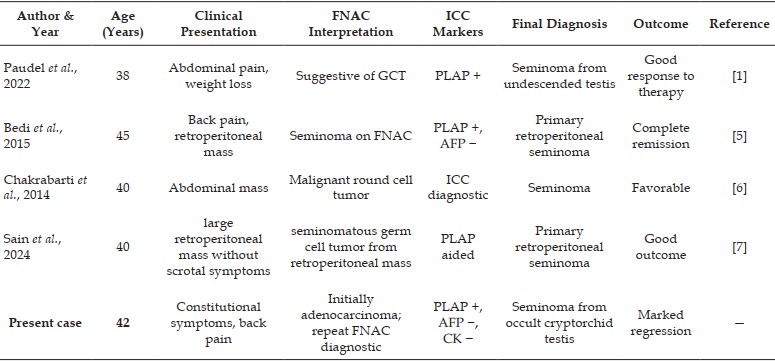
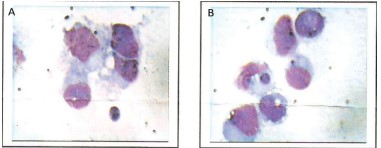
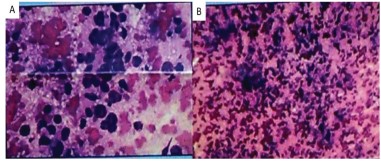
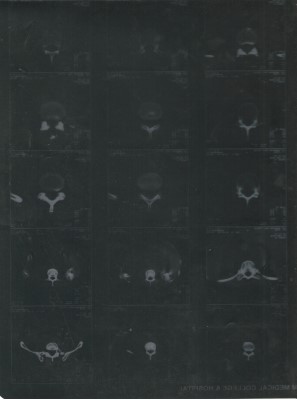
Retroperitoneal masses in adult males present a significant diagnostic dilemma due to their deep location, varied etiologies, and nonspecific clinical manifestations.1 Germ cell tumors, particularly seminoma, may rarely present primarily as retroperitoneal disease, especially in association with cryptorchidism, leading to delayed or erroneous diagnosis.2,3 We report the case of a 42-year-old male who presented with prolonged constitutional symptoms including back pain, abdominal distension, anorexia, intermittent fever, and generalized weakness for over one year. Radiological evaluation revealed a large retroperitoneal preand paravertebral mass suggestive of lymphadenopathy.2 Initial ultrasoundguided fine needle aspiration cytology (USG‑FNAC) was interpreted as metastatic adenocarcinoma. Repeat FNAC demonstrated dispersed medium-to-large atypical cells with vesicular nuclei, prominent nucleoli, pale cytoplasm, and a characteristic tigroid background. Immunocytochemistry showed strong positivity for placental alkaline phosphatase (PLAP) and negativity for AFP, cytokeratin, leukocyte common antigen, and carcinoembryonic antigen, confirming the diagnosis of seminoma.5 Subsequent clinical examination revealed absence of the left testis in the scrotum, consistent with an undescended testis, explaining the unusual presentation.3 The patient showed marked response to radiotherapy. This case highlights the critical role of USG-FNAC combined with immunocytochemistry in diagnosing seminoma at an unusual site, emphasizes the importance of careful clinical correlation, and underscores the need to consider germ cell tumors in the differential diagnosis of retroperitoneal masses in adult males.1,6
References
- 1. Paudel S., Shrestha A., Karki S., et al. Retroperitoneal seminoma in an undescended testis: A case report. Nepalese J Radiol. 2022; 12(2): 33–37.
- 2. Singla N., Hutchinson R.C., Daneshmand S. Testicular germ cell tumors: diagnosis and management. JAMA. 2024; 331(4): 395–406.
- 3. Tongaonkar A., Kulkarni J.N., Bakshi G. Management of testicular tumours in patients with undescended testes. ecancermedicalscience. 2023; 17: 1523.
- 4. Scholz M., Zehender M., Thalmann G.N., et al. Extragonadal retroperitoneal germ cell tumors: diagnostic and therapeutic challenges. Ann Oncol. 2002; 13(3): 467–473.
- 5. Bedi D., Kaur H., Kumar N. Primary retroperitoneal seminoma: a rare entity diagnosed on cytology. J Cytol. 2015; 32(4): 256–258.
- 6. Chakrabarti I., Ghosh N., Das A. Ultrasoundguided fine needle aspiration cytology of retroperitoneal masses: A diagnostic approach. J Cytol. 2014; 31(4): 196–200.
- 7. Sain S., Tripathi S., Bakshi N., Das SAP, Nundy S. Primary retroperitoneal seminoma—an uncommon presentation with significant implications. Case Rep Surg. 2024; 2024: 4376859. doi:10.1155/cris/4376859. PMID:39723237; PMCID:PMC11669426.
Data Sharing Statement
There are no additional data available. All raw data and code are available upon request.
Funding
This research received no funding.
Author Contributions
All authors contributed significantly to the work and approve its publication.
Ethics Declaration
This article does not involve any human or animal subjects, and therefore does not require ethics approval.
Acknowledgements
We would like to express our gratitude to the patients, their families, and all those who have contributed to this study.
Conflicts of Interest
No conflicts of interest in this work.
About this article

Cite this article
Subhalakshmi Saikia, Devajit Nath, Adity Sharma. Silent Retroperitoneal Seminoma Arising from an Occult Undescended Testis: Diagnostic Challenges and the Role of Ultrasound-Guided FNAC. Ind Jr of Path: Res and Practice 2026; 15(2) 158-162.
Licence:
Attribution-Non-commercial 4.0 International (CC BY-NC 4.0)This license enables reusers to distribute, remix, adapt, and build upon the material in any medium or format for noncommercial purposes only, and only so long as attribution is given to the creator.
| Received | Accepted | Published |
|---|---|---|
| December 27, 2025 | January 29, 2026 | August 30, 2026 |
DOI: https://doi.org/10.21088/ijprp.2278.148X.15226.9
Keywords
SeminomaRetroperitoneal massCryptorchidismImmunocytochemistryFNACSearch for Similar Articles
Similar Articles
- Clinico-Pathological and Immunohistochemical Study of Primary CNS Tumors in a Te...
- The Role of SGLT2 Inhibitors in Cardiovascular Protection Beyond Diabetes: A Co...
- Epidermal Inclusion Cyst Presenting as 4th Ventricle Space Occupying Lesion: A R...
- Scapular Metastasis of Oral Squamous Cell Carcinoma: A Case Report of an Unusual...
- Adrenocortical Carcinoma Presenting as a Retroperitoneal Mass: Diagnostic Challe...
Article Level Metrics
Last UpdatedSunday 18 October 2026, 16:54:36 (IST)
4207
Accesses
24
671
00
Citations
NA
NA
NA
Download citation
Article Keywords
Keyword Highlighting
Highlight selected keywords in the article text.
Timeline
| Received | December 27, 2025 |
| Accepted | January 29, 2026 |
| Published | August 30, 2026 |
licence
Attribution-Non-commercial 4.0 International (CC BY-NC 4.0)
This license enables reusers to distribute, remix, adapt, and build upon the material in any medium or format for noncommercial purposes only, and only so long as attribution is given to the creator.