Full Text (PDF)
Physiotherapy and Occupational Therapy Journal 18(2):p 113-119, April- June 2025. | DOI: 10.21088/potj.0974.5777.18225.
Original Article
Knowledge, Attitude and Willingness of Caregivers of Children with Physical Disability to use Orthosis
Author Information
Licence:
Attribution-Non-commercial 4.0 International (CC BY-NC 4.0)This license enables reusers to distribute, remix, adapt, and build upon the material in any medium or format for noncommercial purposes only, and only so long as attribution is given to the creator.
Physiotherapy and Occupational Therapy Journal 18(2):p 113-119, April- June 2025. | DOI: 10.21088/potj.0974.5777.18225.
How Cite This Article:
Metange D, Gajra R, Deo M. Knowledge, Attitude and Willingness of Caregivers of Children with Physical Disability to use Orthosis. Physiother Occup Ther J 2025;18(2):113-9.Timeline
Received : February 22, 2025
Accepted : May 24, 2025
Published : June 30, 2025
Abstract
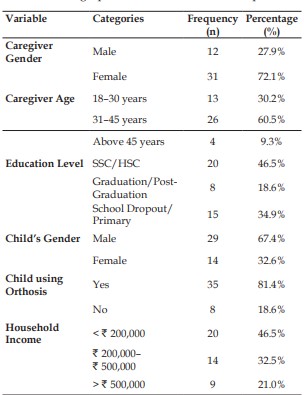
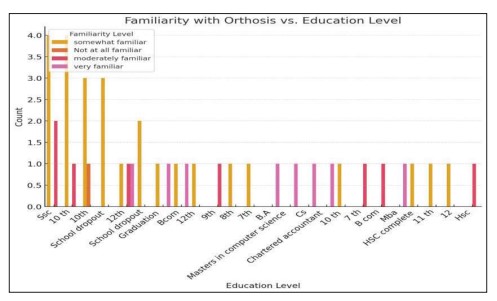
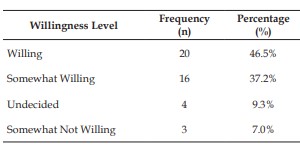
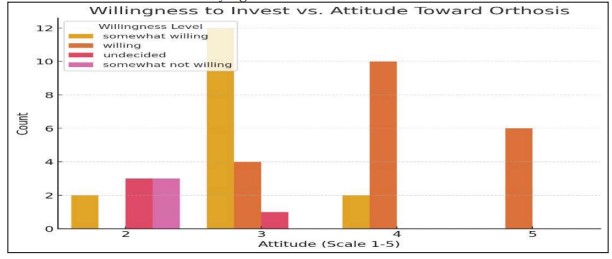
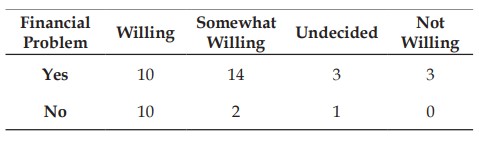
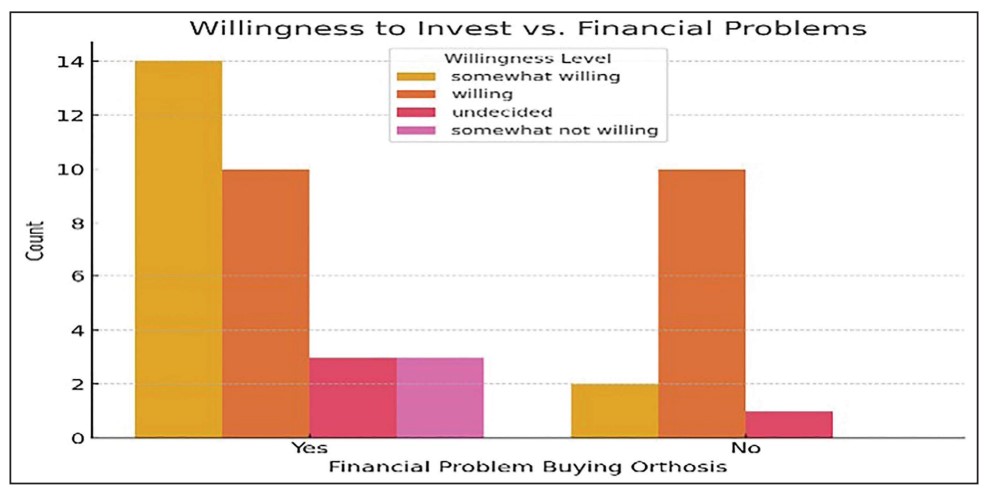
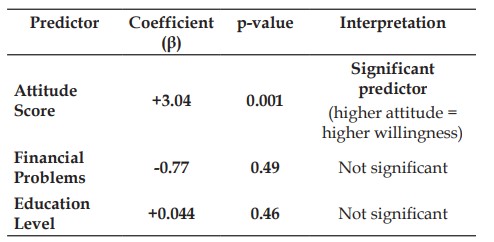
Background: Rehabilitation aims to optimize function and reduce disability in children with physical impairments. Orthotic devices, such as splints and braces, are essential in preventing deformities and enhancing mobility. However, accessibility and adherence to orthotic use remain challenges, particularly in low-resource settings. Caregivers play a crucial role in ensuring compliance, yet their knowledge, attitudes, and willingness to invest in orthotic interventions are not well-documented in India. This study aimed to assess these factors among caregivers of children with physical disabilities. Methods: A cross-sectional observational study was conducted among 43 caregivers from the Mumbai Metropolitan Region. Participants were recruited using convenience sampling from physiotherapy clinics and special schools. Data were collected through a self-administered, validated questionnaire assessing knowledge, attitudes, and willingness to use orthotic devices. Descriptive statistics, chi-square tests, and logistic regression analyses were performed to determine associations between variables. Results: The majority of caregivers were female (72.1%) and aged 31–45 years (60.5%). Most children (81.4%) currently used an orthosis. Knowledge of orthosis was moderate, with only 18.6% being highly familiar. Attitudes varied, with 27.9% reporting positive perceptions and 39.5% remaining neutral. Willingness to invest in orthosis was reported by 46.5% of caregivers, though financial constraints were a major concern (69.8%). Attitude was the strongest predictor of willingness to invest (p = 0.001), while financial constraints and education level showed no significant influence. Conclusion: Caregivers’ attitudes significantly impact their willingness to invest in orthotic interventions, highlighting the need for targeted educational initiatives. Addressing misconceptions and financial barriers could enhance compliance and improve rehabilitation outcomes for children with physical disabilities.
References
- 1. World Health Organization. Rehabilitation [Internet]. World Rehabilitation Alliance; [cited 2023 Jan 5]. Available from: https://www.who.int/rehabilitation
- 2. Olusanya B.O., Davis A.C., Wertlieb D., et al. Developmental disabilities among children younger than 5 years in 195 countries and territories, 1990–2016: a systematic analysis for the Global Burden of Disease Study 2016. Lancet Glob Health. 2018; 6(10): e1100-21
- 3. Ganguly N.K., Satyanarayana K., Srivastava V.K., Kant L., Sah Bela M.V. Prevention of disability in children. Int Rehabil Rev. 1979; 3:1-5.
- 4. Physiopedia contributors. Introduction to spinal orthosis [Internet]. Physiopedia; 2021 Jul 29 [cited 2023 Jan 5]. Available from: https://www.physio-pedia.com/Introduction_to_Spinal_Orthosis
- 5. Mishra A.K., Ojha A., Kumar S., Kanaujia A., Dwivedi A., Dasgupta S., et al. Persons with Disabilities (Divyangjan) in India - A Statistical Prole: 2021. Govt. of India; 2021.
- 6. Roy L., et al. Splints and orthosis. 2021. p. 15-98.
- 7. Rashtriya Bal Swasthya Karyakram (RBSK). National Health Mission [Internet]. [cited 2023 Jan 5]. Available from: https://www.nhm.gov.in
- 8. Iqbal M.S., Dubey R., Thakur K., Katiyar S., Prasad M. Assessment of awareness and barriers to clubfoot treatment in the Indian scenario. J Family Med Prim Care. 2021; 10(11): 4229-35. doi: 10.4103/jfmpc.jfmpc_2606_20. PMID: 35136794; PMCID: PMC8797066.
- 9. Zaino N.L., Westcott McCoy K., Schwartz M.H., et al. “That’s frustrating”: Perceptions of ankle foot orthosis provision, use, and needs among people with cerebral palsy and caregivers. ProsthetOrthot Int. 2023; 47(2): 147-54. doi: 10.1097/PXR.0000000000000165.
- 10. Grzybowski G., Bliven E., Wu L., et al. Caregiver experiences using orthotic treatment options for developmental dysplasia of the hipin children. J PediatrOrthop. 2023;43(2):105-10.
- 11. Chen N., Zafani M.D., Baleotti L.R., Ireno J.M.The use of orthosis in children with cerebralpalsy: perception of caregivers. Cad Bras TerOcup. 2019; 27(1). doi: 10.4322/2526-8910.ctoAO1612.
- 12. Yasukawa Y., Malas B., Martin P. Caregiver satisfaction for orthotic management of a severely involved child with cerebral palsy seen at age 7 years and 19 years. J ProsthetOrthot. 2016;28(2):78-82. doi: 10.1097/JPO.0000000000000090.
- 13. Schulz R, Beach SR, Czaja SJ, Martire LM. Caregivers’ willingness to pay for technologies to support caregiving. Gerontologist. 2016;56(5):817-29. doi: 10.1093/geront/gnv033.
Data Sharing Statement
There are no additional data available. All raw data and code are available upon request.
Funding
This research received no funding
Author Contributions
All authors contributed significantly to the work and approve its publication.
Ethics Declaration
This article does not involve any human or animal subjects, and therefore does not require ethics approval.
Acknowledgements
We would like to express our gratitude to the patients, their families, and all those who have contributed to this study.
Conflicts of Interest
The authors report no conflicts of interest in this work.
About this article

Cite this article
Metange D, Gajra R, Deo M. Knowledge, Attitude and Willingness of Caregivers of Children with Physical Disability to use Orthosis. Physiother Occup Ther J 2025;18(2):113-9.
Licence:
Attribution-Non-commercial 4.0 International (CC BY-NC 4.0)This license enables reusers to distribute, remix, adapt, and build upon the material in any medium or format for noncommercial purposes only, and only so long as attribution is given to the creator.
| Received | Accepted | Published |
|---|---|---|
| February 22, 2025 | May 24, 2025 | June 30, 2025 |
DOI: 10.21088/potj.0974.5777.18225.
Keywords
Orthotic devicesCaregiver attitudesPhysical disabilitiesRehabilitation outcomesWillingness to investSearch for Similar Articles
Similar Articles
- Digital Healthcare Revolution: Role of E-Health Systems in Modern Society
- Evidence-Based Teaching in Physiotherapy: An Academic Review
- Secondary Versus Primary Persistent Postural-Perceptual Dizziness (PPPD): A Narr...
- Digital Transformation of Healthcare: E-Health Systems and their Impact
- To Compare the Effectiveness of Static Stretch versus Post Isometric Relaxation...
Article Level Metrics
Last UpdatedMonday 22 June 2026, 05:02:45 (IST)
1121
Accesses
3
304
00
Citations
NA
NA
NA
Download citation
Article Keywords
Keyword Highlighting
Highlight selected keywords in the article text.
Timeline
| Received | February 22, 2025 |
| Accepted | May 24, 2025 |
| Published | June 30, 2025 |
licence
Attribution-Non-commercial 4.0 International (CC BY-NC 4.0)
This license enables reusers to distribute, remix, adapt, and build upon the material in any medium or format for noncommercial purposes only, and only so long as attribution is given to the creator.